
The Best Fluffy Pancakes recipe you will fall in love with. Full of tips and tricks to help you make the best pancakes.

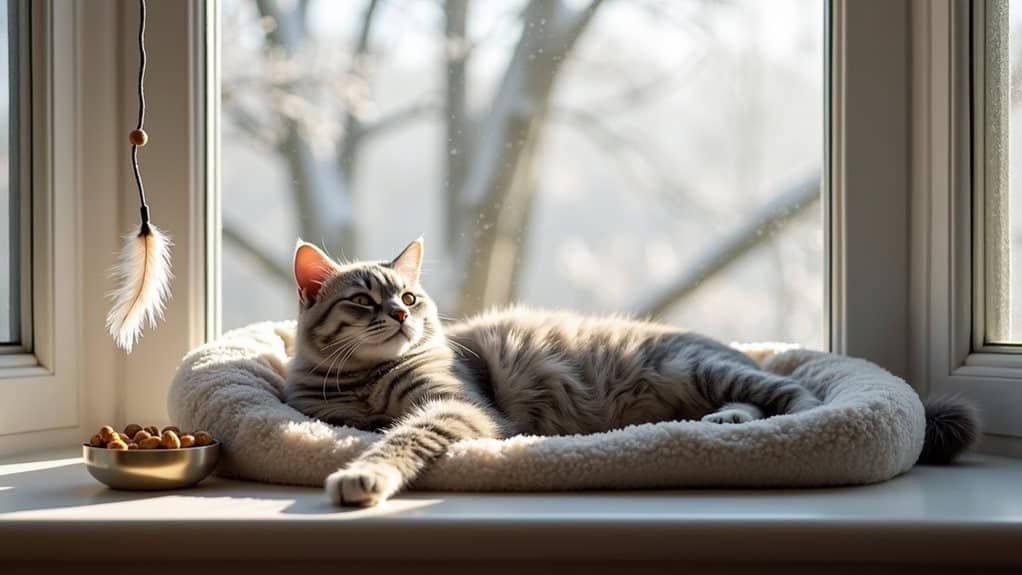
While humans commonly experience seasonal affective disorder (SAD), you might not realize that your feline companion can suffer from similar winter-related mood changes. Your cat's natural circadian rhythm depends heavily on sunlight exposure, and the shorter winter days can disrupt their internal clock, leading to behavioral changes and decreased energy levels. As a pet parent, you'll want to recognize these subtle shifts in your cat's demeanor and understand how to help them through the darker months. The good news is that there are several proven strategies you can implement to keep your furry friend content and active when winter settles in.
Understanding Winter's Impact on Cats
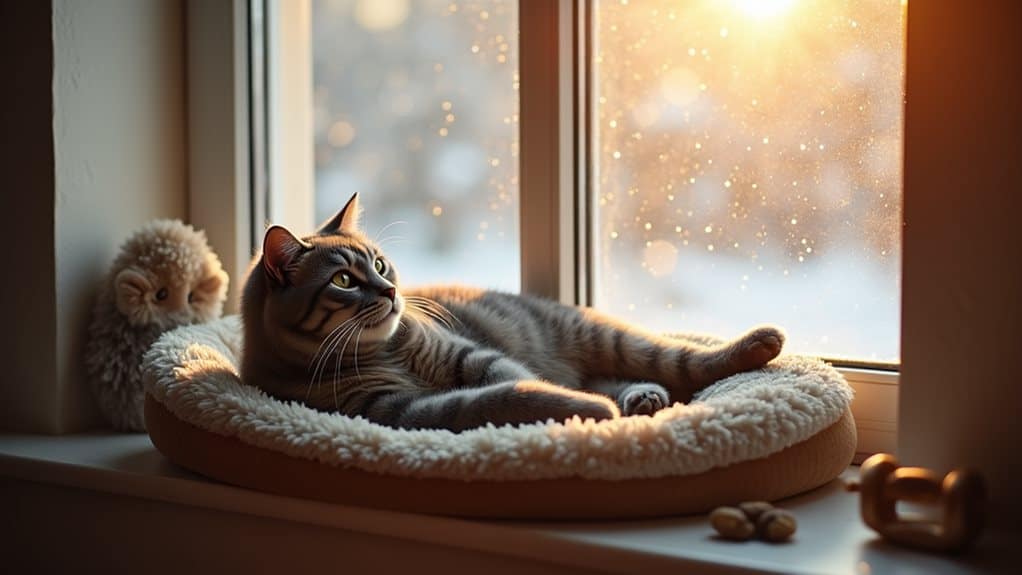
While cats are naturally resilient creatures, winter presents unique challenges that can affect their health and behavior. You'll notice your feline friend may sleep more during these colder months and might even develop a heartier appetite as they work to stay warm. Cats require significantly more calories during winter to maintain their body temperature. It's essential to ensure they have access to warm, accessible spaces to lessen the cold's impact on their joints.
These winter challenges aren't just about staying cozy, though – they're about keeping your cat safe and healthy. Cats may experience mood changes due to reduced sunlight exposure during the darker winter months. Regular veterinary check-ups can play a crucial role in identifying and addressing these seasonal changes early.
Your cat's natural behaviors might shift during winter, with less outdoor exploration and more indoor lounging. You'll want to watch for signs of seasonal changes in their feline behavior, like increased neediness or reluctance to use a chilly litter box.
If you've got an outdoor cat, remember that temperatures below 45 degrees Fahrenheit can be dangerous, putting them at risk for frostbite and hypothermia. Indoor cats aren't immune to winter's effects either, as dry air and reduced activity can impact their well-being. Providing ample interactive toys and climbing structures can help combat the risks of decreased physical activity during the winter months.
Signs Your Cat Needs Help
How do you know when winter weather is affecting your cat's well-being? Your feline friend can't tell you directly, but they'll show you through changes in cat behavior and winter health signals.
Watch for physical signs like increased sleeping, shivering, or changes in grooming habits. Healthy cats become noticeably uncomfortable when temperatures drop below 45°F. If your usually social kitty starts hiding more or seems less interested in playtime, that's your cue to pay attention. Your cat may also seek out heat sources and sunspots throughout your home as temperatures drop. Additionally, be aware that winter can trigger increased shedding due to seasonal changes, which may indicate your cat is feeling stressed.
You'll want to notice if they're eating or drinking differently, too. Maybe they're visiting the litter box more often, or perhaps they're more vocal than usual.
These changes aren't just your cat being finicky – they're often crying out for help. When you spot unusual behaviors like excessive grooming or reluctance to move around, it's time to take action and guarantee your furry friend stays warm and comfortable.
The Science Behind Feline Blues
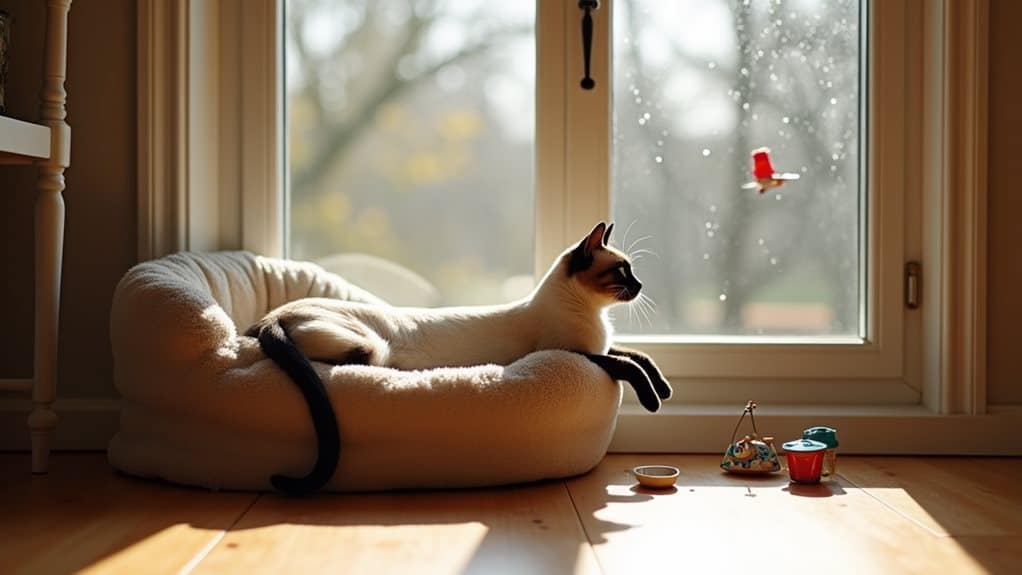
Your cat's winter blues might've more to do with science than you'd think, as changes in daylight affect their brain chemistry just like yours.
While research hasn't proven that cats get seasonal depression, it's understood that shorter winter days can impact their hormones and natural rhythms, which might explain why your furry friend seems a bit different during the cold months. Studies show that one-third of owners report their cats display lower mood and energy during winter. In addition, the impact of cat allergens can also influence your cat's overall comfort and behavior, potentially contributing to their emotional state during these colder months.
The connection between light exposure and mood isn't just a human thing – your cat's brain responds to seasonal changes too, influencing everything from their energy levels to their appetite. Reduced sunlight exposure can lead to a decrease in serotonin production, affecting your cat's overall mood.
Hormones and Seasonal Changes
Just as the seasons shift throughout the year, your cat's hormones and behavior undergo significant changes driven by daylight hours and temperature.
These hormonal fluctuations affect your feline friend's mood, energy levels, and seasonal behaviors in profound ways, especially during the darker winter months.
Understanding these natural changes can help you better support your cat:
- Your cat's internal clock responds to reduced daylight, often leading to increased sleep and moodiness. During this period, it is essential to incorporate interactive toys to keep them mentally stimulated.
- Cold temperatures trigger ancient instincts to conserve energy and seek warmth.
- Hormonal changes may cause shifts in appetite and activity levels.
Female cats are particularly sensitive to seasonal changes, as they are seasonally polyestrous breeders who respond to longer daylight hours.
Both indoor and outdoor cats naturally seek out cool resting spots during warmer weather.
When you notice your cat becoming less active or showing changes in behavior during winter, remember it's perfectly normal.
These biological responses have evolved over thousands of years, and you can help by providing extra comfort, warmth, and understanding during these seasonal adjustments.
Light's Impact on Mood
While cats may seem naturally resilient, the winter's diminishing daylight can profoundly affect their mood and behavior through complex biological mechanisms.
You'll notice your feline friend might sleep more, show less interest in play, or seem a bit down during these darker months. That's because reduced light exposure affects their serotonin and melatonin levels, just like it does in humans. Many cats experience seasonal behavioral changes that become most noticeable during winter months. Research shows that indoor/outdoor cats are especially susceptible to winter depression due to limited outdoor access. Providing engaging indoor activities such as interactive toys can help mitigate these effects.
Don't worry – you can help boost your cat's mood with some simple light therapy solutions.
Try opening curtains during daylight hours and placing their favorite bed near sunny windows. For mood enhancement, you might consider using specially designed sun lamps for 30 minutes daily.
Just remember to monitor your cat's response and adjust the lighting based on their comfort level. With these thoughtful adjustments, you'll help your furry friend maintain better spirits throughout winter.
Brain Chemistry in Winter
Seasonal shifts in daylight trigger complex neurochemical changes in your cat's brain, much like those seen in humans experiencing winter blues.
When winter arrives, your furry friend's brain chemistry adapts to shorter days, affecting both mood and behavior. Just as you might feel sluggish during darker months, your cat's brain adjusts its production of key chemicals that influence their well-being. Regular grooming sessions can help combat these effects by promoting emotional well-being, as it fosters a sense of security during the winter months.
Understanding these seasonal changes can help you support your cat when they're feeling down.
Watch for these common signs that your cat's brain chemistry might be affected:
- Increased sleeping or lethargy during daytime hours
- Changes in appetite or eating patterns
- Noticeable shifts in sociability or playfulness
Creating a Cozy Winter Haven
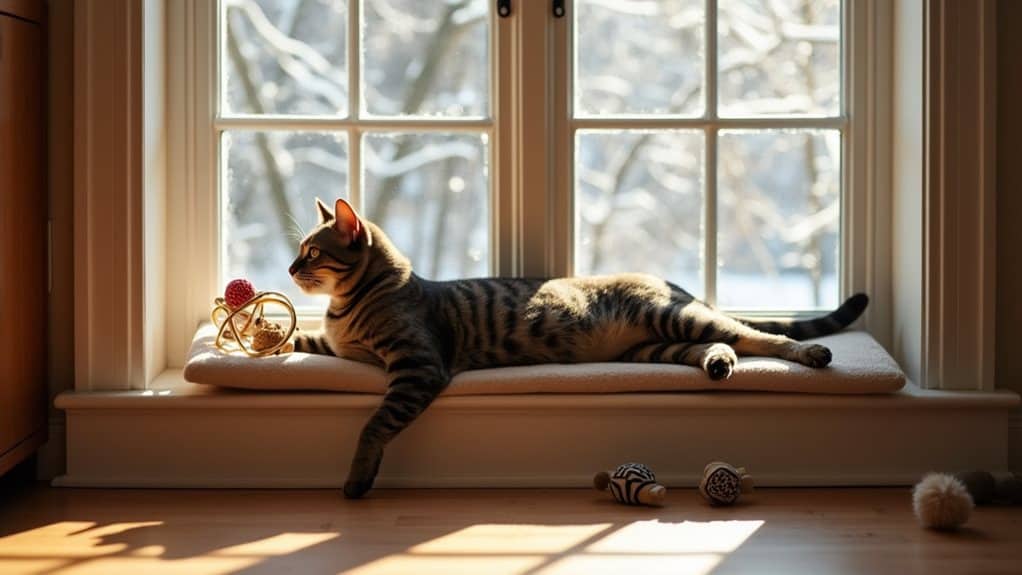
Your cat's comfort during winter starts with creating ideal warm spots throughout your home, especially near windows where they can soak up natural sunlight.
You'll want to set up multiple cozy beds in these strategic locations, making sure they're equipped with soft blankets and perhaps a heated pad for extra warmth.
These special spots will quickly become your cat's favorite winter hideaways, giving them a perfect balance of warmth and entertainment as they watch the world outside while staying toasty indoors. Regular cat grooming will also help keep their coats healthy and comfortable during the winter months.
Warm Spots and Windows
During winter months, cats naturally seek out warm and comfortable spots throughout your home. You can help your feline friend stay cozy by creating perfect window warmth zones with strategically placed beds and cozy perches.
Position their favorite spots near sunny windows, but make sure they're draft-free and secure.
To create the perfect warm haven for your cat, consider these essential tips:
- Elevate their beds to take advantage of rising heat, using steps for older cats
- Line cardboard boxes with soft blankets for insulated hideaways
- Place heated beds near windows that get plenty of sunshine
Remember to keep an eye on your cat when they're lounging near windows, and always provide alternative warm spots away from cold surfaces. Additionally, ensuring that your cat has designated hiding spots can help alleviate anxiety during the winter, as hiding behavior can be influenced by environmental changes and stress.
Your cat will appreciate these thoughtful touches that make winter more comfortable.
Cozy Bedding Essentials
When winter's chill sets in, proper bedding becomes essential for keeping indoor cats warm and content.
You'll want to focus on selecting bedding materials that provide maximum comfort and warmth, like plush fleece or soft faux fur options that help trap body heat.
Consider heated options, such as thermal self-warming beds or those with built-in heating elements, to create the perfect cozy spot for your feline friend.
Position your cat's bed strategically by placing it away from drafts and near sunny windows where they can soak up natural warmth.
If you've got multiple cats, make sure each one has their own warm retreat.
Don't forget to add extra layers with soft blankets, and if you're using heated bedding, always check that it has proper safety features to prevent overheating. Additionally, regular grooming can help maintain your cat's coat health, ensuring they have the best protection against the cold winter air, which is crucial for their overall well-being and comfort in winter months, especially for skin health benefits.
Light Therapy for Cats
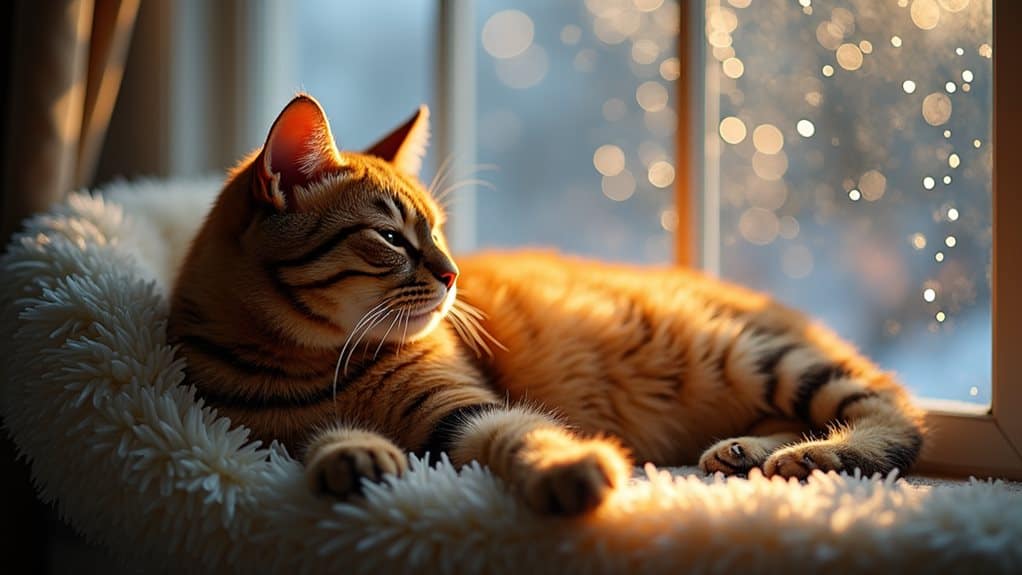
Just like humans, cats can experience Seasonal Affective Disorder (SAD) during the darker winter months, affecting their mood and behavior through decreased sunlight exposure.
If you've noticed your furry friend seeming a bit down, light therapy might be the perfect solution to boost their feline mood. This non-invasive treatment has shown remarkable benefits for cats struggling with winter blues.
Here's what you'll need for effective light therapy:
- A pet-safe SAD lamp or light box placed about a foot from your cat's favorite spot
- 30 minutes of daily exposure, preferably in the morning
- A consistent schedule to help regulate their natural rhythms
You'll want to work with your vet to create the right light therapy plan for your cat, but don't worry – it's a simple and effective way to help your companion feel more energetic and balanced during those gloomy winter days.
Keeping Your Cat Active
As winter weather keeps cats indoors more often, maintaining their activity levels becomes essential for their physical and mental well-being.
When it comes to playtime essentials, you'll want to establish a consistent schedule of 2-3 daily play sessions, totaling about 30 minutes.
Get creative with exercise variety by setting up indoor obstacle courses using cardboard boxes or creating cozy window perches for bird watching.
Don't forget to rotate your cat's toys to keep things interesting – even simple household items like paper bags or ping pong balls can become exciting new playthings.
Consider investing in puzzle feeders or setting up a cat gym to challenge both body and mind. Interactive playtime fosters stronger human-animal bonds and promotes overall well-being.
If you've got multiple cats, encourage them to play together, as they'll naturally create their own exercise routines through social interaction.
Maintaining Routines During Winter
Regular routines keep your cat healthy and content during the cold months, building upon their indoor exercise habits.
By maintaining consistent grooming techniques and making smart dietary adjustments, you'll help your feline friend thrive despite the winter weather.
Your winter care checklist should include these essential routines:
- Brush your cat 2-3 times weekly (daily for long-haired cats) to prevent matting and reduce hairballs
- Monitor food intake and consider higher-calorie meals, especially for outdoor cats
- Keep fresh water available and create cozy spots near heat sources
When to Seek Veterinary Care
Knowing when to seek veterinary care for your cat during winter can mean the difference between minor discomfort and a serious health emergency.
Watch for veterinary signs like lethargy, shivering, or difficulty moving, which could indicate your furry friend needs help. If you notice your cat's sleeping more than usual or showing mood changes, it might be dealing with seasonal blues that deserve attention.
Don't wait to seek emergency care if you spot signs of hypothermia or frostbite – these conditions need immediate treatment.
You'll also want to get prompt care for respiratory infections, which can worsen in cold weather. Keep in mind that older cats with arthritis may need extra attention during winter months.
Final Thoughts
You'll find that helping your cat through winter isn't just about keeping them warm – it's about creating a sanctuary where they can thrive. Picture your feline friend basking in a sunbeam by the window, pouncing on interactive toys, and snuggling in their heated bed. By following these strategies and staying attuned to their needs, you're not just beating the winter blues – you're transforming the cold months into a cozy adventure for your furry companion.