The Best Fluffy Pancakes recipe you will fall in love with. Full of tips and tricks to help you make the best pancakes.

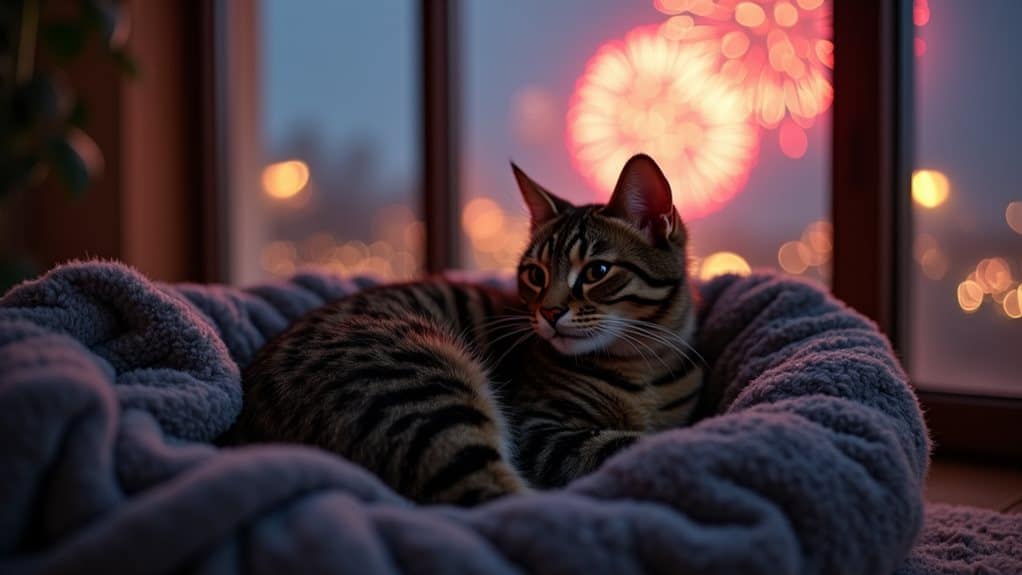
If you're a cat owner, you've likely witnessed your feline friend's distress during fireworks displays. As New Year's Eve approaches, you'll want to guarantee your cat stays calm and safe during the inevitable pyrotechnic celebrations. While you can't control the chaos outside, you can take several effective steps to protect your pet from anxiety and fear. From creating cozy hideaways to using proven calming techniques, there's more to keeping your cat comfortable than simply closing the windows. Let's explore how you can transform this potentially stressful night into a peaceful experience for your furry companion.
Why Cats Fear Fireworks
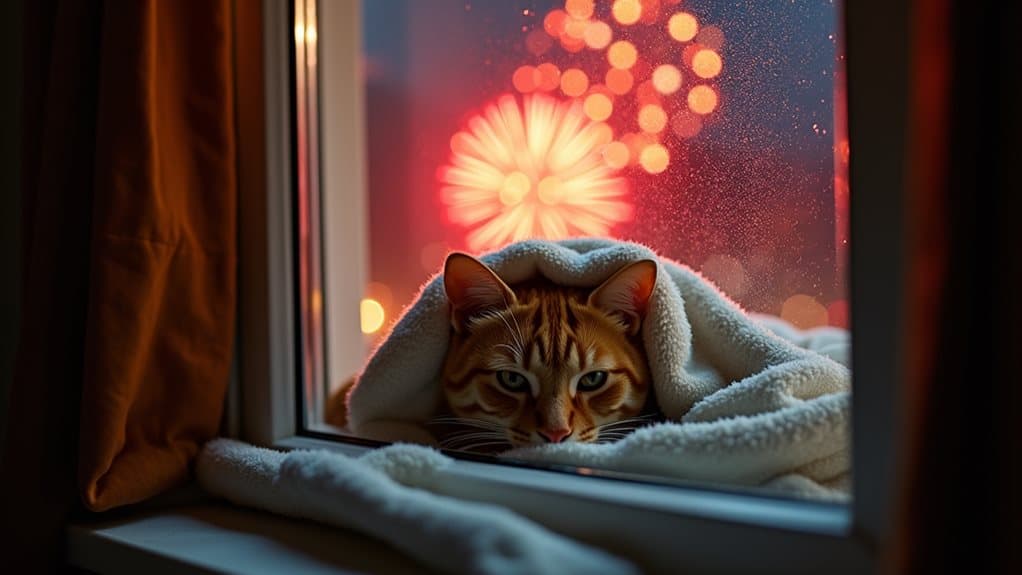
While many pet owners may dismiss their cat's fear of fireworks as simple skittishness, the reasons behind this fear run deep into feline biology and evolution. Your cat isn't just being dramatic – their sensitivity to firework noise is actually rooted in survival instincts passed down through generations.
Cats can detect sounds up to 64,000 Hz in frequency, making fireworks particularly overwhelming for them. Additionally, this heightened sensitivity is a key factor in cat communication that can significantly influence their reactions to loud noises.
According to research, 54% of cats experience distress during firework displays.
Think of it this way: your cat's ears are far more sensitive than yours, making those booming explosions feel like an all-out assault on their senses.
Add in the bright flashes, acrid smells, and unpredictable nature of fireworks, and you've got a recipe for sensory overload. It's no wonder your feline friend dashes under the bed!
This natural fear response helped their ancestors survive in the wild, and it's still hardwired into your cat's DNA today.
Before the Celebration Begins
You'll want to start preparing your home well before the New Year's festivities kick off, creating cozy hideouts with familiar bedding and secure spaces where your cat can retreat. Providing comfortable spaces for your cat is essential for their well-being during stressful events.
Getting ahead of the game means you can also begin playing recorded firework sounds at low volumes weeks in advance, helping your kitty adjust gradually to the upcoming commotion.
Using a white noise machine while setting up your home can help mask unsettling sounds and create a calming environment. Synthetic pheromones can also promote calmness during this time, making it easier for your cat to feel at ease.
These early steps, combined with setting up safe zones throughout your home, will help your feline friend feel more confident when the real celebration begins. Drawing thick curtains closed will minimize both noise and visual stress from the firework displays.
Safe Space Setup
Before New Year's Eve celebrations begin, setting up a dedicated safe space for your cat can considerably reduce their anxiety and stress during the festivities. Choose a quiet interior room away from windows, and fill it with your cat's favorite bed, toys, and familiar items that'll make them feel secure and comfortable. Consider using white noise machines to help mask the sound of fireworks. Providing a safe outdoor enclosure can also help satisfy their natural instincts for exploration while keeping them sheltered from noise and chaos.
Create multiple cozy hiding spots throughout the safe room using covered pet beds, cardboard boxes, or cat carriers. Your furry friend might prefer to retreat to these sanctuaries when the noise becomes overwhelming. Installing a pheromone diffuser can help create a calming atmosphere in the room.
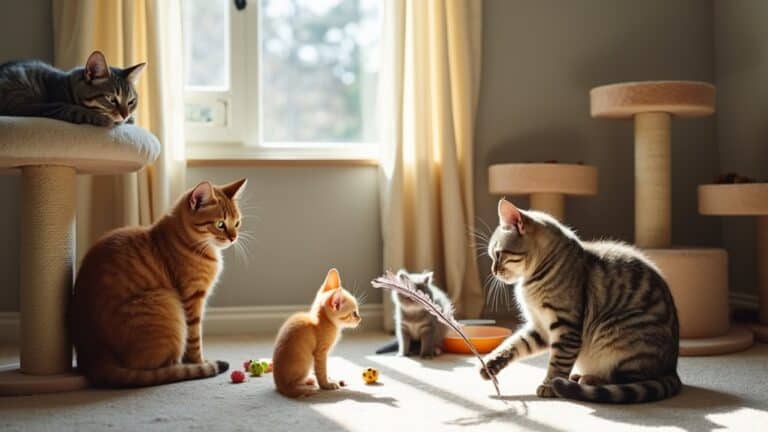
Don't forget to add some vertical options, like a cat tree with enclosed spaces, since many cats feel safer when they're up high.
Remember to keep the room's door open so your cat doesn't feel trapped – they'll appreciate having the freedom to come and go as they please.
Early Preparation Steps
Preparing well ahead of New Year's Eve celebrations can make a significant difference in your cat's comfort and safety during the festivities.
Studies show that 30-40% of pets experience fear during fireworks displays, making early preparation crucial for their wellbeing.
Start by implementing noise desensitization techniques several weeks before the big night – playing firework sounds at low volumes while offering treats can help your cat build positive associations with these scary noises. Playing relaxing music in the background can also help reduce anxiety during practice sessions. Regular grooming sessions can further provide comfort and enhance your cat's emotional well-being during these stressful times.
Don't forget to update your cat's identification tags and microchip information as an essential safety measure.
You'll want to guarantee your furry friend can be returned home if they manage to slip out during the excitement.
Make your home escape-proof by securing windows and doors, and create a cozy indoor environment where your cat can feel protected.
Consider using calming aids like pheromone diffusers or vet-recommended supplements to help ease any anxiety they might experience.
Setting Up Safe Spaces
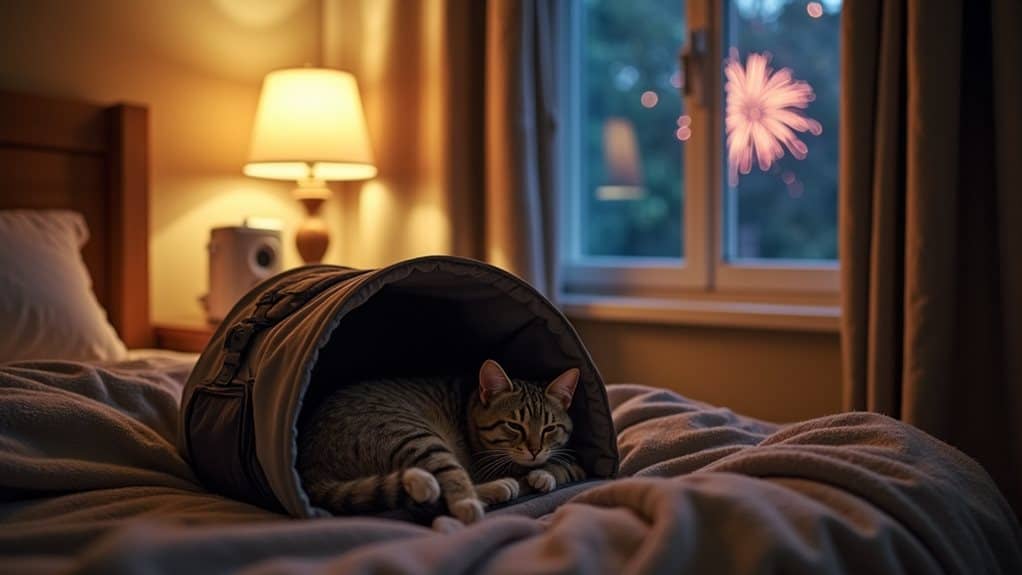
Creating a secure haven for your cat during New Year's Eve celebrations starts with selecting a quiet interior room where firework sounds are naturally muffled.
Transform this safe zone into a cozy retreat by adding your cat's favorite comfort items, like their bed, toys, and familiar blankets.
Cover any windows with thick curtains or blankets to block out the startling flashes, and set up an elevated hiding spot where your cat can feel protected. A covered pet bed or cardboard box placed on a higher surface works perfectly. Enhance the area with old sweaters or clothing to provide comforting familiar scents. Studies show that 30-60% more pets are reported lost during firework celebrations, making these precautions essential.
Don't forget to add some white noise – a fan, soft music, or TV can help mask the sound of fireworks.
Keep the space calm and organized, removing any potential hazards that might cause stress.
Natural Calming Solutions
Several natural solutions can help keep your cat calm during New Year's Eve festivities.
You'll find that pheromone diffusers, like Feliway, work wonders by mimicking your cat's natural calming signals – just be sure to plug them in well before the celebrations begin.
For effective stress relief, try playing soft classical music or white noise to mask those startling firework sounds.
If you're looking for additional calming techniques, consider pet-safe supplements containing chamomile or L-theanine, but always check with your vet first.
You might also want to try catnip, which can naturally promote relaxation in most cats. It's also important to ensure an allergen-free environment to minimize stress from other potential triggers during the festivities.
Reading Your Cat's Signals
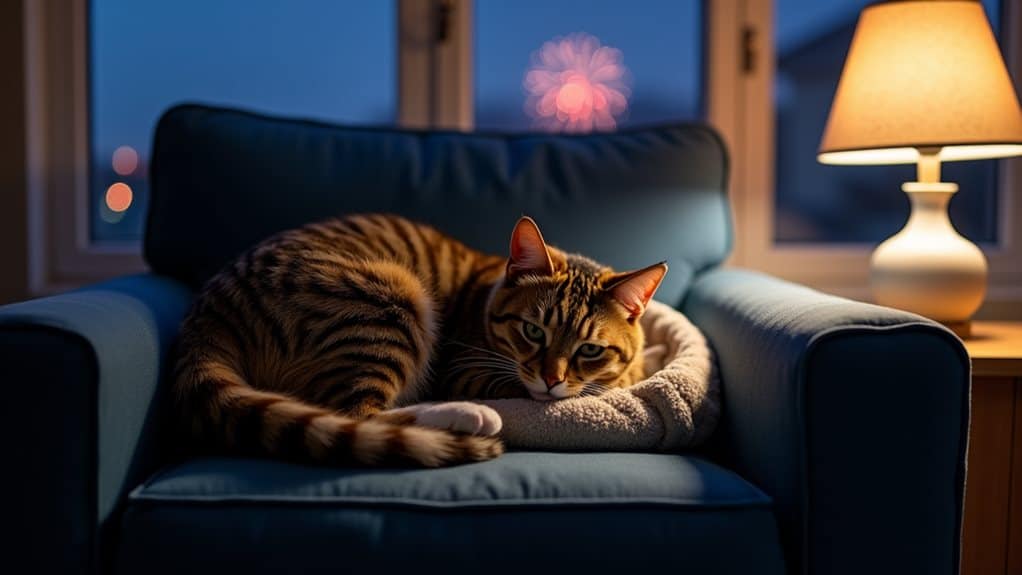
Your cat's body language speaks volumes during fireworks season, and you'll want to look for subtle changes like dilated pupils, flattened ears, or excessive grooming that signal rising stress levels.
If you notice your normally confident kitty pacing restlessly, hiding more than usual, or having accidents outside the litter box, they're likely feeling overwhelmed by the festivities.
Paying attention to these warning signs early on will help you better support your furry friend through the celebration, whether that means providing extra hiding spots or creating a quieter environment away from the chaos.
Additionally, recognizing their body posture can provide valuable insights into their emotional state during this stressful time.
Physical Signs of Distress
Recognizing signs of distress in your cat requires careful attention to their body language and behavior.
You'll notice changes in their body posture, like crouching low with a tucked tail or freezing in place.
Watch their facial expressions closely – dilated pupils, wide eyes, and nervous lip-licking are clear indicators that your cat's feeling anxious.
Your furry friend might also show behavioral changes that signal stress.
If they're hiding more than usual, overgrooming, or seeking extra attention, they're probably feeling uneasy.
Physical signs like inappropriate spraying or avoiding the litter box shouldn't be ignored either.
When you spot these warning signals, it's important to respond with patience and understanding – your cat's counting on you to help them feel safe and secure. Moreover, recognizing signs of stress is vital for effective intervention in a skittish cat's behavior.
Behavioral Changes to Watch
When fireworks light up the night sky, cats often display distinct behavioral changes that signal their distress.
You'll notice your furry friend showing clear behavioral signals, like pacing restlessly around the house or grooming themselves more than usual. These anxiety responses can also include hiding in safe spots and avoiding their regular activities, including meals and bathroom routines.
Watch for changes in your cat's posture and movement – they might crouch low to the ground with their ears flattened or positioned sideways.
If you notice excessive vocalization, like persistent meowing or grumbling, it's your cat's way of communicating their unease. Your cat might also become more vocal than usual or display repetitive behaviors.
Understanding these signs helps you respond appropriately and provide the comfort they need during firework displays. Additionally, creating a safe environment for your cat with cozy spots can alleviate their anxiety during such stressful events.
Hidden Stress Indicators
Cats communicate their anxiety through subtle yet telling stress signals that many owners might miss during firework displays. Your feline friend may exhibit hidden stress through seemingly normal behaviors like excessive grooming, frequent yawning, or unusual scratching. While these actions might appear innocent, they're actually displacement behaviors indicating your cat's growing discomfort.
Watch for physical changes you mightn't immediately associate with anxiety, such as increased shedding or changes in appetite. To ensure your cat's skin remains healthy during stressful times, pay attention to their nutrition and hydration, as a balanced diet can support skin health and minimize irritations.
You'll also want to notice if your cat's whiskers are positioned differently than usual or if they're blinking more frequently.
Even small shifts in feline behavior, like slight changes in ear position or tail movement, can signal that your cat is feeling overwhelmed. Understanding these subtle cues helps you respond more effectively to your pet's needs during stressful events.
Essential Safety Measures
Because fireworks can trigger intense fear responses in cats, implementing proper safety measures is vital for their well-being during New Year's Eve celebrations.
Your cat's safety and anxiety management should be top priorities as you prepare your home for the festivities. Here are four significant steps you'll need to take:
- Create a cozy retreat by setting up a quiet room with familiar bedding and toys.
- Secure all windows, doors, and cat flaps to prevent escape attempts.
- Install white noise machines or play calming music to mask firework sounds.
- Keep identification updated and microchip information current.
Don't forget to close your curtains to block out sudden flashes, and consider using pheromone diffusers to help keep your furry friend calm. Additionally, remember to respect your cat's boundaries and emotional state to help alleviate their stress during this trying time.
Having these measures in place will help guarantee a safer, less stressful evening for your cat.
Final Thoughts
Just like a conductor orchestrates each instrument to create harmony, you'll need to fine-tune your New Year's Eve preparations to keep your cat feeling safe. By creating a cozy retreat, using calming aids, and watching for stress signals, you're giving your feline friend the security they need during the festivities. Remember, your cat's comfort isn't optional – it's the key to starting the new year on the right paw together.