The Best Fluffy Pancakes recipe you will fall in love with. Full of tips and tricks to help you make the best pancakes.

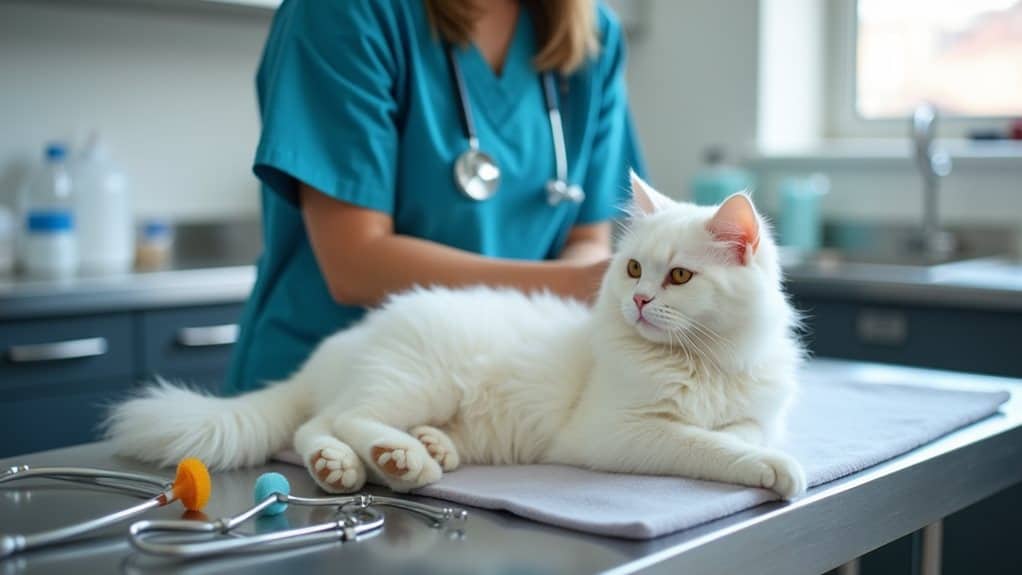
You've probably noticed your cat's uncanny ability to hide any sign of discomfort – it's just what they do. During National Cat Health Month, it's time to become your feline friend's health champion, because they can't exactly tell you when something's wrong. From crucial vet visits to choosing the right food, there's more to keeping your cat healthy than meets the eye. Let's explore how you can guarantee your furry companion stays purring with vigor for years to come.
Why Regular Veterinary Check-ups Matter
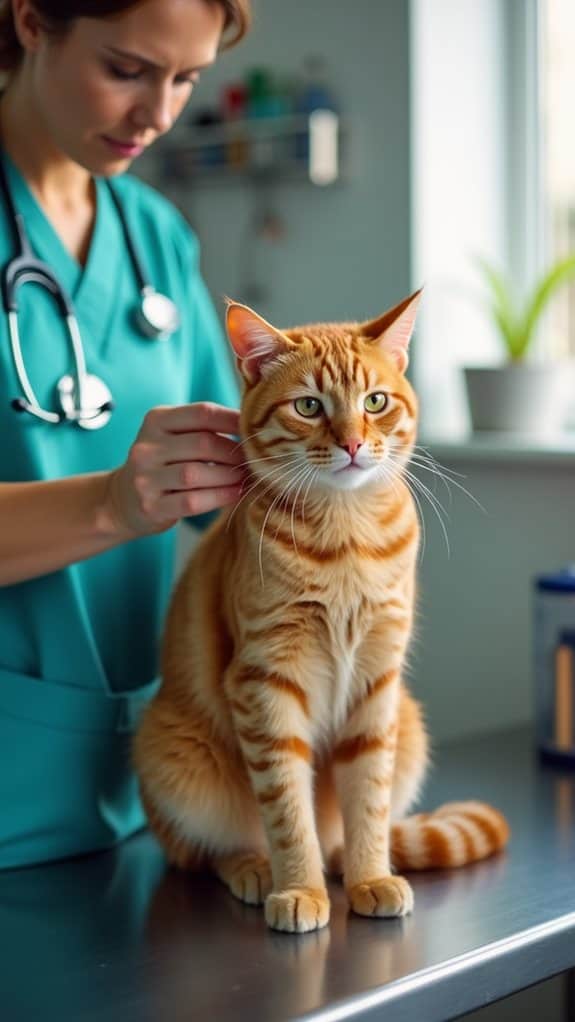
While your cat may seem perfectly healthy lounging in their favorite sunspot, regular veterinary check-ups are essential for keeping them purring for years to come.
Since cats are masters at hiding discomfort, preventive screenings can catch potential health issues before they become serious problems. Regular vet visits also allow for early detection of possible health issues, ensuring timely interventions that can significantly improve your cat's quality of life.
Through consistent health monitoring, your veterinarian can spot early signs of dental disease, kidney problems, and other conditions that might otherwise go unnoticed.
These visits also create a less stressful environment for your cat over time as they become more familiar with the clinic setting.
Your veterinarian will maintain a detailed medical history that helps track changes in your cat's health over time.
You'll also receive tailored advice about nutrition, weight management, and behavioral concerns that could signal underlying health issues.
Best of all, catching problems early often means more effective and less expensive treatments for your feline friend.
Essential Vaccinations for Your Feline Friend
Your cat's health depends on staying up-to-date with core vaccinations, including the crucial FVRCP combination vaccine, rabies shot, and potentially the FeLV vaccine based on your pet's lifestyle. Additionally, working with your vet for a tailored deworming plan is essential to maintain your cat's overall health.
You'll need to work closely with your vet to create the right vaccination schedule, which typically starts when your kitten is 6-8 weeks old and continues throughout their life with regular boosters. While most cats handle vaccines well, watch for mild reactions like temporary lethargy or swelling at the injection site.
Whether you've got an indoor explorer or an outdoor adventurer, these important vaccines protect your furry friend from serious diseases while keeping your whole family safe. These vaccinations are especially vital during TNR procedures, which help control community cat populations while preventing the spread of diseases.
Core Vaccination Schedule
Three core vaccinations form the foundation of every cat's health protection plan, making them essential for both kittens and adult cats alike.
Your kitten's vaccination timeline begins at 6-8 weeks of age with the FVRCP vaccine, which protects against three serious diseases. They'll need boosters every 3-4 weeks until they're about 16-20 weeks old. This vaccine is crucial for preventing feline viral diseases that can severely impact your kitten's health.
These vaccinations protect against feline herpesvirus and calicivirus, both requiring initial two-dose series.
Understanding booster importance is vital for your cat's long-term health. After the initial series, you'll need to schedule a booster at the one-year mark.
From there, most core vaccines are given every three years, except for rabies, which might be required annually depending on your state's laws.
Lifestyle-Based Vaccine Choices
Your furry friend's lifestyle vaccination requirements depend on factors like outdoor activities, interactions with other cats, and your geographic location. These non-core vaccines are highly recommended when indicated by your cat's specific circumstances. If your cat enjoys backyard adventures or socializes with feline friends, they'll need extra protection against exposure risks.
Consider additional vaccines like FeLV if you have multiple cats at home, or Bordetella if your kitty frequently visits the groomer or boarding facility. Feline Leukemia Virus is a common concern for cats that interact with others in outdoor environments, making it critical to ensure they are protected. Starting these vaccinations at 6-8 weeks ensures your kitten builds proper immunity early in life.
Your local vet can help create a personalized vaccination plan that fits your cat's specific needs. Remember, just like you'd adjust your own healthcare routine based on your activities, your cat's vaccine schedule should reflect their daily adventures and social circles.
The Life-Changing Benefits of Spaying and Neutering

You'll find that spaying or neutering your cat isn't just a responsible choice – it's a life-changing investment in your pet's long-term health and happiness.
Your cat's chances of developing certain cancers and diseases drop considerably after the procedure, while you'll save money by avoiding potential medical issues down the road. In particular, spaying before heat virtually eliminates the risk of several reproductive cancers in females. This is because spaying prior to the first heat cycle greatly reduces reproductive cancer risks.
Plus, you'll notice positive changes in your cat's behavior, with less spraying, fighting, and roaming, making your home a more peaceful place for everyone. The evidence is clear – spayed female cats live an average of 13.1 years compared to just 9.5 years for unspayed females.
Health And Disease Prevention
Making the decision to spay or neuter your cat isn't just about preventing unwanted litters – it's a game-changer for their overall health and happiness.
When you choose this path, you're giving your furry friend protection against several serious health conditions. Female cats will have a markedly lower risk of developing breast tumors and uterine infections, while male cats can avoid testicular cancer and prostate problems. Early spaying and neutering is completely safe at 8-weeks, making it an ideal time to set your kitten up for a healthy life. Additionally, spaying and neutering can help control the cat population, preventing countless unwanted litters from being born.
Just like regular cat exercise and dental hygiene, spaying or neutering is a vital part of preventive care.
You'll help your cat avoid diseases that can spread through fighting and mating behaviors. Plus, they'll be less likely to roam or engage in territorial disputes, keeping them safer and healthier.
It's a simple step that can add years of quality life to your beloved companion.
Cost Benefits Over Time
While the initial cost of spaying or neutering your cat might seem significant, the long-term financial benefits are truly remarkable.
You'll see immediate cost savings by avoiding emergency vet visits for reproductive issues and reducing the risk of certain cancers that could drain your wallet down the road.
Think of spaying or neutering as one of the smartest long-term investments you can make in your cat's health.
You won't have to deal with unexpected litters or costly treatments for fighting injuries when your cat roams the neighborhood looking for mates.
Plus, you'll save money on behavioral issues that often require professional intervention.
The best part? Your community benefits too, with fewer resources needed for managing stray cats and handling nuisance complaints.
Additionally, by neutering, you significantly contribute to community cat population control, which helps create a safer environment for both pets and humans.
Better Behavior At Home
Beyond the financial advantages, spaying and neutering can transform your home life in remarkable ways.
You'll notice significant improvements in cat communication and feline playtime as your pets become more focused on positive interactions rather than territorial behaviors.
Here are three amazing changes you'll see after spaying or neutering:
- A quieter, more peaceful home with less yowling and territorial marking
- Increased affection from your cats, who'll spend more energy bonding with you instead of searching for mates
- Better relationships between multiple cats, making playtime more enjoyable for everyone
Your home will become a more harmonious space where you can truly enjoy quality time with your furry friends, as territorial instincts are lessened, allowing for smoother interactions.
Plus, you'll spend less time cleaning up unwanted messes and more time creating lasting memories together.
Nutrition Guidelines for Optimal Cat Health
Since your cat's health depends heavily on proper nutrition, understanding the right feeding guidelines can make all the difference in their well-being.
While some pet parents consider homemade diets, achieving the proper nutrient balance can be tricky without professional guidance.
You'll want to feed your adult cat twice daily, adjusting portions based on their unique needs. For most cats, this means 200-300 calories per day, though active kitties might need more.
Remember that kittens need extra meals and calories, while senior cats typically require less.
Don't forget about hydration – fresh water is essential! If you're mixing wet and dry food (which is ideal), measure portions carefully to prevent overfeeding. Incorporating high moisture content in your cat's diet through wet food can support hydration and overall health.
When in doubt, your vet's always there to help create the perfect feeding plan for your furry friend.
Mental Wellness and Behavioral Enrichment
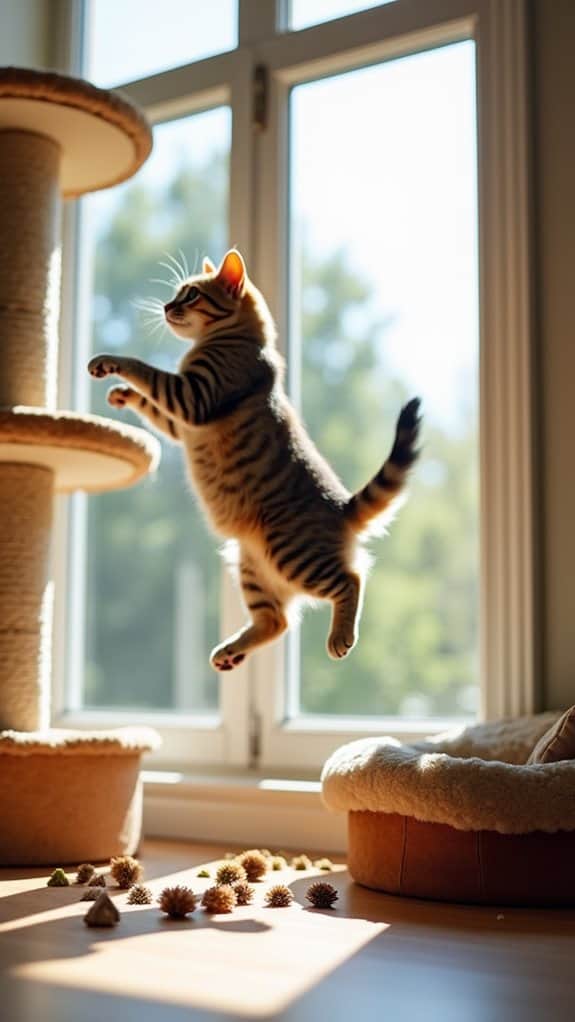
A healthy cat's mind is just as important as a well-fed belly. You can support your feline friend's mental wellness through enrichment activities that keep them engaged and content.
Mental stimulation isn't just fun – it's essential for preventing boredom and reducing anxiety in your cat.
Here are three powerful ways to boost your cat's mental health:
- Create a stress-free sanctuary with cozy hideaways, comfortable temperatures, and calming pheromone products.
- Challenge their problem-solving skills using food puzzles and interactive toys that make mealtimes more exciting.
- Spend quality bonding time through gentle play sessions, grooming, and positive reinforcement training. Engaging in play helps alleviate stress and stimulate mentally.
Your dedication to your cat's mental wellness won't just benefit them – research shows that these interactions can improve your own well-being too, creating a win-win situation for both of you.
Grooming Practices for a Healthy Coat
While your cat might seem like a self-grooming expert, regular brushing and grooming routines play a vital role in maintaining their overall health and happiness.
With the right grooming tools and consistent coat maintenance, you'll help your furry friend stay comfortable and mat-free while reducing those pesky hairballs.
For long-haired cats, daily brushing is essential, while short-haired kitties can get by with weekly sessions.
As you groom, you're not just keeping their coat beautiful – you're also stimulating natural oils and improving circulation.
Plus, it's a perfect opportunity to check for any unusual bumps or skin issues.
Remember to pair your grooming sessions with healthy nutrition, including omega fatty acids and quality proteins, to give your cat's coat that extra shine they deserve.
Signs Your Cat Needs Medical Attention

Knowing when your cat needs medical attention can mean the difference between a minor health issue and a serious emergency.
As a caring pet parent, developing strong symptom awareness can help you spot potential problems early. Watch for behavioral indicators like hiding, excessive meowing, or unusual aggression, as these often signal that something's not quite right with your furry friend.
Here are three critical warning signs that warrant immediate veterinary care:
- Sudden weight changes or appetite loss that last more than a day
- Difficulty urinating, straining, or blood in urine/stool
- Repeated vomiting, particularly if there's blood or it occurs multiple times per hour
Creating a Cat-Friendly Home Environment
Because your cat spends most of their time indoors, creating a comfortable and enriching home environment isn't just a luxury – it's essential for their physical and emotional well-being.
Start by investing in quality cat furniture like window perches, climbing trees, and cozy hideaways that give your furry friend options for rest and play. Don't forget to include safe plants like cat grass to satisfy their natural grazing instincts.
Make their space more accessible by placing essentials like food, water, and litter boxes on the same floor, and add non-slip surfaces for confident movement.
Keep their curious minds engaged with rotating toys and puzzle feeders.
Remember to cat-proof your home by removing hazards and creating secure resting spots – your feline friend will thank you with endless purrs and cuddles!
Final Thoughts
Your cat's health isn't just about yearly check-ups and proper nutrition – it's about creating a loving, enriching environment where they'll thrive. As the saying goes, "An ounce of prevention is worth a pound of cure," so don't wait until problems arise. You're not just a pet owner; you're your cat's guardian and best friend. By following these wellness tips, you'll help guarantee your feline companion enjoys a happy, healthy life by your side.