The Best Fluffy Pancakes recipe you will fall in love with. Full of tips and tricks to help you make the best pancakes.

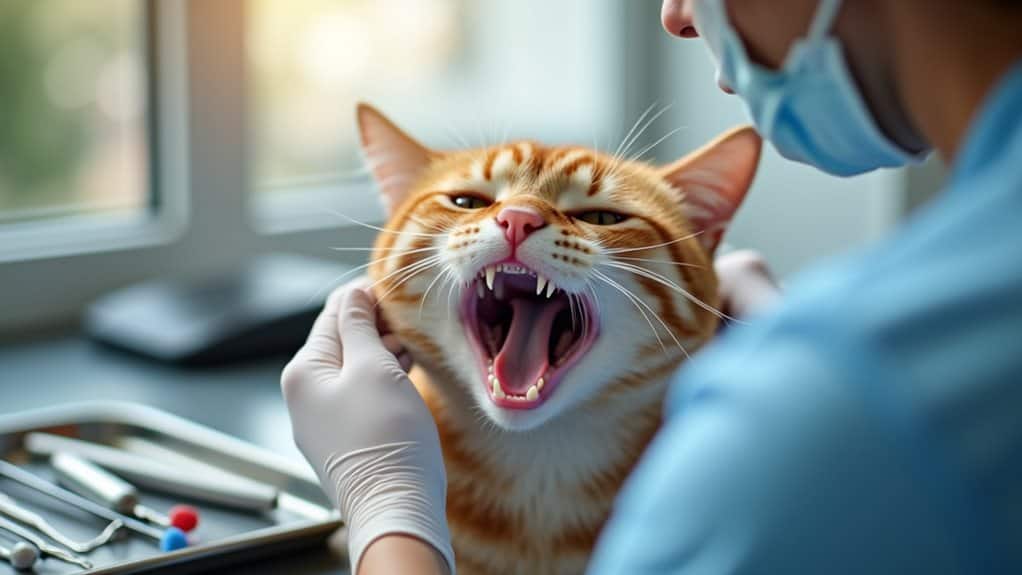
Proper dental care is essential for your cat’s overall health. Watch for warning signs like bad breath, drooling, or pawing at the mouth. Brush your cat’s teeth regularly with pet-specific toothpaste and provide dental treats with VOHC approval. Incorporate dry kibble and dental-specific foods into their diet to help reduce plaque. Even with diligent home care, professional cleanings every 1-2 years are necessary. The more you learn about feline dental health, the happier your whiskered friend will be.
Understanding Common Feline Dental Problems
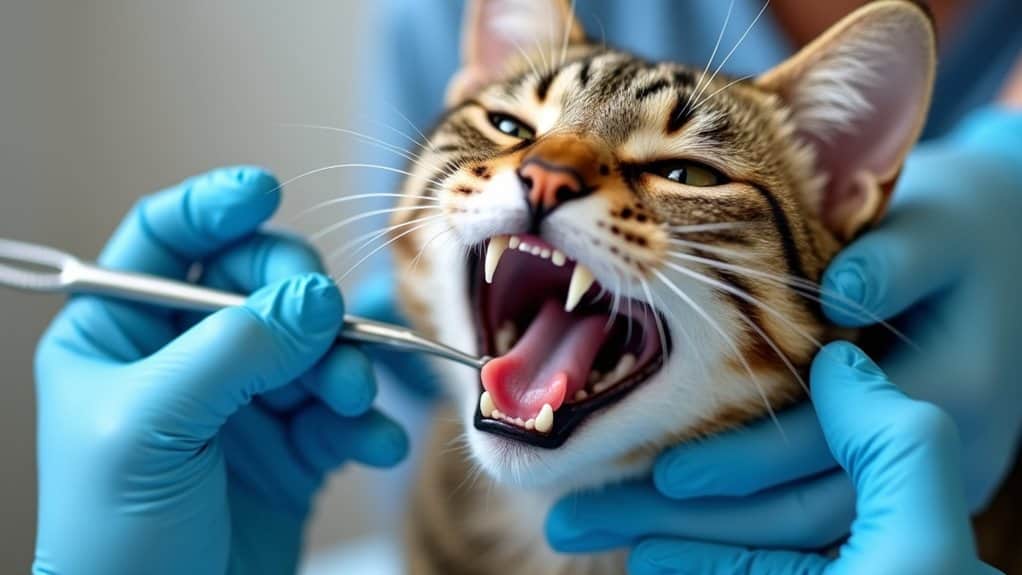
Whiskers and teeth – your cat’s mouth contains a world of potential health concerns that many pet parents overlook. Just like humans, cats suffer from dental issues that can cause discomfort and lead to serious health problems if left untreated.
Your feline friend might be experiencing toothaches without showing obvious signs of pain, as cats naturally hide their discomfort.
Cats suffer in silence—dental pain may be present even when your furry companion seems perfectly fine.
Gum inflammation, or gingivitis, is among the most common issues you’ll encounter. You’ll notice redness along your cat’s gum line, bad breath, or reluctance to eat hard food. This condition can progress to periodontal disease if ignored.
Tartar buildup, broken teeth, and oral tumors also threaten your cat’s dental health. Don’t wait until your kitty’s in pain – regular check-ups and at-home care can prevent these problems before they start. Additionally, fleas or mites can lead to stress and potential oral issues, further emphasizing the importance of overall health monitoring.
Warning Signs of Dental Disease in Cats
As a vigilant pet parent, you’ll want to watch for feline symptoms that indicate something’s wrong with your kitty’s teeth or gums. These warning signs often appear gradually, so regular checks are crucial.
- Your cat paws at their mouth or face, possibly indicating pain that requires immediate treatment options.
- Bad breath that makes you recoil when your furry friend comes in for cuddles.
- Drooling or bloody saliva on toys, bedding, or your furniture.
- Visible yellow or brown tartar buildup along the gumline.
- Changes in eating habits, such as chewing on one side or dropping food while attempting to eat. Additionally, early detection of dental disease can significantly improve treatment outcomes and enhance your cat’s quality of life.
At-Home Dental Care Techniques and Products
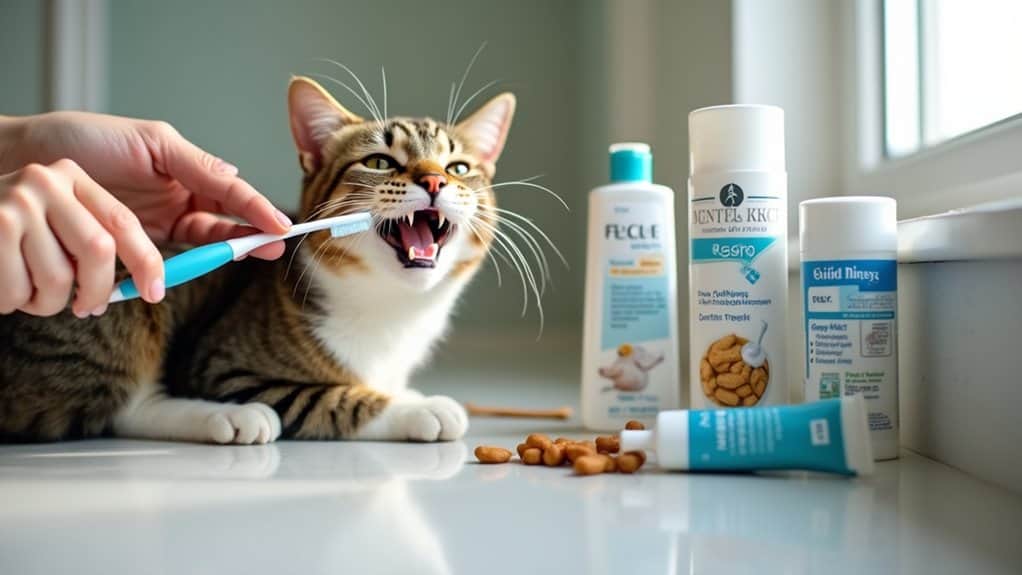
Maintaining your cat’s dental health doesn’t require a veterinary degree – you can make a notable impact right at home. With the right approach and tools, you’ll help prevent costly dental problems while keeping your feline friend comfortable.
Start with proper toothbrush selection – opt for a cat-specific toothbrush with soft bristles or a finger brush that fits comfortably in your cat’s mouth. Pair it with pet-safe toothpaste (never use human toothpaste!).
Begin slowly, letting your kitty get used to having their mouth touched before attempting brushing.
Can’t manage brushing? Dental treats can help reduce plaque buildup when used regularly. Look for products with the Veterinary Oral Health Council seal of approval.
Water additives and dental wipes also offer alternatives for cats who won’t tolerate brushing.
The Role of Diet in Your Cat’s Dental Health
What your cat eats plays an essential role in their dental health, working alongside those brushing routines and dental treats. The dietary impacts of certain foods can either protect or harm your feline’s teeth.
Proper nutrition works silently behind the scenes, either fighting for your cat’s dental health or secretly undermining it.
Dry kibble often provides better food textures for scraping away plaque, while wet food might stick to teeth longer. Consider incorporating dental-specific foods designed to reduce tartar buildup as part of your cat’s regular meals. Additionally, regular inspections can help identify any dental issues early on, leading to timely care.
- Your cat’s disappointed eyes when you replace their favorite soft treats with dental kibble
- The pride you’ll feel seeing your vet nod approvingly at your cat’s improved gums
- The relief of avoiding costly dental procedures down the road
- The satisfaction of your cat crunching happily on tooth-friendly treats
- The bond strengthened as you both traverse new food choices together
Professional Dental Cleanings and When They’re Necessary
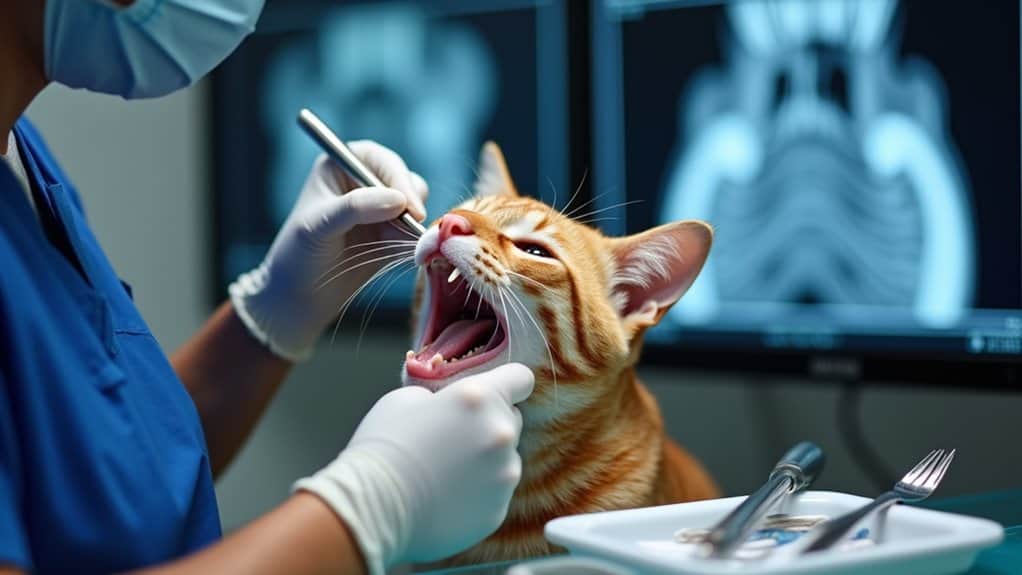
Even with diligent home care, your cat will likely need professional dental cleanings throughout their life. These procedures, performed under anesthesia by your veterinarian, remove plaque and tartar that brushing can’t reach. Most cats benefit from professional cleaning every 1-2 years, though your vet might recommend different intervals based on your pet’s specific needs. Regular grooming not only maintains a healthy coat but also plays a crucial role in detecting health issues, giving you the chance to notice any potential dental problems early on.
| Age Group | Cleaning Frequency | Signs It’s Time |
|---|---|---|
| Young Cats (1-5) | Every 1-2 years | Bad breath, yellow teeth |
| Adult Cats (6-10) | Annually | Reluctance to eat, pawing at mouth |
| Senior Cats (11+) | Every 6-12 months | Red gums, missing teeth |
| All Ages | As recommended by vet | Visible tartar, behavior changes |
Don’t delay professional cleaning benefits when you notice these warning signs—your cat’s overall health depends on proper dental care!
Frequently Asked Questions
Can Dental Issues Affect My Cat’s Behavior?
Yes, dental discomfort can greatly alter your cat’s behavior. You’ll notice behavior changes like decreased appetite, pawing at the mouth, irritability, or withdrawal when your cat’s experiencing pain from dental problems.
At What Age Should I Start Dental Care for Kittens?
Time flies when raising kittens! Start kitten dental care around 8 weeks old. You’ll establish early prevention habits by introducing tooth brushing gradually. By 6 months, you should maintain a regular dental routine for ideal health.
Are Certain Cat Breeds More Prone to Dental Problems?
Yes, certain breeds face higher risks. You’ll notice Siamese susceptibility to gum disease and tooth resorption, while Maine Coon dental issues often include gingivitis. Persian and exotic breeds also frequently develop dental problems due to facial structure.
Can Missing Teeth Impact My Cat’s Quality of Life?
Your cat’s missing teeth can dramatically impact their quality of life. They’ll struggle with eating, experience pain, and might become irritable. Regular dental check-ups help guarantee your feline friend stays happy and comfortable.
How Do Dental Problems Relate to Other Health Conditions in Cats?
Dental problems can severely impact your cat’s systemic health. When left untreated, dental infections can spread bacteria to essential organs like the heart, kidneys, and liver, potentially causing serious complications and chronic diseases.
Final Thoughts
You’re now equipped to be your cat’s dental defender! By watching for warning signs, establishing a home care routine, choosing the right foods, and scheduling those “smile maintenance visits,” you’ll help your furry friend avoid the rainbow bridge for many years to come. Remember, a healthy mouth means a healthy cat – and more precious moments together. Your dedication to their dental health is truly an act of love.