The Best Fluffy Pancakes recipe you will fall in love with. Full of tips and tricks to help you make the best pancakes.

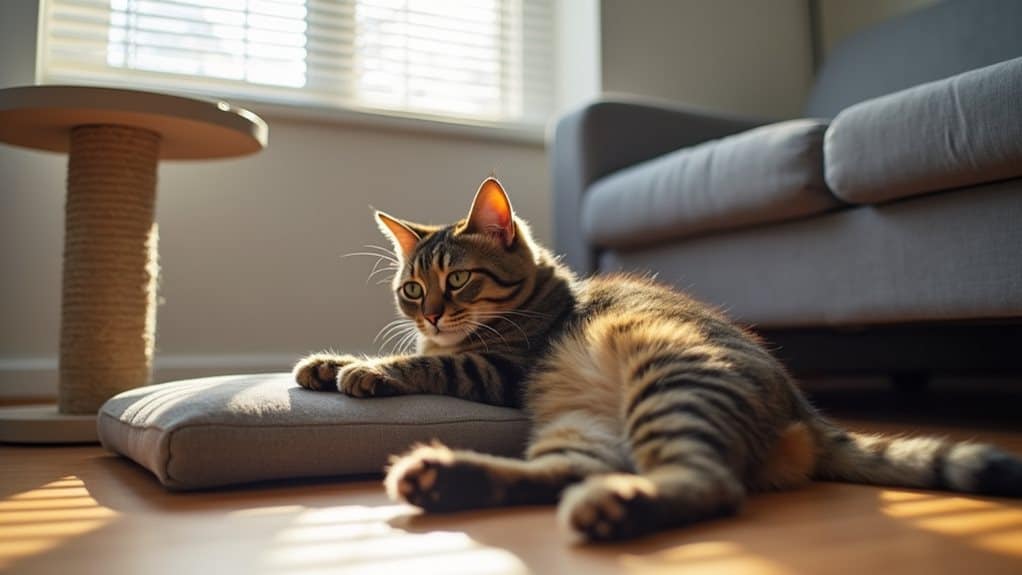
To stop destructive scratching, understand that cats need to scratch—it’s instinctual. Provide multiple scratching posts with different textures, placing them near furniture your cat targets. Redirect their behavior with treats and praise when they use appropriate surfaces. Protect valuable pieces with vinyl guards or double-sided tape, and trim your cat’s nails regularly. Evening play sessions help burn excess energy that leads to nighttime scratching. The right balance of training and alternatives keeps both your furniture and feline friend happy.
Why Cats Need to Scratch: Understanding Natural Behavior
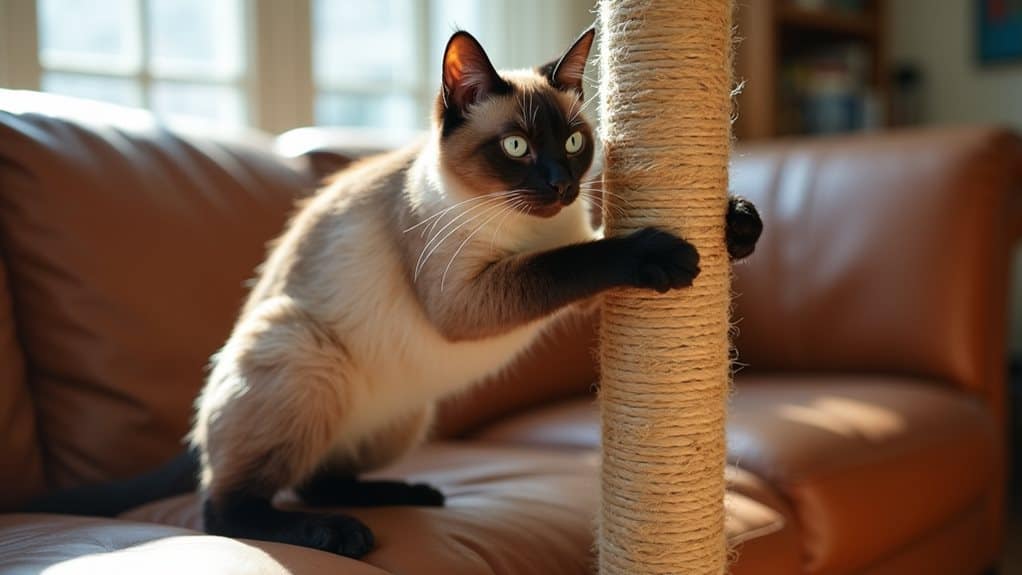
When you catch your cat clawing at your favorite armchair, you’re witnessing a vital feline behavior that’s hardwired into their DNA. Scratching isn’t just a furniture-destroying hobby—it serves multiple important purposes for your cat’s physical and emotional wellbeing.
Your feline friend scratches to maintain healthy claws by removing dead outer layers, much like you’d file your nails. This natural behavior also stretches their muscles and tendons, particularly along their backs and shoulders.
The scratching benefits extend beyond physical maintenance to satisfy deep feline instincts—cats mark territory through scent glands in their paws, leaving both visual and olfactory signals for other animals. Additionally, scratching relieves stress and frustration, serving as an emotional outlet. Providing suitable scratching alternatives can redirect this behavior, helping to preserve your furniture while still meeting your cat’s needs.
Understanding these fundamental needs will help you redirect rather than eliminate this behavior, keeping both your furniture and your cat happy.
Signs Your Cat’s Scratching Has Become Destructive
While normal scratching is part of your cat’s nature, certain signs suggest it’s crossed into problematic territory.
You’ll notice destroyed furniture edges or corners, often with visible stuffing or wood exposed beneath the fabric. Your feline friend might also target multiple household items rather than sticking to one designated spot, and may increase nighttime scratching when you’re trying to sleep—a particularly frustrating habit that suggests excess energy or anxiety. Environmental enrichment is essential to fulfill their natural behaviors and reduce destructive tendencies.
Ruined Furniture Areas
Spotting the difference between normal scratching behavior and destructive furniture damage isn’t always straightforward for cat owners. When your beloved feline’s natural habits cross into problematic territory, you’ll notice specific areas that bear the brunt of their enthusiasm.
Look for frayed corners on sofas and chairs, where fabric has been pulled loose or completely shredded. Wooden furniture might show deep gouges rather than surface scratches. Your cat’s favorite targets often include upholstered armrests, couch corners, and the backs of furniture positioned near windows.
Carpet near doorways may be pulled up in patches, revealing the backing underneath.
Effective furniture protection requires understanding cat behavior – they’re not being malicious, just following natural instincts. Recognizing these damaged areas early helps you redirect their energy before your favorite pieces become completely unsalvageable. Additionally, providing separate resources such as scratching posts can help satisfy their instinctual needs while protecting your furniture.
Clawing Multiple Surfaces
Although occasional scratching is normal for cats, you’ll need to pay attention if your feline friend starts targeting multiple surfaces throughout your home. This behavior suggests your cat’s scratching preferences have expanded beyond acceptable boundaries, potentially signaling stress or territorial marking.
Watch for these warning signs that clawing surfaces has become problematic:
- Your cat ignores dedicated scratching posts but enthusiastically attacks furniture, doorframes, and carpets
- Scratching occurs in multiple rooms rather than just one favorite spot
- The damage is getting deeper and more extensive each week
When cats develop a pattern of scratching everywhere, it’s time to intervene. You can redirect these natural instincts by providing appropriate alternatives that match your cat’s preferred scratching position and texture while protecting your cherished furnishings. Addressing stress triggers in your home can also help reduce excessive scratching behaviors.
Scratching At Night
During the midnight hours, your cat’s scratching behavior can take on an entirely different dimension. Your peaceful sleep might be interrupted by the unmistakable sound of claws against furniture. This nighttime ritual isn’t just annoying—it reveals important aspects of your cat’s feline behavior patterns.
| Time | Nighttime Habits | Possible Reasons |
|---|---|---|
| 10 PM | Initial scratching | Marking territory before sleep |
| 12-2 AM | Peak scratching activity | Excess energy, boredom |
| 3-4 AM | Brief scratching episodes | Response to outside noises |
| 5-6 AM | Pre-dawn scratching | Hunger, wanting attention |
When your cat’s nighttime habits include frantic scratching sessions, they’re likely experiencing pent-up energy. It’s important to consider that scratching behavior can also indicate dissatisfaction with litter texture or cleanliness. Try an evening play session to tire them out—your furniture and sleep schedule will thank you!
Selecting the Perfect Scratching Posts and Alternatives
Why do so many cat owners struggle to find scratching posts their felines actually use? The answer often lies in misunderstanding what cats naturally prefer. Your furniture-saving success depends on offering scratching post types that actually appeal to your cat’s instincts.
The secret to scratch post success isn’t more options—it’s understanding what your cat instinctively craves.
When shopping for the perfect scratching solution, consider these key factors:
- Height and stability – cats love to stretch fully while scratching
- Texture variety – sisal rope, cardboard, and carpet offer different sensations
- Location strategy – place posts near furniture they’re currently destroying
Alternative materials like corrugated cardboard scratchers, wall-mounted options, and even scratching ramps can be game-changers if traditional posts fail.
Additionally, observing your cat’s grooming habits can help you understand their skin health needs, allowing you to select scratching posts that enhance their comfort while meeting their instinctual needs.
You’ll save money and sanity by investing in quality options that match your cat’s preferences rather than forcing them to use something they’ll ignore.
Strategic Placement: Where to Put Scratching Surfaces
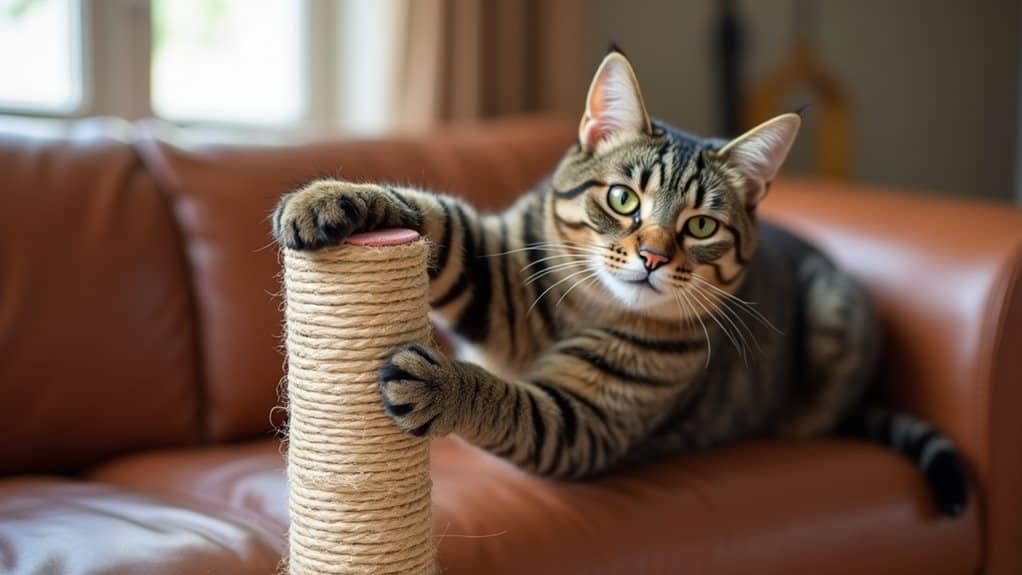
Location is everything when it comes to scratching posts that cats will actually use. Your furniture layout should influence where you position scratching surfaces for maximum effectiveness. Cats are creatures of habit, so placing posts near their favorite scratching spots will help redirect their natural behavior.
| Location | Benefits | Cat Appeal |
|---|---|---|
| Near napping spots | Easy access after stretching | High |
| By entry points | Territorial marking opportunity | Very high |
| Next to furniture | Direct alternative to couches | Medium-high |
| In social areas | Allows scratching during family time | Medium |
Don’t hide scratching surfaces in corners or unused rooms! Your cat won’t go searching for them when the urge strikes. Instead, place them prominently in your living space where both you and your feline friend spend time together. Additionally, incorporating environmental enrichment through diverse scratching surfaces encourages healthy behaviors and reduces the likelihood of destructive tendencies.
Training Techniques to Redirect Scratching Behavior
When your cat starts eyeing your favorite armchair as the perfect scratching spot, it’s time to intervene with effective training techniques.
Understanding your cat’s scratching preferences is key to successful redirection. Cats scratch for many reasons—stretching, marking territory, or simply because it feels good.
To truly succeed at redirecting your cat’s scratching habits, you must first understand their natural urges and personal preferences.
Try these proven methods to guide your kitty to appropriate surfaces:
- Clap your hands when scratching starts, then immediately guide them to their post.
- Use positive reinforcement by offering treats and praise when they use proper scratching surfaces.
- Apply deterrent sprays with citrus scents on furniture while making scratching posts more enticing with catnip. Additionally, providing appropriate scratching surfaces in various textures and heights will satisfy your cat’s natural instincts and encourage them to stay away from your furniture.
Protective Measures for Your Valuable Furniture

Even the most dedicated training efforts sometimes need a backup plan when dealing with determined feline scratchers.
You’ll want to create a multi-layered furniture protection strategy that keeps both your decor and your cat happy.
Consider clear vinyl protectors for the sides of couches and chairs—they’re nearly invisible but effectively deter claws.
Double-sided tape products like Sticky Paws create an unpleasant texture cats naturally avoid.
For wooden furniture legs, try protective sleeves or wraps that blend with your decor while safeguarding vulnerable corners.
Remember to position alternative scratching surfaces near protected furniture.
When your cat approaches your favorite chair, gently redirect them to their scratching post.
This combination of physical barriers and training reinforcement works wonders!
With patience and consistent protection methods, you’ll preserve your valuable pieces while respecting your cat’s natural scratching needs. Additionally, regular grooming routines can help reduce your cat’s desire to scratch by keeping their claws trimmed and less sharp.
Nail Care and Maintenance: Beyond the Scratching Post
You’ll need to trim your cat’s nails every 2-3 weeks to minimize furniture damage, even with regular scratching post use.
Regular trimming not just protects your precious furniture but also prevents your cat’s claws from becoming painfully overgrown or ingrown. Consider trying soft nail caps as a humane alternative to declawing, giving your furniture extra protection while allowing your feline friend to maintain their natural scratching behaviors. Additionally, using specialized cat nail clippers can make the trimming process safer and more efficient for both you and your pet.
Nail Trimming Essentials
Regular nail trimming forms the cornerstone of protecting your furniture from feline destruction. With proper nail care, you’ll greatly reduce your cat’s scratching damage while keeping them comfortable.
You don’t need to be a professional groomer—just patient and prepared with the right tools.
For successful trimming techniques, remember these key points:
- Choose cat-specific clippers or a pet nail grinder for precision cuts
- Trim in a calm environment when your cat is relaxed, perhaps after playtime
- Only clip the white tip, avoiding the pink “quick” that contains blood vessels
You’ll want to establish a routine—every 2-3 weeks works well for most cats.
Don’t worry if you can only manage a few nails per session. Patience wins the scratching battle!
Natural Claw Management
While trimming your cat’s nails is essential, natural claw management extends far beyond basic clipping sessions. Your feline friend needs a thorough approach to maintain proper claw health and prevent furniture damage.
Consider providing scratching alternatives throughout your home. Cardboard scratchers, sisal posts, and wooden platforms all offer different textures that cats love to explore. You’ll notice your cat develops preferences—some adore vertical posts while others prefer horizontal surfaces.
Regular play sessions also contribute to natural claw maintenance. When you engage your cat with feather wands or interactive toys, they naturally wear down their claws during the excitement. It’s like a fun workout for their paws!
Frequently Asked Questions
Can Older Cats Learn to Use Scratching Posts?
Yes, older cats can learn to use scratching posts. With consistent scratching training, your senior feline will adapt to new habits. Place posts strategically, use enticing catnip, and reward them when they use it correctly.
Will Spaying/Neutering Reduce Destructive Scratching Behavior?
While ‘fixing’ your furry friend won’t directly stop their furniture redecorating attempts, spaying benefits include reduced territorial marking. Neutering effects can decrease aggression and territorial behavior, indirectly reducing some destructive scratching. Training remains crucial regardless.
How Do Multi-Cat Households Manage Scratching Resources?
You’ll need multiple scratching alternatives throughout your home—at least one per cat plus extras. Position shared resources in different locations and offer variety in materials to prevent competition and satisfy individual preferences.
Are Certain Cat Breeds More Prone to Destructive Scratching?
Just as you’re researching cat scratching, yes, some breeds scratch more! Siamese tendencies include intense territorial marking, while Maine Coon habits typically involve gentler scratching. Your cat’s personality matters more than breed, though.
Can Medications Help Reduce Excessive Scratching Behavior?
Yes, medications can help when scratching stems from anxiety. You’ll need a vet’s prescription for anxiety reduction pharmaceuticals, though they’re typically used alongside behavior modification techniques rather than as standalone solutions for scratching issues.
Final Thoughts
You’re now equipped to tackle your cat’s scratching challenges head-on! Will your furniture survive the next week intact? That depends on how quickly you implement these strategies. Remember, your feline friend isn’t being destructive on purpose—they’re just following their instincts. With the right scratching outlets, consistent training, and a bit of patience, you’ll create a home where both your cat and your cherished belongings can peacefully coexist.