The Best Fluffy Pancakes recipe you will fall in love with. Full of tips and tricks to help you make the best pancakes.

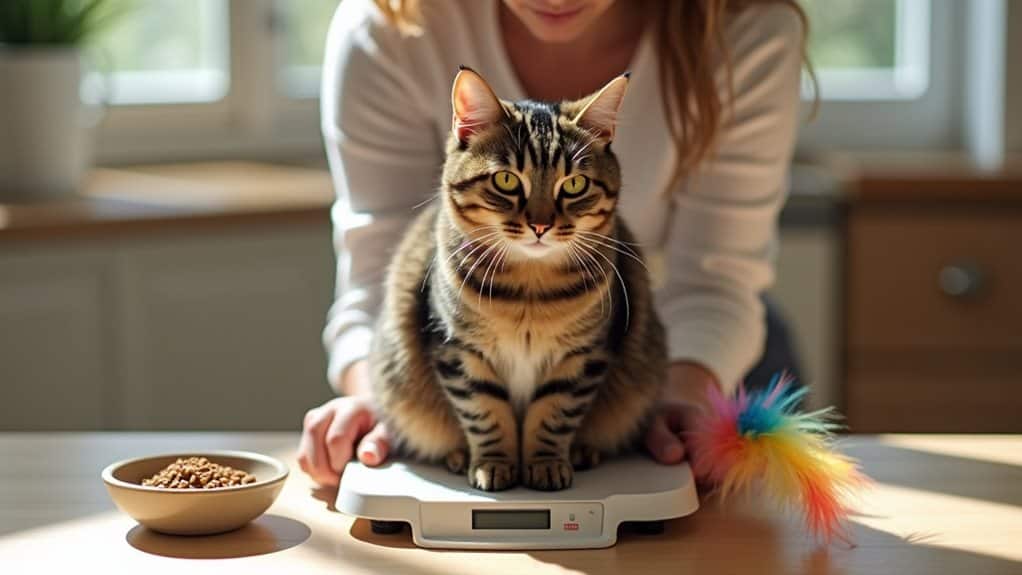
To help your overweight cat slim down safely, focus on three key areas: proper nutrition, regular exercise, and consistent monitoring. Measure portions carefully, opt for high-protein foods, and distribute meals throughout the day. Schedule short play sessions using interactive toys, and rotate them to maintain interest. Track your cat’s weight weekly and document energy levels in a journal. Your veterinarian can help establish healthy weight goals and adjust your strategy as your feline friend progresses toward a healthier, more active lifestyle.
Recognizing the Signs of an Overweight Cat
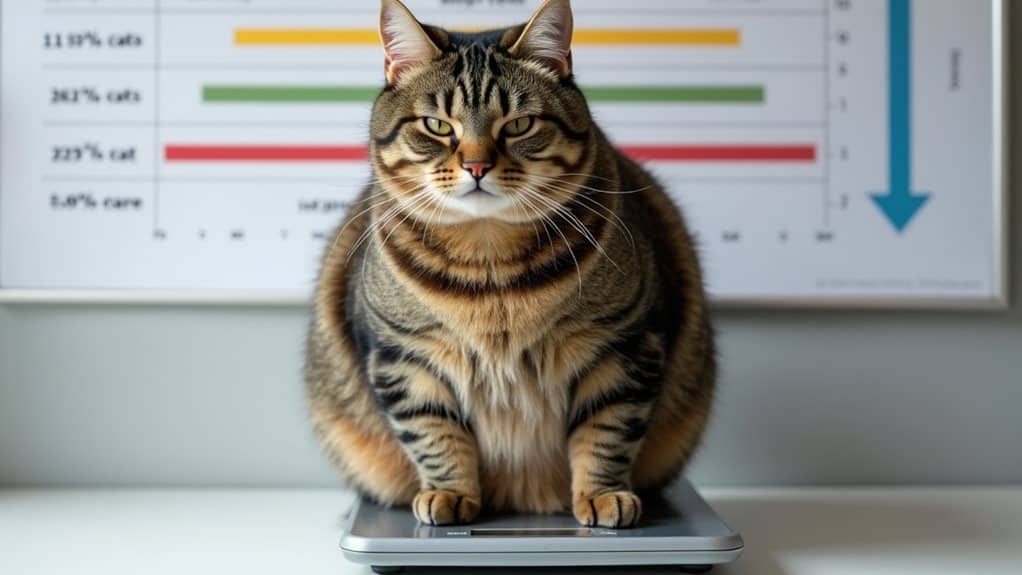
When your formerly sleek feline starts to resemble a furry ottoman, it’s time to contemplate whether your cat has packed on too many pounds.
A healthy feline body should have a visible waist when viewed from above, and you should be able to feel (but not see) their ribs with gentle pressure.
Your cat’s body should reveal a defined waistline from above—ribs felt but not seen under gentle fingertips.
Key weight indicators include difficulty grooming, especially in hard-to-reach areas, resulting in a disheveled coat.
You might notice your cat panting after minimal activity or struggling to jump onto furniture they once accessed with ease.
Their belly might sag closer to the ground when walking, and they may develop a rounded face.
Don’t ignore these signs—excess weight can lead to diabetes, joint problems, and shortened lifespan in cats.
Regular weight checks can help you monitor changes. Additionally, ensuring your cat has adequate hydration for urinary health can also play a role in their overall well-being.
Understanding the Health Risks Associated With Feline Obesity
The extra pounds your cat carries can lead to serious health complications that go far beyond cosmetic concerns. Feline obesity dramatically increases the risk of life-threatening conditions while reducing your pet’s quality of life and longevity.
| Health Risk | Impact on Your Cat | Prevention Tips |
|---|---|---|
| Diabetes | Blood sugar regulation fails | Controlled portions, low-carb diet |
| Arthritis | Painful joints, limited mobility | Weight loss, joint supplements |
| Heart Disease | Decreased heart function | Regular exercise, diet impacts |
| Liver Disease | Fatty liver syndrome | Gradual weight loss program |
| Skin Problems | Inability to groom properly | Brushing help, balanced nutrition |
You’ll notice these feline diseases often develop gradually, making prevention essential. By understanding these risks, you’re taking the first step toward helping your furry friend live a healthier, happier life. Additionally, maintaining proper hydration levels is crucial for overall health and can support weight management in overweight cats.
Creating a Balanced Nutrition Plan for Weight Loss
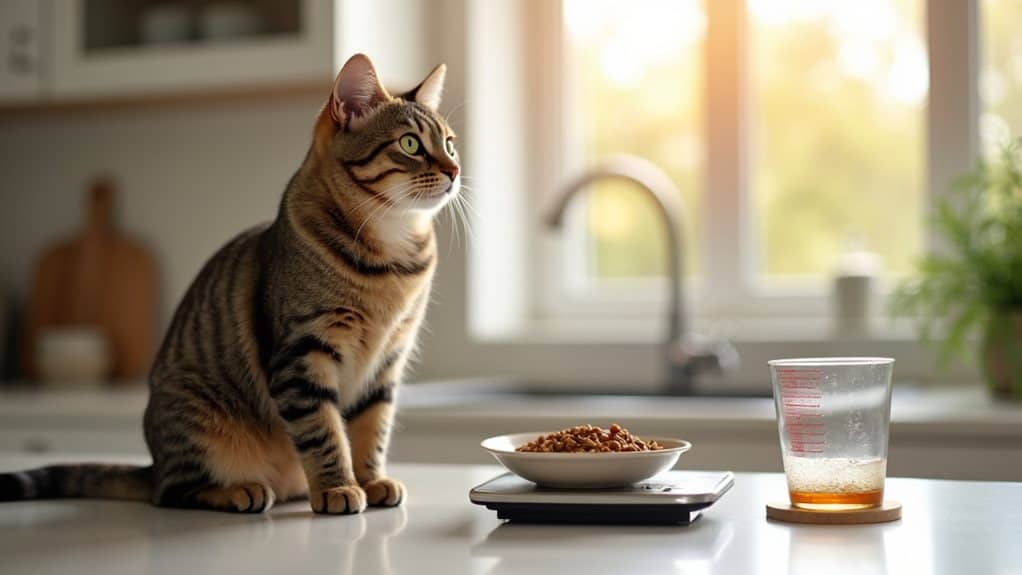
Successfully helping your overweight cat shed pounds requires a carefully structured nutrition plan that balances calorie reduction with essential nutrients.
Effective feline weight loss demands strategic calorie reduction while maintaining complete nutrition for health.
When designing your cat’s weight loss program, focus on nutrient balance rather than simply cutting calories. Your furry friend still needs proper nutrition to maintain muscle mass and overall health during their slimming process.
Consider these key elements for your cat’s weight loss diet:
- Measure portions precisely using a kitchen scale instead of eyeballing amounts.
- Distribute daily calories across multiple small meals to prevent hunger.
- Look for high-protein, lower-carbohydrate foods that support lean muscle.
- Incorporate wet food for increased hydration and better portion control. Additionally, investing in cat insurance can provide peace of mind and financial security for necessary medical treatments during your cat’s weight loss journey.
Incorporating Exercise and Play Into Your Cat’s Daily Routine
Regular exercise and play sessions form the essential second component of any cat weight management program. Your feline friend needs consistent activity to burn calories and maintain muscle tone, just like you do!
Try scheduling two or three 10-minute play sessions daily using interactive toys that trigger your cat’s hunting instincts. Feather wands, laser pointers, and toy mice can transform a sluggish cat into an energetic hunter.
Remember, even indoor cats crave outdoor exploration – consider a secure catio or harness training for supervised adventures.
For reluctant players, make exercise irresistible by rotating toys regularly to prevent boredom. Place food puzzles around your home to combine mealtime with movement. Interactive cat toys, like those that stimulate natural instincts, can also significantly improve your cat’s engagement levels and overall well-being.
Even simple changes like positioning beds and litter boxes on different floors can increase your cat’s daily activity level naturally.
Monitoring Progress and Adjusting Your Strategy for Long-Term Success
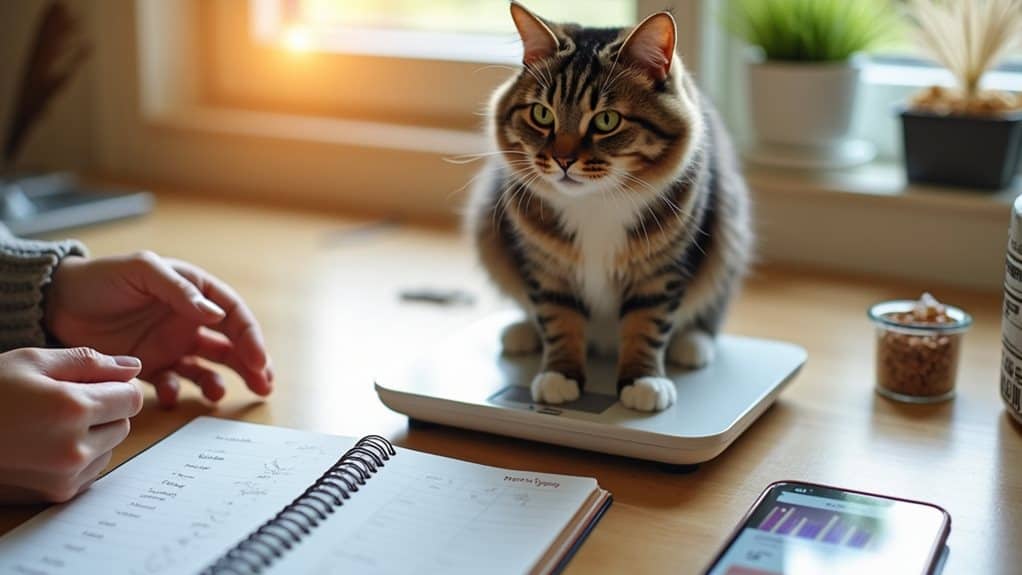
Once you’ve established a healthy diet and fun exercise routine for your cat, systematic tracking becomes the backbone of your weight management plan.
Regular weight loss tracking helps you understand if your strategy is working or needs adjustment. You’ll notice behavior changes too—perhaps your formerly sluggish kitty now zips around the house!
Here’s how to monitor and adjust effectively:
- Weigh your cat weekly, using the same scale at the same time of day for consistency.
- Take monthly photos to visually track changes in your cat’s shape and posture.
- Keep a journal of energy levels, playfulness, and grooming habits.
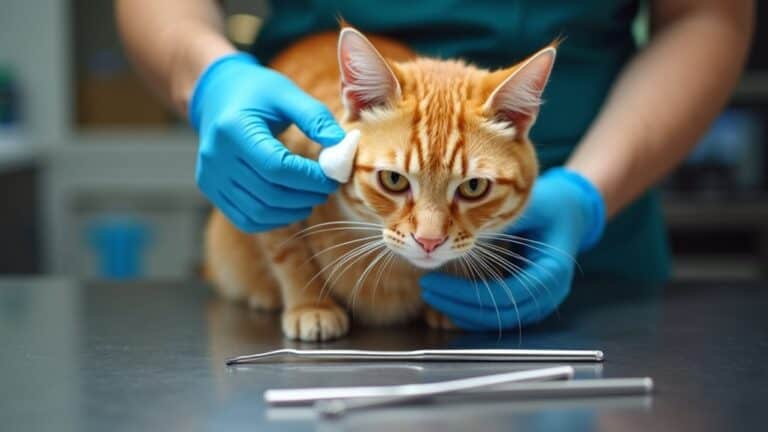
- Schedule quarterly vet check-ups to assess progress and adjust targets. Additionally, consider using regular deworming to further support your cat’s health during its weight loss journey.
Frequently Asked Questions
Can Medication Cause Weight Gain in Cats?
Yes, certain medication types can cause weight gain in your cat. You’ll notice this especially with steroids, insulin, antihistamines, and some anti-anxiety medications. Always discuss potential side effects with your veterinarian when starting new treatments.
How Do I Manage Multiple Cats With Different Weight Needs?
Use separate feeding stations and implement strict feeding schedules. You’ll need to monitor each cat’s intake with portion control. Consider microchip feeders that only allow specific cats access to their designated food bowls.
Should I Consult a Vet Before Starting a Weight Loss Plan?
It’s CRITICAL to consult your vet before launching any weight loss strategies for your cat. They’ll tailor feline nutrition plans to your pet’s specific needs, preventing dangerous complications you’d never forgive yourself for causing.
Can Spaying/Neutering Contribute to My Cat’s Weight Problem?
Yes, spaying/neutering can contribute to weight gain. The procedure causes hormonal changes that often decrease your cat’s metabolic rate. You’ll need to adjust their diet and increase activity to compensate for these physiological changes.
Will My Cat’s Personality Change During Weight Loss?
You’ll notice some behavioral changes as your cat loses weight. They’ll likely become more active and playful. Weight loss effects typically include increased energy and happiness, not negative personality shifts. Monitor their mood throughout the process.
Final Thoughts
You’re now equipped to help your cat achieve a healthier weight! With over 60% of indoor cats being overweight, you’re not alone in this endeavor. Remember, weight loss takes time, but your consistency will pay off. Your furry friend may not thank you now (and might give you the cold shoulder during portion control), but their improved energy, mobility, and health speak volumes. Your dedication adds years to their life—and life to their years!