
The Best Fluffy Pancakes recipe you will fall in love with. Full of tips and tricks to help you make the best pancakes.

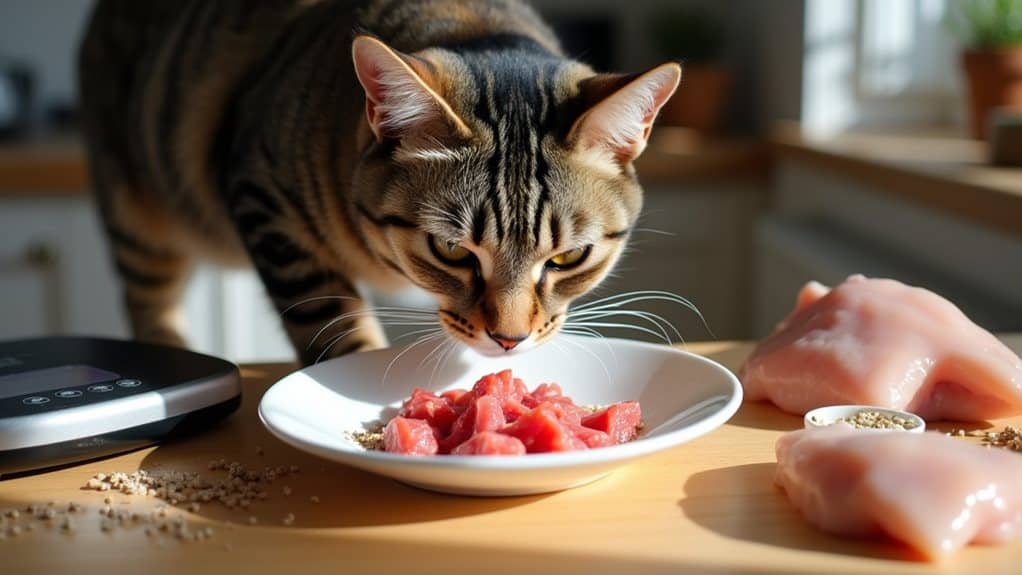
Raw diets for cats can provide benefits like shinier coats, improved digestion, and better dental health since cats are obligate carnivores. However, you’ll need to handle risks carefully, including bacterial contamination and nutritional imbalances. To do it right, shift gradually over 2-3 weeks, guarantee proper calcium-to-phosphorus ratios, include vital taurine, and maintain strict food handling practices. Consulting with a vet familiar with raw feeding will help you guide through this natural but complex dietary approach.
The Natural Carnivore: Understanding Your Cat’s Nutritional Needs
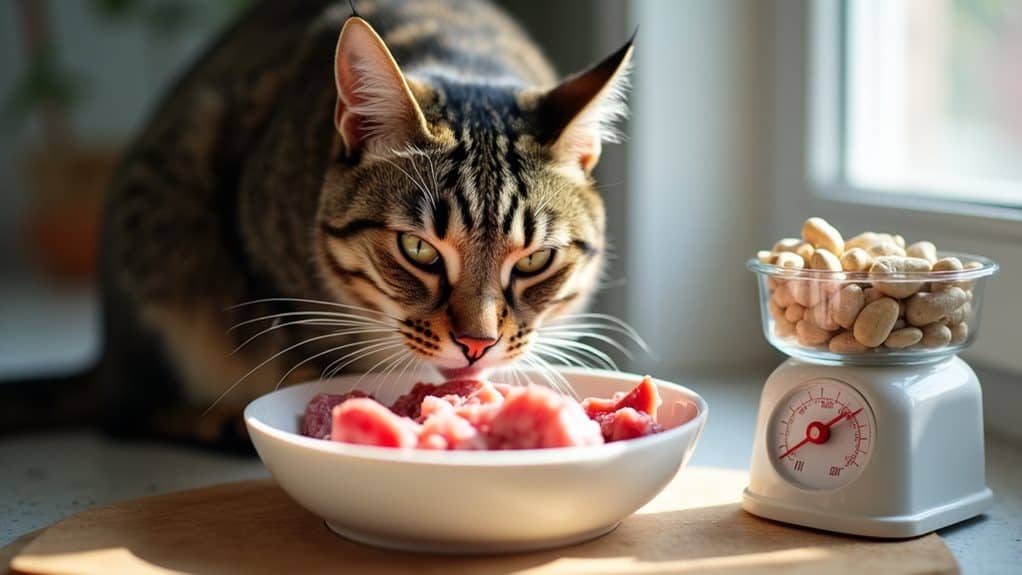
Whiskers twitching and eyes gleaming, your feline friend is a natural hunter at heart. Behind that cute facade lies a strict carnivore with dietary needs shaped by thousands of years of evolution. Your cat’s natural instincts still drive them to stalk, pounce, and consume prey—behaviors deeply wired into their DNA.
Unlike humans who thrive on varied diets, cats evolved as obligate carnivores, meaning their evolutionary diet consisted almost exclusively of animal tissue. They need high protein, moderate fat, and minimal carbohydrates to flourish.
Their bodies are specifically designed to process raw meat, with shorter digestive tracts and specialized teeth for tearing flesh. Ragdoll cats, known for their gentle demeanor and affectionate nature, also thrive on diets that align with their evolutionary needs.
Understanding these fundamental needs helps you make better feeding choices. When you honor your cat’s carnivorous nature, you’re supporting their health in the most biologically appropriate way possible.
Potential Health Benefits of Raw Feeding
Although science hasn’t definitively proven all claims, many cat owners report remarkable health improvements after switching to raw diets.
You might notice your furry friend developing a shinier coat, healthier skin, and improved dental health with less tartar buildup. Don’t be surprised if your cat’s litter box becomes less smelly – this is a common benefit that makes everyone happier!
Among the raw food myths you’ll encounter, some suggest it causes aggressive behavior.
Actually, the opposite often occurs – many owners report positive behavioral changes, including increased energy and playfulness. Your previously lethargic cat might suddenly show more interest in toys and interaction.
While these benefits sound impressive, remember that results vary for each cat, and proper preparation is essential for safety and nutritional balance. Additionally, ensuring your cat maintains good urinary health is crucial to supporting their overall well-being.
Common Concerns and Risks of Raw Diets
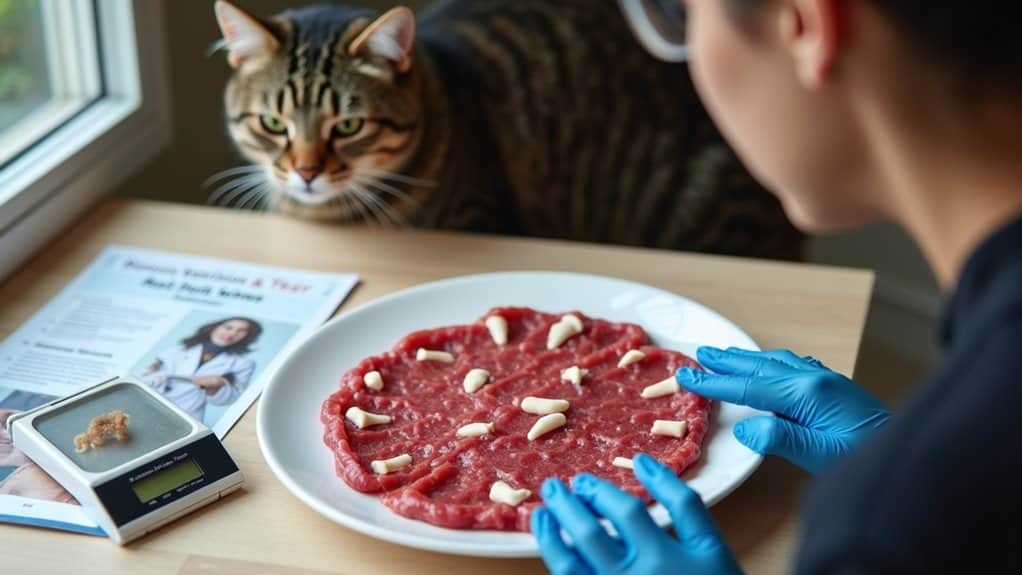
When considering raw diets for your cat, you’ll need to weigh some considerable risks alongside potential benefits.
Raw meat can harbor harmful bacteria like Salmonella and E. coli, posing health threats to both your feline friend and your family.
You’ll also face challenges guaranteeing your cat receives properly balanced nutrition, as homemade raw diets often lack crucial vitamins and minerals that commercial foods provide. Additionally, it’s important to recognize that regular flea treatment is vital for cat health, as raw diets may leave your cat more susceptible to parasites.
Bacterial Contamination Risks
Despite the potential benefits of raw diets, many veterinarians and pet health experts express serious concerns about bacterial contamination risks.
Raw meat naturally harbors bacteria like Salmonella, E. coli, and Listeria that can make both your cat and your family sick. These bacterial sources aren’t visible to the naked eye, making them impossible to detect without testing.
You can reduce these risks with proper prevention methods. Always wash your hands thoroughly after handling raw meat, sanitize all surfaces and utensils, and store raw food separately from other foods.
Consider freezing meat for at least 24 hours before serving to kill some parasites. While these steps help minimize risks, they can’t eliminate the danger entirely. Moreover, understanding the health risks associated with fleas can further ensure the well-being of your cat as you evaluate their diet.
That’s why many vets recommend commercially prepared raw diets that undergo safety testing rather than homemade versions.
Nutritional Imbalance Concerns
Beyond bacterial risks, nutritional imbalances represent another significant challenge with raw diets. When you’re preparing your cat’s raw meals at home, you’re fundamentally becoming their nutritionist—a big responsibility!
Without careful planning, your feline friend might develop nutritional deficiencies that affect their health.
Consider these common imbalance issues:
- Calcium-to-phosphorus ratios that aren’t properly balanced can lead to bone problems.
- Missing vital taurine can cause heart and eye issues in cats.
- Vitamin imbalances that develop slowly but have serious long-term effects.
- Improper protein ratios that don’t match your cat’s specific needs.
You’ll need to make dietary adjustments as your cat ages or if health issues arise. Additionally, remember that even small shifts in dietary balance can have serious long-term effects, underscoring the importance of meticulous meal planning.
Even well-intentioned raw feeders can miss critical nutrients that commercial foods carefully calculate.
Raw vs. Commercial Cat Food: A Nutritional Comparison
Although both raw and commercial cat foods claim to meet your feline’s nutritional needs, they differ greatly in their composition and processing methods.
When you’re comparing options, it’s important to separate raw food myths from facts. Many raw diet advocates believe these diets are nutritionally superior, but studies haven’t confirmed this conclusively.
Commercial foods often contain additives like preservatives and flavor boosters that you won’t find in raw diets, but they also guarantee complete nutrition through careful formulation.
Your cat needs specific amounts of proteins, fats, vitamins, and minerals regardless of diet type. Furthermore, it’s crucial to consider the importance of insurance to safeguard against unexpected veterinary expenses that may arise from dietary changes.
What matters most isn’t whether the food is raw or commercial, but rather if it provides balanced nutrition for your cat’s specific health needs and life stage.
Always consult your vet before making major dietary changes!
Essential Components of a Balanced Raw Diet
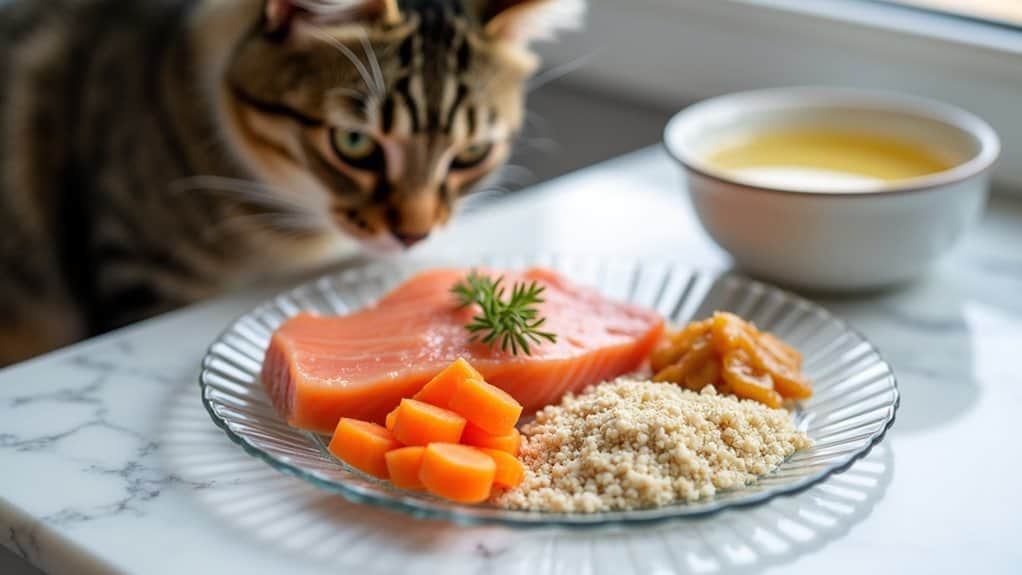
When creating a balanced raw diet for your cat, you’ll need to carefully monitor the protein-to-fat ratio to match their natural nutritional needs.
You must guarantee proper micronutrient balance through variety, including organ meats, muscle meat, and small amounts of vegetables to provide vital vitamins and minerals.
Don’t forget that taurine requirements are non-negotiable for cats, as this amino acid is fundamental for heart function and vision, making fresh meat (especially heart) an important component of any raw feeding plan. Additionally, it’s important to consider the risk of cat parasites that can be transmitted through raw meat, which may necessitate stringent sourcing and preparation practices.
Protein-to-Fat Ratio
Since your cat’s evolutionary biology dictates their nutritional needs, maintaining the right protein-to-fat ratio is crucial in any raw diet plan.
Wild cats naturally consume prey with specific nutritional profiles, and your domestic tiger needs similar balance. Aim for protein sources that mirror what cats would find in nature, while monitoring fat content carefully.
When planning your cat’s raw meals, remember these key ratios:
- Aim for approximately 50-60% protein in each meal
- Limit fat content to 20-30% of the overall diet
- Include 7-10% bone content for calcium and minerals
- Add 5% organ meats (especially liver) for vital nutrients
Too much fat can lead to obesity, while insufficient protein may compromise muscle maintenance. It’s important to consult a veterinarian to ensure a balanced raw food diet that meets your cat’s individual needs.
You’ll soon notice how finding this sweet spot keeps your kitty energetic and satisfied!
Proper Micronutrient Balance
Beyond protein and fat, your cat’s raw diet must contain a complex array of micronutrients that work together to support ideal health.
Calcium and phosphorus balance is critical, with these minerals needing to exist in proper ratios to prevent serious bone issues. You’ll need to include organ meats like liver and heart, which serve as natural micronutrient sources packed with vitamins A, D, and B-complex.
Don’t forget taurine! This amino acid is vital for your cat’s heart and eye health. While meat naturally contains taurine, some gets lost during freezing and storage.
Furthermore, maintaining a balanced diet rich in taurine and Omega-3s can support your cat’s heart health, an important consideration for those at risk of HCM.
That’s why many cat parents turn to dietary supplements to guarantee their furry friends get everything they need. A commercial supplement blend designed specifically for raw diets can be your safety net, filling any nutritional gaps that might otherwise compromise your cat’s wellbeing.
Taurine Requirements
Taurine stands as the single most important amino acid in your cat’s raw diet, serving as a non-negotiable nutrient that supports everything from heart function to vision health.
Unlike humans, cats can’t synthesize taurine on their own, making proper supplementation essential in preventing taurine deficiency that can lead to serious health complications.
The best taurine sources for your cat’s raw diet include:
- Heart muscle meat (chicken, turkey, or beef hearts)
- Dark meat poultry, especially thighs and legs
- Seafood options like sardines and shellfish
- Commercially available taurine supplements as a backup
You’ll want to make sure these sources appear regularly in your cat’s meals. Additionally, incorporating wet food into your cat’s diet can help provide essential hydration, promoting overall health.
Safe Food Handling and Preparation Practices
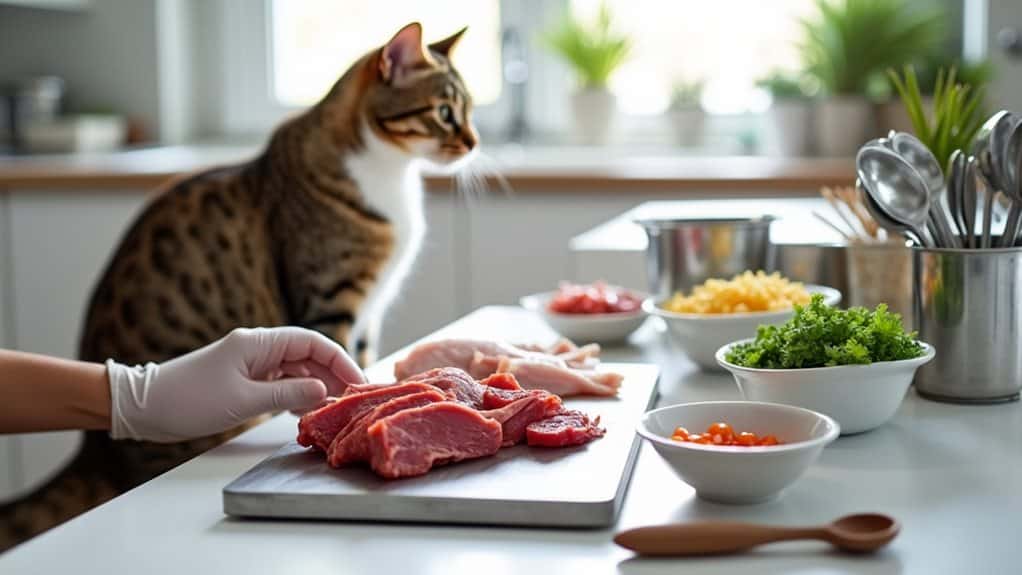
Always wash your hands thoroughly before and after handling raw meat, and dedicate separate cutting boards and utensils exclusively for your cat’s food.
Disinfect all surfaces with a bleach solution after prep work.
Consider wearing gloves, especially if you have cuts on your hands or a compromised immune system.
Transitioning Your Cat to a Raw Diet
When introducing your cat to a raw diet, patience becomes your greatest ally. Most cats don’t accept change overnight, especially when it comes to food.
Effective alteration strategies involve gradually mixing raw food with their current diet, slowly increasing the raw portion over 2-3 weeks.
Here’s a simple approach to modify your feeding schedule:
- Start by replacing just 25% of their regular food with raw options
- Watch for any digestive issues before increasing to 50% raw food
- Continue monitoring as you move to 75% raw diet
- Finally convert to 100% raw, maintaining consistent meal times
Commercial Raw Options vs. Homemade Preparations
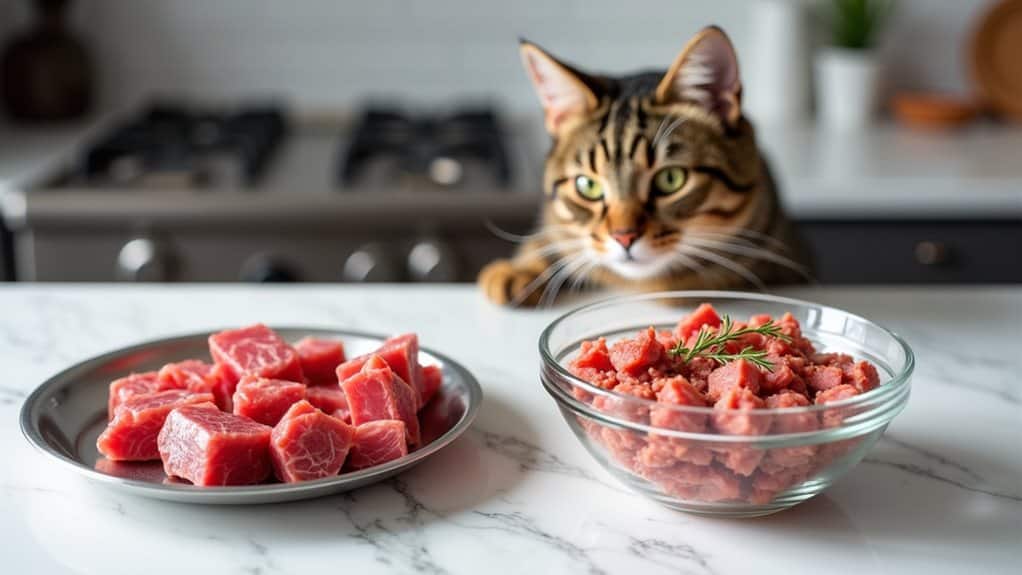
When choosing a raw diet for your cat, you’ll find both convenient pre-made options at pet stores and online retailers that take the guesswork out of nutritional balance.
Creating your own raw meals at home gives you complete control over ingredients but requires careful research to guarantee your cat receives all necessary vitamins and minerals.
While commercial raw foods typically cost more upfront, a thoughtful cost comparison might surprise you when you factor in the equipment, storage, and bulk ingredients needed for DIY preparations.
Pre-made Raw Solutions
Many cat owners find themselves torn between commercial raw food options and homemade preparations when altering their feline friends to a raw diet.
Pre-made options offer considerable convenience factors that can make adapting to raw feeding much more approachable. You’ll find these ready-to-serve meals take the guesswork out of balancing nutrients while saving you precious time.
Here are four advantages of pre-made raw solutions:
- Complete nutritional balance without the need for supplements
- Consistent portion sizes that help prevent overfeeding
- Longer shelf life than homemade preparations
- No mess from grinding meat or handling organs
When you’re juggling a busy schedule but still want the best for your cat, these commercial options provide a practical middle ground.
They’re pricier than DIY versions but offer peace of mind for raw feeding beginners.
DIY Nutritional Balance
Although commercial raw options provide convenience, creating your own homemade raw diet gives you complete control over what goes into your cat’s food bowl.
When crafting DIY raw meals, you’ll need to research proper nutritional sources to guarantee your cat gets all crucial nutrients. Remember, cats require specific amino acids like taurine that they can’t produce themselves!
Many pet parents enjoy experimenting with ingredient variations, but don’t let creativity compromise nutrition. You might find your finicky feline prefers chicken liver to beef heart, but both should be part of a balanced approach.
Truth is, homemade preparation demands dedication and knowledge—you’re fundamentally becoming your cat’s nutritionist. Without proper balance, you could unintentionally create deficiencies or excesses that harm your furry friend’s health over time.
Cost Comparison Analysis
Beyond knowledge and skills, your budget plays an important role in choosing between commercial raw cat foods and homemade preparations. When conducting your cost comparison, consider both upfront expenses and long-term value.
Commercial options offer convenience but often come with premium pricing, while DIY requires initial investment in equipment but may save money over time.
Here’s what to factor into your budget considerations:
- Initial costs: freezer space, meat grinder, storage containers for homemade vs. none for commercial
- Per-meal expense: homemade averages $1-2 per day vs. $3-5 for premium commercial raw
- Time investment: 2-3 hours monthly prep time has value too!
- Healthcare savings: potential reduction in vet bills with either option when fed properly
Monitoring Your Cat’s Health on a Raw Diet
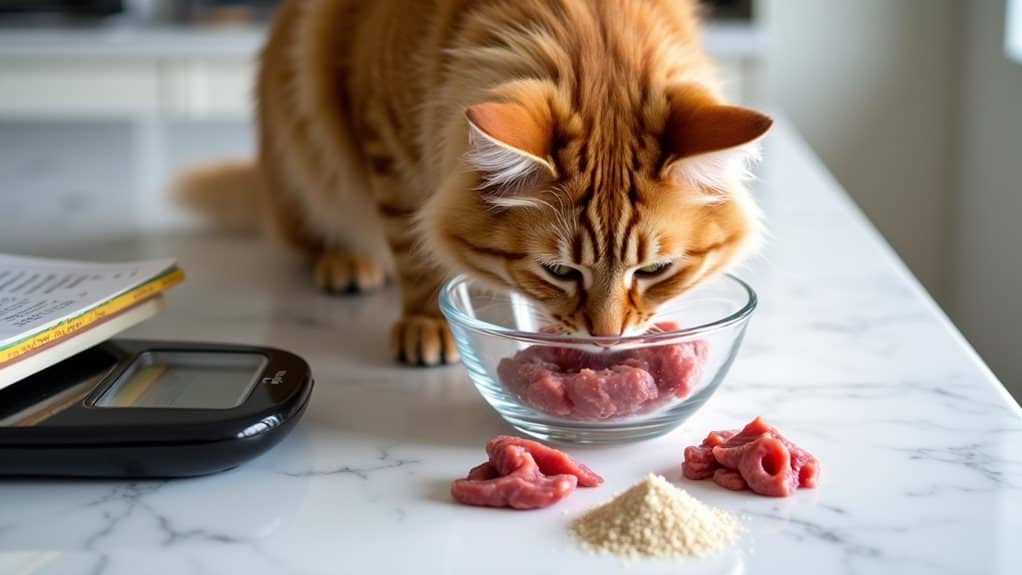
How will you know if your cat’s raw diet is truly working? Your cat can’t tell you directly, but their body and behavior will reveal the truth.
Start by monitoring weight regularly—a healthy cat maintains a stable weight, with ribs you can feel but not see. Watch for changes in their coat too; it should become shinier and softer over time.
Weight monitoring is key—aim for ribs you can feel but not see, while looking for that signature raw-diet shine developing in their coat.
Observing behavior is equally important. You’ll likely notice increased energy, better digestion with smaller, less smelly stools, and improved dental health.
Keep an eye out for any concerning changes like lethargy, vomiting, or diarrhea—these could signal that adjustments are needed.
Regular vet check-ups remain essential, especially during the changeover. Blood work can confirm your furry friend is thriving, not merely surviving, on their new primal menu.
Expert Perspectives: What Veterinarians and Nutritionists Say
When it comes to raw diets for cats, veterinary professionals remain divided on the benefits and risks.
You’ll find passionate advocates and cautious skeptics within the veterinary community, each with valid points about your cat’s health.
Some common raw food myths have been challenged by recent research, while others persist despite limited evidence.
Before making a decision, consider these varying veterinary opinions:
- Traditional veterinarians often warn about bacterial contamination risks.
- Holistic practitioners may emphasize evolutionary dietary alignment.
- Board-certified nutritionists typically recommend commercially balanced diets.
- Researchers acknowledge potential benefits but stress safety protocols.
Your best approach? Consult your own vet who knows your cat’s specific health history before jumping on the raw food bandwagon.
They’ll help you weigh the pros and cons for your unique feline friend.
Frequently Asked Questions
Are Raw Diets Suitable for Kittens and Senior Cats?
Yes, raw diets can work for both age groups. Your kitten’s nutrition needs extra monitoring for growth, while senior cat considerations include adjusting portions and guaranteeing digestibility. Always consult your vet before starting either on raw.
How Much Does Feeding a Raw Diet Typically Cost?
Did you know raw diets cost 2-3 times more than kibble? You’ll spend $2-5 daily depending on your raw food pricing choices. Budget considerations include buying in bulk and comparing commercial versus homemade options.
Can I Mix Raw Food With Kibble or Wet Food?
Yes, you can mix raw food with kibble or wet food. Raw food combinations can provide variety while kibble nutrition supplements your cat’s diet. Start with small amounts to help your cat adjust gradually.
Is Raw Feeding Legal in All Countries and Regions?
No, raw feeding regulations vary by location. You’ll need to check your country’s specific guidelines, as some nations have strict rules or even bans on certain raw meat products for pets.
How Do I Handle Raw Feeding When Traveling or Boarding?
When starting adventures with your furry companion, you’ll need to prepare. Freeze meals in portable containers, research pet-friendly accommodations with refrigeration, or consider freeze-dried raw alternatives. Some boarding facilities accommodate special dining requirements too.
Final Thoughts
As you weigh the raw diet option for your feline friend, remember there’s no one-size-fits-all approach. You’ll need to balance potential benefits against safety concerns, and possibly combine raw elements with quality commercial foods. Whether you plunge in fully or just dip your paws, consult with your vet first. Your cat’s purrs of satisfaction and vibrant health will ultimately be the best indicator of whether you’ve made the right choice.