The Best Fluffy Pancakes recipe you will fall in love with. Full of tips and tricks to help you make the best pancakes.

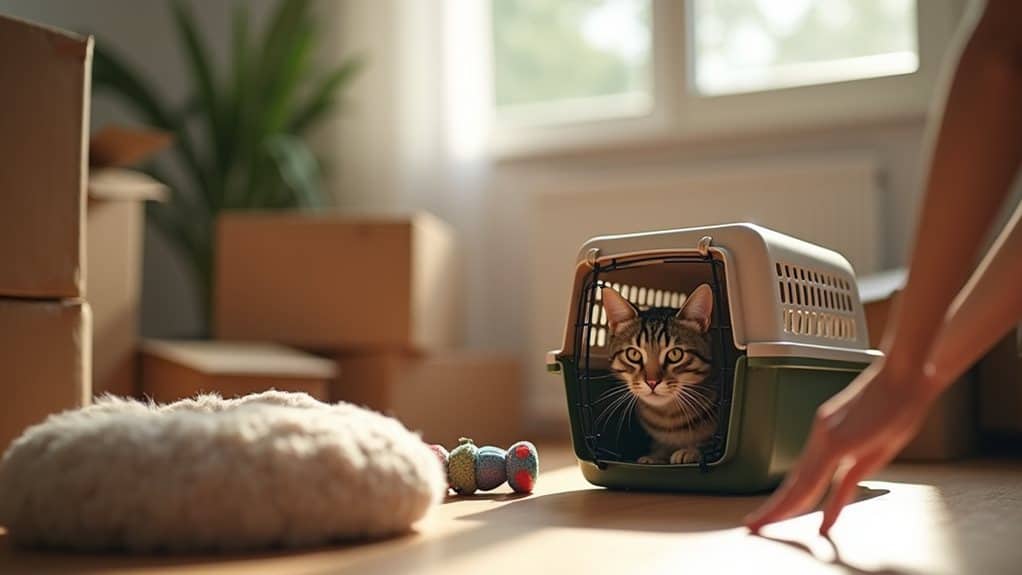
Start preparing your cat for a move weeks in advance by maintaining routines and creating a sanctuary room away from the chaos. During moving day, keep your cat in a secure carrier with familiar scents and use pheromone sprays for calming effects. Once at your new home, set up a quiet room with familiar items before gradually introducing your cat to other areas. Consistent feeding times and play sessions will help your furry friend adjust more seamlessly to their new territory.
Preparing Your Cat Weeks Before The Move
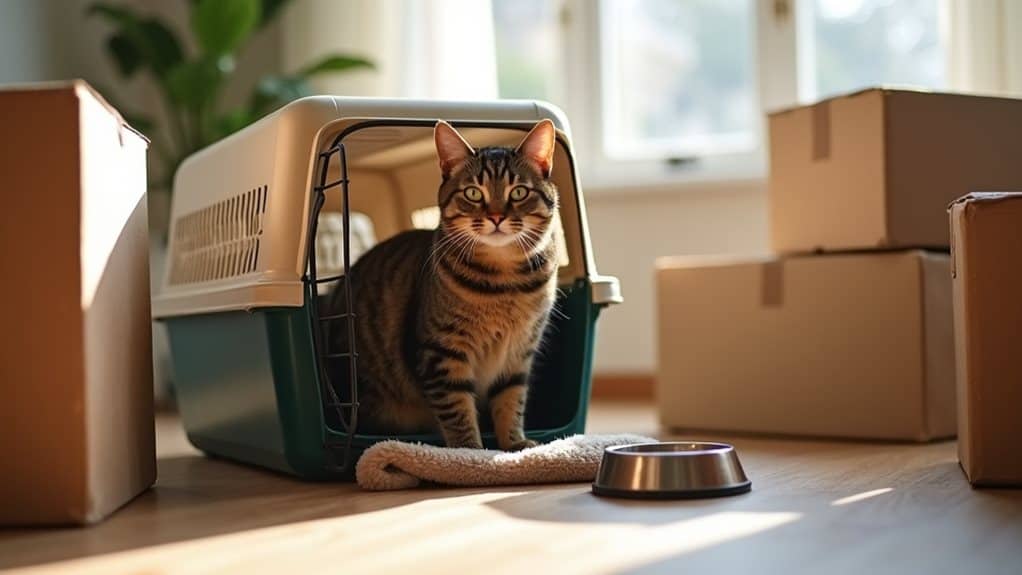
Preparing your cat for a move isn’t something you should leave until the last minute. Cats are creatures of habit, and sudden changes can trigger anxiety and stress behaviors. Start the adjustment process at least 3-4 weeks before your moving date to help your feline friend acclimate gradually.
First, bring out your moving boxes early and let your cat explore them at their own pace. This familiarizes them with new objects that will soon fill your home.
Cats need time to investigate new objects – those moving boxes won’t seem so scary after proper exploration.
Watch for changes in cat behavior – hiding, excessive grooming, or reduced appetite are signs they’re feeling unsettled.
One of the best relocation tips is to maintain your cat’s routine as much as possible. Keep feeding times consistent, don’t rearrange furniture all at once, and make sure to give them extra attention and reassurance during this adjustment time. Additionally, creating a calming atmosphere that minimizes noise can help your cat feel more secure during the transition.
Creating A Safe Space During Packing And Loading
When your home becomes filled with boxes and unfamiliar people on moving day, your cat will need a dedicated sanctuary away from the chaos.
Set up a quiet room with your cat’s necessities—food, water, litter box, bed, and favorite toys. Place a “Do Not Enter” sign on the door to prevent anyone from accidentally letting your kitty escape.
Keep your packing supplies like boxes, tape, and bubble wrap out of your cat’s safe zone. These items can be tempting to play with but potentially dangerous if chewed or crawled into.
If possible, designate a bathroom or bedroom as your cat’s temporary haven, and visit them regularly throughout the day to provide reassurance. Monitoring your cat’s body language for signs of discomfort can help you better understand their feelings during this stressful time.
Your furry friend will appreciate having their own space while the rest of the house transforms around them.
Keeping Your Cat Comfortable On Moving Day
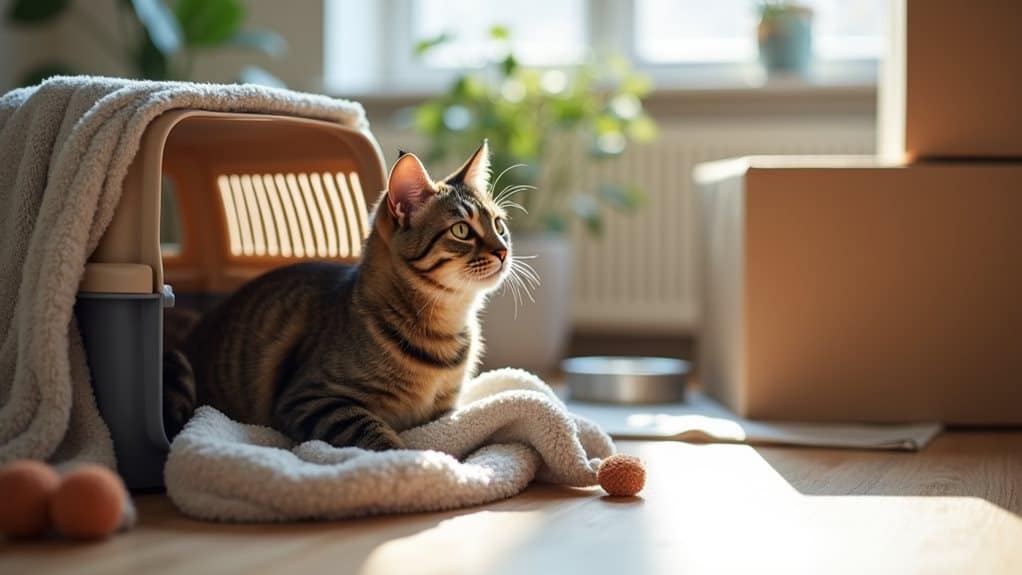
Before the first box heads out the door, you’ll need a strategic plan to keep your feline friend calm during the moving day chaos. Consider setting up a quiet room far from the action, complete with familiar bedding, toys, and a litter box. This sanctuary will shield your cat from the stress of strangers and noisy activity.
When it’s time to leave, place your cat in a secure car carrier lined with something that smells like home. Implementing calming scents, such as synthetic pheromones, can significantly help in alleviating your cat’s anxiety during the move.
Don’t forget to implement noise reduction strategies – playing soft classical music can mask jarring moving sounds and create a soothing atmosphere. You might also try pheromone sprays specifically designed to calm anxious cats.
Setting Up A Sanctuary Room In Your New Home
The first 24 hours in your new home are crucial for helping your cat adjust without overwhelming them. Create a sanctuary room with familiar items that smell like your previous home. This quiet space lets your cat decompress while you’re busy unpacking everywhere else.
When designing your cat’s sanctuary, include these room necessities:
| Sanctuary Necessities | Why It Matters |
|---|---|
| Litter Box | Familiar bathroom spot reduces accidents |
| Food & Water | Keeps routine intact |
| Favorite Bed | Provides comfort with familiar scents |
| Toys & Scratchers | Allows stress relief through play |
Don’t rush your kitty to explore the whole house at once. The sanctuary room design should include hiding spots where they can retreat when feeling anxious. Additionally, providing a quiet space with familiar items can help your cat adjust and promote mental engagement throughout the transition. You’ll know they’re ready for more adventure when they start showing curiosity about what’s beyond the door!
Gradual Introduction To New Surroundings
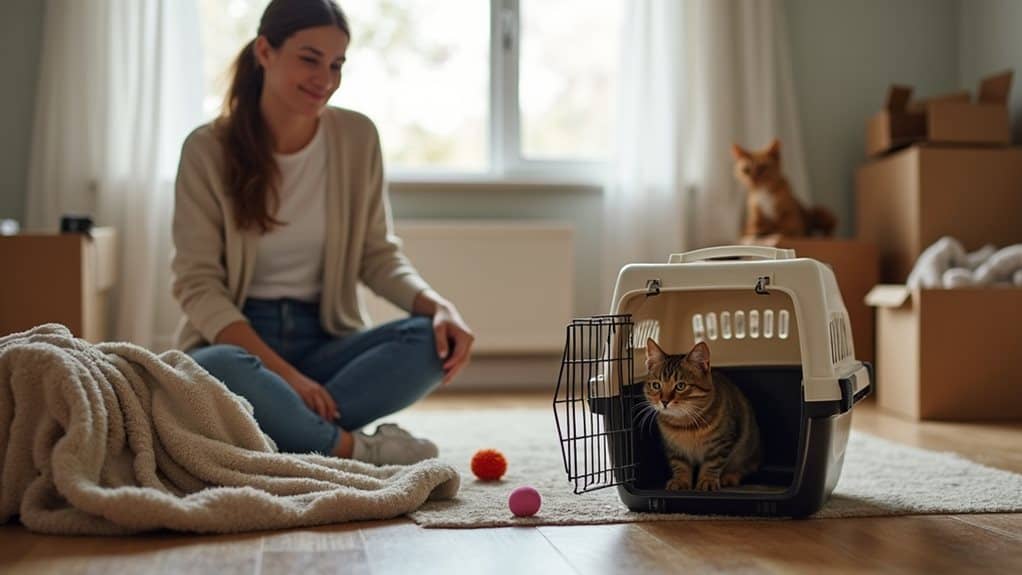
After your cat feels comfortable in their sanctuary room, you’ll need to start expanding their territory slowly and methodically.
Cats thrive on familiar scents and routines, so gradual exposure to new areas will help them adjust without feeling overwhelmed. Let your cat set the pace—some may explore boldly while others need more encouragement.
Each cat adapts to new environments differently—follow their lead and respect their comfort level during exploration.
- Rub a soft cloth on your cat’s cheeks to collect their scent, then wipe it on furniture and doorways in new areas to create “scent markers” that feel familiar.
- Open the sanctuary room door for short periods while you’re present, allowing exploration but respecting when they retreat.
- Place familiar toys, bedding, or treats in adjacent rooms to create positive associations with these new spaces. Additionally, ensuring ample vertical space through shelves or cat trees can provide your cat with safe vantage points as they navigate their new environment.
Managing Ongoing Anxiety And Adjustment Issues
If your cat still seems anxious after the move, you might consider using pheromone diffusers or sprays that mimic natural calming scents cats respond to.
You’ll find that maintaining a consistent daily routine with regular feeding times, play sessions, and cuddles provides security during this unsettling change.
These familiar patterns, combined with patience and the comfort of pheromone therapy, can help your feline friend adjust to their new home more effortlessly, reducing stress behaviors like hiding or excessive meowing. Additionally, recognizing signs of stress such as hiding or fleeing can help you intervene effectively to support your cat’s transition.
Pheromone Therapy Options
While your cat adjusts to a new home, pheromone products can provide considerable relief from anxiety and stress-related behaviors.
These synthetic versions of cats’ natural calming pheromones create a sense of security in unfamiliar environments. Pheromone diffusers, plugged into wall outlets, release a continuous calming scent throughout your home, making them ideal for the first few weeks after moving.
You might also try calming collars, which work wonderfully for cats who venture throughout the house or need comfort during carrier trips.
- Feliway diffusers work best when placed in rooms where your cat spends most time
- Calming collars typically last 4-6 weeks before needing replacement
- Pheromone sprays can be applied directly to bedding, carriers, or hiding spots
Most cats respond within hours, though some might need a week to show noticeable improvement. Additionally, ensuring your cat’s physical well-being is essential, as signs of distress could also indicate untreated infections from any prior injuries or bites.
Consistent Routine Benefits
Cats thrive on predictability, especially during the chaos of relocating to a new home. Maintaining consistent daily routines offers tremendous stress reduction benefits for your feline friend.
Try to feed, play with, and groom your cat at the same times each day. This familiarity creates security amid all the changes happening around them.
You’ll notice your cat responds positively when you establish a reliable schedule in your new space. Their favorite blanket, toys, and scratching posts should be unpacked first and placed in similar arrangements to your previous home.
These routine benefits extend beyond the initial move—they help your cat gradually accept their new territory without feeling overwhelmed, which is important since scent recognition and bonding play a crucial role in creating a comfortable environment for your cat.
Frequently Asked Questions
Should I Update My Cat’s Microchip Information Before or After Moving?
Update your cat’s microchip registration before moving. This guarantees relocation safety by maintaining current contact details if your cat escapes during the move. You’ll have peace of mind during this stressful change.
Can I Use Pheromone Products to Help Reduce My Cat’s Stress?
While you’re feeling anxious, your cat is too. Yes, you can use pheromone types like Feliway diffusers, sprays, or collars as effective calming techniques. They’ll help ease your kitty’s stress during this change.
How Long Should I Keep My Indoor Cat Inside the New Home?
You should keep your indoor cat inside the new home for at least 2-4 weeks. This adjustment period guarantees your cat builds confidence and maintains indoor cat safety before any supervised outdoor exploration is considered.
Will My Outdoor Cat Try to Return to Our Old House?
Like a compass seeking north, your cat may try returning to your old house. Keep them inside for 3-4 weeks, gradually introducing supervised outdoor time to establish cat behavior patterns and guarantee outdoor safety at home.
Should I Maintain the Same Feeding Schedule During the Moving Process?
Yes, you should maintain your cat’s feeding routine during the move. Consistent mealtimes provide comfort and stability, reducing relocation stress. Familiar feeding patterns help your cat adjust while everything else is changing around them.
Final Thoughts
While your furniture finds its place in your new home, your cat’s emotional expedition is just beginning. You’ll need patience as they explore unfamiliar territory—cats who seemed confident may become skittish, while shy cats might surprise you with their adaptability. Remember, what seems like a simple change of address to you is a complete world shift for them. With time, consistency, and the sanctuary spaces you’ve created, you’ll both call this strange place “home” together.