The Best Fluffy Pancakes recipe you will fall in love with. Full of tips and tricks to help you make the best pancakes.

When decoding cat food labels, focus on the guaranteed analysis panel for protein and fat content, and look for AAFCO adequacy statements that confirm balanced nutrition. Quality matters—animal-based proteins should top ingredient lists since cats need taurine they can’t produce naturally. Don’t be fooled by marketing terms like “natural” or “premium,” which lack regulatory definitions. Consider wet food for hydration benefits and higher protein content. The ingredient list reveals what’s truly behind those flashy packaging claims.
Deciphering the “Guaranteed Analysis” Panel
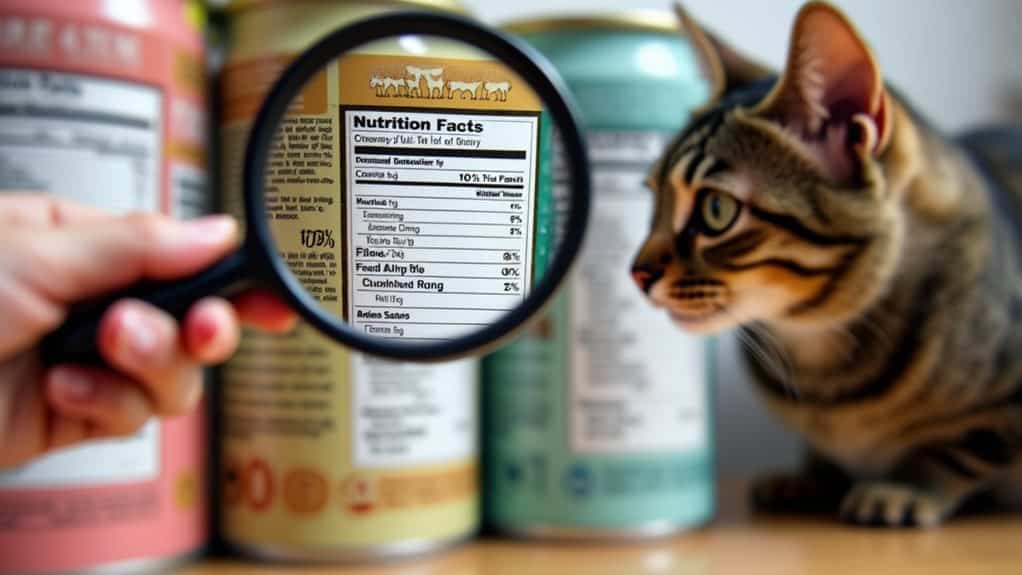
When you first glance at a cat food label, the “Guaranteed Analysis” panel might seem like a mysterious code that only scientists can crack.
Don’t worry – it’s actually designed to help you understand what’s inside the package.
This panel breaks down the minimum percentages of protein and fat, along with maximum percentages of fiber and moisture in your cat’s food.
While these numbers are important, they don’t tell the whole story about nutritional breakdown or ingredient sourcing.
You’ll want to look beyond just the percentages.
For example, protein can come from high-quality meat sources or lower-quality by-products.
The moisture content also matters tremendously – wet foods naturally show lower protein percentages than dry foods simply because they contain more water.
Understanding these nuances helps you make better choices for your feline friend’s health.
Common Cat Food Ingredients Explained
When you’re scanning cat food labels, understanding the quality of protein sources can make a world of difference in your pet’s health.
You’ll want to distinguish between nutritious ingredients and mere fillers, like corn and wheat gluten, which offer little nutritional value to your feline friend.
Watch out for artificial preservatives such as BHA, BHT, and ethoxyquin, which you might prefer to avoid in favor of natural alternatives like vitamin E and rosemary extract.
Protein Sources Ranked
Since your feline friend is a natural carnivore, understanding the quality of protein in their food is crucial to their overall health. Not all protein sources are created equal, and protein digestibility varies greatly between ingredients.
Named animal proteins like “chicken,” “turkey,” or “salmon” typically rank highest on the quality scale. They’re more complete and bioavailable than plant proteins such as pea or corn gluten.
Be wary of generic terms like “meat by-products” or “animal meal,” which don’t specify the source animal.
Many premium brands now address sourcing ethics too, offering proteins from free-range, humanely raised animals. Regular grooming sessions can help minimize cat dander and contribute to a healthier environment for your cat.
Your cat can’t read the label, but they’ll certainly appreciate your effort to choose high-quality proteins that fuel their playful pounces and satisfied purrs!
Fillers vs. Nutrition
Many pet parents struggle to distinguish between nutritional ingredients and mere fillers in cat food products. When you’re scanning those ingredient labels, knowing the difference between crucial nutrients and cheap fillers can help you make better choices for your furry friend’s health. Fleas can pose deadly threats to cats if not managed properly.
| Ingredient | Filler Type | Nutritional Value |
|---|---|---|
| Corn | Carbohydrate | Low protein, high calories |
| Wheat gluten | Protein extender | Incomplete amino acids |
| Meat by-products | Protein source | Variable quality |
| Pea protein | Plant protein | Moderate nutritional balance |
Not all ingredients listed as “fillers” are necessarily bad—some provide dietary fiber that supports digestion. However, your cat needs a proper nutritional balance with high-quality protein sources. Remember, cats are obligate carnivores, so meat-based ingredients should always top the list on quality foods.
Preservatives Worth Avoiding
Beyond understanding protein sources and fillers, you’ll need to watch out for potentially harmful preservatives hiding in your cat’s food. Many commercial brands rely on artificial additives to extend shelf life, but these can take a toll on your furry friend’s health.
BHA, BHT, and ethoxyquin are harmful chemicals you should avoid whenever possible. These synthetic preservatives have been linked to various health issues in pets, including liver problems and potential cancer risks.
Instead, look for natural alternatives like vitamin E (listed as mixed tocopherols), vitamin C (ascorbic acid), or rosemary extract.
Regular monitoring of urinary health can also play a significant role in preventing long-term damage from poor dietary choices.
When scanning ingredient lists, remember that preservatives often hide at the bottom. Don’t be fooled by fancy packaging claiming “natural” benefits if the small print reveals these concerning additives.
Your cat’s long-term health is worth the extra label-reading effort!
Protein Sources: Complete vs. Incomplete
When choosing cat food, you’ll want to understand the difference between meat proteins (complete) and plant proteins (incomplete) for your feline friend.
Your cat’s body requires specific amino acid profiles that are naturally present in animal sources but often missing in plant-based ingredients.
Taurine, a crucial amino acid that’s abundant in meat but absent in plants, is particularly critical for your cat’s heart health and vision, which is why quality animal protein should top the ingredient list.
Meat vs. Plant Proteins
Why do some protein sources appear more prominently on cat food labels than others? It’s all about what your feline friend truly needs. Cats are obligate carnivores, meaning they require animal-based proteins that offer higher protein digestibility and amino acid bioavailability than plant sources. When you’re scanning those labels, understanding the difference matters tremendously for your cat’s health. Regular flea treatment is also crucial for maintaining your cat’s overall well-being, as it prevents discomfort associated with infestations.
| Protein Source | Digestibility | Benefits for Cats |
|---|---|---|
| Chicken | High | Complete amino profile |
| Beef | High | Rich in taurine |
| Fish | Very High | Omega-3 fatty acids |
| Soy | Moderate | Incomplete for cats |
| Pea Protein | Low | Missing crucial aminos |
While plant proteins can supplement a diet, they simply can’t provide everything your cat needs to thrive. Your kitty’s ancestry as a hunter explains why meat proteins should dominate their bowl.
Amino Acid Profiles
The difference between complete and incomplete protein sources forms the cornerstone of proper feline nutrition. Your cat’s body can’t produce vital amino acids on its own, so they must come from food.
Complete proteins, typically from animal sources, contain all vital amino acids your furry friend needs for muscle maintenance, immune function, and overall health.
Plant-based proteins, however, often lack one or more vital amino acids, making them incomplete for cats. That’s why you’ll see taurine listed on cat food labels—it’s a critical amino acid that cats can’t synthesize themselves.
When examining ingredient lists, look for animal proteins like chicken, turkey, or fish at the top. These provide the complete amino acid profiles your obligate carnivore requires to thrive, unlike the partial profiles found in plant proteins. Additionally, cats may benefit from essential amino acids found in a well-rounded raw food diet, especially for heart and eye health.
Taurine Content Matters
Taurine stands as perhaps the most vital nutrient your cat absolutely can’t live without. Unlike dogs and humans, cats can’t produce this amino acid naturally, making external taurine sources crucial for their survival.
When examining cat food labels, you’ll want to confirm taurine is explicitly listed—it’s not merely a nice addition, it’s mandatory for your feline’s heart and eye health.
The taurine benefits extend beyond basic survival. This powerhouse nutrient supports proper digestion, immune function, and even pregnancy in female cats. Additionally, a lack of taurine may lead to severe health complications, similar to the effects of heartworms on a cat’s well-being.
Animal-based proteins like chicken, turkey, and fish deliver the richest taurine content, while plant proteins fall short. That’s why grain-free isn’t automatically better—what matters is the quality and quantity of animal protein delivering this life-sustaining amino acid to your furry friend.
Carbohydrates and Grains: Necessary or Filler?
When you scan cat food labels, carbohydrates and grains often spark heated debates among pet owners and veterinarians alike. Contrary to popular belief, cats can derive some benefits from certain grain sources in their diet.
While your feline friend is primarily carnivorous, small amounts of easily digestible carbohydrate sources can provide energy and fiber.
Cats need mostly meat, but thoughtful additions of quality carbs can support their energy needs and digestive health.
Look for quality ingredients like brown rice, oats, or sweet potatoes rather than corn or wheat fillers. Remember, not all grains are created equal! Some grain benefits include improved digestive health and sustained energy levels when properly balanced with protein.
The key is moderation—carbohydrates should never dominate your cat’s diet. Additionally, keeping your cat’s gut health in check can prevent issues such as worm infestations.
Your cat’s individual needs matter too. Some cats thrive with minimal carbs, while others, especially seniors or those with certain health conditions, may benefit from specific carbohydrate formulations.
Marketing Terms: What “Natural,” “Premium,” and “Holistic” Really Mean
Now that you understand what ingredients to look for, let’s examine the flashy terms that often catch your eye in the pet food aisle.
Marketing tactics in cat food can be confusing, with brands using buzzwords that sound impressive but mean little legally.
Here’s what these popular terms actually mean:
- “Natural” claims often just indicate the absence of artificial colors or flavors, not that the food is minimally processed.
- “Premium ingredients” has no regulatory definition, so any brand can use it regardless of quality.
- “Holistic nutrition” suggests whole-body health but isn’t defined by industry standards.
- “Human-grade” is one of the few terms that requires the entire food meet human consumption standards.
Additionally, a focus on balanced nutrition is essential for ensuring optimal feline health, so don’t be swayed by pretty packaging alone—focus on the guaranteed analysis and ingredient list to make informed choices.
AAFCO Standards and Nutritional Adequacy Statements
Unlike the vague marketing terms we’ve just explored, nutritional adequacy statements provide meaningful information about your cat’s food.
These statements confirm whether a product meets AAFCO nutritional guidelines for complete and balanced nutrition at specific life stages.
Nutritional adequacy statements verify your cat food meets established AAFCO standards for complete nutrition at each life stage.
When you’re scanning cat food labels, look for phrases like “formulated to meet AAFCO nutrient profiles” or “complete and balanced nutrition for adult maintenance.”
These aren’t just empty claims—they’re backed by AAFCO definitions and testing standards.
Products without these statements mightn’t provide all the nutrients your cat needs.
Understanding By-Products and Meals
By-products and meals often trigger confusion and concern among cat owners examining pet food labels.
It’s important to understand that not all by-products are created equal, and many can be nutritious components of your cat’s diet.
Consider these facts about common ingredients:
- Meat by-products include organs like liver and kidneys, which are actually nutrient-dense and appealing to cats.
- Meal sources refer to concentrated protein made by removing water from animal tissues.
- By-product types vary greatly in quality, from nutritious organ meats to less desirable parts.
- The specific animal source (chicken, fish, etc.) matters more than whether it’s labeled as a “meal” or “by-product.”
- While evaluating by-products, it’s crucial to recognize that some can provide essential nutrients necessary for a balanced feline diet.
You’ll make better choices for your feline friend when you know what these terms actually mean rather than automatically avoiding them.
Wet vs. Dry Food: Comparing Nutritional Profiles
When choosing between wet and dry cat food, you’re actually deciding between two fundamentally different nutritional profiles.
Dry food benefits include convenience, cost-effectiveness, and dental health support as the crunchy texture helps reduce plaque buildup. It’s also shelf-stable once opened and generally higher in carbohydrates.
Wet food advantages, on the other hand, center around hydration—especially important for cats who don’t drink enough water naturally. The higher moisture content (typically 70-80%) supports urinary tract health and may help prevent kidney issues. Furthermore, high moisture content aids in maintaining hydration levels, which is crucial for overall feline health.
Wet food usually contains more protein and fewer carbohydrates than kibble, potentially making it closer to a cat’s natural diet. While pricier and less convenient, many cats prefer the taste and texture of wet food, making mealtime more appealing for finicky felines.
Special Dietary Needs: Prescription and Therapeutic Foods
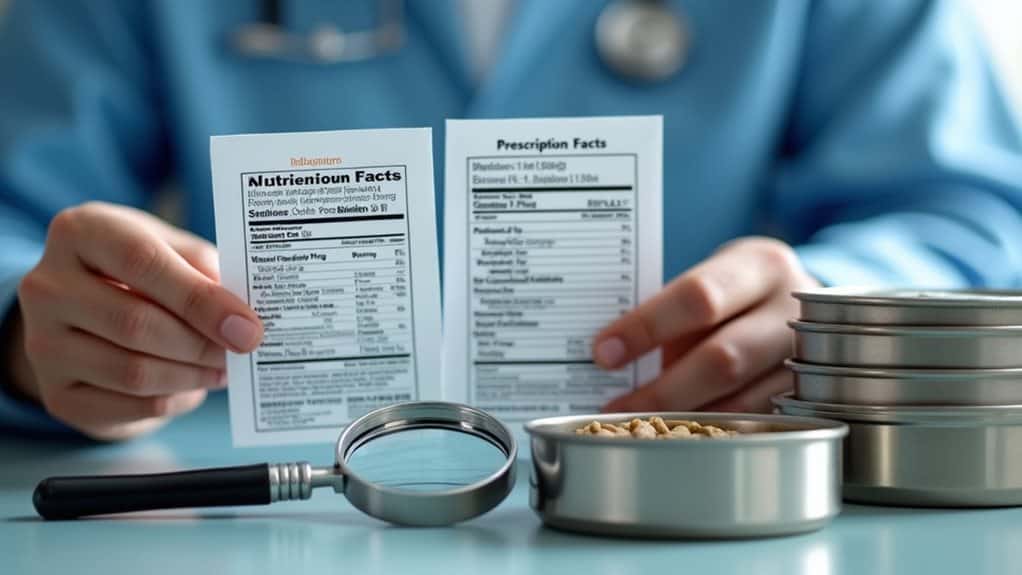
Veterinary-formulated prescription and therapeutic foods serve as critical nutritional interventions for cats with specific health challenges.
When your feline friend develops a medical condition, these specialized diets can become vital parts of their treatment plan. Unlike regular commercial foods, prescription diets are specifically developed to address health issues while providing balanced nutrition.
Common therapeutic formulations address:
- Kidney disease – lower phosphorus and protein to reduce kidney workload
- Urinary tract problems – adjusted mineral content to prevent crystal formation
- Diabetes – controlled carbohydrates to help regulate blood sugar
- Food allergies – novel or hydrolyzed proteins that minimize allergic reactions
You’ll need a veterinarian’s recommendation to purchase most prescription diets, as they’re designed to be used under professional supervision.
While they’re typically more expensive than regular cat food, they’re often worth the investment for your cat’s health and comfort.
Frequently Asked Questions
How Often Should I Switch My Cat’s Food Brand?
You don’t need to regularly switch your cat’s food brand. If you’re considering brand rotation, implement a gradual food changeover over 7-10 days to prevent digestive upset. Many cats thrive on consistency.
Can Homemade Cat Food Meet All My Cat’s Nutritional Needs?
It’s difficult to achieve proper nutritional balance with homemade recipes. You’ll need to consult a veterinary nutritionist to guarantee your cat gets all vital nutrients, as deficiencies can lead to health problems.
How Do Feeding Guidelines Account for My Cat’s Activity Level?
While standard guidelines offer a starting point, they’re not perfect. You’ll need to adjust feeding practices based on your cat’s specific activity level, increasing portions for active cats and reducing for sedentary ones.
Do Cats Need Different Foods at Different Life Stages?
Yes, your cat’s needs evolve throughout life. Kittens require kitten nutrition with higher calories and protein for growth, while seniors benefit from specialized senior diets with adjusted nutrients to support aging joints and organs.
How Long Does Opened Wet Cat Food Remain Safe?
Picture your cat’s wet food turning into a science experiment! You’ll want to limit opened food storage to 3-5 days refrigerated. For ideal wet food shelf life, use airtight containers and discard uneaten portions after 4 hours.
Final Thoughts
You’re now equipped to steer through the cat food aisle like a seasoned detective following clues. Just as you wouldn’t eat mystery stew from a stranger’s kitchen, your furry friend deserves food with transparent ingredients. By understanding labels, you’ll cut through marketing fluff and make choices based on what actually matters—proper nutrition. Your cat can’t read the label, but they’re counting on you to do the detective work.