The Best Fluffy Pancakes recipe you will fall in love with. Full of tips and tricks to help you make the best pancakes.

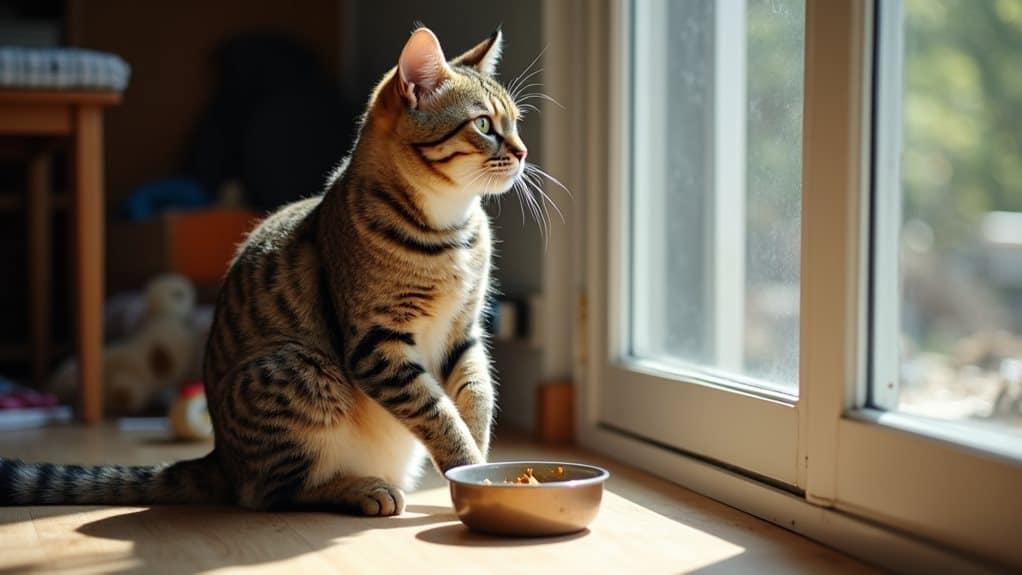
Your cat’s separation anxiety might show through excessive meowing, clinginess, inappropriate elimination, destructive behavior, or over-grooming. Common triggers include environmental changes, schedule disruptions, new household members, past trauma, or routine changes. Unlike dogs, cats often show subtler signs of distress. Try enriching their environment with toys, gradually desensitizing them to your departures, and using calming pheromones. If symptoms persist for over two weeks or include aggression or self-harm, it’s time to consult a professional for customized solutions.
Recognizing the Signs of Separation Anxiety in Cats
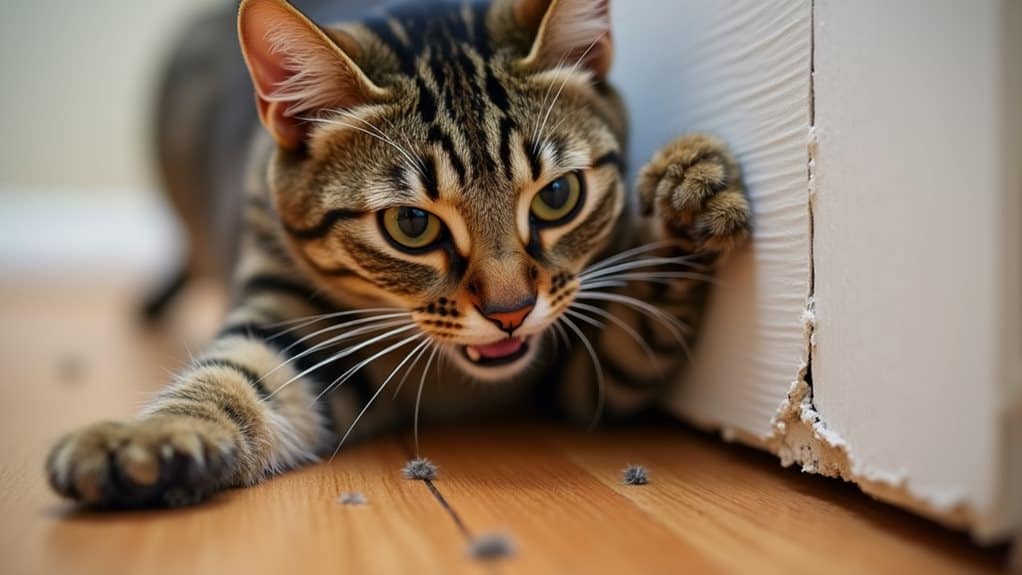
Contrary to popular belief, cats aren’t always the aloof, independent creatures they’re made out to be. Many felines form deep bonds with their owners and can experience genuine distress when left alone.
The independent feline is often a myth—many cats form profound attachments and suffer real distress during separation.
You’ll need to become fluent in feline body language to spot separation anxiety symptoms. Watch for excessive meowing or howling when you’re preparing to leave. Your cat might follow you from room to room, becoming your furry shadow.
Other telltale signs include inappropriate elimination outside the litter box, destructive behavior, excessive grooming (sometimes to the point of creating bald spots), decreased appetite, or vomiting.
Some cats might even show their anxiety through aggressive behavior or by becoming unusually clingy when you return home. These behaviors aren’t your cat being spiteful—they’re crying out for help. Additionally, recognizing signs of anxiety can help you better understand their emotional state and address any underlying issues.
Common Triggers and Root Causes of Feline Anxiety
While many cat owners assume their pets simply need food and shelter, understanding what triggers anxiety in your feline friend requires deeper insight. Cats develop separation anxiety due to various environmental stressors and past experiences that shape their behavior.
| Trigger Type | Examples | Impact on Your Cat |
|---|---|---|
| Environmental Stressors | Moving homes, loud noises | Hiding, excessive grooming |
| Schedule Changes | New work hours, vacation | Destructive behavior, vocalization |
| Household Dynamics | New baby, new pet | Territorial marking, aggression |
| Past Trauma | Abandonment, shelter experience | Clinginess, fear behaviors |
You’ll notice that many behavioral triggers stem from changes in your cat’s routine or surroundings. Cats thrive on predictability, and disruptions can trigger their anxiety responses, especially in cats with sensitive temperaments or traumatic backgrounds. Understanding how wound care can minimize discomfort and promote healing during stressful situations can also help alleviate anxiety in some cases.
How Separation Anxiety Differs Between Cats and Dogs
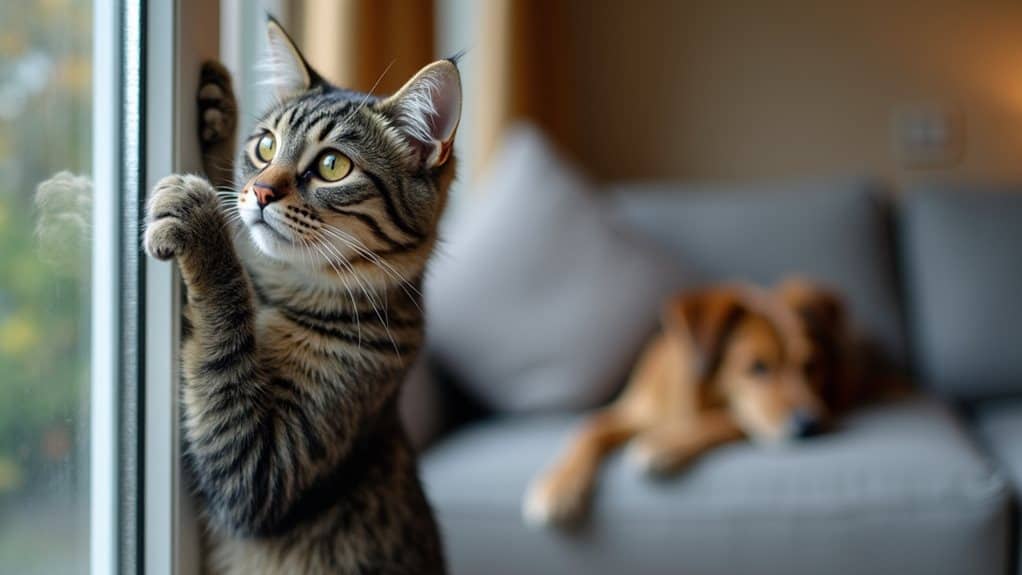
Although cats and dogs both experience separation anxiety, the ways they express it differ greatly in both symptoms and severity.
While dogs often bark, howl, or destroy furniture, cats typically show subtler signs that you might miss if you’re not paying attention.
Dogs vocally advertise their distress, while cats suffer silently, their anxiety hiding in plain sight.
In terms of feline behavior, anxious cats may excessively groom, leading to bald patches, or they might eliminate outside the litter box.
Dogs tend to display their distress immediately when you’re leaving, but cats might act indifferent to your departure, then show signs of stress later.
This anxiety comparison is important because cat owners sometimes misinterpret these behaviors as spite rather than distress.
Your cat isn’t being difficult—they’re communicating their emotional needs in the only way they know how. Additionally, stress can be deeply influenced by emotional triggers, making it crucial to understand the specific issues affecting your cat’s well-being.
Evidence-Based Treatment Strategies for Anxious Cats
When your cat shows signs of separation anxiety, several evidence-based strategies can help ease their distress.
Start with environmental enrichment by creating a stimulating space that keeps your cat engaged while you’re away. Interactive toys, puzzle feeders, and window perches can provide mental stimulation and reduce anxiety.
Behavioral modification techniques are equally important. Gradually desensitize your cat to departure cues by picking up keys or putting on shoes without actually leaving.
Practice short absences, slowly increasing duration as your cat becomes more comfortable. You’ll also want to maintain a calm demeanor when leaving and returning home to avoid reinforcing anxious behavior. Additionally, incorporating calming scents like Feliway can further enhance your cat’s emotional stability during these transitions.
When to Seek Professional Help for Your Cat’s Anxiety
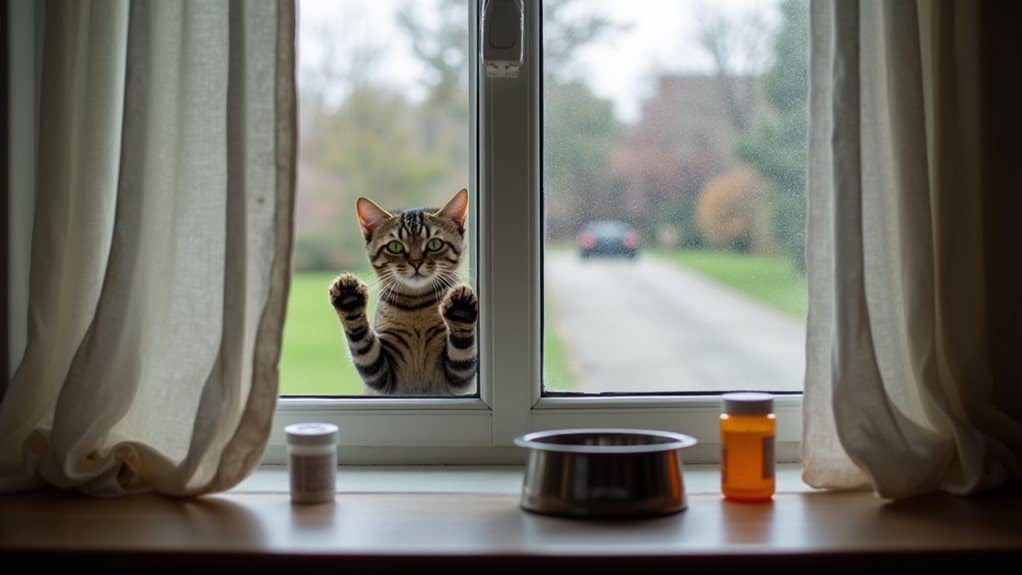
Despite your best efforts at home, some cat anxiety cases require professional intervention. If your cat’s symptoms persist for more than two weeks or worsen despite trying environmental enrichment techniques, it’s time to consult a veterinarian.
Warning signs include aggressive behavior, refusing to eat, or self-harming behaviors like excessive grooming that causes bald patches. Additionally, be aware that cat bites can lead to serious health issues if not treated promptly, indicating the importance of addressing both physical and emotional well-being.
Your vet might refer you to a certified animal behaviorist who can develop a customized behavioral therapy plan for your furry friend. These experts often use a combination of medication and behavior modification techniques that you simply can’t access on your own.
A certified animal behaviorist brings specialized tools to the table—medication and techniques unavailable to even the most dedicated cat parents.
Don’t feel like you’ve failed your cat—seeking help actually shows how much you care! Professional guidance often provides the breakthrough your anxious kitty needs to feel secure again.
Frequently Asked Questions
Can Certain Cat Breeds Be More Prone to Separation Anxiety?
Yes, certain breeds with specific characteristics, like Siamese, Burmese, and Abyssinian cats, can be more prone to separation anxiety. You’ll notice these breeds often display anxiety symptoms more intensely when left alone.
At What Age Do Cats Typically Start Showing Separation Anxiety?
You’ll witness separation anxiety emerge at ANY age! Most commonly, it develops during vital kitten development stages (7-9 weeks) or after life changes. These behavioral patterns can appear suddenly when you’ve established strong bonds with your cat.
Will Getting Another Cat Help With My Cat’s Separation Anxiety?
Getting another cat isn’t a guaranteed solution. While cat companionship can help some anxious cats, it might stress others. You’ll need to combine this with behavior modification techniques for the best results.
Can Separation Anxiety in Cats Resolve Completely Without Intervention?
While it’s possible, cat separation anxiety rarely resolves without intervention. You’ll need to address underlying anxiety triggers and modify your cat’s behavior through structured routines, enrichment, and possibly professional guidance for complete resolution.
How Long Does Treatment for Feline Separation Anxiety Usually Take?
You’ll typically see improvement in 4-8 weeks, though duration factors like severity and your cat’s temperament affect treatment success. Some mild cases resolve faster, while severe anxiety may require several months of consistent intervention.
Final Thoughts
You’ve learned how to spot, understand, and help your anxious cat. Coincidentally, the same morning you started reading about feline anxiety, your cat might have left fewer “protest puddles” around the house! Remember, patience and consistency are your best tools. With the right approach, both you and your furry friend can enjoy peaceful separations. Don’t hesitate to call your vet if your cat’s anxiety persists—they’re just a phone call away.