The Best Fluffy Pancakes recipe you will fall in love with. Full of tips and tricks to help you make the best pancakes.

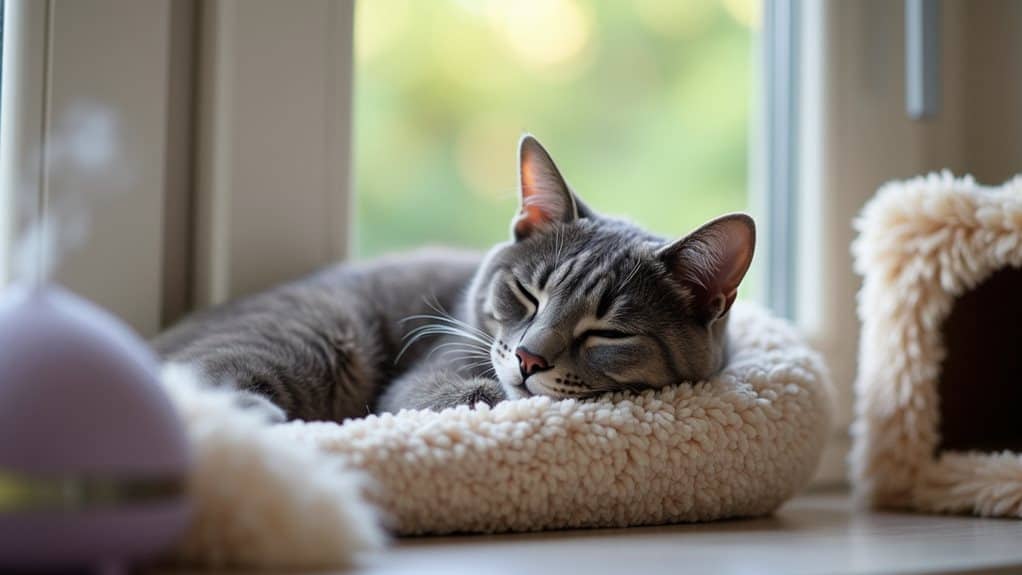
Creating a calm environment for your anxious cat starts with recognizing stress signals like flattened ears or excessive grooming. Provide multiple hiding spots—cardboard boxes and cat trees work wonders. Minimize loud noises, establish consistent routines, and use interactive toys to redirect nervous energy. High-quality nutrition with omega-3s can support emotional balance, while positive reinforcement builds confidence. For persistent anxiety, don’t hesitate to consult your vet. The right adjustments can transform your feline’s well-being.
Understanding the Signs of Feline Anxiety

While you enjoy watching your cat’s quirky behaviors, recognizing signs of anxiety in your feline friend can be challenging. Your cat can’t tell you when they’re stressed, but their feline body language speaks volumes.
Watch for excessive grooming, flattened ears, dilated pupils, or a tucked tail—these are classic stress signals that shouldn’t be ignored.
Your cat’s body speaks truth – excessive grooming, flat ears, dilated eyes, and tucked tail reveal their hidden stress.
You might also notice changes in your cat’s routine. Are they hiding more than usual? Have they stopped using their litter box properly?
Maybe they’re suddenly aggressive or unusually clingy? These behavioral shifts often indicate underlying anxiety. Additionally, understanding body language signs can help you identify when your cat is feeling particularly stressed.
Common Triggers That Stress Your Cat
Your cat’s peaceful day can quickly turn stressful when certain triggers appear in their environment.
Environmental changes, like rearranged furniture or new pets, often upset your feline friend’s sense of security and territorial comfort.
Loud noises from vacuum cleaners or construction, along with unfamiliar visitors who don’t understand cat etiquette, can send your cat hiding under the bed faster than you can say “here kitty.” Observing your cat’s body language cues can help you identify when they are feeling threatened or anxious.
Environmental Changes
Cats thrive on routine and predictability, which is why environmental changes often trigger considerable stress in our feline friends. Moving to a new home, rearranging furniture, or even adding new decorations can disrupt your cat’s sense of environmental stability and safety.
Your cat relies on familiar scents and landmarks to steer through their territory confidently. When you’re planning changes at home, consider implementing them gradually. Maintain some consistency in your cat’s core spaces—like keeping their feeding station and litter box in familiar locations.
Too much sensory stimulation from new sounds, smells, or visual changes can overwhelm even the most adaptable cats. Remember, what seems like a minor update to you might feel like a complete upheaval to your sensitive companion. Creating a safe outdoor enclosure is one way to provide your cat with a secure area to explore without overwhelming them.
Loud Noises
Beyond environmental changes, sudden loud noises represent another notable stressor for most feline companions. Your cat’s sensitive ears can detect sounds you mightn’t even notice, making everyday noises like thunderstorms, construction work, or even loud television potentially terrifying for them.
When you notice your cat hiding or displaying signs of anxiety during noisy periods, it’s time to implement some soundproofing strategies. Consider installing sound-absorbing curtains or placing foam panels in rooms where your cat spends most time. Additionally, ensuring your cat has a safe space to retreat to during stressful moments can greatly help in alleviating their anxiety.
Playing calming music specifically designed for cats can also help mask frightening external sounds. Many cat owners report success with classical compositions or specially created feline relaxation tracks that incorporate purring sounds.
Unfamiliar Visitors
While familiar faces bring comfort to your household, strangers entering your home often trigger considerable stress responses in feline family members.
Your cat’s behavior during visits offers important clues about their comfort level through subtle cat communication signals. Understanding visitor behavior that causes anxiety can help create gentler introductions.
Here’s how to minimize stress when guests arrive:
- Ask visitors to avoid direct eye contact, which cats interpret as threatening
- Create raised safe zones where your cat can observe from a distance
- Instruct guests to let your cat approach them first
- Keep visitor voices low and movements slow
- Consider using calming pheromone diffusers before scheduled gatherings
- Always remember that each cat has unique stress responses to different visitors, so be attentive to their signals and comfort levels.
Creating Safe Spaces and Hiding Spots
When feeling threatened or overwhelmed, your feline friend needs a personal sanctuary to retreat to. Cats instinctively seek out safe havens where they can observe their surroundings while feeling protected.
Creating multiple cozy nooks throughout your home gives your cat options when stress levels rise. Consider adding cardboard boxes, cat trees with enclosed perches, or even a dedicated “cat room” if space allows.
You don’t need to spend a fortune—cats often prefer simple hideaways like paper bags or laundry baskets with soft blankets. Place these retreats in quiet corners away from household traffic. Additionally, ensure that both cats have their own spaces to establish territories, which can help minimize stress during introductions and enhance their sense of security.
The Power of Pheromone Products

Pheromone products offer a science-backed solution for helping your stressed cat feel more secure in their environment.
These synthetic versions of natural cat pheromones mimic the comforting signals cats naturally produce, creating a sense of safety and familiarity that can greatly reduce anxiety.
Consider incorporating these effective options into your cat’s stress management routine:
- Pheromone diffusers that plug into wall outlets, releasing calming scents throughout a room
- Calming sprays for specific areas like carriers or new furniture
- Pheromone-infused collars that provide constant comfort wherever your cat goes
- Wipes for targeted application on surfaces your cat frequently contacts
- Travel-sized options for reducing stress during car rides or vet visits
In addition to pheromones, be mindful of your cat’s whisker fatigue, as this can also contribute to their anxiety levels and overall discomfort.
You’ll likely notice a difference in your cat’s behavior within days of introducing these helpful products to your home.
Environmental Enrichment Strategies
Because cats are natural explorers and hunters, creating an enriched environment for them can dramatically reduce stress and anxiety.
You’ll notice a happier cat when you provide a variety of interactive toys that stimulate their hunting instincts. Puzzle feeders, wand toys, and battery-operated mice can keep your furry friend mentally engaged while burning excess energy that might otherwise manifest as anxious behaviors.
Don’t forget about sensory stimulation beyond just toys! Consider installing cat shelves or a window perch where your kitty can safely observe the outside world. Many cats find comfort in raised spaces that offer both security and entertainment.
You might also try rotating toys weekly to maintain interest – what seems boring today could become fascinating again next month! Incorporating environmental stimulation can prevent boredom and encourage natural behaviors, further supporting your cat’s well-being.
Noise Management for Sensitive Cats

Many cats become visibly distressed by everyday household sounds that humans barely notice. Your feline friend might flatten their ears, hide under furniture, or exhibit anxious behaviors when exposed to vacuum cleaners, blenders, or even TV volume spikes.
Creating a noise-managed environment can greatly reduce your cat’s stress levels.
A peaceful sound environment is essential for your feline’s mental wellbeing and overall happiness.
Consider these soundproofing solutions to help your sensitive companion:
- Create a designated “quiet room” where your cat can retreat
- Install soft furnishings like cushions and rugs to absorb sound
- Use white noise machines to mask startling household sounds
- Close windows during predictably noisy times (lawn mowing, construction)
- Play calming classical music specifically designed for cats
Additionally, addressing emotional well-being through enriching your cat’s environment can further contribute to their comfort and confidence.
You’ll notice a remarkable difference in your cat’s demeanor once you’ve implemented these noise management strategies.
Their confidence will grow as their environment becomes more predictable and comfortable.
Consistent Routines and Predictable Interactions
Establishing a reliable daily schedule for your cat can greatly reduce their anxiety and create a sense of security in their environment.
You’ll notice improved behavior when you maintain consistent feeding times, play sessions, and even grooming routines that your feline friend can anticipate.
When interacting with your cat, always use gentle, predictable handling techniques—approach slowly, let them sniff your hand first, and pay attention to their body language that indicates when they’ve had enough attention. Regular breaks during sessions enhance comfort levels and create a more enjoyable experience for both you and your cat.
Daily Schedule Benefits
Cats thrive on predictability, just as you’d appreciate knowing what to expect in your day. Establishing consistent daily routines dramatically reduces stress for your feline friend.
When your cat knows exactly when meals, playtime, and cuddles happen, they’ll feel more secure and relaxed in their environment.
Consider implementing these schedule benefits for your cat’s wellbeing:
- Fixed feeding times that align with your own meal schedule
- Regular play sessions at the same times each day
- Consistent bedtime routine to signal the end of the day
- Dedicated quiet time when your cat won’t be disturbed
- Predictable greeting rituals when you return home
These simple stress reduction techniques work because they eliminate uncertainty, which is a major trigger for cat anxiety.
Your cat will thank you with more balanced behavior and fewer stress-related issues.
Gentle Handling Techniques
Just as important as your cat’s daily schedule is how you physically interact with them. Your touch and voice greatly impact your cat’s stress levels. When approaching your anxious feline, use gentle petting along their back and speak in calming words with a soft tone.
| Handling Technique | When to Use | Benefit |
|---|---|---|
| Slow blinks | During quiet moments | Builds trust |
| Gentle ear rubs | When cat is relaxed | Releases endorphins |
| Chin scratches | During greeting | Shows respect |
| Soft back strokes | During cuddle time | Reduces anxiety |
| Light chest pets | When cat approaches | Reinforces bonding |
Nutritional Support for Stress Reduction

While many cat owners focus solely on behavioral techniques, proper nutrition plays a crucial role in managing your feline friend’s stress levels. Just like humans, cats’ emotional well-being is connected to what they eat. Nutrient-rich foods can actually help regulate your cat’s mood and stress response naturally.
Nutrition is the overlooked key to a calmer cat, impacting their emotional health just as it does yours.
Consider incorporating these stress-reducing nutritional elements:
- High-quality proteins that support overall brain function
- Omega-3 fatty acids to reduce inflammation and anxiety
- Calming supplements like L-theanine or tryptophan
- Probiotics that support gut health (where many mood chemicals are produced)
- Hydration sources beyond just water bowls
You’ll notice improvements in your cat’s demeanor when their diet supports their nervous system.
Training Techniques to Build Feline Confidence
Training your cat with positive reinforcement, including treats and praise for desired behaviors, creates a foundation for stress reduction and confidence building.
You’ll find clicker training particularly effective, as the distinct sound helps your cat connect the clicking noise with rewards, making training sessions more efficient and enjoyable.
Gradually exposing your nervous feline to new experiences in small, manageable steps allows them to build confidence at their own pace, transforming anxious moments into opportunities for growth.
Positive Reinforcement Basics
Because cats respond best to gentle encouragement rather than harsh corrections, positive reinforcement forms the foundation of effective feline training.
When you use reward-based training, you’ll strengthen your bond while teaching your cat that good behaviors lead to pleasant outcomes. Positive reinforcement techniques work especially well with anxious cats who need extra patience.
Here’s how to get started:
- Use treats your cat truly loves—tiny pieces of chicken or commercial treats work wonders
- Click training pairs a clicking sound with rewards, creating a precise marker for good behavior
- Keep sessions short (2-3 minutes) to prevent boredom or frustration
- Always end on a successful note to build confidence
- Maintain consistency with your cues and rewards to avoid confusion
Clicker Training Benefits
Although many cat owners overlook its potential, clicker training stands as one of the most effective tools for building feline confidence. You’ll discover that the simple click-treat combination creates a positive association that helps anxious cats feel more secure. The clicker training basics involve marking desired behaviors with a click, followed immediately by a reward. This precision timing helps your cat understand exactly what they’re doing right.
| Benefit | For Your Cat | For You |
|---|---|---|
| Reduces anxiety | Builds confidence | Strengthens bond |
| Creates predictability | Provides mental stimulation | Offers satisfaction |
| Establishes routine | Encourages exploration | Deepens understanding |
With patience and consistency, you’ll see remarkable clicker training success. Your cat will become more responsive, less stressed, and genuinely enthusiastic to participate in training sessions, transforming your anxious feline into a more confident companion.
Gradual Exposure Therapy
Gradual exposure therapy serves as a cornerstone technique for helping anxious cats overcome their fears.
You’ll find this anxiety desensitization approach particularly effective when introduced slowly and consistently. By carefully controlling your cat’s interactions with stressors, you’re helping them build confidence at their own pace.
Key exposure techniques include:
- Starting with the trigger at a distance where your cat remains calm
- Gradually decreasing distance as comfort increases
- Pairing exposure with positive rewards like treats or play
- Keeping sessions short (3-5 minutes) to prevent overwhelm
- Maintaining a consistent schedule for predictability
When to Seek Veterinary Intervention
How can you tell when your cat’s stress has crossed the line from manageable to medically concerning?
Watch for behavioral signs that persist despite your best efforts. If your cat stops eating, shows elimination problems outside the litter box, or displays excessive grooming that causes bald patches, it’s time to call the vet.
Serious stress symptoms, like prolonged hiding (more than two days), aggressive behavior when it’s normally gentle, or visible physical changes such as dilated pupils and rapid breathing that don’t resolve, warrant professional attention.
You know your cat best—if something feels “off,” trust your instinct.
Frequently Asked Questions
Can Anxiety Medication Change My Cat’s Personality?
Yes, anxiety medication can subtly alter your cat’s personality. You’ll notice medication effects like reduced reactivity or increased calmness. These personality changes are typically positive, helping your cat feel more comfortable in their environment.
How Do Multi-Cat Households Affect Individual Stress Levels?
Multi-cat dynamics greatly impact stress levels. Your cats may experience anxiety from territorial disputes, resource competition, and hierarchy establishment. You’ll notice increased tension when cats don’t have enough personal space or resources to feel secure.
Should I Adopt a Companion for My Anxious Cat?
Not necessarily. Your anxious cat might find a companion more stressful. Evaluate your cat’s personality and social dynamics first. Consider cat compatibility carefully – some felines prefer solitude while others thrive with feline friends.
Do Cats Outgrow Anxiety or Is It Lifelong?
Like deep-rooted vines, cat anxiety rarely disappears completely. You’ll notice some cats improve with age, but many need lifelong management. Identifying anxiety triggers and developing effective coping strategies will be your ongoing responsibility.
How Does Catnip Affect Stress in Anxious Cats?
Catnip effects vary – it’ll relax some anxious cats while exciting others. You’ll notice feline relaxation in responsive cats through reduced stress behaviors. Try small amounts first to see if it’s helpful for your kitty.
Final Thoughts
Remember, you’re the anchor in your cat’s stormy sea of anxiety. Just as a lighthouse guides ships through rough waters, your consistent care lights the path to your feline’s emotional stability. By implementing these stress-reduction strategies, you’ll transform your home into a sanctuary where your cat can truly thrive. You don’t need to eliminate every stressor—just give your furry friend the tools and confidence to steer through life’s challenges with whisker-twitching ease.