The Best Fluffy Pancakes recipe you will fall in love with. Full of tips and tricks to help you make the best pancakes.


Protecting your cat from deadly diseases starts with a proper vaccination schedule. Core vaccines like rabies and feline distemper are vital for all cats, starting at 6-8 weeks for kittens with regular boosters throughout life. Even indoor cats need these protections, as disease threats can sneak through open doors. Watch for mild side effects like lethargy after shots, but contact your vet about any severe reactions. The rest of this guide covers everything you’ll need for your cat’s lifelong health plan.
Core Vaccines Every Cat Needs

While caring for your cat’s health involves many considerations, understanding core vaccines should be at the top of your priority list. These crucial shots protect your furry friend from potentially fatal diseases that could otherwise devastate their wellbeing.
The primary vaccine types your cat needs include those for rabies, feline distemper (panleukopenia), and upper respiratory infections.
You’ll want to establish a vaccination schedule with your vet when your cat is still a kitten, typically starting around 6-8 weeks of age. Don’t worry if you’ve adopted an older cat with an unknown vaccine history—your vet can create a catch-up plan! Additionally, some non-core vaccines may be necessary based on your cat’s lifestyle and exposure risks.
When to Vaccinate: Recommended Schedule by Age
Now that you understand which vaccines your cat needs, let’s look at when they should receive them.
Kitten vaccinations typically begin at 6-8 weeks of age, with boosters given every 3-4 weeks until they’re about 16 weeks old. This series builds their immunity gradually as maternal antibodies fade.
Starting vaccination early ensures kittens develop immunity as protection from mom naturally wanes.
Adult cats need boosters annually or every three years, depending on the vaccine and your cat’s lifestyle.
Don’t skip these appointments—they’re essential for maintaining protection! Regular boosters help ensure active immune system readiness against infections.
Senior cat vaccinations might follow a modified schedule based on your older kitty’s health status. Your vet may recommend fewer vaccines for seniors with certain conditions, focusing only on those most necessary.
Indoor vs. Outdoor Cats: Tailoring the Vaccination Approach
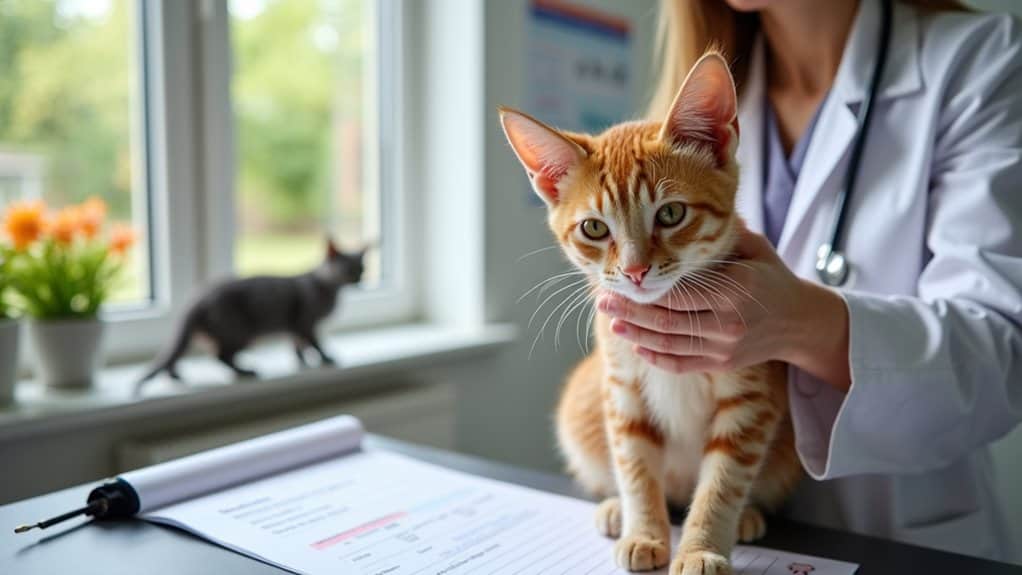
Does your cat spend its days lounging on windowsills or prowling through neighborhood gardens? Your cat’s lifestyle directly impacts its vaccination needs.
Indoor cats enjoy greater safety from disease exposure, but they still need core vaccinations. Even the most dedicated homebody might dart through an open door or encounter wildlife that finds its way inside.
Don’t assume indoor safety means zero risk!
Outdoor adventurers face considerably higher threats, requiring a more thorough vaccination protocol. Their routine exposure to other cats, wildlife, and environmental hazards increases their chances of contracting contagious diseases. Additionally, maintaining regular vet check-ups is essential to monitor overall health and vaccination status.
Your vet might recommend additional vaccines like feline leukemia for cats with outdoor exposure.
Potential Side Effects and How to Monitor Your Cat
Just as you tailor your cat’s vaccination plan to their lifestyle, you’ll need to stay alert for possible reactions after their shots. Most cats experience minimal side effects, but it’s wise to know what’s normal and what’s not.
Common reactions include mild lethargy, temporary loss of appetite, or slight swelling at the injection site. These typically resolve within 24-48 hours.
Your monitoring techniques can be simple: check the injection spot for unusual swelling, observe your cat’s eating and activity levels, and note any behavior changes. Understanding how medical conditions can affect your cat’s response to vaccinations may also enhance your monitoring efforts.
If you notice persistent vomiting, facial swelling, difficulty breathing, or extreme lethargy, don’t wait—call your vet immediately. These could indicate a rare but serious allergic reaction.
Cost Considerations and Insurance Coverage for Vaccines
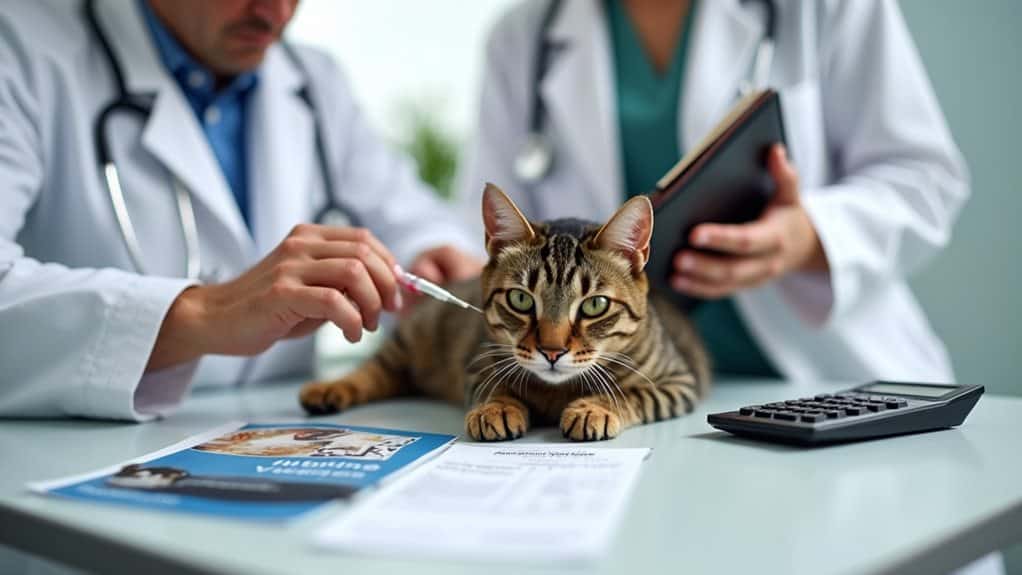
While protecting your cat’s health through vaccinations is essential, the financial aspect deserves careful consideration.
Vaccine pricing varies widely between clinics, ranging from $15 to $30 per core vaccine, with specialty shots potentially costing more. Many veterinarians offer package deals that can save you money when multiple vaccines are administered during the same visit.
Don’t forget to explore your insurance options! Many pet insurance policies cover preventative care, including vaccinations. Given that certain breeds may have higher health risks, it’s crucial to understand how this can affect your insurance rates.
Before selecting a plan, compare coverage details specifically for vaccine reimbursement. Some policies might fully cover core vaccines but only partially reimburse for non-core ones.
Frequently Asked Questions
Can My Cat Receive Vaccines if They’re Currently Sick?
No, you shouldn’t vaccinate a sick cat. Vets postpone sick cat vaccinations due to vaccine safety concerns. Your cat’s immune system needs to be healthy to properly respond to vaccines and avoid complications.
Are There Vaccines My Senior Cat No Longer Needs?
Your senior cat’s vaccine schedule may be adjusted. Core vaccines remain important, but your vet might extend intervals between boosters or eliminate non-core vaccinations based on your pet’s lifestyle, health status, and risk factors.
How Long Do Cat Vaccinations Provide Immunity?
Though you might worry about over-vaccinating, your cat’s immunity timeline varies by vaccine. Core vaccines typically provide 1-3 years of protection, while others offer shorter vaccine duration. Always follow your vet’s recommended schedule.
Can I Vaccinate My Pregnant Cat?
No, you shouldn’t vaccinate your pregnant cat. Vaccinations are best administered before pregnancy due to potential risks. After birth, kittens will receive maternal antibodies naturally, then follow proper vaccination timing for the litter.
Do Purebred Cats Need Different Vaccines Than Mixed-Breed Cats?
Like knights of old, you’ll find no difference in vaccination protocols between purebred and mixed-breed cats. They’re all susceptible to the same diseases, so you don’t need special purebred considerations for standard feline vaccines.
Final Thoughts
Just like building a fortress around your home, vaccinating your cat creates a shield of protection against life-threatening diseases. You’ll sleep better knowing you’ve done everything to keep your furry friend healthy. Remember, the small investment in vaccines today prevents heartache and costly treatments tomorrow. Partner with your vet to create the perfect vaccination plan that fits your cat’s lifestyle and needs.