The Best Fluffy Pancakes recipe you will fall in love with. Full of tips and tricks to help you make the best pancakes.

Have you ever wondered if your cat's unique meows are part of a broader feline dialect? You're not alone, as scientists have discovered that cats develop distinct vocal patterns based on their geographic location and cultural environment. Just like humans celebrate the diversity of our languages, your cat's personal vocabulary reflects a fascinating intersection of nature and nurture. There's much more to uncover about these purr-fect linguists and how they've mastered the art of cross-species communication.
The Origins of Cat Communication
While your cat's adorable meows might seem like a natural part of feline behavior, they're actually the product of thousands of years of evolution alongside humans.
It might surprise you to learn that your cat's wild ancestors and feral relatives rarely meow at all, preferring to communicate through scent markings and body language. Some research has revealed that domestic cats have developed solicitation purrs that mimic human infant cries. This evolutionary change reflects their bonding and emotional connection with humans, as they adapt their communication for social interaction.
Throughout feline evolution, your domestic cat's communication strategies have adapted specifically to interact with you.
When cats first joined human settlements 8,000 to 12,000 years ago as pest controllers, they began developing vocalizations that would appeal to human ears.
Your cat's meow evolved from kitten-like "mews" into something more sophisticated – shorter, higher-pitched sounds that you'd find irresistible.
It's a fascinating example of how living alongside humans has transformed these once-solitary animals into the chatty companions we recognize today. This unique vocal development shows how cats use meowing as a tool to manipulate humans to get what they want.
Understanding Meow Variations Across Cultures
Just as cats adapted their meows to communicate with humans, they've inspired unique interpretations of their sounds across different languages and cultures.
You'll find fascinating meow variations, from Japan's gentle "nyā" to Thailand's soft "mǐiao," each reflecting distinct cultural perspectives on our feline friends. Ancient Egyptian culture was particularly influential, as their word miu deeply influenced how we interpret cat sounds today.
These cultural meow variations tell us something special about how different societies view and interact with cats. In Japan, where cats bring good fortune through the maneki-neko, you'll hear the delicate "nyan," while in Indonesia, the spirited "meong" captures cats' playful nature. In Russia, the beloved кошка for cat reflects their centuries-old appreciation of felines.
Whether it's the French "miaou" or the Vietnamese "meo," you're witnessing how languages worldwide have embraced and adapted the universal language of cats to fit their unique linguistic patterns and cultural understanding.
Regional Differences in Cat Vocalizations
You'll be fascinated to learn that cats, like their human companions, develop distinct regional "accents" based on where they live. Research from Lund University shows that cats in Stockholm meow differently from those in Lund, suggesting they're picking up local dialects from their owners' speech patterns. Understanding your cat's unique vocalizations can also enhance your ability to interpret their body language cues, which reveals their emotions and needs. If you've ever noticed your cat's unique vocal style, it might be influenced by the specific way people speak in your area, from the melody of daily conversations to regional expressions. This research mirrors how linguistic diversity matters, as recognized by UNESCO in promoting cultural understanding through language preservation. Scientists are conducting studies using loudspeakers behind screens to measure how cats respond to different human speech patterns and dialects.
Meow Patterns By Region
Although cats worldwide share similar vocal patterns, their 'accents' and meowing styles can vary considerably based on their geographic location and cultural environment.
You'll notice these unique meow melodies when you travel across different regions. In France, you might hear cats using sounds closer to /mwa/, while German kitties lean towards /miau/ in their feline frequencies. Research shows cats can produce up to 100 calls in their vocal repertoire, and these meowing styles often reflect the way cats communicate with their humans through affectionate behaviors like grooming.
If you're in Japan, you'll discover cats expressing themselves with "nyaa," and in Mandarin-speaking regions, they tend towards "miao." Most cats use these sounds as all-purpose greetings when communicating with humans.
These variations aren't just coincidence – studies in Sweden have shown that cats actually adapt their vocalizations to match their owners' language patterns.
While cats maintain their universal language skills, they're remarkably adaptable, fine-tuning their sounds to better communicate with the humans in their lives.
Cross-Cultural Cat Communication
While cats communicate through a rich variety of facial expressions and body language worldwide, their specific communication styles can vary based on cultural and regional influences. Similar to how mother languages shape identity, cats develop unique regional variations in their vocalizations.
Recent studies have shown cats utilize 276 distinct expressions when interacting with others.
You'll find that cats display remarkable feline expressions, using nearly 300 distinct facial movements to connect with both humans and fellow cats.
- Your cat's slow blinks aren't just cute – they're actively trying to build a bond with you through positive emotional signals, reflecting their capacity for emotional attachment.
- Cats demonstrate cat empathy by responding to your emotional state and even matching your yawns.
- When cats face each other in friendly encounters, they'll point their ears and whiskers toward one another.
Understanding these communication patterns can help you better connect with cats, whether you're meeting them in your neighborhood or across the globe.
They're truly remarkable at bridging cultural divides through universal expressions.
Geographical Purr Variations
Just as humans develop unique regional accents and dialects, cats have their own geographical variations in how they communicate vocally. You'll notice that your cat's purring patterns might sound different from those of cats in other regions, as they're influenced by the local human language and environment they're exposed to.
This fascinating dialect development isn't just limited to purring – it extends to meows too! Your feline friend's vocalizations may be shorter and higher-pitched than their wild relatives, making them more pleasant to your ears. Understanding these geographical purr variations can deepen your connection with your cat and enhance your ability to interpret their emotions.
Female cats typically produce brighter sounds than males, while kittens meow in higher pitches than adult cats. Next time you're visiting friends with cats in different regions, listen closely – you might just catch the subtle differences in their furry companions' "accents!"
How Cats Adapt Their Language to Humans
You'll notice that your cat's vocalizations aren't just random meows, but carefully crafted sounds tailored specifically for you.
Your feline friend has learned, through years of domestication and personal experience, that certain types of meows are more effective at getting your attention and meeting their needs.
Your cat's adaptable nature means they'll adjust their pitch, duration, and frequency of meows based on how you respond, creating a unique communication system that works just between the two of you. This adaptability can be seen as a form of territorial behavior, establishing a bond and sense of ownership in the relationship.
Cat-Human Communication Patterns
As cats have adapted to living alongside humans, they've developed fascinating ways to bridge the communication gap between our species. Your feline friend's meow psychology has evolved specifically to get your attention, and they'll use different vocal patterns to express various needs. Understanding these feline gestures can help you become a better pet parent and strengthen your bond.
- Your cat's facial expressions include almost 300 distinct signals – from slow blinks that show trust to whisker positions that reveal their mood.
- Unlike wild cats, your domestic companion keeps their "kitten voice" into adulthood, using it just for you.
- When your cat head-bunts you, they're not just being cute – they're marking you as part of their trusted family.
- Furthermore, they often use trilling sounds to invite interaction and enhance emotional connections with their owners.
These unique communication patterns show how deeply cats have adapted to living with us.
Vocal Adjustments For Owners
While cats are known for their independent nature, they've developed remarkable abilities to customize their vocal communication specifically for their human companions.
Through their vocal adaptation strategies, your feline friend can produce over 100 different vocalizations, each tailored to get specific responses from you.
You'll notice your cat uses emotional vocal cues to express various needs, from requesting food to seeking attention.
They're so sophisticated in their communication that they'll even mimic baby cries to trigger your nurturing instincts!
Your cat develops a unique dialect with you through trial and error, creating a personalized language that's exclusive to your relationship.
When you respond to their different meows, you're actually participating in a carefully crafted communication system that your clever cat has designed just for you. Additionally, just as cat kneading behavior signifies comfort and security, vocalizations also reflect your cat's emotional state and needs.
The Science Behind Feline Dialects

The fascinating world of feline dialects extends far beyond simple meows and purrs, with scientists identifying up to 21 distinct vocalizations that cats can produce.
When you're studying feline phonetics and meow morphology, you'll discover that cats adapt their sounds based on their environment and the humans they live with.
- Cats in urban areas often develop louder, more assertive meows to compete with city noise.
- Your cat's dialect may be influenced by your own speaking patterns and regional accent.
- Shelter cats display subtle variations in their vocalizations based on their geographical origins.
You'll find that cats' communication abilities are remarkably sophisticated, using a combination of tonal, pulse, and broadband sounds. Understanding body language is equally crucial, as it enhances the bond between cats and humans and allows for better responses to their unique needs.
Understanding these dialects can help you better serve your feline friends and respond to their unique needs more effectively.
Cat Body Language: A Universal Mother Tongue
While your cat's vocalizations may vary by region, their body language serves as a universal form of communication you'll recognize anywhere in the world.
You'll notice how your cat's tail position acts like an emotional barometer – from the friendly question mark shape to the agitated low swish – telling you exactly how they're feeling.
Even more telling are your cat's ears, which work like tiny radar dishes broadcasting their mood, from the happy forward position to the wary airplane mode that signals they're not quite sure about that new household item you've brought home. Whiskers also play a crucial role in sensory perception, helping your cat gauge their environment and communicate their emotions effectively.
Tail Positions Tell Stories
Just as humans communicate through words and gestures, cats express themselves through an intricate language of tail positions that you'll want to understand if you're a cat parent or enthusiast.
Understanding your feline friend's tail storytelling reveals their emotional state and intentions, helping you become a better caregiver.
- A high tail with a curved tip means your cat's feeling friendly and wants to interact
- A puffed-up tail signals your cat feels threatened and needs space
- A low or tucked tail suggests your cat's feeling cautious or fearful
Ear Movements Speak Volumes
Moving from tail tales to facial features, cat ears serve as remarkably expressive messengers in feline communication.
You'll discover that ear language reveals your cat's innermost feelings, from contentment to concern. When your feline friend's ears point forward and stay relaxed, they're telling you they feel safe and happy in your presence.
Watch closely, as their ear movements paint a vivid picture of their emotional state. If you notice their ears swiveling, they're gathering information about their surroundings, while sideways-pointing ears signal irritation.
Most importantly, if you see flattened ears or those pointed backward, give your cat space – these feline expressions indicate fear or defensive posturing.
Understanding these subtle ear positions helps you better serve your cat's needs and maintain a harmonious relationship.
Preserving and Documenting Cat Dialects
Although research on cat dialects remains largely unexplored, the significance of preserving and documenting these unique feline communication patterns can't be overlooked.
While we're still learning about cat dialects and feline linguistics, you can play a crucial role in understanding your cat's unique way of communicating. By paying attention to your cat's vocal patterns and keeping detailed records, you'll contribute to this emerging field of study.
- Start a diary of your cat's different vocalizations and when they occur
- Record your cat's sounds using your smartphone to capture subtle variations
- Share your observations with local veterinarians and animal behaviorists
You're not just helping science – you're strengthening the bond with your feline friend and potentially helping other cat owners better understand their pets' unique dialects.
Every meow, purr, and trill tells a story worth preserving.
The Evolution of Cat-Human Communication
Through centuries of living alongside humans, cats have developed fascinating ways to bridge the communication gap between our species. Your cat's intelligence shines through their ability to understand your voice, responding differently when you use those special cat-directed tones they love.
They'll even use your emotional cues to navigate new situations, showcasing their remarkable social skills.
You'll notice that your indoor companion meows more than their feral cousins, as they've learned it's an effective way to get your attention. This evolution in feline emotions and communication shows how deeply cats have adapted to life with humans.
Whether they're turning their ears toward you when you speak or looking to you for guidance, your cat's constantly finding new ways to connect and bond with you.
Teaching Our Cats Multiple "Languages"
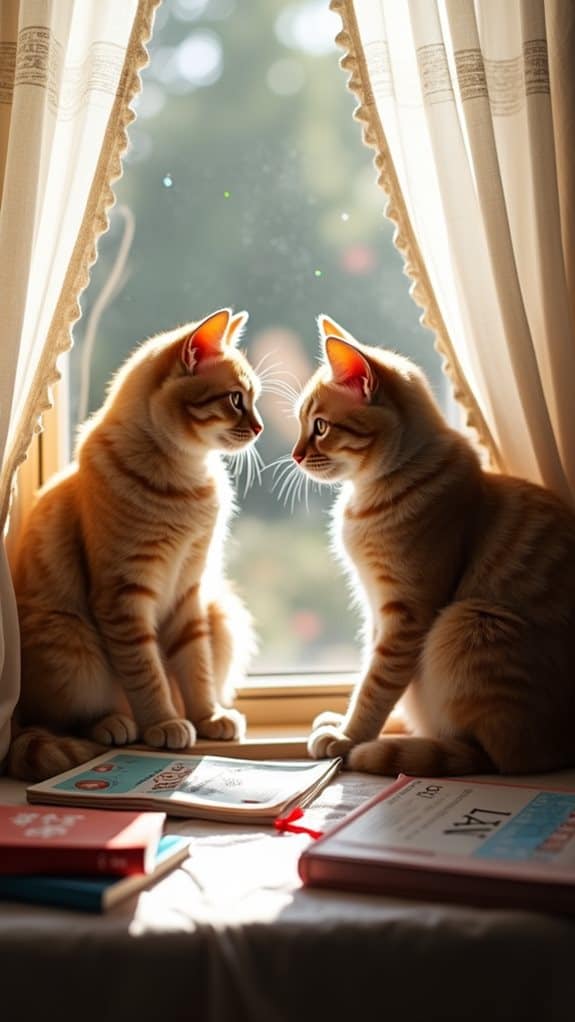
Just as humans can become bilingual, your feline friend has the remarkable ability to learn multiple "languages" of communication.
When exploring cat bilingualism, you'll discover that your pet can adapt to different vocal patterns and speaking styles, making them incredibly versatile communicators. Through feline phonetics and contextual learning, cats develop unique ways to interact with their human families.
- Your cat can learn to associate different vocalizations with specific needs, like dinner time or cuddles.
- They'll combine both vocal and non-vocal cues, using their facial expressions to get their point across.
- You can strengthen your bond by paying attention to their various communication methods.
Celebrating Feline Linguistic Diversity
Whether you live in a bustling multilingual household or simply chat with your cat in different accents, your feline friend's linguistic abilities are truly remarkable.
Research shows that cats excel at feline phonetics, picking up subtle differences in tone, pitch, and pronunciation across various languages and dialects.
You'll notice your cat's impressive language adaptation as they respond to different speech patterns and vocal cues. They're not just mimicking sounds – they're actively processing and distinguishing between languages based on their experiences.
When you speak to your cat in different languages or accents, you're helping them develop a richer understanding of human communication.
It's fascinating to watch how cats in multilingual environments often develop more diverse vocal repertoires, showing just how adaptable these intelligent creatures can be.
Final Thoughts
Just like a maestro conducting a symphony, you've learned how your cat's unique dialect tells a story of their heritage and connection with you. Whether it's your kitty's morning chirps or midnight melodies, you're now equipped to better understand their vocal fingerprint. By celebrating these distinctive meows and trills, you're not just honoring your cat's mother tongue – you're strengthening the special language that only you and your feline friend share.