The Best Fluffy Pancakes recipe you will fall in love with. Full of tips and tricks to help you make the best pancakes.

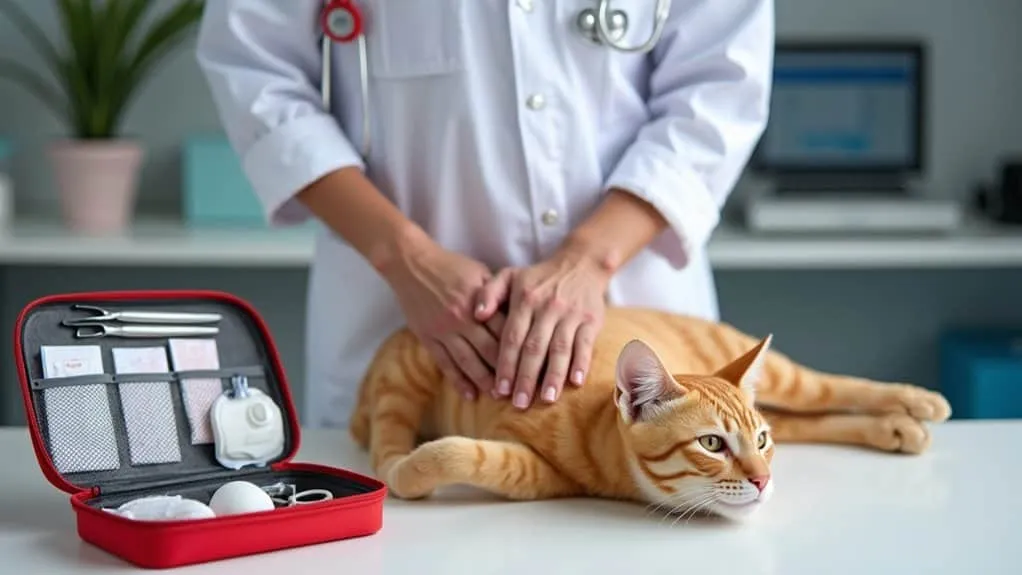
When your cat faces an emergency, quick action can save their life. Watch for serious signs like labored breathing, unresponsiveness, or inability to urinate. For bleeding, apply direct pressure with clean gauze. If your cat isn’t breathing, check for a heartbeat near the left elbow and perform chest compressions at 100-120 per minute if needed. Keep an emergency kit with gauze, bandages, and thermometer. The following techniques could make all the difference in a crisis.
Recognizing Life-Threatening Emergencies in Cats
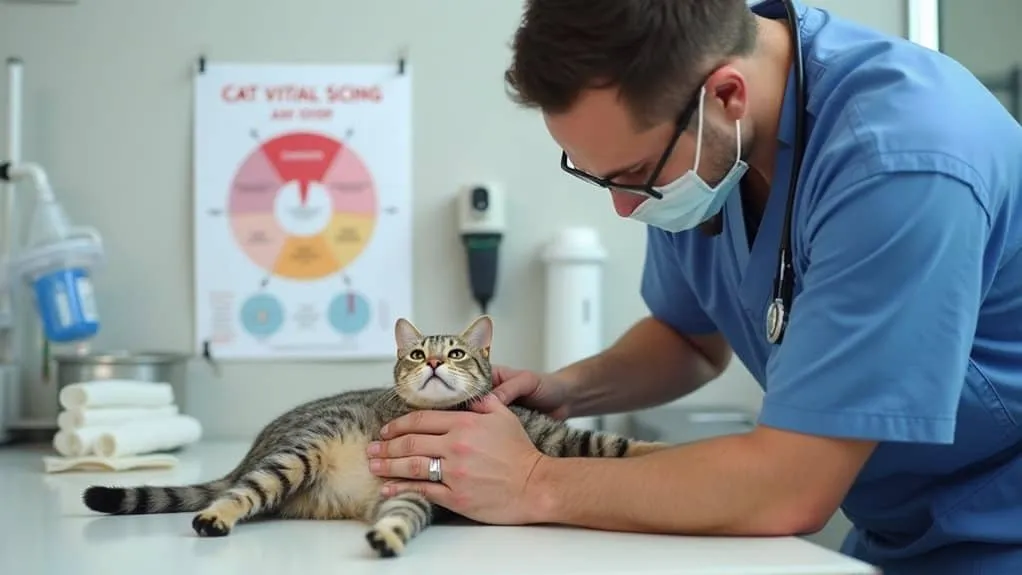
How quickly can you tell when your cat needs immediate medical attention? Recognizing emergency signs could save your furry friend’s life.
When your normally playful cat becomes lethargic or unresponsive, it’s time to act fast. Watch for labored breathing, excessive panting, or blue-tinged gums—these indicate oxygen deprivation requiring immediate care.
Your cat’s behavior speaks volumes—lethargy and breathing issues aren’t just bad days, they’re urgent cries for medical help.
Cat behavior changes dramatically during emergencies. If your kitty can’t stand, is dragging limbs, or shows sudden paralysis, don’t wait. Uncontrolled bleeding, prolonged vomiting, or inability to urinate are serious red flags too.
Trust your instincts! You know your cat best. That gut feeling that something’s wrong? Listen to it.
Even subtle changes like hiding more than usual or crying when touched might signal serious issues requiring veterinary attention right away. Additionally, inappropriate urination can often be a sign of underlying medical problems that need immediate evaluation.
CPR and Respiratory Support Techniques
When your cat stops breathing or loses consciousness, knowing proper CPR techniques becomes essential for their survival.
First, check for signs of cardiac arrest by feeling for a heartbeat near your cat’s left elbow. If you don’t detect one, begin chest compressions immediately – place your thumb and fingers on either side of the chest and compress gently but firmly at a rate of 100-120 compressions per minute.
For airway obstruction, open your cat’s mouth and check for foreign objects. If you spot something, carefully remove it without pushing it further down.
Remember to tilt your cat’s head slightly to open the airway before giving rescue breaths. After every 30 compressions, give two small breaths into your cat’s nose with its mouth closed. Continuous monitoring of the cat’s condition, including signs of life, is crucial during CPR.
Don’t give up – your quick action could save your furry friend’s life!
Managing Bleeding and Treating Wounds
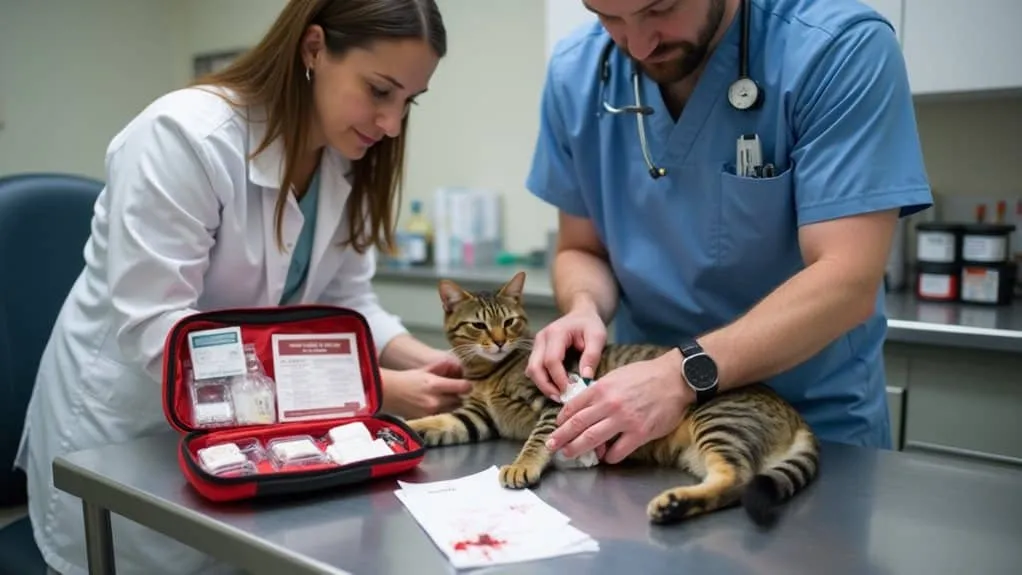
Three critical steps can help you effectively manage your cat’s bleeding wounds in an emergency situation.
When your cat is injured, knowing the three critical emergency steps can make the difference in managing bleeding wounds effectively.
First, apply direct pressure with a clean cloth or gauze to stop the bleeding.
Second, perform proper wound cleaning using warm water or saline solution to remove debris.
Third, apply appropriate bandaging techniques to protect the wound while transporting your cat to the vet.
- Keep your cat calm during treatment—stress can increase bleeding.
- Use pet-specific antiseptic solutions, never human products like alcohol or hydrogen peroxide.
- Monitor bandages for tightness—too tight can restrict circulation.
- Change dressings daily and watch for signs of infection.
- Create a “donut” bandage around wounds your cat might lick. Additionally, ensure you monitor for signs of infection to catch any issues early and facilitate faster healing.
Responding to Poisoning and Toxic Exposure
Recognizing the signs of poisoning in your cat can make the difference between life and death during an emergency.
Watch for sudden vomiting, drooling, difficulty breathing, seizures, or unusual lethargy—these could indicate your furry friend has encountered something toxic.
If you suspect poisoning, don’t wait! Call your vet or animal poison control immediately.
Keep the ASPCA Animal Poison Control number (888-426-4435) saved in your phone. While waiting for professional help, never induce vomiting unless specifically instructed by a professional.
Remove toxic plants like lilies, tulips, and azaleas from your home—these common houseplants can be deadly to curious cats. Additionally, if your cat consumes a rodent, monitor for symptoms of poisoning as early intervention is crucial.
Creating and Using a Cat-Specific First Aid Kit
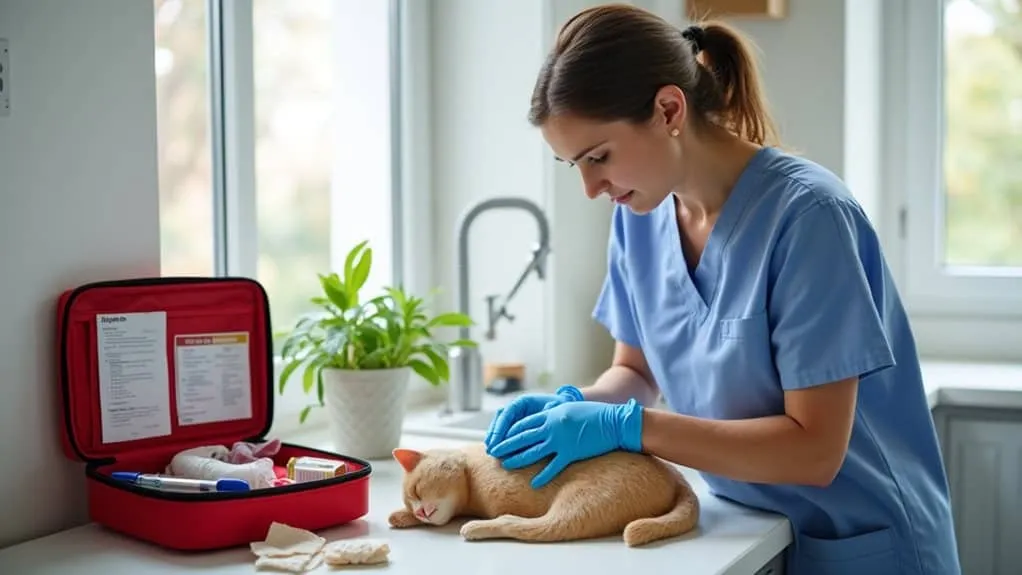
Every cat owner needs a dedicated first aid kit designed specifically for feline emergencies.
Being prepared with crucial supplies can make all the difference when your furry friend faces an unexpected injury or illness. Keep your cat first aid kit in an accessible location and check it regularly to verify nothing has expired.
In moments of feline crisis, having the right supplies ready can mean the difference between panic and proper care.
- Digital thermometer (normal cat temperature is 100.5-102.5°F)
- Gauze pads, cotton balls, and self-adhesive bandages
- Blunt-tipped scissors and tweezers for fur trimming and splinter removal
- Saline eye wash and antiseptic wipes
- Your vet’s phone number, nearest emergency clinic info, and poison control hotline. Additionally, be aware of cat bite infection symptoms to ensure prompt treatment if necessary.
Frequently Asked Questions
How Do I Safely Transport an Injured Cat to the Vet?
Use a secure cat carrier with cushioning. Keep the carrier level and minimize movement. Don’t remove the cat unless necessary. Drive carefully, maintaining travel safety by avoiding sudden stops and sharp turns.
Can I Give My Cat Human Pain Medications in Emergencies?
No, you shouldn’t give your cat human painkillers. They pose serious risks including kidney damage and death. Instead, call your vet immediately for guidance on safe alternatives or appropriate dosing for cat-specific medications.
How Should I Handle a Seizure in My Cat?
As your cat’s body stiffens and trembles, stay calm. Clear the area of hazards, don’t restrain them, and time the seizure. Watch for seizure symptoms like paddling or foaming. Provide quiet post-seizure care and call your vet immediately.
What Should I Do if My Cat Has Heatstroke?
Move your cat to a cool area immediately. Recognize heatstroke symptoms like panting and lethargy. Apply cooling techniques by dampening their fur with room-temperature water, especially on paws and ears. Call your vet right away.
How Do I Restrain an Injured Cat Without Causing More Harm?
Like a careful dancer approaching a wounded partner, gently wrap your cat in a thick towel, leaving only their head exposed. Stay calm—your anxiety affects cat behavior. Make a quick injury assessment before transport.
Final Thoughts
You’re now a million times more prepared to save your cat’s life when seconds count! Remember, your quick actions can make the difference between tragedy and a purr-filled recovery. Keep your first aid kit stocked, practice these techniques, and program your vet’s emergency number in your phone today. While we hope you’ll never need these skills, you’ll sleep better knowing you’re ready for anything your curious feline might encounter.