The Best Fluffy Pancakes recipe you will fall in love with. Full of tips and tricks to help you make the best pancakes.

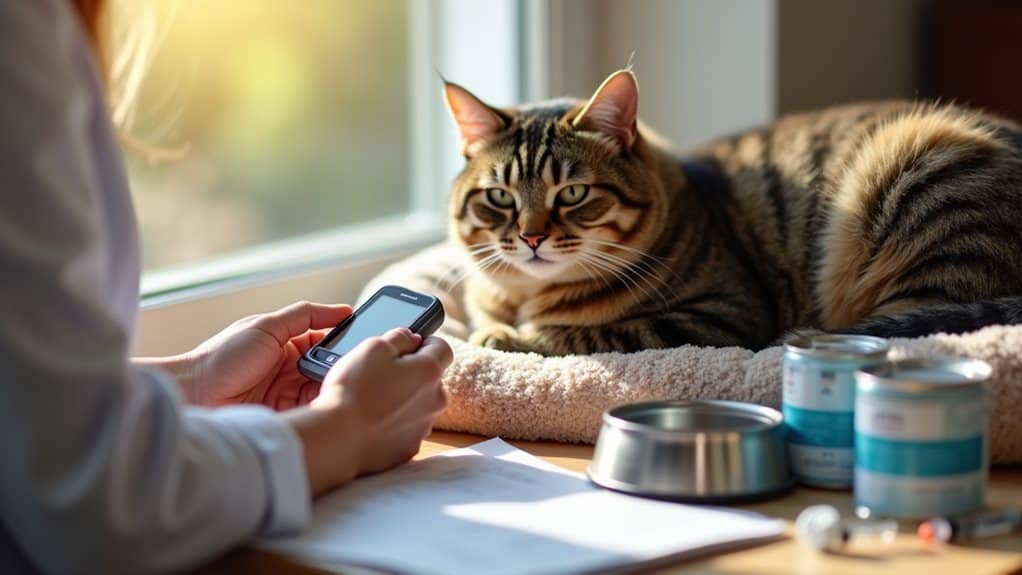
Feline diabetes shows up as increased thirst, frequent urination, weight loss, and unusual tiredness in your cat. If you notice these signs, call your vet right away. Treatment typically involves insulin injections and a high-protein, low-carb diet, with regular glucose monitoring. You’ll need to establish consistent feeding and medication routines. With proper care, many diabetic cats live normal, happy lives—some even achieve remission. The path to managing your cat’s diabetes starts with understanding these fundamentals.
Understanding Feline Diabetes: Causes and Risk Factors
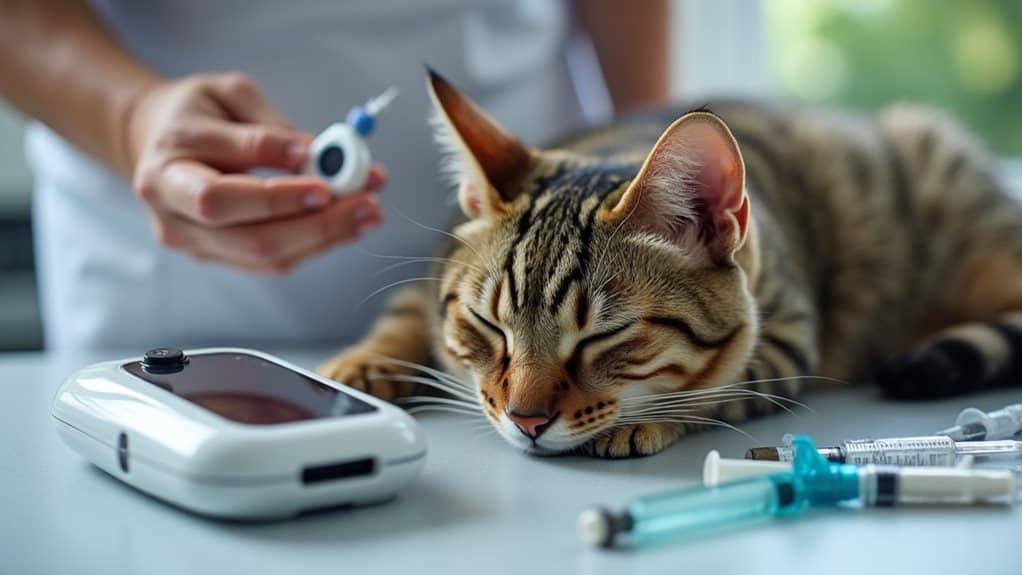
While diabetes in humans is widely discussed, feline diabetes often goes unrecognized until symptoms become severe. Your cat’s risk factors are important to understand, as they can help you identify and manage this condition early.
Obesity stands as the primary culprit, with overweight cats facing double the risk. When your feline friend carries extra pounds, their cells can’t properly respond to insulin.
Genetic predisposition also plays a notable role—certain breeds like Burmese cats have higher rates of diabetes.
Age matters too; cats over eight years old are more vulnerable.
Lifestyle factors such as an inactive routine and high-carbohydrate diets contribute substantially to risk. Male cats, especially neutered ones, seem more susceptible than females.
Curiously, some medications like steroids can trigger diabetes in predisposed cats. Regular vet check-ups are essential for monitoring your cat’s health and can help with early detection of potential issues.
Recognizing the Warning Signs: When to Call Your Vet
How quickly could you spot the subtle changes in your cat’s behavior that signal diabetes? Your feline friend can’t tell you when something’s wrong, so it’s vital to watch for early symptoms that might indicate trouble.
If your cat suddenly drinks water like it’s going out of style or visits the litter box more frequently, take notice. These behavioral changes, along with unexpected weight loss despite a hearty appetite, are classic warning signs.
Increased thirst, frequent urination, and weight loss despite good appetite are telltale diabetes signs in cats.
You might also observe your cat seeming unusually tired or walking with a strange, flat-footed stance on their hind legs. Additionally, inappropriate urination can be a key indicator of underlying health issues like diabetes.
Don’t wait for symptoms to worsen—call your vet immediately if you notice these changes. Early detection dramatically improves your cat’s chances for successful treatment and a happy, comfortable life.
Treatment Options: Insulin, Diet, and Monitoring
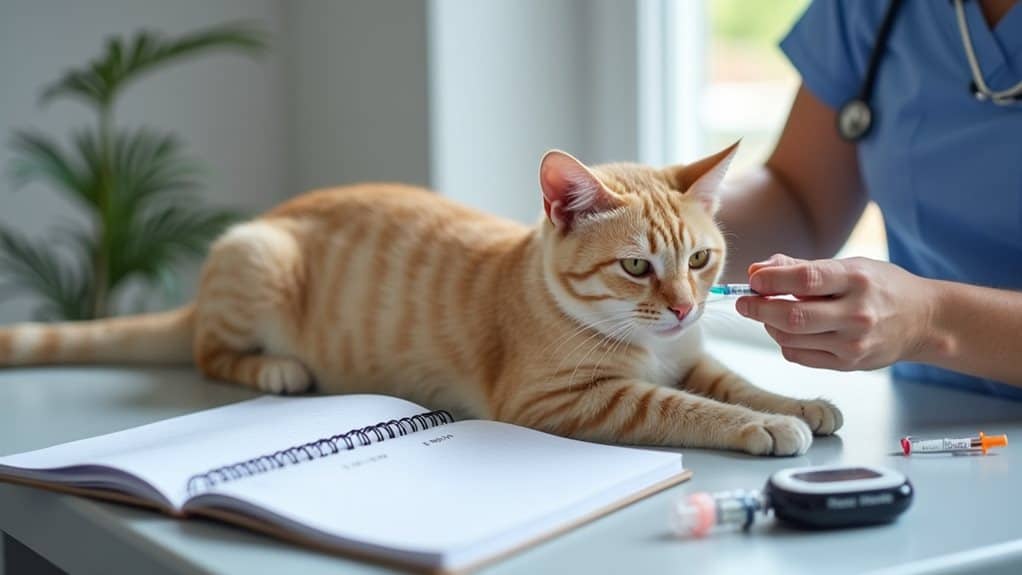
Once you’ve identified diabetes in your cat, a thorough treatment plan becomes your next priority. Most cats require insulin injections, which sounds intimidating, but you’ll quickly become comfortable with the process. Your vet will determine the proper dosage and schedule for your furry friend.
Feline nutrition plays an essential role in managing diabetes. High-protein, low-carbohydrate diets help regulate blood sugar levels more effectively than standard cat food. Some owners explore alternative therapies like herbal supplements, but always consult your vet before trying these approaches.
Regular monitoring is non-negotiable. You’ll need to track blood glucose levels, either at home with a glucose meter or through regular vet visits. It’s also important to maintain a clean environment to reduce allergens, as this can positively affect your cat’s overall health and allergy symptom management.
Weight checks, water consumption, and energy levels are also important indicators of how well your treatment plan is working.
Daily Management: Creating a Routine for Your Diabetic Cat
Because consistency forms the backbone of successful diabetes management, establishing a daily routine for your diabetic cat becomes crucial for their wellbeing.
Consistency creates the foundation for managing your diabetic cat’s health through reliable daily routines.
You’ll need to coordinate insulin injections with feeding schedules, creating a predictable pattern your cat can rely on. Gentle exercise routines also help regulate blood sugar levels, though you shouldn’t force your kitty into sudden workouts.
Here’s what your daily diabetes management routine should include:
- Fixed feeding times (typically 12 hours apart) with measured portions
- Insulin administration at the same times each day, usually after meals
- Brief play sessions to encourage natural exercise routines
- Regular monitoring of water intake, litter box use, and energy levels, as proper hydration is vital for overall health and can help prevent additional complications associated with diabetes.
Long-term Outlook: What to Expect and Potential Complications
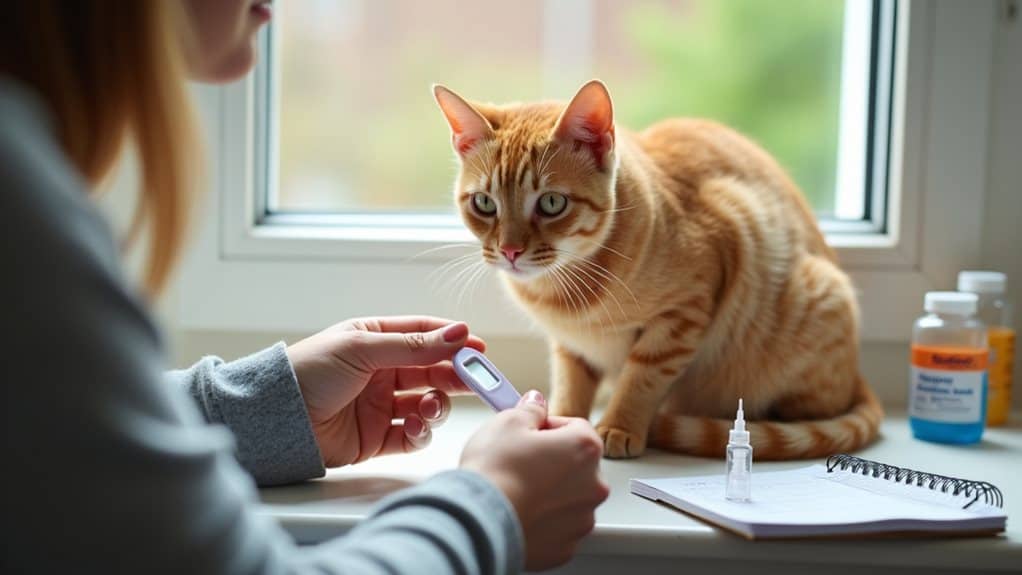
While managing your cat’s diabetes is an ongoing commitment, understanding the long-term outlook can help you prepare for the path ahead. With proper care, many diabetic cats live happy, comfortable lives for years after diagnosis.
The prognosis factors that influence your cat’s long-term health include how well their blood sugar is controlled, their age at diagnosis, and any other underlying conditions. Additionally, be aware that conditions such as cat hepatitis can complicate diabetes management, requiring special attention.
Watch for potential complications like neuropathy (nerve damage), kidney disease, or recurring infections. Diligent complications management involves regular vet checkups, monitoring for subtle behavior changes, and adjusting treatment as needed.
Some cats may even experience diabetic remission, where they no longer need insulin! Remember, your dedication to consistent care dramatically improves your furry friend’s quality of life and overall outlook.
Frequently Asked Questions
Can Cats Go Into Diabetic Remission?
Yes, your cat can achieve diabetic remission. Key remission factors include early detection and proper insulin therapy. Diet impact is substantial—low-carbohydrate foods help regulate blood glucose levels, increasing chances of successful remission.
Is Feline Diabetes Contagious to Other Pets or Humans?
Like isolated islands in a shared sea, feline diabetes isn’t contagious to other pets or humans. You don’t need to worry about transmission when managing your cat’s health condition—it’s a metabolic disease, not an infectious one.
Are Certain Cat Breeds More Prone to Developing Diabetes?
Yes, certain breeds do have higher diabetes risk. Burmese cats show a strong genetic predisposition to diabetes. You’ll notice some breed characteristics influence the condition, with overweight domestic shorthairs also commonly affected.
How Does Stress Affect Blood Sugar Levels in Diabetic Cats?
Like adding fuel to a fire, stress triggers adrenaline release in your diabetic cat, causing blood sugar fluctuations. You’ll need consistent stress management techniques to prevent dangerous spikes and maintain stable glucose levels.
Can Diabetic Cats Still Receive Routine Vaccinations?
Yes, your diabetic cat can still receive routine vaccinations. You’ll need to maintain regular vaccination schedules, but make certain your cat’s diabetes is well-controlled first to minimize health risks during the immune response.
Final Thoughts
You’ve got this! With proper treatment and monitoring, your diabetic cat can live a happy, fulfilling life. Stay committed to their insulin schedule, diet, and vet check-ups. Though managing feline diabetes might feel like climbing Mount Everest some days, the routine will become second nature over time. Remember, you’re not only extending your furry friend’s life—you’re preserving the special bond you share for many more purr-filled years.