The Best Fluffy Pancakes recipe you will fall in love with. Full of tips and tricks to help you make the best pancakes.

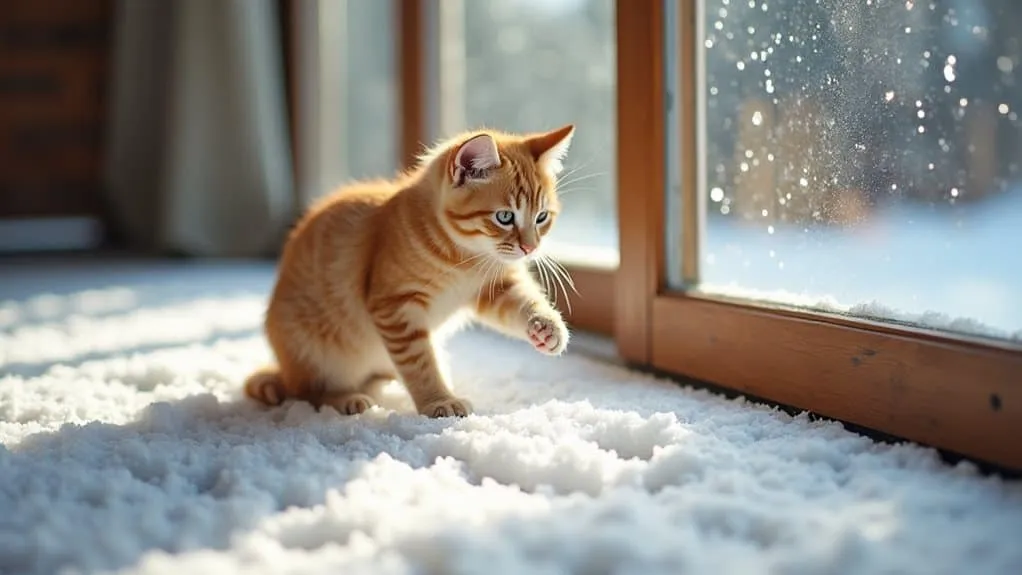
When winter's white blanket transforms your backyard into a wonderland, you might wonder if your feline friend can join in the fun. Introducing your cat to snow isn't as simple as opening the door and letting them pounce into the powder. You'll need to contemplate their personality, prepare for their safety, and understand how to make their first snow encounter a positive experience. If you're ready to help your kitty discover the magic of snow, there's plenty you should know before taking that first chilly step.
Preparing Your Cat for Winter Weather
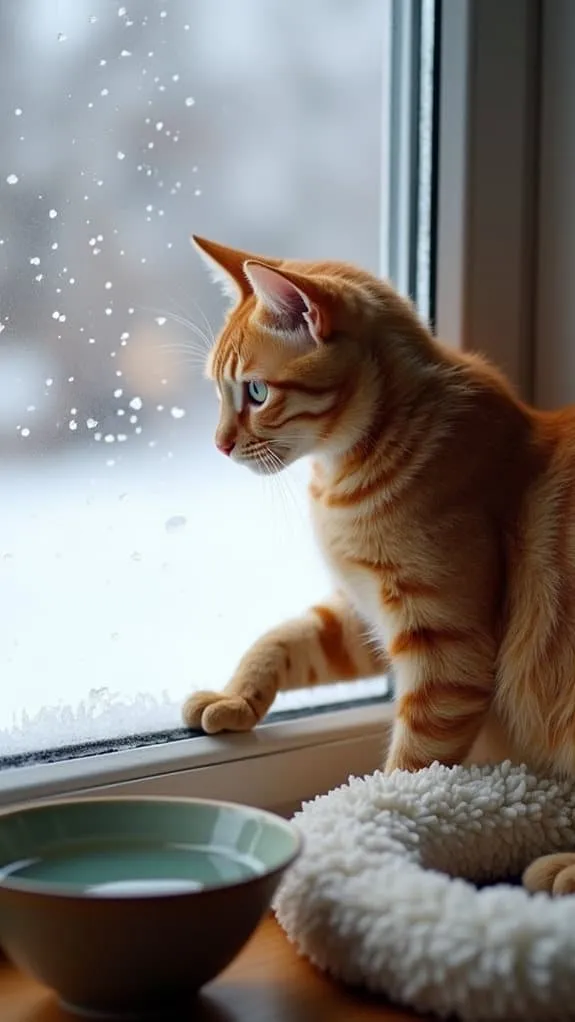
When winter's chill starts creeping in, your feline friend needs a little extra care to stay safe and cozy during the cold months ahead.
If your cat spends time outdoors, you'll want to create a proper winter shelter using straw for insulation – not blankets or towels, which can actually make them colder. For indoor cats, focus on finding them a warm, draft-free spot to rest. Your cat may display increased sleeping patterns as the days get shorter, and increased water intake becomes essential to prevent dehydration during the cold months.
Your cat's dietary adjustments are essential during winter months. You'll need to increase their portions since they're burning more energy to stay warm.
Opt for wet food when possible, as it's easier to digest and helps them maintain their body temperature. Remember to check under vehicles before starting them, as cats often seek warmth beneath car hoods during cold weather. Don't forget to use heated water bowls to prevent freezing, and always keep fresh water available to prevent dehydration in heated indoor spaces.
Creating a Safe Snow Environment
Now that you've prepared your cat for winter's challenges, let's focus on creating a safe outdoor space for their snowy adventures.
Snow safety starts with careful outdoor supervision and a thoughtfully prepared environment where your feline friend can explore comfortably.
- Remove all toxic substances like antifreeze and rock salt from your yard. Additionally, be sure to regularly inspect your outdoor space for any new hazards that may arise, especially during winter.
- Create a warm, accessible shelter with extra bedding for quick retreats.
- Clear pathways to prevent slipping and guarantee easy access to necessities.
Since kittens and senior cats are especially vulnerable, be extra cautious with their cold exposure time.
Remember to inspect your outdoor space regularly for potential hazards that might be hidden under the snow.
Your cat's safety is paramount, so you'll want to maintain fresh water sources and make sure they're protected from harsh elements. Consider using heated food bowls to prevent water from freezing in extreme temperatures.
While watching your kitty discover snow can be delightful, always keep outdoor sessions brief and supervised.
First Snow Experience Tips
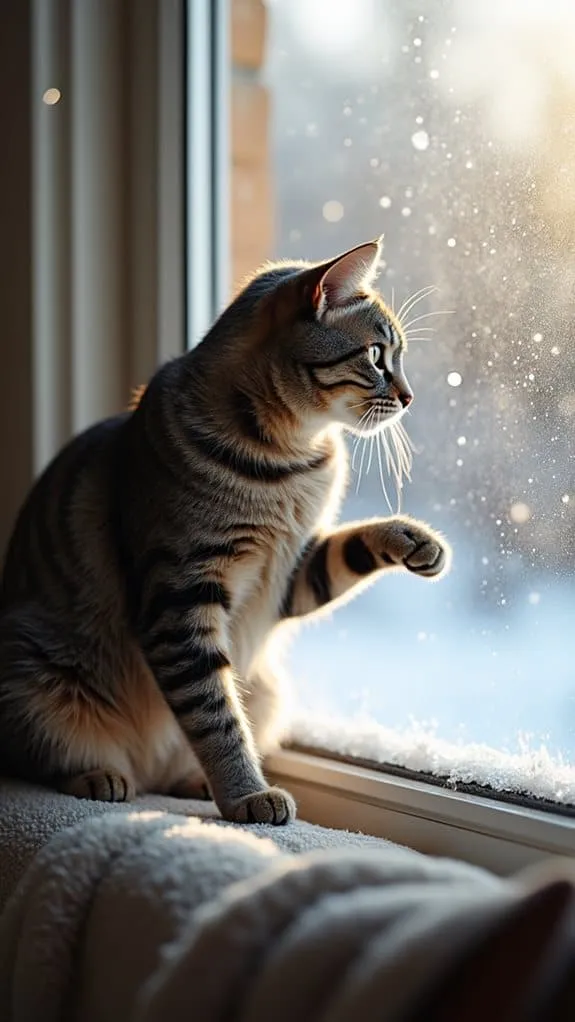
When you're ready to introduce your cat to snow, start with fresh powder in a quiet area where they'll feel most comfortable exploring the fluffy white stuff. Adventurous snow players will often eagerly dive right in, while other cats may need more encouragement.
Keep a close eye on your cat's body language – if their tail is up and they're showing interest, that's a great sign, but if they flatten their ears or try to retreat, it's time to head inside. It's also important to ensure that your indoor environment allows for safe exploration of new experiences, helping to build confidence in your cat.
Remember to limit their first snow sessions to just 5-10 minutes, which helps build positive associations while keeping them safe and warm. Always inspect and wash your cat's paws when coming back inside since rock salt can be harmful to their sensitive paw pads.
Start With Fresh Powder
Taking your cat out for their first snow adventure requires careful preparation and the right conditions to make it a positive experience. Fresh powder snow provides the perfect texture for your cat's initial snow exploration, as it's soft, clean, and less likely to contain hidden hazards. Similar to introducing new cats, proceed very slowly when acclimating your pet to snow for the first time.
You'll want to let your furry friend's natural feline snow instincts guide them while staying close by for support and safety. Since cats have a normal body temperature of 102°F, monitoring their comfort level is essential. Additionally, it's important to ensure that territorial behaviors are respected; monitor how your cat interacts with this new environment.
- Choose an area with untouched snow that's free from ice melt chemicals and road salt
- Wait for a calm, windless day when temperatures aren't too extreme
- Pick a quiet spot away from traffic and other distractions
Remember to bring your prepared backpack with warming gear, and keep initial sessions brief.
Watch as your cat discovers the magical texture of fresh snow at their own pace, offering gentle encouragement when needed.
Watch Their Body Language
Understanding your cat's body language is the key to a successful first snow encounter. Pay attention to their feline communication signals to guarantee they're comfortable exploring this new sensation. You can try meditation techniques before taking your cat out to create a calming energy.
Watch for relaxed body language cues like forward-pointing ears, half-closed eyes, and a gently curved tail, which indicate they're feeling secure. Cats that experience territorial aggression might be particularly sensitive to new environments like snow, so it's important to monitor their reactions closely.
If you notice signs of anxiety, such as flattened ears, dilated pupils, or a puffed-up tail, it's time to bring your kitty back inside. Just like with cat to cat introductions, rushing or forcing the experience can create lasting negative associations. Don't force them to stay in the snow if they're showing stress signals.
Instead, look for positive indicators like slow blinking, which means they trust you during this new experience. Remember, some cats will naturally be more curious than others, so let them set the pace for their snowy adventure.
Keep Sessions Brief
Brief snow sessions are essential for your cat's first winter adventure. Start with just a few minutes and gradually increase the session duration as your cat grows more comfortable.
By monitoring cat behavior during these short outings, you'll better understand their tolerance for cold and snow.
Key benefits of keeping sessions brief:
- Prevents cold-related health risks like frostbite and hypothermia
- Allows your cat to build confidence at their own pace
- Helps maintain positive associations with snow adventures
Remember to pack a warm backpack with fleece lining and a safe heat source for your furry friend. Additionally, regular grooming can help keep your cat's coat healthy, aiding in temperature regulation during winter outings.
You'll want to watch for signs that they're ready to head back inside, like shivering or paw lifting.
When you keep these initial encounters short and sweet, you're setting your cat up for successful snow experiences.
Managing Snow Consumption Risks
While your cat's curiosity about snow is natural, you'll need to watch carefully for any attempts to eat it, as snow can contain harmful chemicals and pollutants that aren't safe for consumption.
You can let your furry friend take tiny "sample tastes" of fresh, clean snow from your backyard, but don't let them make it a habit or snack on snow near roads or treated surfaces. It's important to note that urinary tract infections can lead to increased thirst and may cause cats to consume more snow in an attempt to hydrate.
To keep your cat safe, create a designated snow play area away from places where road salt, antifreeze, or other winter chemicals might collect.
Safe Snow Tasting Guidelines
Since cats naturally explore their environment with their mouths, you'll need to establish some ground rules for snow tasting to keep your furry friend safe.
While a few curious licks won't hurt, it's important to monitor your cat's snow consumption to prevent health issues like dehydration or hypothermia.
- Choose fresh, clean snow from undisturbed areas away from roads and walkways
- Limit snow tasting sessions to 5-10 minutes at a time
- Always provide fresh water indoors as the main source of hydration
Additionally, be cautious about antifreeze exposure as it can be found in areas where snow has melted or where vehicles are parked.
If you notice your cat becoming obsessed with eating snow, gently redirect their attention to indoor activities.
Remember to watch for signs of discomfort, such as shivering or excessive thirst. Your vigilance will help guarantee safe snow tasting experiences while protecting your cat from potential risks.
Limiting Chemical Exposure Hazards
Although your cat's winter wonderland adventures can be delightful, there's a serious side to snow exploration that you'll need to watch out for.
Chemical awareness is essential, as substances like antifreeze and de-icing agents can be deadly to your curious feline.
Always check your outdoor spaces for potential hazards, and opt for safe alternatives when treating walkways and driveways.
After your cat explores snowy areas, gently wipe their paws with a warm cloth to remove any chemical residue they might lick off later.
Create designated play zones using untreated snow, and keep your kitty away from areas where road salt or other chemicals might accumulate.
If you're unsure about an area's safety, it's better to redirect your cat to a known safe spot for their winter fun. Additionally, stress and anxiety from exposure to hazardous substances can lead to behavioral issues in your cat, making it vital to ensure their environment is safe.
Recognizing Signs of Cold Stress
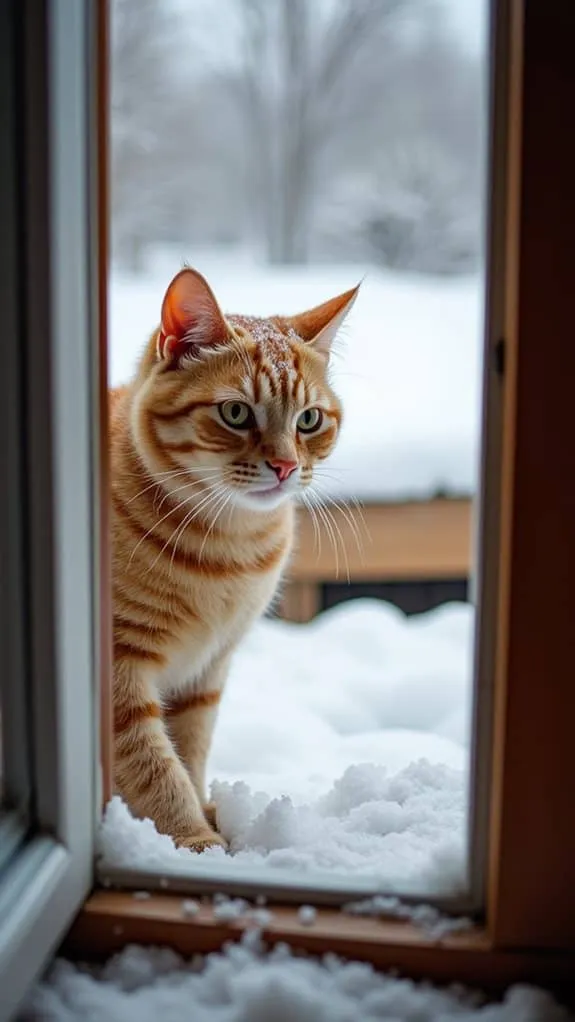
Safety should be your top priority when introducing your cat to snow, and that means knowing the warning signs of cold stress. Your cat's normal body temperature should stay above 98°F (36.6°C), and you'll need to watch for early warning signs that they're getting too cold.
Keep an eye out for these essential indicators:
- Intense shivering and seeking warm places
- Decreased activity or seeming unusually tired
- Cold ears and paws to the touch
If you notice any of these signs, it's time to bring your furry friend inside to warm up. Regular grooming can help maintain your cat's coat health and improve their ability to insulate against the cold, as a balanced diet significantly affects coat quality.
Don't wait until you see more serious symptoms like difficulty breathing or extreme lethargy – these require immediate veterinary care.
Winter Care Essentials
When winter's chill settles in, your indoor cat needs extra care to stay cozy and content throughout the cold season.
Start by creating a warm retreat with cat bedding in draft-free areas, and consider adding pet-safe heating pads or thermal blankets for extra comfort. You'll want to keep those curious paws safe by securing heaters and holiday decorations out of reach.
Don't forget about pet hydration – your furry friend might drink less in winter, so try adding wet food to their diet and keep fresh water readily available. A water fountain can make drinking more enticing for your cat.
For added warmth, layer their favorite spots with soft blankets or try a cozy cat sweater. Remember to maintain regular playtime with interactive toys to keep them active and engaged during those indoor winter days.
Final Thoughts
Like a delicate snowflake landing on your cat's whiskers, introducing them to winter's wonderland requires patience and care. You'll know you've succeeded when your furry friend explores the snow with curiosity rather than fear. Remember to watch their comfort level, limit their exposure time, and provide a warm retreat. With these safety measures in place, you're creating magical winter memories that'll make your cat's eyes sparkle like frost in the morning sun.