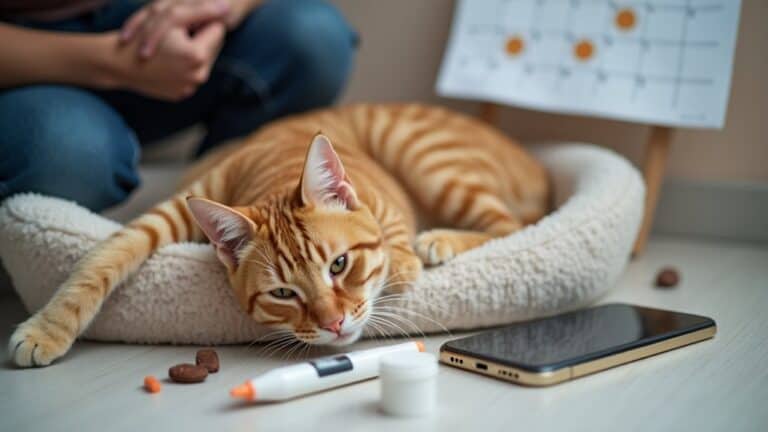
The Best Fluffy Pancakes recipe you will fall in love with. Full of tips and tricks to help you make the best pancakes.

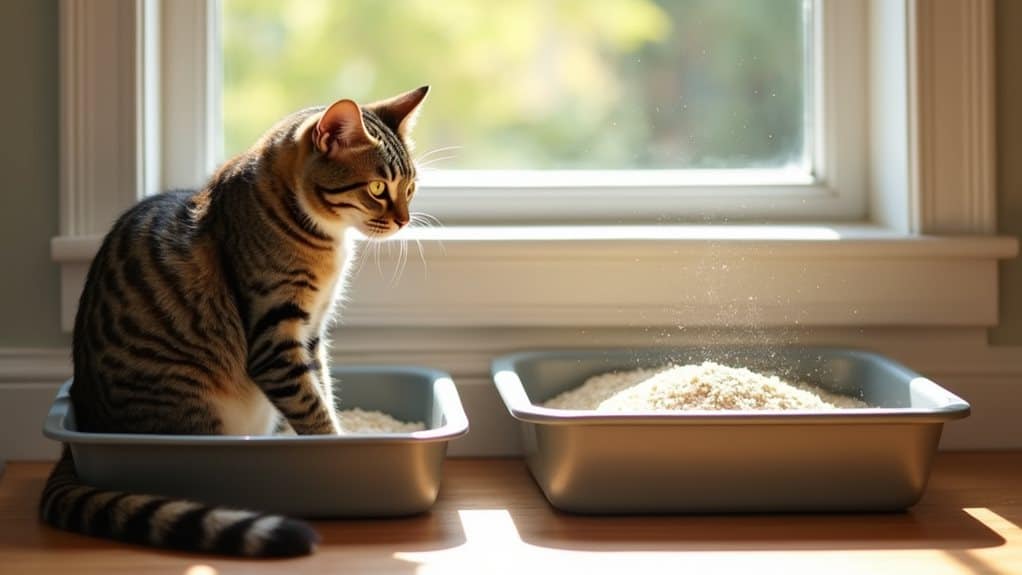
Cats avoid litter boxes for various reasons: health issues like UTIs, dirty boxes, poor location, or disliked litter. Start with a vet check to rule out medical problems. Then, clean boxes daily, place them in quiet but accessible spots, and experiment with different litter types. For multi-cat homes, follow the “one box per cat plus one” rule. Try enzyme cleaners on soiled areas to break bad habits. These simple fixes can transform your frustrated feline into a box-using pro.
Medical Issues: When Health Problems Cause Litter Box Avoidance
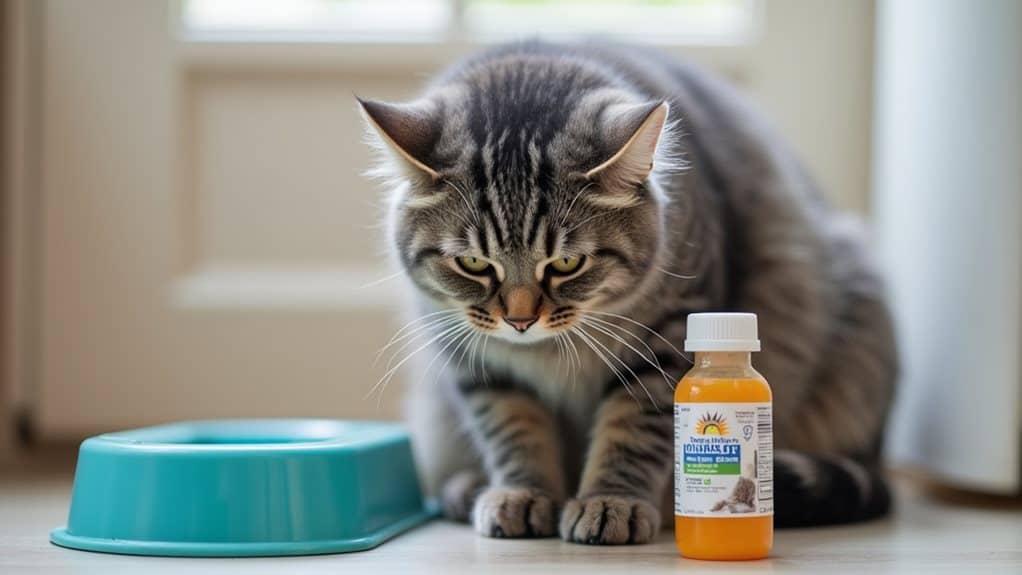
When your normally well-behaved cat starts avoiding the litter box, health issues might be the hidden culprit. Cats are masters at hiding discomfort, but their bathroom habits often tell the truth about what’s happening inside their bodies.
Urinary tract infections can make urination painful, causing your furry friend to associate the litter box with discomfort. They might start peeing in unusual places, thinking a new location will hurt less.
Similarly, digestive disorders can lead to sudden urgency that doesn’t allow enough time to reach the box.
If you notice your cat straining, crying while using the box, or making frequent, unproductive trips, it’s time for a vet visit. Monitoring for frequent urination can help identify potential medical issues early on.
Don’t scold your kitty—they’re not being stubborn, they’re trying to tell you something’s wrong!
Dirty Box Blues: How Cleaning Frequency Affects Your Cat’s Habits
Once your cat’s medical issues are ruled out, let’s look at the most common reason cats reject their litter boxes: cleanliness standards.
Cats are naturally fastidious creatures, and many will simply refuse to use a dirty box. Would you want to use a bathroom that hasn’t been flushed in days? Neither does your feline friend!
Proper litter box maintenance requires scooping at least once daily, preferably twice. Maintaining ideal depth of 2-3 inches ensures your cat has a comfortable and effective digging environment.
Clean twice daily for fussy felines. A scooped box means a happy cat.
Invest in quality cleaning tools like a sturdy scoop with deep slots and a dedicated trash container to make the job easier. A complete litter change and box scrub-down should happen weekly.
Location Matters: Finding the Perfect Spot for Your Cat’s Bathroom
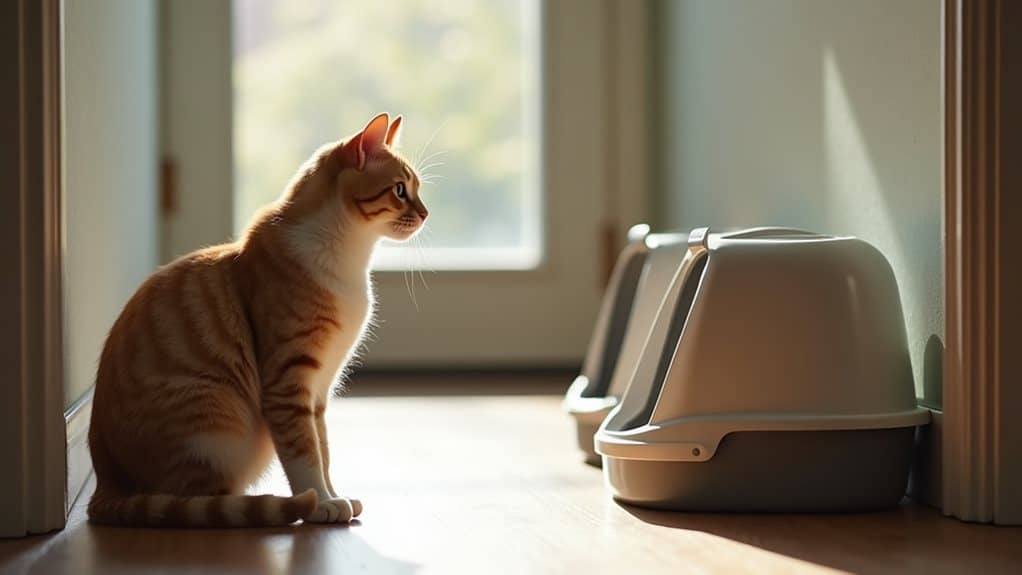
Finding the perfect spot for your litter box means balancing your cat’s need for privacy with easy access to their bathroom.
You’ll want to place it away from high-traffic areas where your cat might feel exposed or startled by sudden movements and noise.
Remember that cats, like humans, don’t appreciate having their bathroom next to their dining area, so keep food bowls and litter boxes in separate locations. Providing separate litter boxes helps minimize territorial conflicts among your cats and contributes to their overall well-being.
Privacy vs. Accessibility
Choosing the right location for your cat’s litter box involves balancing two competing needs: your cat’s desire for privacy and your need to keep the box accessible.
Cats naturally prefer secluded spots for their bathroom business, but if you hide the box too well, your furry friend might forget where it is!
Consider your cat’s privacy concerns by placing the box in a quiet area away from noisy appliances or high-traffic zones. A corner location often works well, providing security from two sides.
However, don’t create accessibility challenges by tucking it into impossible-to-reach spaces, especially for senior cats or kittens.
Some cats enjoy covered boxes for extra privacy, while others prefer open ones where they can keep watch. Additionally, ensure that the litter box is placed in a location where it is easy to maintain and clean, as regular access to the litter box is essential for preventing aversion and promoting good habits.
Ultimately, you’ll need to experiment with different setups until you find what makes your particular cat comfortable.
Traffic Flow Matters
While privacy remains essential for your cat’s comfort, the traffic flow around their litter box can make or break their bathroom experience.
Cats are naturally cautious creatures who don’t appreciate surprises while they’re in vulnerable positions. Would you want someone suddenly walking by when you’re using the restroom?
Place the litter box away from high-traffic areas like hallways, doorways, and busy living spaces. Your cat’s litter preferences might include a quiet corner where they can see approaching family members or pets without feeling trapped. Providing multiple litter boxes ensures that each cat can choose their preferred space without feeling threatened or stressed.
Consider box accessibility from multiple angles—ensure your cat has at least two escape routes when using their facilities.
Litter Type Preferences: Discovering What Your Cat Actually Wants
Your cat’s pickiness about litter isn’t just feline snobbery—it’s actually about what feels right under their paws, with substrate texture being the top consideration for most cats.
You’ll want to experiment with different textures, from clay to silica crystals, noting which ones your cat seems most comfortable using through their consistent bathroom habits.
Cat noses are incredibly sensitive, so unscented litters often work best, as your kitty might avoid strongly scented options that smell pleasant to you but overwhelming to them. Additionally, maintaining litter box cleanliness is crucial, as neglecting this can lead to increased scratching and refusal to use the box.
Substrate Matters Most
Cats, with their finicky personalities, often have strong opinions about their bathroom facilities. When it comes to litter box issues, substrate selection might be the hidden culprit behind your cat’s refusal to use the box.
Many cats develop strong preferences for specific textures underfoot, making substrate compatibility essential for bathroom success. Your furry friend might be voting with their paws!
If they’re avoiding the box, try offering different options—fine-grained clumping clay, recycled paper pellets, or silica crystals—to see which they prefer. Regular veterinary check-ups can also help identify any underlying health issues that might affect their litter box habits.
Place multiple boxes with different substrates side-by-side and observe which becomes the favorite.
Texture Testing Tips
Since every feline has unique preferences, discovering your cat’s favorite litter texture requires some detective work.
Cats experience litter sensations differently than we do, and what feels comfortable to one may be unbearable to another.
Try setting up a texture test with multiple boxes containing different litter types—fine-grained clumping clay, coarse crystals, recycled paper pellets, or natural options like pine or corn.
Watch which your cat gravitates toward without prompting. Some cats adore the soft feel of fine-grained varieties between their toes, while others prefer larger particles that won’t stick to their paws. Additionally, consider using biodegradable litter options to promote a more eco-friendly disposal practice that aligns with your cat’s preferences.
Scent Sensitivities Explained
While humans might enjoy scented products around the house, a cat’s sensitive nose can find artificial fragrances overwhelming and off-putting.
Your feline friend’s scent preferences play a vital role in their litter box habits, as cats rely heavily on their sense of smell to traverse their world.
Understanding your cat’s scent sensitivities can help solve many litter box issues:
- Strong perfumes in scented litters may cause your cat to avoid the box completely
- Pheromone influences drive many of your cat’s behaviors, including where they prefer to eliminate
- Cleaning products with strong odors might make your cat associate the litter box with unpleasant experiences
- Unscented, natural litters often appeal more to a cat’s instinctual preferences
- Whisker fatigue can also cause behavioral changes during feeding, so ensuring comfort in all sensory experiences is crucial.
Try offering unscented options and notice if your cat seems more enthusiastic about their bathroom arrangements!
Too Many Cats, Too Few Boxes: The Magic Number for Multi-Cat Households
One of the most common mistakes in multi-cat households is underestimating how many litter boxes you actually need. While you might think one large box serves multiple cats just fine, your feline friends strongly disagree!
Cats are territorial creatures, and sharing toilets can create serious stress. The golden rule is simple: maintain a proper cat to box ratio by having one box per cat, plus an extra one. So if you have three cats, you’ll need four boxes.
For multi-cat harmony, remember: one box per cat plus one extra. Territory matters to felines!
This isn’t just about convenience—it’s about respecting feline territory and preventing elimination issues before they start. Providing individual boxes ensures privacy, which helps to reduce stress among your cats.
Place these boxes in different locations throughout your home, not all lined up in one room. Your cats will appreciate having options, and you’ll appreciate fewer “accidents” on your favorite rug or new couch!
Stress and Anxiety: Environmental Factors Affecting Litter Box Use
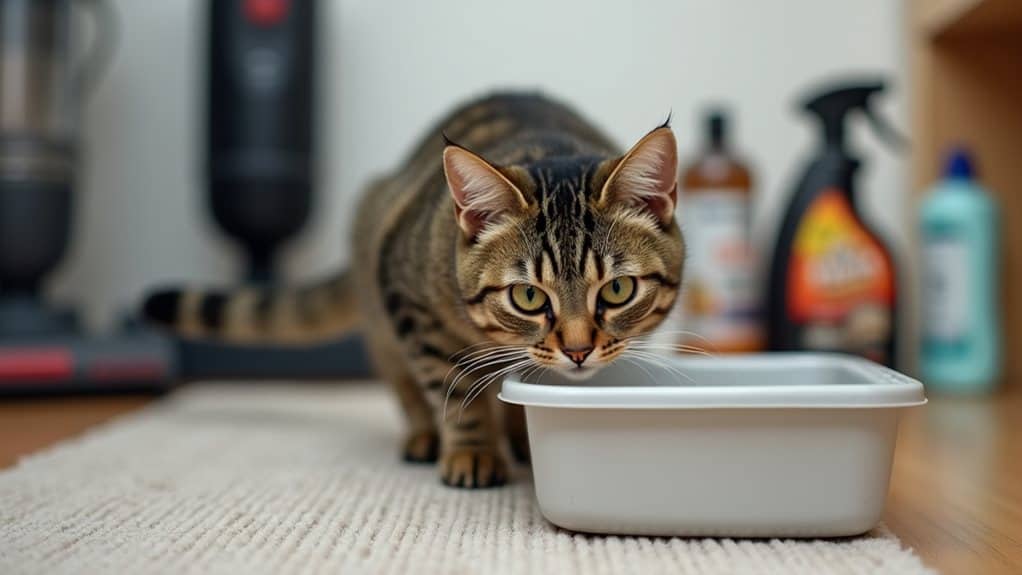
Your cat’s litter box troubles might stem from stress in their environment, merely a dirty box.
If you’ve added new cats to your home or made considerable changes like moving furniture, your cat may express their anxiety by avoiding the litter box.
Even outdoor threats, like neighborhood cats peering through windows, can make your feline friend too nervous to use their bathroom spot comfortably.
Multi-Cat Household Tensions
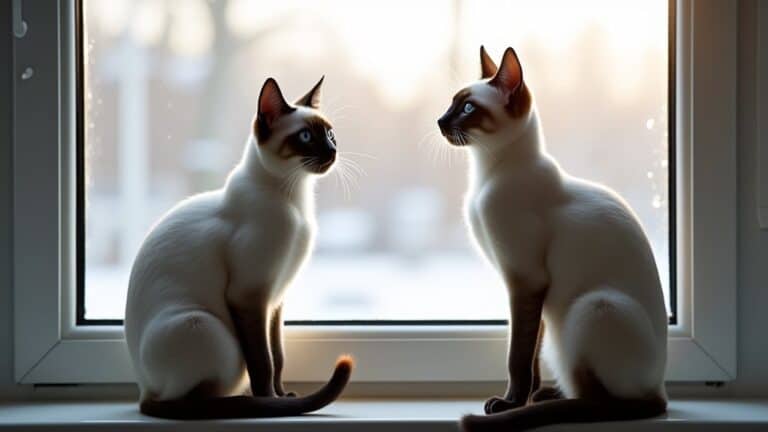
Living with multiple cats can transform a peaceful home into a battleground when feline tensions rise. Understanding multi-cat dynamics is essential when litter box issues emerge. Your cats aren’t being stubborn—they’re responding to complex feline hierarchy challenges that affect their bathroom habits.
When tension exists between your cats, litter box avoidance often follows. Watch for these warning signs:
- A dominant cat guarding litter box areas, preventing others from access
- Subordinate cats feeling too vulnerable while using exposed boxes
- Cats avoiding spaces where they’ve previously been ambushed
- Stress marking behaviors outside the box to establish territory
You’ll need one litter box per cat plus one extra, placed in different locations throughout your home. This simple rule helps reduce confrontations and gives each cat a safe, accessible option when nature calls.
Disruptive Home Changes
Cats thrive on consistency, which explains why even minor home changes can trigger anxiety and subsequent litter box issues.
Whether you’re rearranging furniture, welcoming a new family member, or hosting overnight guests, your cat may express their discomfort by avoiding their litter box.
Pay attention to your cat’s litter box preferences when your home environment changes. During renovations or holiday decorating, make sure their box remains in a familiar location with easy access.
If you must move their box, do it gradually—just a few inches per day—rather than suddenly relocating it across the room.
Consider using pheromone diffusers to create a calming atmosphere during stressful shifts.
Outdoor Predator Fears
Even though they live indoors, many cats experience considerable stress when they detect potential predators lurking outside. Your cat’s instinctual behaviors kick in when they sense outdoor threats, often causing them to avoid their litter box.
Cats feel vulnerable while eliminating, and if they associate the box location with danger, they’ll find safer alternatives—like behind your couch!
Signs your cat might be experiencing predator fears:
- Hesitation approaching boxes near windows
- Startling and running from the litter box when outdoor noises occur
- Using the bathroom in enclosed, protected spaces instead
- Displaying heightened vigilance near exterior walls
To help your stressed kitty, try moving the litter box away from windows and exterior doors.
Adding privacy shields or placing boxes in quieter, interior rooms can make a tremendous difference in helping your cat feel secure enough to use their box again.
Box Design Dilemmas: Size, Style, and Accessibility Issues
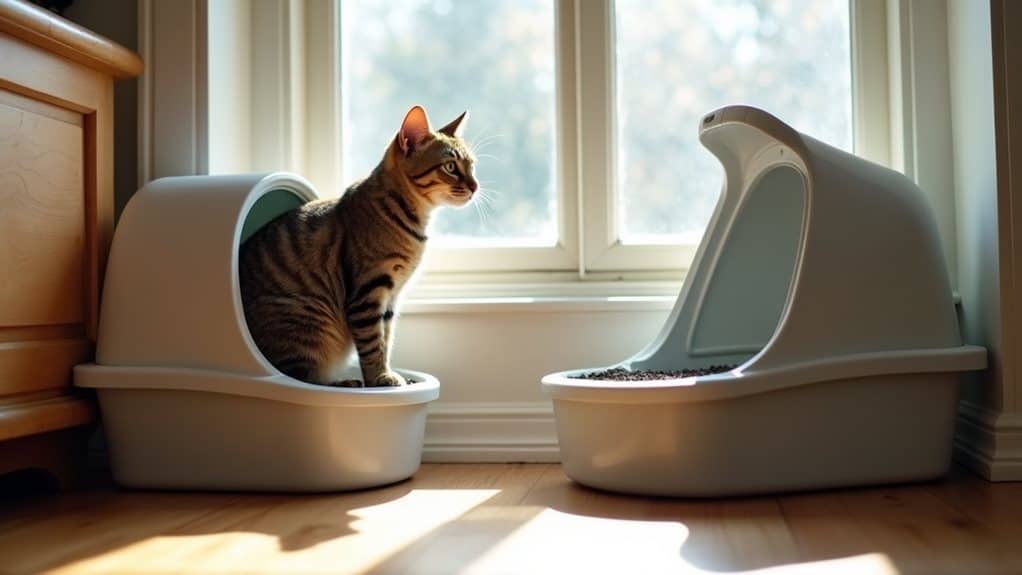
When your feline friend refuses to use their litter box, the problem mightn’t be behavioral but rather the box itself.
Cats are incredibly particular about their bathroom setup, and the design details matter more than you might think.
The box shape can make or break your cat’s bathroom experience. Many cats prefer open, spacious boxes where they can turn around comfortably and dig to their heart’s content.
Entrance height is another important factor, especially for senior cats or kittens who might struggle with high walls. If your older cat suddenly avoids the box, they might be dealing with arthritis that makes climbing difficult.
Consider investing in a larger box with lower entry points.
Territorial Tensions: When Other Pets Interfere With Litter Box Use
Beyond the physical design of the litter box, another common challenge lurks in multi-pet households. Your cat may avoid their bathroom because of territorial disputes with other animals.
Even the friendliest cats can refuse their litter box when feeling territorially threatened by furry housemates.
Cats are naturally sensitive to pet hierarchy issues, especially when it comes to private activities like using the litter box.
When your furry friends are engaged in a turf war, consider these solutions:
- Place multiple litter boxes in different locations to prevent ambushes and give timid cats safe options
- Create privacy screens or barriers that block other pets from watching or approaching
- Separate litter boxes by pet if possible, giving each animal their own designated space
- Monitor interactions and intervene when you notice intimidation happening around box areas
These strategies can help restore peace in your multi-pet household and get everyone back to proper bathroom habits.
Breaking Bad Habits: Retraining Your Cat After Accidents Begin
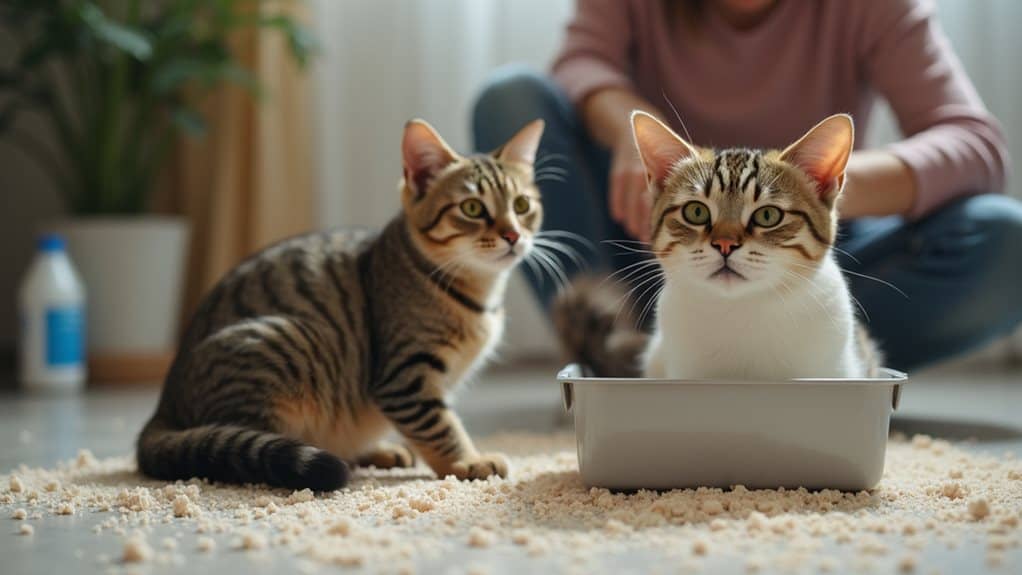
Once your cat develops a habit of avoiding the litter box, retraining requires patience and detective work.
Start by thoroughly cleaning accident areas with enzyme-based cleaners that eliminate odors completely. Your cat’s keen nose can detect even faint smells that might trigger repeat offenses.
Effective retraining techniques include temporarily restricting your cat to a smaller space with a clean litter box, fresh water, and comfortable bedding. This helps re-establish proper habits.
When your furry friend uses the box correctly, immediately offer treats, gentle praise, or playtime as positive reinforcement.
Consider making the soiled areas less appealing by placing aluminum foil or sticky tape there—cats typically hate these textures!
Cleaning Cat Accidents Properly: Eliminating Odors That Encourage Repeat Behavior
Proper cleaning techniques are the foundation of successful retraining. When your cat has an accident, simply masking the smell won’t work—cats can detect odors we can’t perceive.
Thorough cleaning with specialized odor neutralizers breaks the cycle of repeat marking, an essential step in accident prevention.
For effective cleanup, follow these steps:
- Blot fresh accidents immediately to remove as much liquid as possible
- Use enzymatic cleaners designed specifically for pet messes, not only regular household cleaners
- Apply odor neutralizers after cleaning to eliminate all traces cats might detect
- Clean areas thoroughly, even underneath furniture where odors might linger
Frequently Asked Questions
Can Cats Be Trained to Use a Human Toilet?
Yes, you can train your cat to use a human toilet. With patience and consistent toilet training techniques, you’ll gradually modify your cat’s behavior from litter box to toilet over several weeks or months.
Will Automatic Self-Cleaning Litter Boxes Frighten My Cat?
Like a noisy dragon awakening, self-cleaning boxes can initially startle your cat. You’ll want to introduce it gradually, observing your cat’s behavior closely. Many felines adjust well with patience and positive reinforcement.
Do Pheromone Products Actually Help With Litter Box Issues?
Yes, pheromone products can help with litter box issues by reducing stress. You’ll find varying pheromone effectiveness among cats, so consider combining them with litter box alternatives like different locations or substrate types for best results.
Should Senior Cats Have Special Considerations for Litter Boxes?
Yes, senior cats need special considerations. You’ll want to prioritize their comfort with low-sided boxes for easier entry. Guarantee litter box accessibility on each floor to accommodate mobility issues they’re experiencing with age.
Can Cats Develop Sudden Litter Box Aversion After Moving Homes?
Yes, in the blink of an eye, your cat can suddenly avoid their litter box after moving. You’ll need to contemplate litter box location and manage stress factors to help them readjust to their new surroundings.
Final Thoughts
You’re now armed with cat bathroom wisdom that’ll transform your home from a potential minefield to a harmony zone! Whether it’s finding the perfect litter that your finicky feline will actually use, or placing boxes in locations so ideal your cat will think they’ve discovered bathroom heaven, success is just around the corner. Remember, your patience will pay off a thousand times when your floors—and your relationship with your cat—remain spotless!