The Best Fluffy Pancakes recipe you will fall in love with. Full of tips and tricks to help you make the best pancakes.

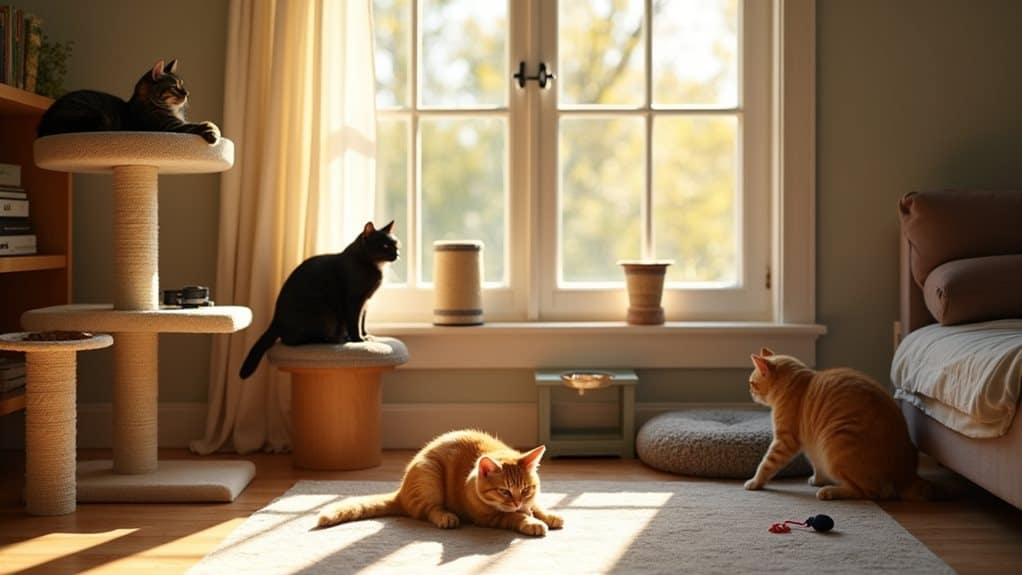
To create harmony in a multi-cat home, focus on providing multiple resource stations—separate feeding areas, litter boxes (one more than your cat count), and diverse resting spots at various heights. Introduce new cats gradually through scent-swapping and supervised meetings. Vertical space is essential—cat trees and shelves allow retreat options during conflicts. Establish feeding routines in separate locations and create shared spaces for communal scent marking. These strategies help cats establish natural hierarchies without the drama of territorial disputes.
Understanding Feline Territorial Behavior
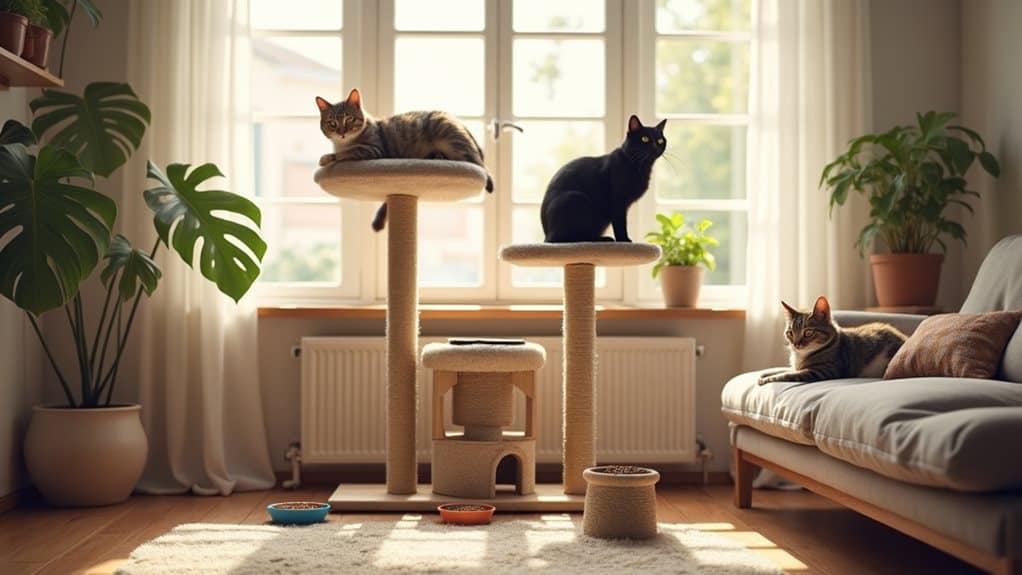
When you bring multiple cats together under one roof, you’re fundamentally asking independent creatures with strong territorial instincts to share their space.
Understanding feline hierarchy is essential to maintaining peace in your multi-cat home. Cats naturally establish social dynamics through subtle interactions that you might miss if you’re not watching closely.
Unlike dogs, who typically follow a straightforward pack structure, cats create complex, sometimes fluid relationships. You’ll notice them establishing territories through scent marking, visual cues, and occasional standoffs.
These aren’t signs of hatred—they’re normal communication methods cats use to set boundaries.
Your role isn’t to eliminate territorial behavior (that’s impossible!), but to provide enough resources and space so each cat feels secure in their position within the household hierarchy. Implementing positive reinforcement techniques can assist in managing interactions and ensuring harmony among your feline companions.
When cats don’t need to compete, they’re more likely to coexist peacefully.
Creating Multiple Resource Stations Throughout Your Home
Since cats naturally compete for resources, you’ll need to create multiple stations throughout your home to reduce tension and prevent territorial disputes.
Smart resource allocation isn’t just nice—it’s crucial for peaceful coexistence! Think of your home as a feline community where each cat deserves equal access to necessities.
Creating a balanced cat kingdom isn’t optional—it’s the foundation for harmony in your multi-feline household.
For effective space optimization, establish these key resource stations:
- Feeding zones – Place food dishes in separate areas, at least 3 feet apart, to prevent mealtime confrontations.
- Litter box locations – Follow the “n+1 rule” (one more box than cats).
- Water stations – Distribute fresh water sources throughout your home.
- Resting spots – Create multiple cozy hideaways at various heights for each cat to claim.
Additionally, ensure cleanliness in the litter boxes, as proper setup enhances overall cat well-being, which diminishes unwanted scratching behavior.
Your furry roommates will thank you with purrs instead of hisses!
Vertical Space: The Overlooked Peace-Keeping Strategy
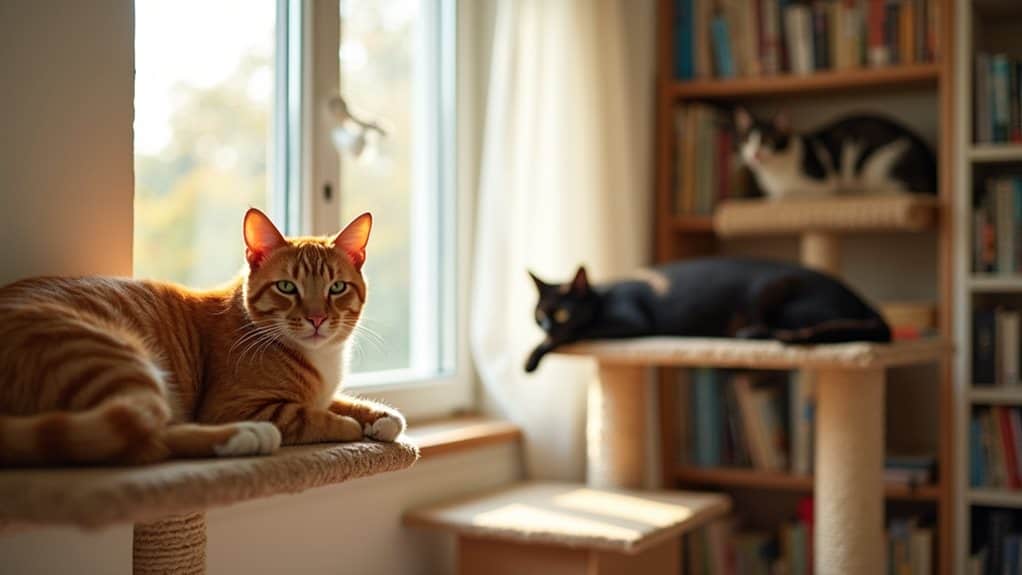
While many cat owners focus on floor-level arrangements, vertical space remains the unsung hero of multi-cat household harmony. When cats feel crowded, tension rises—but the solution might be above your head! By adding cat shelves, tall scratching posts, and multi-tiered cat trees, you’re fundamentally expanding your home’s square footage in the feline dimension.
The vertical space benefits are remarkable. Cats naturally seek raised resting spots where they can observe their territory while feeling secure. This instinctive desire for height allows your cats to establish their own zones without direct confrontation. Incorporating interactive playtime through vertical arrangements can further enhance their physical and mental well-being.
You’ll notice less hissing and fewer standoffs when cats can retreat upward instead of facing off on the ground. Plus, watching your cats traverse their vertical playground becomes an entertaining household feature that benefits everyone—especially your now-happier feline family members.
Proper Introduction Techniques for New Cats
Although many cat owners make the mistake of rushing introductions, properly acclimating a new cat to your existing feline family requires patience and strategy.
Successful new cat integration hinges on gradual introductions that respect each cat’s need for security. You’ll find your furry roommates settling in more harmoniously when you follow a thoughtful approach.
Here’s your step-by-step introduction plan:
- Start with complete separation – keep your new cat in a private room with all necessities for 3-7 days.
- Exchange scents by swapping bedding or toys between cats.
- Allow supervised visual contact through a baby gate or cracked door.
- Progress to short, supervised face-to-face meetings, gradually increasing duration. Proper wound care techniques such as monitoring for signs of discomfort is essential for a smooth transition when introducing new cats to prevent anxiety-induced stress.
Managing Feeding Time Conflicts

Even the most well-behaved cats can transform into territorial creatures when food enters the equation. That peaceful home you’ve created can quickly become a battleground when dinner bells ring, with cats hissing, swatting, or stealing from each other’s bowls.
To restore mealtime peace, establish consistent feeding routines that your cats can anticipate. You’ll want to place food dishes in separate locations, giving each cat their own dining space away from high-traffic areas.
Pay attention to individual food preferences too – some cats might need more time to eat or prefer wet food over dry. Introducing multiple resources can also help minimize competition and promote harmony during feeding times.
For particularly competitive eaters, consider feeding them in different rooms or using microchip feeders that only open for specific cats.
Scent Management and Cat Communication
You’ll find that cats communicate primarily through scent, making proper scent management crucial for multi-cat harmony.
Try introducing scent swapping techniques between your cats, such as rotating bedding or gently rubbing a cloth on one cat and then allowing others to investigate it.
Creating communal scent zones and using pheromone products can greatly reduce tension, as they help establish a shared “family scent” that makes all your feline friends feel more secure together. Additionally, understanding that cat huffing serves as a method for communication can help you better interpret your cats’ feelings during these interactions.
Scent Swapping Techniques
Scent swapping helps them become familiar with each other before they meet face-to-face, reducing potential conflict. Try these proven scent swapping techniques:
- Swap bedding between cats daily, allowing them to sleep on each other’s scent trails without the stress of direct contact.
- Use a soft cloth to gently rub around each cat’s cheeks and paws, then place it near the other cat’s resting areas.
- Brush each cat with the same brush to simulate mutual grooming, creating a shared colony scent.
- Exchange toys between cats to blend their scents while associating each other with positive play experiences.
These methods gradually build a scent profile that helps your cats recognize each other as family. Additionally, establishing a routine for interaction can enhance feelings of love and security among the cats, making the introduction process smoother.
Communal Scent Zones
Beyond individual scent swapping, creating communal scent zones throughout your home helps cats establish shared territory and communicate peacefully.
Designate specific areas where your cats can engage in communal grooming and scent marking together. Try placing comfy blankets or beds in neutral locations where all cats can leave their scent without feeling threatened.
You’ll notice your cats rubbing against these shared items, depositing their unique scent signatures while picking up others’. This natural scent blending creates a “family smell” that reduces tension.
Some cats even start grooming each other in these zones, strengthening their bonds.
Don’t wash these items too frequently! While it might seem messy to you, those mingled scents are creating an invisible harmony map that helps your cats feel secure and connected in their shared home. Additionally, incorporating interactive toys can further enhance their time spent together, providing mental stimulation and promoting positive interactions among housemates.
Pheromone Product Benefits
Synthetic pheromone products offer a scientific approach to managing multi-cat household tensions when natural scent-sharing techniques aren’t quite enough.
You’ll find pheromone diffusers and calming sprays mimic the natural facial pheromones cats use to mark safe spaces, helping reduce anxiety and territorial disputes.
The benefits of using these products include:
- Reduced urine marking – cats feel less need to claim territory when surrounded by familiar, calming scents.
- Decreased aggressive encounters – pheromones signal safety, lowering defensive reactions.
- Smoother introductions – new cats integrate more easily when the environment feels secure.
- Enhanced overall harmony – relaxed cats mean a more peaceful household for everyone.
When strategically placed in common areas, these science-backed solutions can transform your multi-cat dynamic without medication or training, making everyone’s lives happier. Additionally, understanding the types of aggression that may arise can further assist in fostering a harmonious environment.
When to Seek Professional Behavioral Help
If you’re noticing persistent aggression, extreme hiding, or prolonged hissing between your cats, it’s time to contemplate professional behavioral help.
Cat behaviorists can offer specialized intervention options customized to your specific household dynamics, including gradual reintroduction protocols or environmental modifications.
Additionally, considering spaying as a preventive measure can help reduce aggressive behaviors linked to heat cycles in females.
You don’t have to solve serious cat conflicts alone—professional guidance often makes the difference between ongoing tension and peaceful coexistence.
Warning Signs
While many cat conflicts can be resolved with patience and the strategies we’ve discussed, certain behaviors signal it’s time to call in professional help.
Learning to recognize these warning signs and behavioral cues can prevent escalation and protect all your feline family members.
Watch for these serious indicators:
- Persistent aggression that doesn’t improve after several weeks of intervention
- Self-harm behaviors like excessive grooming or refusing to eat
- Inappropriate elimination that continues despite medical clearance and litter box adjustments
- Hiding or freezing when the other cat enters a room, showing extreme fear
You know your cats best, so trust your instincts.
If something feels wrong or your once-peaceful home has turned into a battleground, don’t wait—reach out to a certified feline behaviorist or your veterinarian.
Intervention Options
Recognizing those warning signs is only half the battle—now let’s explore what professional help actually looks like. When your cats’ conflicts have escalated beyond simple hissing matches, it’s time to contemplate calling in a certified animal behaviorist.
These experts offer specialized intervention techniques customized to your cats’ specific issues, not generic solutions that might work for dogs. A professional can develop a thorough behavioral modification plan that addresses the root causes of tension.
They’ll observe interactions you might miss and suggest environmental changes, from strategic litter box placement to creating vertical territory. Don’t worry—seeking help isn’t admitting failure! It’s actually a sign you’re a dedicated pet parent who wants the best for your furry family.
Many issues can be resolved within a few sessions, transforming your home from a battleground back to the peaceful haven everyone deserves.
Frequently Asked Questions
Can Cats From Different Age Groups Live Harmoniously Together?
Yes, cats from different age groups can live harmoniously together. You’ll need to manage their social dynamics carefully and understand age compatibility factors when introducing them, guaranteeing each cat has their own space and resources.
How Do I Stop My Resident Cat From Bullying the New Cat?
Envision this: your resident cat wearing a tiny crown while the newcomer cowers in a corner. You’ll need to reset their territorial behavior by separating them, then reintroducing slowly. The social hierarchy takes time to establish.
Should I Separate Fighting Cats Overnight or During Absences?
Yes, you should separate fighting cats overnight or when you’re away. Overnight separation is an effective fighting prevention strategy, giving them space to decompress without supervision and reducing territorial confrontations when you can’t intervene.
Can Cat Pheromone Diffusers Actually Reduce Multi-Cat Household Tension?
Yes, pheromone diffusers can reduce tension between cats. You’ll often notice improved feline stress levels within 1-2 weeks. Their effectiveness varies by household, but many cat owners report calmer interactions and fewer territorial displays.
How Long Does It Typically Take for Cats to Accept Each Other?
You thought getting cats to accept each other would be quick? Ha! It’ll take 2-8 weeks with gradual introduction. Patience required—your feline dictators need time to negotiate their peace treaty on their terms.
Final Thoughts
You’ve discovered that multi-cat harmony isn’t just luck—it’s strategic planning. By providing enough resources, vertical spaces, and proper introductions, you’re creating a peaceful feline community. Remember, cats aren’t naturally inclined to share their space, but with your thoughtful management of territories and feeding routines, they’ll adjust. When tensions arise, don’t hesitate to seek help. With patience and these techniques, your cats can move from hissing roommates to purring companions.