The Best Fluffy Pancakes recipe you will fall in love with. Full of tips and tricks to help you make the best pancakes.

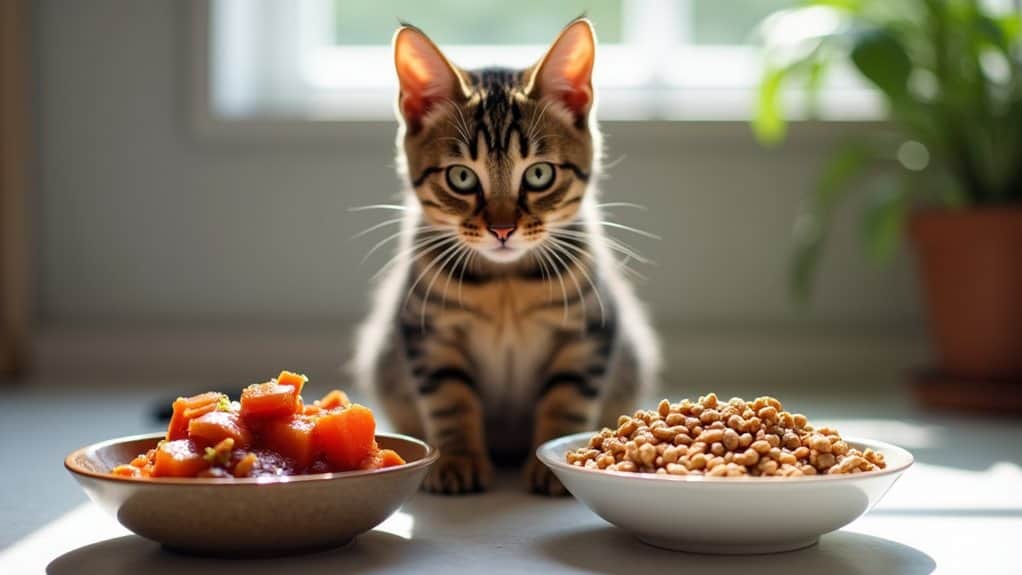
Wet cat food offers superior hydration with 70-80% water content (versus dry’s 10%), helping prevent urinary and kidney issues. While wet food typically contains higher-quality proteins that are easier to digest, dry kibble provides convenience and potential dental benefits. Your cat’s weight management might be easier with wet food’s higher satiety effect at fewer calories. Consider a hybrid approach, combining both food types to balance hydration, nutrition, and practicality for your feline friend’s unique needs. The perfect feeding strategy awaits below.
Hydration Matters: How Moisture Content Affects Feline Health
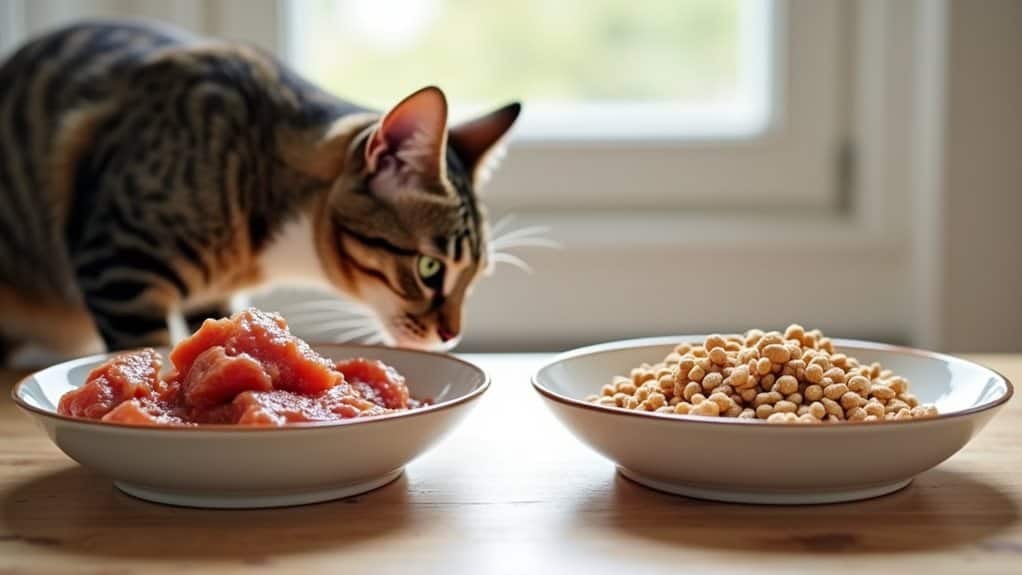
While many cat owners focus on taste and convenience when choosing between wet and dry food, hydration is actually the most critical factor to evaluate for your feline’s health.
Cats naturally have a low thirst drive, which means they don’t always seek out hydration sources on their own. This evolutionary trait dates back to their desert-dwelling ancestors!
Wet food’s moisture advantages are notable – with about 70-80% water content compared to dry food’s measly 10%. This extra hydration helps prevent urinary tract issues, kidney problems, and constipation that plague many cats.
You’ll notice your cat might urinate more frequently on wet food, which is actually a good sign! Their system is processing more fluids, flushing toxins, and keeping everything functioning seamlessly.
It’s like giving your kitty a built-in water fountain with every meal. Additionally, providing a balanced diet formulated for urinary tract health is crucial for maintaining your cat’s overall well-being.
The Protein Quality Comparison: Bioavailability in Wet vs. Dry Formulations
Beyond hydration benefits, protein quality emerges as another key factor when choosing your cat’s food. While both food types can provide adequate nutrition, wet food often contains higher-quality proteins with better amino acid profiles that more closely match your cat’s natural dietary needs.
Quality protein matters—wet cat food often provides superior amino acids that align with your cat’s carnivorous nature
When examining protein digestibility, wet food typically offers an advantage. The minimal processing and higher moisture content in canned foods helps preserve protein structure, making nutrients more bioavailable to your feline friend.
Your cat’s digestive system can extract more nutritional value from these proteins with less effort. Additionally, a healthy diet rich in omega-3 and omega-6 fatty acids can support your cat’s overall health, further enhancing the benefits of a wet food diet.
Dry kibble, while convenient, sometimes contains plant-based proteins that aren’t as easily utilized by your obligate carnivore.
Dental Health Considerations: Separating Myth From Reality
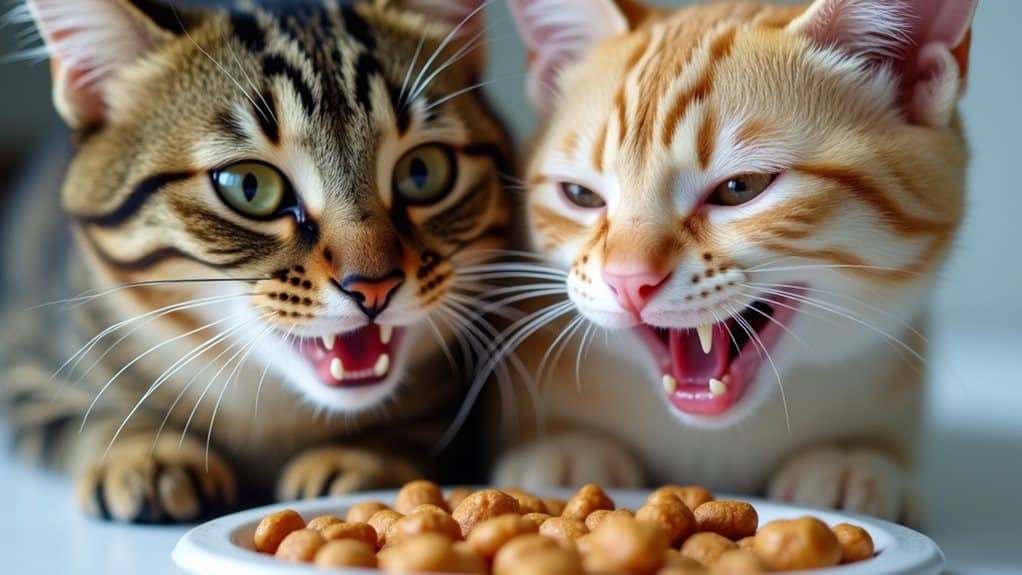
Despite what you’ve probably heard from pet food marketing, the relationship between dry food and dental health isn’t as straightforward as many believe. The common claim that kibble scrapes plaque off teeth actually holds little scientific merit. Most cats swallow kibble whole or crush it minimally, providing virtually no cleaning effect.
Studies show that tooth decay and gum disease in cats depend more on genetics, overall diet quality, and dedicated dental care than food texture. Your furry friend needs proper dental attention regardless of their diet type.
In fact, some wet foods with specific dental-supporting ingredients might benefit oral health more than standard dry options. Additionally, inappropriate urination can occur due to stress, suggesting that overall well-being plays a critical role in your cat’s health.
Don’t fall for the dental myth when choosing between wet and dry food. Instead, focus on nutritional value while implementing a separate dental care routine including brushing and veterinary cleanings.
Weight Management and Caloric Density: Which Option Prevents Obesity
When it comes to your cat’s waistline, the choice between wet and dry food matters greatly. Wet food typically contains fewer calories per volume, making it easier to manage your cat’s caloric intake. The higher water content helps your feline feel fuller while consuming fewer calories.
| Aspect | Wet Food | Dry Food |
|---|---|---|
| Caloric Density | Lower | Higher |
| Portion Control | Easier to measure | Can lead to overfilling |
| Satiety | More filling | Less filling per calorie |
| Free-feeding Risk | Lower | Higher |
| Weight Management | Generally better | Requires more attention |
You’ll find portion control simpler with wet food’s pre-measured containers. Meanwhile, dry food’s convenience often leads to free-feeding habits that contribute to obesity. If you’re using kibble, consider using a measured scoop rather than filling the bowl whenever it looks empty. Your cat’s healthy weight depends on it! Regular grooming can also promote better overall health, contributing to early detection of potential skin problems.
Creating the Perfect Balance: Combining Food Types for Optimal Nutrition
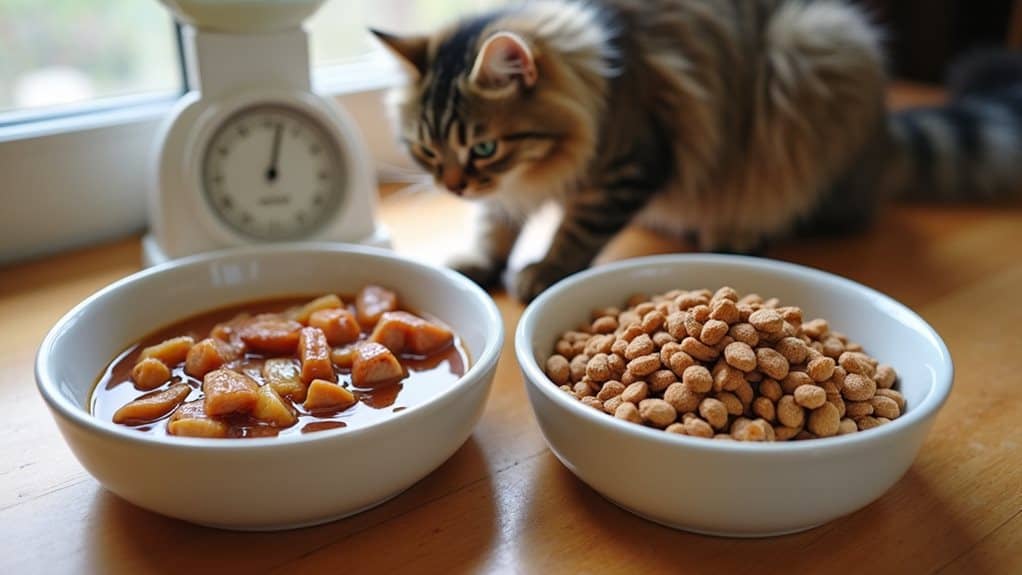
Many cat owners are discovering the benefits of a hybrid feeding approach rather than choosing strictly between wet or dry food.
The modern feline diet evolves as pet parents embrace mixing wet and dry options for optimal feline health.
This balanced strategy offers your feline friend the best of both worlds – hydration from wet food and dental benefits from dry kibble.
When planning a food change, start slowly by mixing small amounts of the new option with your cat’s regular meals.
Gradually increase the proportion over 7-10 days to prevent digestive upset.
The beauty of combining food types lies in nutritional variety.
Your cat receives a broader spectrum of nutrients, textures, and flavors that can keep even finicky eaters interested in mealtime.
Plus, you’ll have flexibility to adjust the ratio based on your cat’s changing needs, whether they’re dealing with weight issues, aging, or health concerns. Additionally, ensuring adequate hydration is crucial, as it directly impacts your cat’s overall health and well-being.
Frequently Asked Questions
How Does Food Texture Affect Picky Eaters?
Texture greatly influences your cat’s taste preferences. If they’re picky, they’ll often reject unfamiliar textures, disrupting feeding habits. Try introducing various textures gradually to discover what your feline friend consistently enjoys.
Can Switching Between Wet and Dry Food Cause Digestive Issues?
Yes, it can. Your cat’s digestive sensitivity may react to sudden changes. Always implement a gradual food shift over 7-10 days, mixing increasing amounts of new food with the old to prevent upset stomachs.
Is Grain-Free Better in Wet or Dry Formulations?
Grain-free benefits exist in both wet and dry formulations. You’ll find nutritional balance matters more than form. Whether you choose wet or dry, focus on quality ingredients customized to your cat’s specific dietary needs.
How Long Can Wet and Dry Food Safely Sit in Bowls?
Dry food can safely remain out 8-10 hours, while wet food shouldn’t sit longer than 1-2 hours. For ideal food safety, follow feeding guidelines and discard wet food promptly to prevent bacterial growth.
Do Senior Cats Have Different Wet vs. Dry Food Requirements?
Yes, they do. Your senior cat’s nutrition requires more wet food to support hydration needs. Their aging kidneys benefit from moisture-rich diets, while reduced dry food helps maintain healthy weight and eases digestion challenges.
Final Thoughts
Just like a balanced diet keeps your car running efficiently, your cat needs the right fuel mix too. You don’t have to choose sides in the wet vs. dry debate—combination feeding offers the best of both worlds. Wet food delivers essential hydration and high-quality protein, while dry kibble provides convenience and dental benefits. Listen to your cat’s preferences, watch their health responses, and adjust accordingly. Your perfect feeding strategy is as unique as your feline companion.