The Best Fluffy Pancakes recipe you will fall in love with. Full of tips and tricks to help you make the best pancakes.

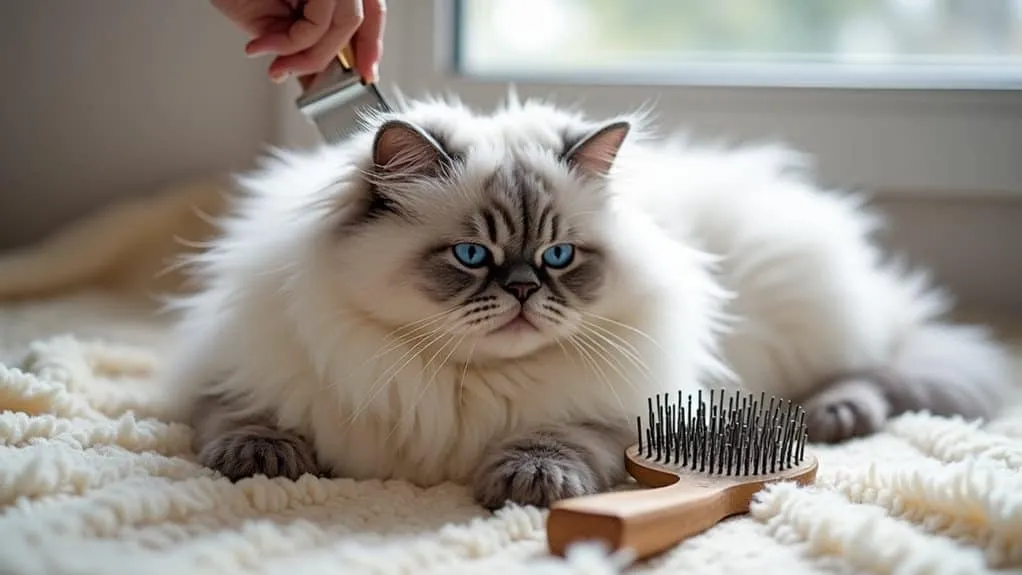
When Sarah noticed her Persian cat Maxwell developing thick mats under his belly last December, she didn't realize that winter grooming requires a completely different approach than summer care. If you're caring for a long-haired cat during the cold months, you'll need to adapt your grooming routine to address unique seasonal challenges. From static-prone fur to dense undercoat development, winter brings specific concerns that can affect your cat's comfort and health. Let's explore how you can protect your feline friend's coat while keeping them cozy during the chilly season ahead.
Understanding Winter Coat Changes
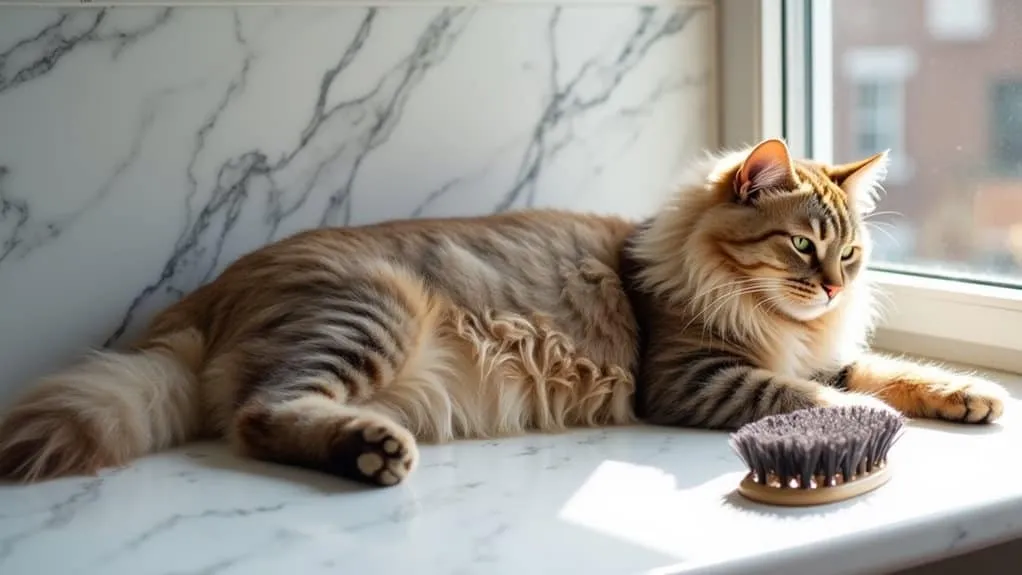
As winter approaches, your long-haired cat will undergo significant coat changes to prepare for colder weather. This natural coat adaptation helps your feline friend stay warm and comfortable during the chilly months ahead.
You'll notice your cat's fur becoming thicker and fuller as their body develops a dense undercoat alongside longer guard hairs. Long-haired breeds like Maine Coons experience the most dramatic seasonal changes. Daily brushing during this time provides vital health benefits, helping with digestion and blood circulation through gentle massage. Regular grooming also helps minimize hairballs, which can be a common issue during shedding season.
During this seasonal shedding period, your cat's body responds to changing day lengths rather than just temperature drops. It's a fascinating process that typically takes about eight weeks for outdoor cats, though your indoor kitty might shed year-round due to controlled temperatures.
Understanding these changes will help you provide better care for your furry companion. When you notice increased shedding and a fluffier appearance, that's just your cat's instincts kicking in to guarantee their winter survival.
Essential Winter Grooming Tools
As your cat's winter coat comes in thicker and fluffier, you'll need a specialized set of tools to handle the increased grooming demands.
Your winter toolkit should include a slicker brush and wide-tooth comb for daily maintenance, plus a high-quality dematting tool for those stubborn tangles that seem to pop up overnight in the cold weather. Long wire teeth brushes are particularly effective at removing loose hairs that accumulate during winter months. Cat restraint bags can help keep your cat calm and secure during grooming sessions. Additionally, employing gentle handling techniques while grooming can significantly reduce stress and anxiety for your cat.
A Furminator or shedding blade will be your best friend during this season, as they'll help remove the dying summer coat while your cat's winter fur grows in.
Deshedding Tools for Winter
Three essential deshedding tools can help you manage your long-haired cat's winter coat effectively.
When choosing the right tool selection, consider your cat's size and coat type to guarantee gentle yet thorough grooming. Your deshedding techniques should always prioritize your pet's comfort while effectively removing loose fur. Regular grooming sessions can reduce shedding by 90% with proper technique. A money-back guarantee ensures you can try these tools risk-free. Additionally, using high-quality brushes specifically designed for your cat's coat type can further enhance your grooming routine.
For the best winter grooming results:
- Use a stainless steel edge deshedding tool with a skin guard to protect your cat's delicate skin.
- Select an ergonomic handle design that won't tire your hand during longer grooming sessions.
- Look for tools with a FURejector button to easily clean collected hair.
- Choose the appropriate size tool for your cat's body.
Remember to groom weekly for 10-20 minutes in winter, increasing frequency during heavy shedding periods.
You'll notice considerably less fur around your home and a happier, healthier cat.
Winter Brushing Kit Essentials
Every long-haired cat owner needs six essential tools in their winter brushing kit to maintain a healthy, tangle-free coat.
You'll want a slicker brush with thin wire teeth for removing debris, a wide-tooth comb for tackling the undercoat, and a bristle brush for distributing natural oils. Consider using a Hepper Cat Brush for its enhanced durability and ease of use. Regular use of grooming tools can significantly improve your cat's coat health.
Using positive reinforcement with treats during grooming sessions will help your cat associate brushing with pleasant experiences.
Don't forget a pin brush and de-matting tool for those stubborn knots that seem to appear overnight!
To make the most of your grooming schedule, you'll need to pay special attention to friction-prone areas like behind the ears and around the tail.
Remember, brush maintenance is key – keep your tools clean and in good condition.
If you're noticing persistent matting despite regular care, don't hesitate to consult a professional groomer who can offer personalized advice for your furry friend.
Detangling Equipment Must-Haves
Successful winter detangling starts with the right equipment mix of wide-tooth combs, de-matting brushes, and fine-tooth tools.
When you're planning your grooming schedules, you'll want to guarantee you've got all the essentials to keep your furry friend comfortable during those chilly months. Regular grooming maintains overall cat health and comfort, ensuring a happier winter experience for both you and your cat.
Select the rotating stainless-steel teeth in your combs and brushes for maximum effectiveness and comfort.
The Catit Longhair Kit includes all essential tools needed for proper winter grooming.
Here are the must-have tools for effective detangling techniques:
- Wide-tooth combs for gentle initial detangling, especially behind those sensitive ear areas
- De-matting brushes to tackle those stubborn winter knots
- Fine-tooth combs for finishing touches and preventing new tangles
- Quality detangling spray to make the whole process smoother
Remember to pair these tools with patience and a gentle touch.
Your cat's coat will stay healthier when you're using the right equipment, and you'll both enjoy more pleasant grooming sessions throughout the winter season.
Preventing Cold Weather Matting
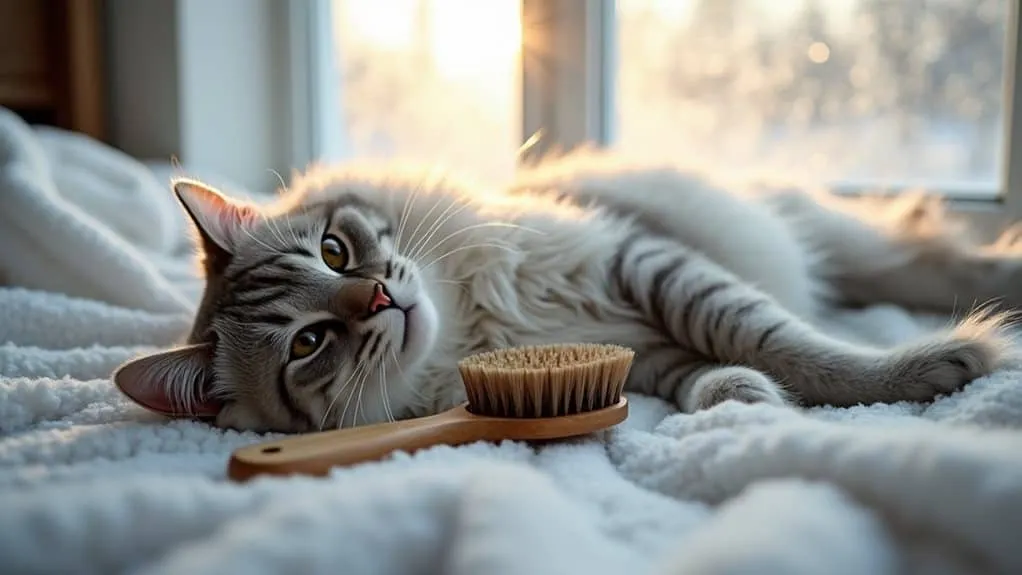
During the colder months, long-haired cats face an increased risk of matting as their undercoat thickens and sheds.
To guarantee effective matting prevention, you'll need to establish a consistent grooming schedule that includes daily brushing with the right tools. Your furry friend will thank you for using brushes with long, thin wire teeth to remove loose undercoat hairs before they become tangled.
Pay special attention to those trouble spots where mats love to form – behind the ears, along the tail, and around the belly. Regular grooming not only helps prevent mats but also promotes better circulation and supports a comfortable coat.
If your cat's getting a bit round or showing signs of age, they might need extra help with their hind-end grooming.
Don't forget to check under their collar regularly, as this sneaky spot can develop mats before you know it.
Managing Static and Dryness
During winter, you'll notice your long-haired cat's fur becoming extra staticky and prone to those surprising little zaps that neither of you enjoy.
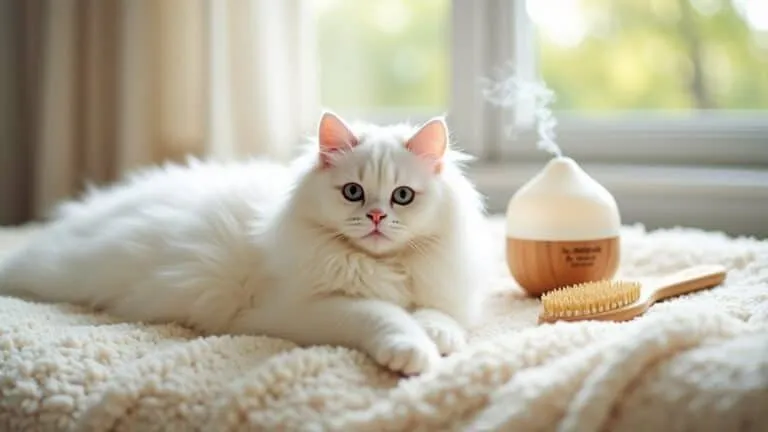
You can tackle this pesky problem by using a humidifier in your home and applying pet-safe anti-static sprays to keep your furry friend's coat manageable.
Regular grooming with an ionic brush, combined with maintaining proper indoor humidity levels, will help eliminate static while keeping your cat's coat healthy and comfortable throughout the cold season. Additionally, incorporating regular grooming practices can significantly aid in reducing dander accumulation, further enhancing your cat's overall comfort.
Static Control Methods
Managing static electricity in your cat's coat becomes especially challenging throughout winter months, when dry indoor air creates perfect conditions for unwanted charges.
You'll want to incorporate effective grooming techniques to keep your furry friend comfortable and static-free.
Here are four proven methods to control static in your cat's coat:
- Use metal combs instead of plastic ones to naturally absorb static charges during grooming.
- Spray a light mist of pet-safe moisturizing spray before brushing to add hydration.
- Place grounding mats in your cat's favorite spots to help discharge static buildup.
- Switch to natural fiber bedding and avoid synthetic materials that create extra static.
Remember to brush regularly and keep your cat well-hydrated – these simple steps make a world of difference in managing static electricity during winter grooming sessions. Additionally, maintaining a consistent grooming schedule can help reinforce the bond with your cat while promoting overall feline happiness.
Indoor Humidity Solutions
While static electricity plagues many cat owners in winter, maintaining proper indoor humidity levels provides a thorough solution for both static and dry skin issues.
You'll want to keep your home's humidity between 30% and 50% for your furry friend's comfort. Start with humidity monitoring using a simple hygrometer to track moisture levels throughout your home.
For effective moisture control, you've got several options at your disposal.
Consider running an ultrasonic cool mist humidifier in rooms where your cat spends the most time. You can also place moisture-loving houseplants like peace lilies around your home – they'll naturally help balance humidity while adding a touch of greenery. Additionally, maintaining proper humidity supports feline well-being by alleviating stress and promoting a comfortable environment.
Don't forget to use fans to circulate the moistened air evenly, ensuring your long-haired companion stays comfortable and static-free all winter long.
Indoor Heating Grooming Challenges
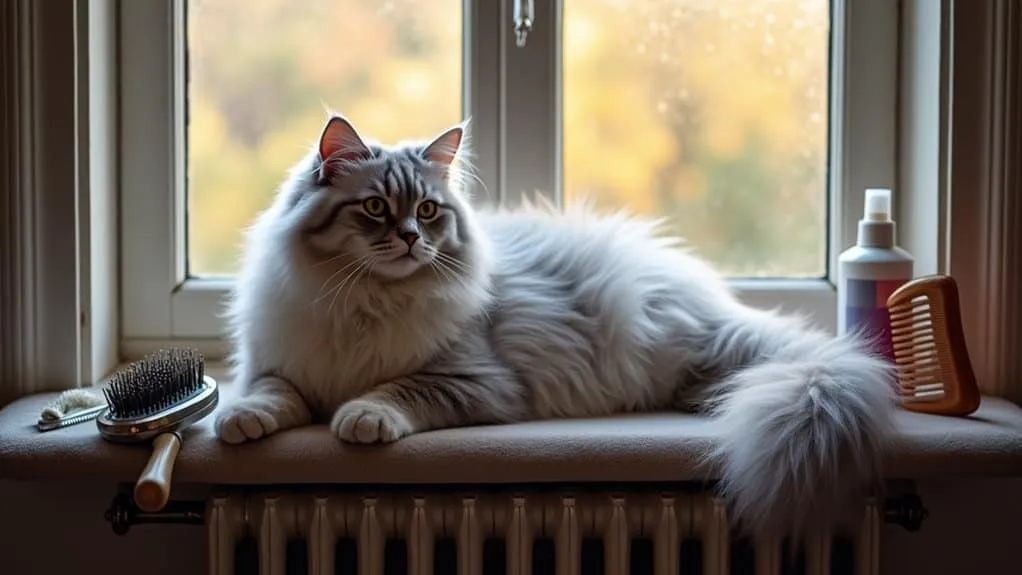
As winter's indoor heating kicks into high gear, your long-haired cat faces unique grooming challenges. The heating effects can wreak havoc on your kitty's coat, leading to increased shedding and dry, itchy skin.
You'll need to adjust your grooming frequency to keep your furry friend comfortable and healthy during these months.
To help your long-haired cat thrive during the heating season, follow these essential steps:
- Brush your cat daily to prevent painful mats and tangles.
- Install HEPA filters in your heating system to reduce dander buildup.
- Clean heating vents regularly to maintain good air quality.
- Keep a humidifier running to combat dry air, as maintaining consistent humidity levels in the home can aid in reducing shedding.
Senior Cat Winter Care
Senior long-haired cats require special attention during winter months, building on the indoor heating challenges all cats face.
You'll need to focus on senior nutrition by switching to high-quality foods that are easy to digest, and don't forget to mix in some wet food if your furry friend has dental concerns.
Winter hydration is essential, so keep those water bowls filled and consider adding a fun water fountain to entice your senior cat to drink more.
Make grooming sessions extra gentle and frequent to prevent matting, which can be more common when your cat snuggles up in warm spots.
Create a cozy haven with heated beds placed away from drafts, and maintain a regular brushing schedule to check for skin issues.
Final Thoughts
As winter's icy fingers sweep through your home, you'll find that proper grooming isn't just about keeping your long-haired cat looking gorgeous – it's an essential part of their health and happiness. With consistent care and the right tools in your grooming arsenal, you're setting your furry friend up for a cozy, mat-free season. Remember, like a warm cup of cocoa on a snowy day, regular grooming sessions can become a cherished bonding ritual between you and your cat.