The Best Fluffy Pancakes recipe you will fall in love with. Full of tips and tricks to help you make the best pancakes.

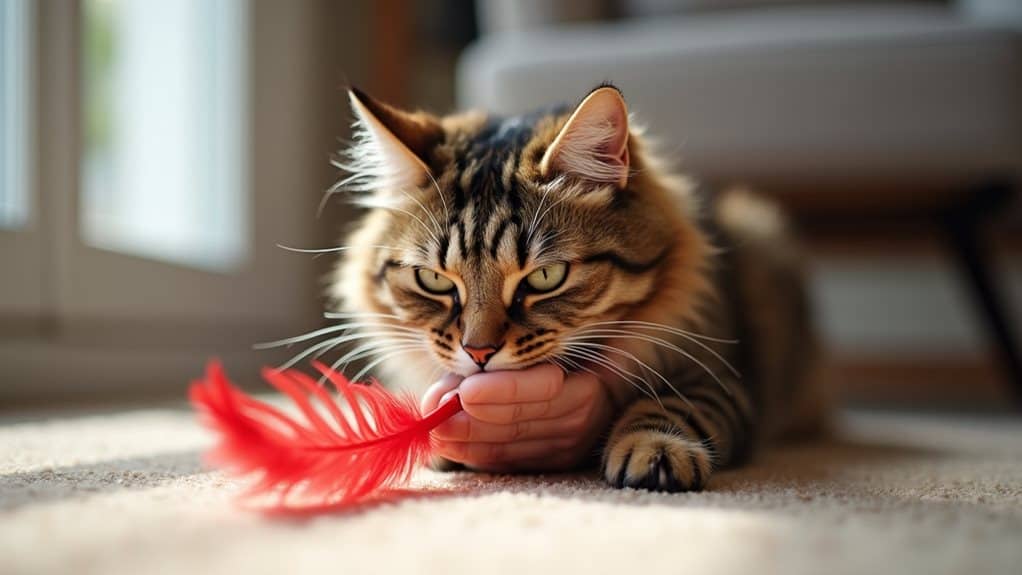
To stop your cat’s biting behavior, recognize the warning signs like tail swishing, flattened ears, and dilated pupils. Redirect their energy by immediately offering toys when biting starts, and use a firm “ouch” to signal pain. Implement consistent time-outs and positive reinforcement for gentle play. Schedule two 15-minute interactive play sessions daily to satisfy their hunting instincts. Remember, physical punishment damages trust—patience and consistency will transform your feisty feline into a well-mannered companion.
Understanding Why Cats Bite During Play
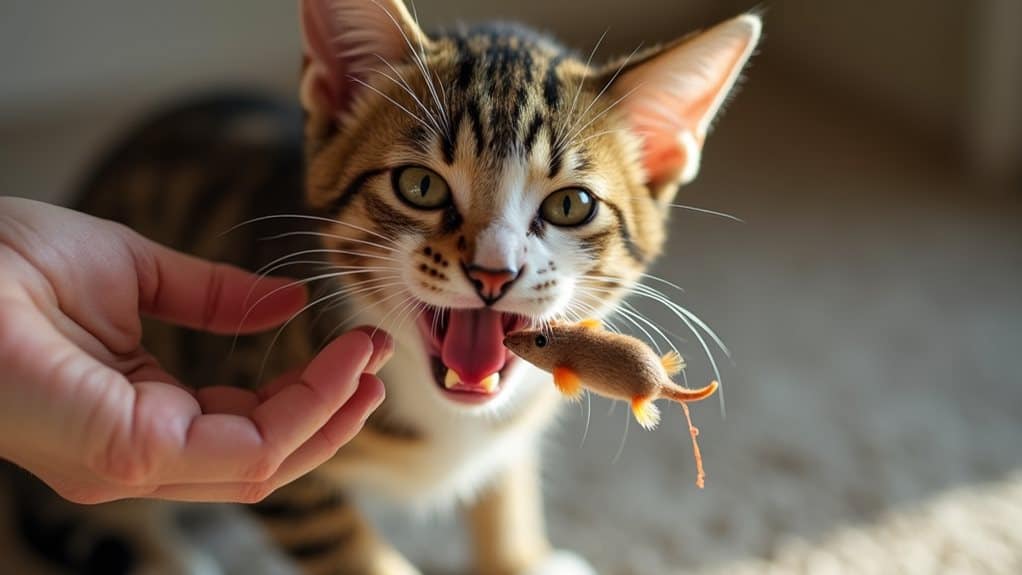
Cats, those mysterious bundles of fur and mischief, often communicate with their teeth in ways that puzzle even the most devoted pet parents.
When your feline friend suddenly transforms from cuddly companion to sharp-toothed nibbler, they’re actually displaying natural play aggression rooted in their wild ancestry.
You’re witnessing feline instincts in action! Your cat isn’t being mean—they’re practicing hunting skills they’d use in the wild. Those little nips during playtime mimic how they’d catch prey or wrestle with littermates.
It’s actually a compliment that they feel comfortable enough to engage with you this way. Understanding these natural behaviors is your first step toward redirecting them. Your cat doesn’t realize their teeth hurt you more than they’d another cat’s fur-protected skin. Additionally, recognizing signs of stress or discomfort can help you address any behavioral issues before they escalate.
Recognizing Warning Signs Before a Bite Occurs
While learning why your cat bites during play is helpful, spotting the signs before those teeth come out can save your fingers and maintain harmony in your home.
Cats typically display several clear feline signals before they bite, giving you precious seconds to disengage.
Watch for a swishing or thumping tail, flattened ears, and dilated pupils – these are classic bite triggers that indicate your cat is becoming overstimulated.
Pay attention to your cat’s body language – thumping tails, flattened ears, and dilated pupils signal they’re about to bite.
You might also notice your kitty’s body stiffen, skin ripple, or hear a low growl. Some cats will even give a warning nip before committing to a full chomp!
When you recognize these warning signs, immediately stop petting or playing. It’s essential to establish a calming routine to help your cat feel more secure and reduce instances of biting.
Give your cat space to decompress, which they’ll appreciate much more than your surprised yelp!
Differentiating Between Play Biting and Aggression
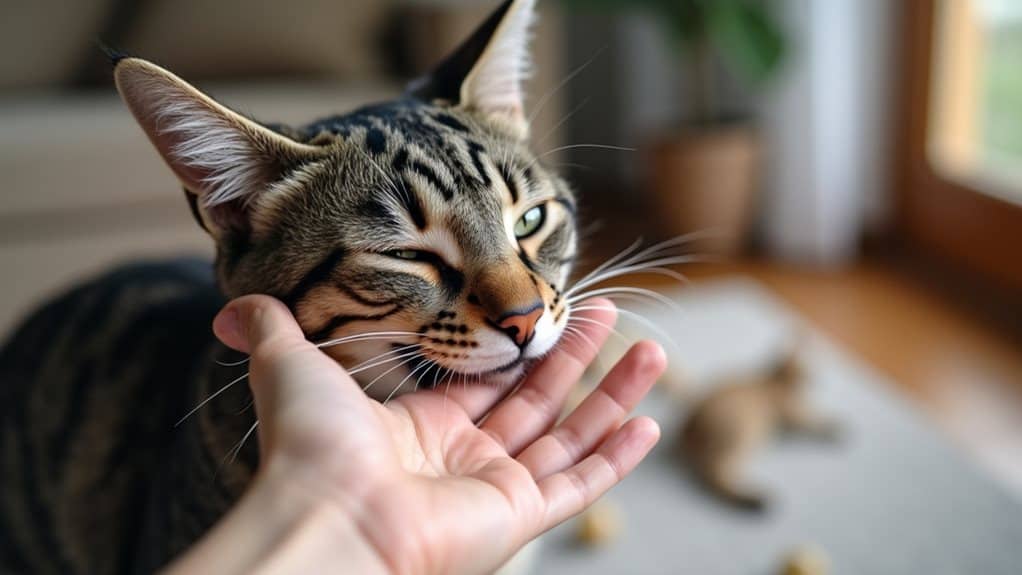
You’ll notice distinct differences between playful biting and aggressive attacks by watching your cat’s body language, which often signals their intentions before teeth meet skin.
During play, your cat’s ears remain upright and forward, while aggressive cats flatten their ears, puff their fur, and may growl or hiss before striking. Understanding these differences helps you respond appropriately—redirecting playful energy to toys or giving space when your cat is genuinely upset. Recognizing types of aggression can also aid in managing your cat’s behavior more effectively.
Reading Feline Body Language
Understanding the subtle signals in your cat’s body language can make all the difference between a playful interaction and a potential scratch fest. Your cat’s entire body communicates intentions, from ear position to tail movement.
When observing feline communication, watch for flattened ears, dilated pupils, and a twitching tail—these signal your cat is overstimulated or agitated. A relaxed cat, meanwhile, will have forward-facing ears and a gently swaying tail. Body language offers a window into your cat’s emotional state before biting occurs. Tail position is a crucial emotional indicator of how your cat is feeling during playtime.
You’ll notice that play intentions often involve a relaxed posture with ears perked forward, while aggression includes stiffened legs and arched backs. Learning these visual cues helps you recognize when to continue play and when to give your furry friend some space.
Play vs. Defensive Biting
Recognizing the difference between playful nips and aggressive bites is essential for responding appropriately to your cat’s behavior.
Play aggression typically involves gentler bites that don’t break skin, often accompanied by playful pouncing and wrestling. Your cat’s ears will usually remain forward, and they’ll seem relaxed despite their energetic antics.
Defensive biting, however, comes with warning signs you shouldn’t ignore. Your cat may flatten their ears, hiss, growl, or swish their tail rapidly before striking. These bites are harder and stem from fear or feeling threatened.
Understanding these distinctions helps you develop effective defensive strategies for both scenarios. For play aggression, redirect with toys; for defensive biting, give your cat space and remove triggers. Additionally, using positive reinforcement techniques can help shape your cat’s behavior over time.
Essential Training Techniques to Stop Biting Behavior
When your cat sinks its teeth into your hand during playtime, implementing effective training techniques becomes crucial for both your comfort and your relationship with your feline friend. Teaching bite inhibition through consistent socialization techniques can transform your cat’s behavior over time. Additionally, recognizing your cat’s body language cues can help you understand their emotional state and respond accordingly to reduce biting behaviors.
| Technique | How to Apply | Expected Result |
|---|---|---|
| Redirection | Move hand away, offer toy | Cat learns appropriate targets |
| Time-out | Stop play immediately | Associates biting with end of fun |
| Vocal cue | Say “ouch” firmly | Mimics kitten socialization |
| Positive reinforcement | Reward gentle play | Strengthens desired behavior |
| Consistency | Apply techniques every time | Creates lasting habit change |
Redirecting Biting Behavior With Appropriate Toys
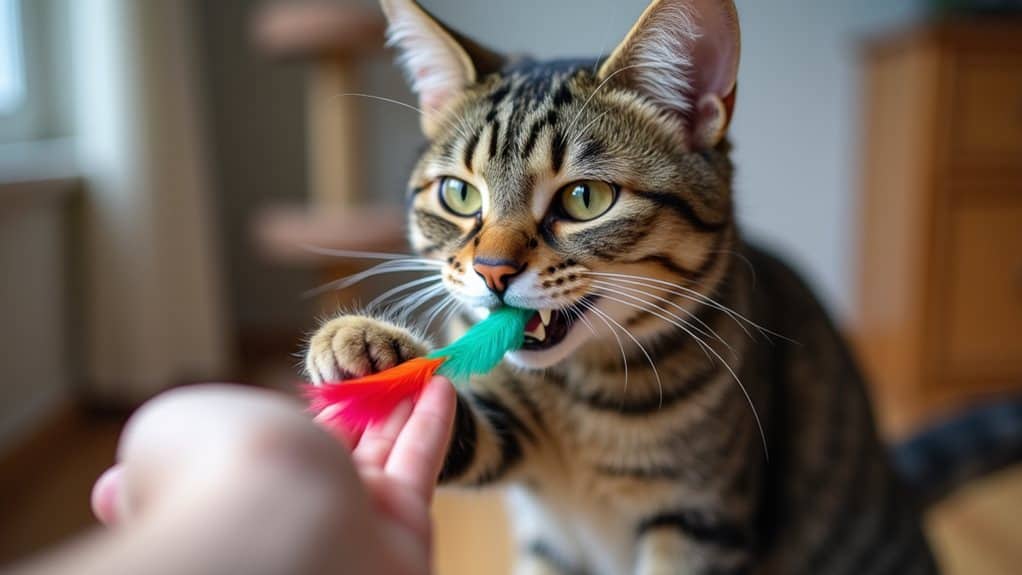
Since cats naturally need to bite and hunt, providing the right toys becomes essential in redirecting those razor-sharp teeth away from your hands and toward more appropriate targets.
Toy selection matters tremendously—look for options that mimic prey movements, like feather wands or motorized mice that satisfy your cat’s predatory instincts.
Select toys that simulate natural prey movements to fulfill your cat’s innate hunting needs and prevent unwanted biting behavior.
When your kitty starts nipping at your fingers, immediately offer an alternative toy. This consistent redirection teaches them what’s acceptable to bite.
Proper usage of interactive toys also strengthens your bond, as playtime becomes a positive experience rather than a painful one. Establishing routines can further enhance your cat’s confidence and reduce aggressive tendencies.
Setting Clear Boundaries With Your Cat
While toy redirection helps satisfy hunting instincts, cats also need to understand your personal boundaries.
When your cat bites, immediately stop play, make a short “ouch” sound, and gently remove yourself from the situation. This teaches them that biting ends all fun interactions.
Consistent training is essential for effective boundary reinforcement.
Never use your hands as toys, as this confuses cats about when biting is acceptable. Instead, always keep appropriate toys nearby for quick substitution when playful nipping begins. Additionally, engaging in interactive play can help channel your cat’s energy constructively while reinforcing positive behavior.
The Role of Exercise in Reducing Aggressive Play
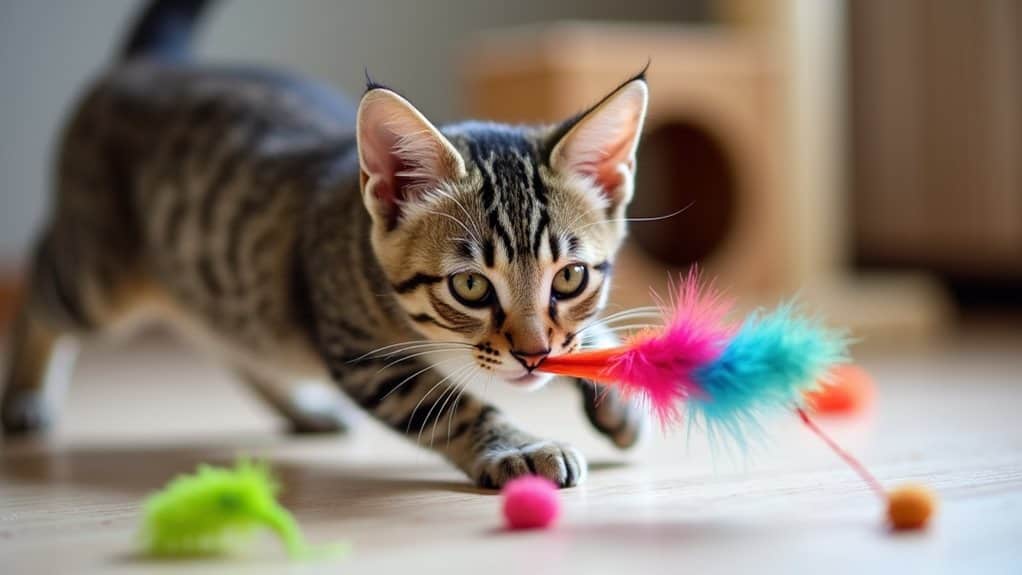
You’ll find that meeting your cat’s daily play requirements can dramatically reduce those painful play bites, as cats with pent-up energy often express it through aggressive behaviors.
Setting aside just 15-20 minutes twice daily for targeted activity sessions with wand toys or laser pointers helps your feline friend channel their natural hunting instincts in appropriate ways. Engaging in interactive play fosters mental stimulation and reduces the likelihood of aggressive behavior.
When you consistently provide these structured play opportunities, you’re not just strengthening your bond but also creating a physically and mentally satisfied cat who’s less likely to use your hands and feet as substitute prey.
Daily Play Requirements
Regular exercise represents one of the most effective strategies for preventing your cat’s biting behavior. Most cats need at least two dedicated 15-20 minute play sessions daily, with energetic kittens often requiring more.
Interactive toys like feather wands, laser pointers, and puzzle feeders provide mental and physical stimulation that satisfies your cat’s hunting instincts.
You’ll notice a notable difference in your cat’s behavior when you establish a consistent feline exercise routine. Morning and evening sessions often work best, aligning with your cat’s natural activity peaks.
Don’t worry if you’re busy—even five minutes of intense play can help burn excess energy. Remember, a tired cat is typically a well-behaved cat!
When you invest time in play, you’re not only preventing biting—you’re strengthening your bond while meeting your pet’s fundamental needs. Providing proper enrichment in their environment also enhances their play experience and reduces aggressive tendencies.
Targeted Activity Sessions
Because cats are natural predators, targeted activity sessions specifically designed to channel hunting behaviors can dramatically reduce aggressive biting.
When you schedule two or three 10-minute targeted play sessions daily, you’re giving your cat a healthy outlet for those predatory instincts that might otherwise be directed at your hands or feet.
Interactive toys like wand feeders or laser pointers mimic prey movements, satisfying your cat’s hunting drive.
You’ll notice a difference when you consistently engage your furry friend with these tools! Remember to let your cat “catch” the toy occasionally—this success prevents frustration that could lead to aggression later.
Try timing these sessions before typical biting incidents occur, like evening hours when cats naturally become more active.
Your consistent attention to targeted play will strengthen your bond while solving those pesky biting problems.
When to Seek Professional Help for Biting Issues
While mild biting during play can be normal for cats, persistent or aggressive biting requires professional intervention.
If your cat’s biting draws blood, happens without provocation, or doesn’t improve with your training efforts, it’s time to call in the experts.
Consider scheduling a professional training consultation where a certified animal behaviorist can conduct a thorough behavior assessment of your feline friend.
They’ll identify underlying causes that mightn’t be obvious to you – from medical issues to anxiety triggers.
Don’t wait until someone gets seriously hurt!
Many behavior problems that seem insurmountable at home can be addressed with expert guidance.
Preventing Biting Behaviors in Kittens
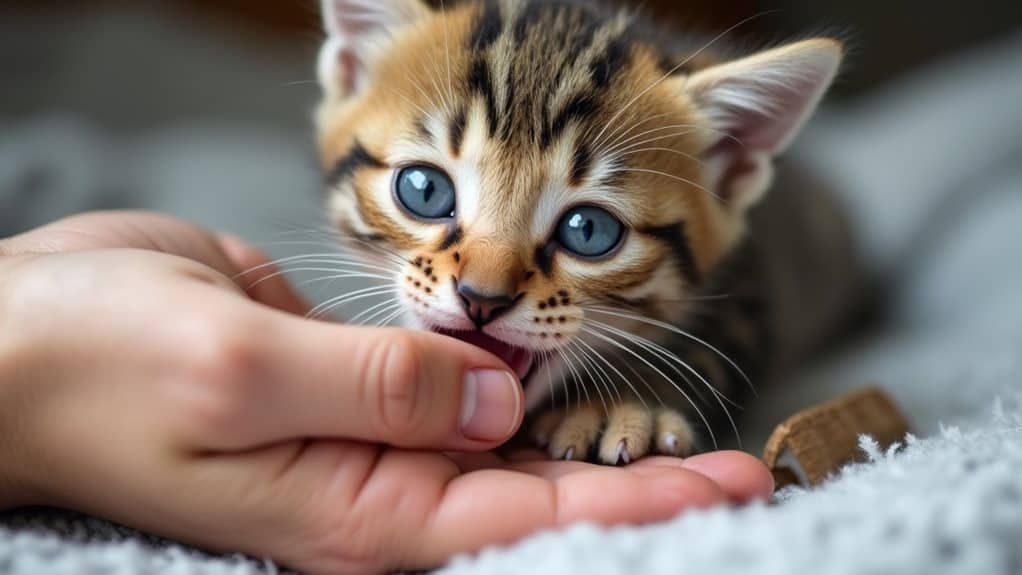
When kittens first join your home, they haven’t yet learned the difference between acceptable play and painful biting. Early intervention is essential to prevent these behaviors from becoming habits. Proper kitten socialization includes teaching them that human hands aren’t toys through consistent boundaries.
When your kitten bites, immediately redirect their attention to an appropriate toy. This positive reinforcement helps them understand what they can and can’t chew on.
Try making a high-pitched “ouch” sound when they bite too hard—this mimics how littermates communicate that play has gotten too rough.
Never punish your kitten physically, as this damages trust and can increase aggression. Instead, reward gentle play with treats, pets, and praise.
With patience and consistency, you’ll help your kitten develop into a well-mannered adult cat.
Frequently Asked Questions
Do Cats Bite More During Certain Times of the Year?
Yes, your cat might bite more during spring and fall due to seasonal behavior changes. These periods trigger heightened feline instincts like mating and territorial behaviors, causing your furry friend to be more reactive.
Can Spaying/Neutering Reduce Biting Behavior in Cats?
Spaying/neutering can DRAMATICALLY reduce your cat’s biting tendencies. You’ll notice incredible spaying benefits including decreased aggression, while neutering effects often include calmer behavior and less territorial nipping. It’s a game-changer for your bitey friend!
Are Certain Cat Breeds More Prone to Biting Problems?
Yes, some breeds have stronger bite tendencies. Siamese, Bengals and Abyssinians often display more assertive personality traits. However, your cat’s individual temperament and early socialization matter more than breed characteristics.
How Do Medications Affect a Cat’s Biting Tendencies?
Like a switch flipping circuits, medications can considerably alter your cat’s biting behaviors. Certain medication types may increase aggression, while others reduce it by managing underlying anxiety or pain causing behavioral changes. Always consult your veterinarian.
Can Cats Outgrow Biting Behaviors Without Specific Training?
Yes, some cats can outgrow biting as they mature, but don’t count on it. Natural kitten development often includes behavior changes, but without your guidance, aggressive play habits might persist into adulthood.
Final Thoughts
Training your cat to stop biting isn’t an overnight expedition—it’s more like taming a tiny tiger in your living room. With consistent boundaries, proper play techniques, and understanding your cat’s body language, you’ll transform those painful nips into gentle interactions. Remember, your patience will pay off! By redirecting aggression to toys and guaranteeing your furry friend gets enough exercise, you’ll build a trusting relationship that’s bite-free and full of healthy play.