The Best Fluffy Pancakes recipe you will fall in love with. Full of tips and tricks to help you make the best pancakes.


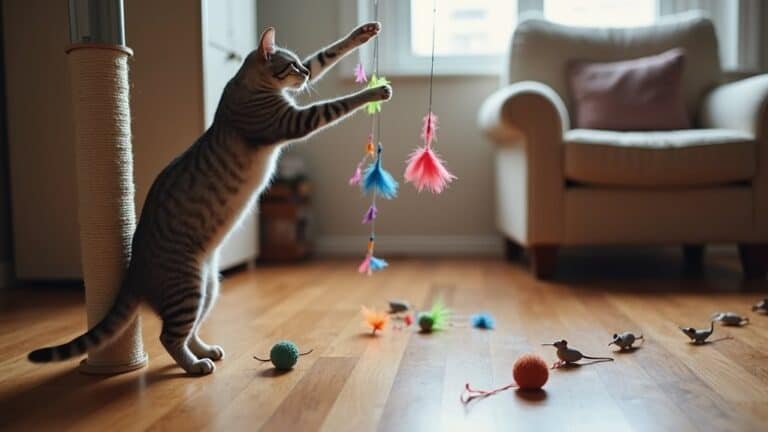
Intelligent cats need mental stimulation to prevent boredom and behavioral issues. You can create DIY puzzle toys from cardboard boxes or toilet paper tubes, or use treat-dispensing toys that challenge their problem-solving skills. Interactive toys that mimic prey movements engage their hunting instincts, while training games with positive reinforcement strengthen your bond. Try cycling toys every few days to maintain novelty, and don’t forget that even senior cats benefit from gentle memory games. The right mental enrichment approach depends on your cat’s unique intelligence type.
Understanding Your Cat’s Intelligence Type
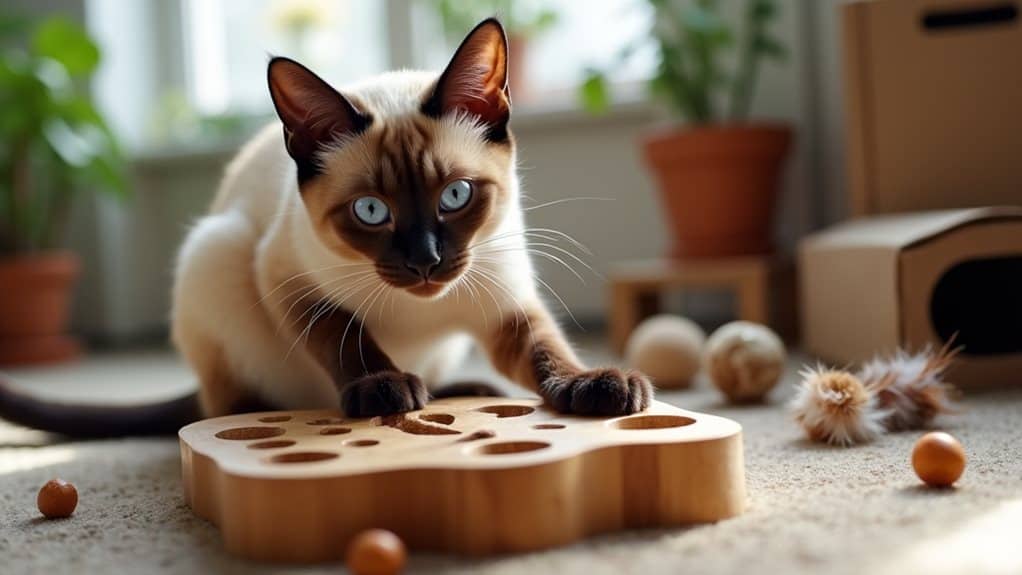
While you may think all cats are similar in how they play and learn, each feline has a unique type of intelligence that shapes how they interact with puzzles and games.
Just like humans, cats have distinct learning styles and preferences that influence their engagement with mental challenges.
Felines possess their own cognitive preferences, shaping how they tackle puzzles and learn new skills.
You can conduct a simple behavioral assessment at home by observing how your cat solves problems. Does your kitty use their paws to investigate objects, or are they more observational?
These intelligence indicators reveal whether your cat is a tactical learner, visual processor, or social thinker. Some cats excel at food puzzles, while others prefer interactive toys that mimic prey movement, enhancing their natural instincts during play.
DIY Puzzle Toys That Challenge Feline Minds
You’ll be amazed at how easy it’s to create mind-stimulating toys for your cat using everyday household items. Transform cardboard boxes into intricate mazes, craft treat-hiding puzzle boxes from toilet paper tubes, or design slider games with bottle caps that challenge your cat’s problem-solving skills. These DIY options won’t break the bank but will keep your feline friend mentally engaged for hours while satisfying their natural hunting instincts. Engaging in these activities promotes optimal physical and mental health for your feline companion.
Budget-Friendly Cardboard Mazes
Creating budget-friendly cardboard mazes for your cat doesn’t require expensive materials or professional crafting skills. All you’ll need are cardboard boxes, scissors, and a bit of imagination to craft engaging cardboard maze designs that will keep your feline friend entertained for hours.
Start by cutting doorways and windows in boxes of different sizes, then connect them with cardboard tunnels to create obstacle course challenges. You can add complexity by incorporating multiple levels, hidden treats, or dangling toys at unexpected turns.
For extra excitement, sprinkle catnip in certain areas to motivate exploration. Additionally, these mazes encourage mental stimulation and engagement, essential for your cat’s happiness.
When your cat masters one configuration, simply rearrange the components to create a fresh challenge. Remember, your cat doesn’t care about aesthetics—they’re looking for mental stimulation and play opportunities.
These recyclable puzzles provide both while saving you money!
Treat-Hiding Puzzle Boxes
Moving from elaborate cardboard constructions to more targeted challenges, treat-hiding puzzle boxes offer a different kind of mental workout for your curious cat. These interactive toys tap into your feline’s natural hunting instincts while rewarding their persistence with tasty surprises.
| Puzzle Box Materials | Treat Hiding Techniques |
|---|---|
| Cardboard tubes | Layer treats between flaps |
| Plastic containers | Hide under sliding compartments |
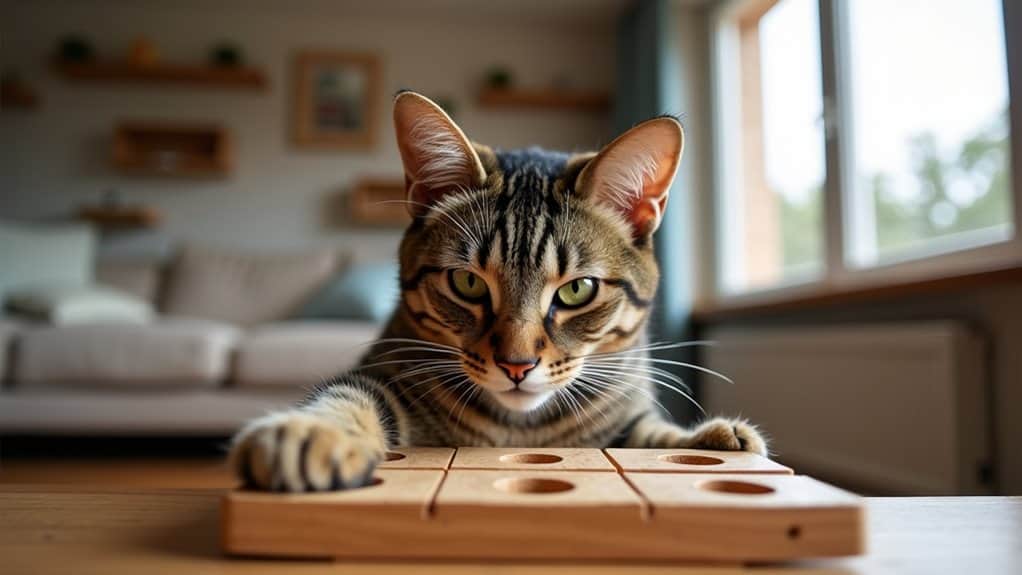
| Wooden puzzles | Tuck inside scent pouches |
You don’t need fancy equipment to create these brain-teasers. Simply repurpose household items like egg cartons or toilet paper rolls. The key is varying the difficulty level as your cat masters each challenge. Start with treats partially visible, then gradually increase complexity. Remember, the goal isn’t frustration but stimulation—your cat should feel accomplished, not defeated, when they finally discover that hidden morsel! Engaging in these activities can also lead to reducing stress and enhancing your cat’s overall well-being.
Bottle Cap Slider Games
Bottle cap slider games represent one of the most accessible yet mentally stimulating DIY puzzles you can create for your cat. Using plastic bottle caps on a flat surface, you’ll watch your feline friend’s problem-solving skills flourish as they learn to manipulate these simple objects.
Try various bottle cap techniques to keep your cat engaged—freeze treats inside caps with a bit of water, or secure small toys underneath them on a cardboard base. Most cats quickly discover they can slide the caps to reveal hidden treasures!
For slider game variations, arrange caps in patterns or create obstacle courses on a shallow tray. You’ll notice your cat developing strategies over time, sometimes using their nose, sometimes their paws. Engaging in these activities promotes mental stimulation, enhancing your cat’s cognitive abilities and reducing boredom.
It’s adorable and fascinating to see their unique approaches to these puzzles!
Food Puzzles: Turning Mealtime Into Mental Exercise
Food puzzles benefit extend beyond mere entertainment—they satisfy your cat’s natural hunting instincts while slowing down fast eaters.
You’ll find various feeding strategies to challenge your intelligent companion. Try a basic treat ball where kibble falls out as your cat bats it around, or graduate to more complex puzzles with sliding compartments.
Some puzzles even mimic hunting by hiding food in small crevices your cat must fish out with their paws.
Start with easier puzzles and gradually increase difficulty as your cat masters each challenge. Rotating treat options prevents boredom and maintains interest, ensuring your cat remains engaged and mentally stimulated.
You’ll notice increased satisfaction after meals, reduced behavioral issues, and a mentally stimulated pet who’s less likely to become bored or destructive.
Interactive Toys That Simulate Hunting Behaviors
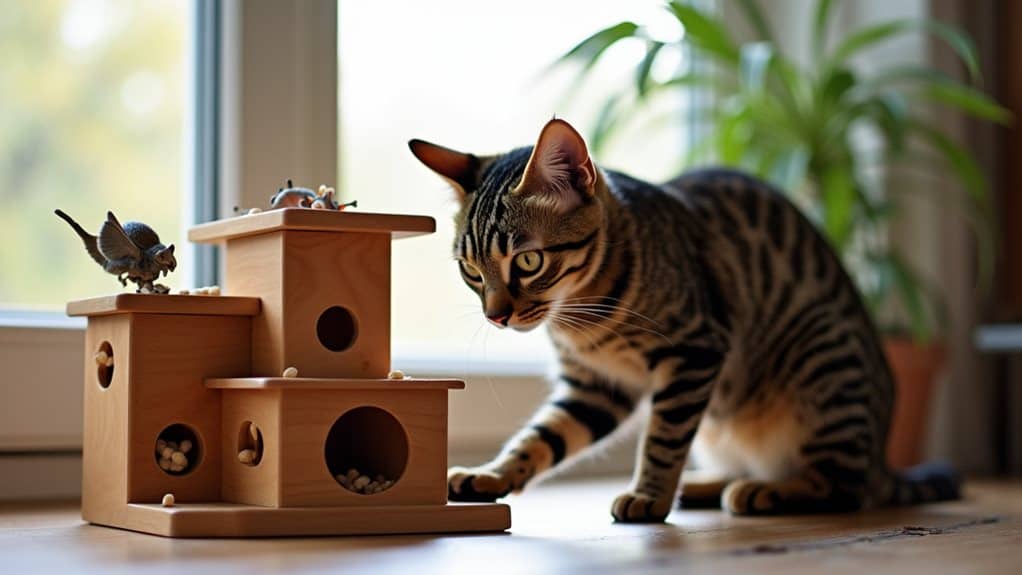
Interactive toys stand as the next frontier in feline enrichment beyond mealtime puzzles. These toys tap into your cat’s natural hunting instincts, providing both physical exercise and mental stimulation.
You’ll notice your cat stalking, pouncing, and batting at toys that mimic the movements of prey—behaviors deeply encoded in their DNA.
Consider investing in feather wands, robotic mice, or toys with unpredictable movements that trigger your cat’s feline curiosity. The best interactive toys create an engaging experience that keeps your cat guessing, which is essential for their psychological well-being. Additionally, these toys can help channel any excess energy and reduce fear aggression that may arise from boredom or stress.
Don’t be surprised if your normally lazy housecat transforms into a focused predator during playtime! This dramatic shift isn’t just entertaining to watch—it’s actually fulfilling a primal need that even well-fed indoor cats carry within them.
Training Games to Strengthen the Human-Cat Bond
Unlike what many people believe, cats can indeed be trained to perform various behaviors that strengthen your bond with them. Through consistent, positive reinforcement, you’ll discover your feline friend is quite capable of learning commands and tricks.
Start with simple bonding exercises like target training, where you teach your cat to touch a stick or your finger with their nose. This foundation opens doors to more complex interactions.
Target training creates a gateway to your cat’s mind, turning simple nose touches into a language you both understand.
Try clicker training for behaviors such as high-fives, sitting, or coming when called.
Interactive training sessions should be kept short—about five minutes—to match your cat’s attention span. Always end on a successful note with treats and praise.
These training moments aren’t just about teaching skills; they’re valuable opportunities to build trust and deepen your connection through shared positive experiences that enhance your emotional bond, similar to how cats express affection through grooming.
Rotation Strategies to Prevent Boredom
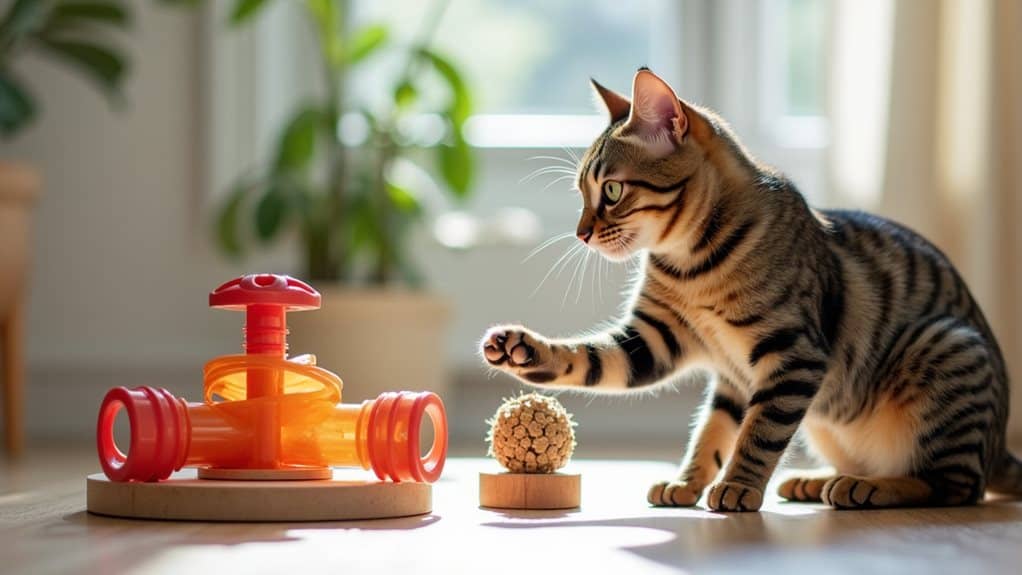
You’ll keep your cat engaged by implementing a regular toy cycling schedule, where toys are rotated every few days to maintain the element of surprise. Creating novelty through variety isn’t complicated—simply store most toys out of sight and swap them periodically, making old toys feel new again when reintroduced. This rotation strategy prevents your feline friend from growing bored with their toys, as cats naturally crave the excitement of “hunting” different types of prey, which you’re simulating through diverse toy options. Additionally, incorporating interactive toys can significantly enhance mental engagement and mimic their hunting instincts.
Toy Cycling Schedules
Cats quickly grow bored with toys that remain constantly available, much like children who lose interest in the same old games. Implementing a toy rotation schedule keeps your feline friend mentally stimulated and keen to play. By strategically cycling through different toys, you’ll maintain your cat’s curiosity and prevent toy fatigue.
Consider these engagement techniques for effective toy rotation:
- Store two-thirds of your cat’s toys out of sight, switching them every 3-5 days to create a “new toy” experience.
- Pair toy rotations with positive reinforcement like treats or praise to build excitement.
- Schedule special toys for specific times, creating anticipation and routine.
In addition, regular play serves as an essential aspect of grooming for health, promoting overall well-being while enriching your cat’s environment.
You’ll notice your cat’s enthusiasm spike when forgotten toys make their reappearance, making playtime more engaging and mentally stimulating for both of you.
Novelty Through Variety
Three key strategies form the backbone of effective toy rotation for feline entertainment.
First, observe your cat’s novelty preferences closely—notice which toys spark excitement initially but lose appeal after repeated exposures. You’ll discover patterns that help you predict when it’s time for a switch.
Second, acknowledge the importance of variety by introducing different textures, sounds, and movements. Your clever companion might adore crinkly toys one week but prefer silent, fuzzy mice the next. This sensory diversity keeps their hunting instincts sharp and engaged.
Finally, create a surprise factor by reintroducing “forgotten” toys after they’ve been absent for weeks. You’ll often find your cat treating these familiar items as exciting new discoveries, proving that absence truly makes the whiskers grow fonder!
Cognitive Enrichment for Senior Cats
As your feline friend enters their golden years, mental stimulation becomes just as important as physical comfort. Preventing cognitive decline in aging cats requires consistent engagement through specialized activities.
You’ll notice your senior cat still craves mental challenges, just at a different pace than their younger days.
Try these senior-friendly cognitive exercises:
- Simple memory games using treat-hiding techniques under cups or in puzzle boxes
- Gentle scent enrichment with new, safe aromas placed around their favorite resting spots
- Rotation of old toys brought back into circulation to spark recognition and memories
These activities don’t need to be complicated—even five minutes of focused play can greatly boost your senior cat’s mental sharpness and provide quality bonding time for both of you.
Environmental Enrichment Beyond Toys
While your senior cat benefits from focused mental exercises, their entire living space offers untapped potential for enrichment.
Consider transforming your home into a feline paradise with cat friendly furniture strategically placed near windows. These perches allow your curious companion to safely watch birds, squirrels, and neighborhood activities – nature’s television for cats!
Create opportunities for sensory exploration by introducing different textures throughout your home. A patch of carpet here, a sleek shelf there, and perhaps a crinkly paper zone will engage your cat’s paws and whiskers.
Don’t forget about vertical space – cats naturally love to climb and observe from above. Wall-mounted shelves or cat highways near the ceiling provide exercise, security, and mental stimulation all at once.
Your cat will appreciate these thoughtful environmental additions even when you’re not actively playing together.
Digital Games and Apps Designed for Cats
Touch-screen cat games have revolutionized how you can entertain your feline friend, with apps specifically designed to capture their attention through moving objects they can paw at on your tablet or smartphone.
You’ll notice your cat becoming more mentally stimulated as they interact with these digital playthings, potentially reducing destructive behaviors around your home.
These interactive apps offer a convenient way to engage your cat when you’re busy, providing benefits like improved coordination and satisfying their natural hunting instincts without requiring physical toys.
Touch-Screen Cat Games
Three digital revolutions have transformed entertainment for our feline friends, with touch-screen cat games leading the way. These innovative apps offer notable touch screen benefits for cats, including mental stimulation and prey-drive satisfaction.
You’ll find a wide game selection ranging from fish-catching simulations to mouse-chasing adventures customized specifically for feline reflexes and interests.
When choosing touch-screen games for your cat, consider:
- Games with realistic movements that mimic prey behavior
- Apps that produce enticing sounds to capture your cat’s attention
- Touch-screen protectors designed for cat paws and claws
While not every cat will show interest in digital games, many felines become surprisingly engaged with these modern toys.
You might discover your cat developing favorite games and even improving their reaction times through regular play.
Interactive App Benefits
Although digital games for cats might seem like a novelty, interactive apps offer considerable benefits beyond simple entertainment. You’ll notice your feline companion developing better paw-eye coordination while engaging with moving objects on screen.
These digital playtimes contribute greatly to your cat’s cognitive development, keeping their brain active and alert. When you introduce interactive learning through cat-specific apps, you’re providing mental stimulation that mimics hunting behaviors.
Your cat isn’t just batting at random lights—they’re exercising their natural instincts in a controlled environment. Many pet owners report their cats showing improved focus and problem-solving skills after regular digital play sessions.
Signs Your Cat Needs More Mental Stimulation
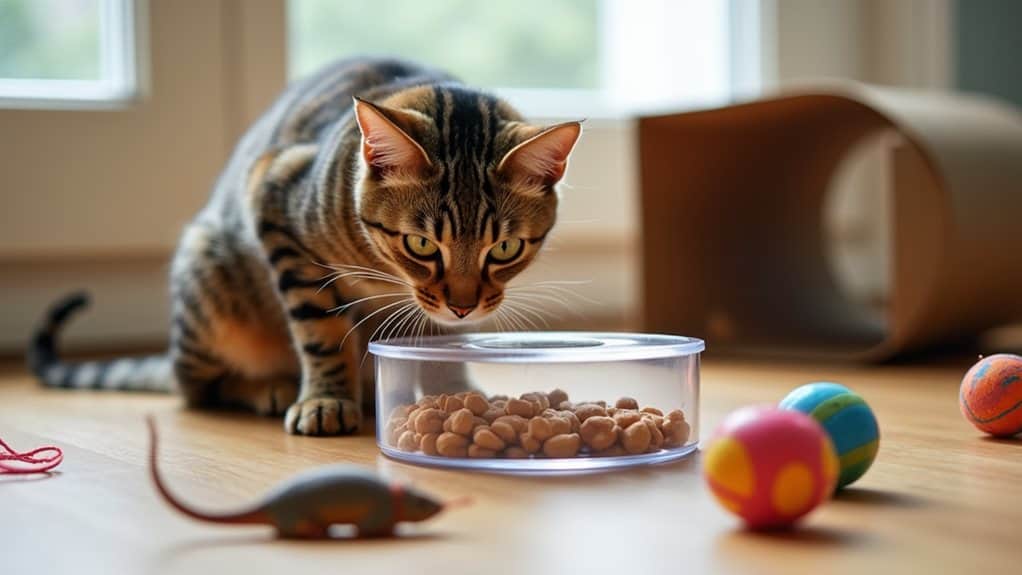
Cats often display clear signals when they’re feeling bored or understimulated, yet many pet parents miss these important cues. Understanding your cat’s behavior is crucial for maintaining good mental health and preventing destructive habits from developing.
Watch for these telltale signs that your feline friend needs more brain games:
- Excessive grooming or destructive behavior like scratching furniture
- Increased aggression, restlessness, or nighttime activity
- Lethargy, excessive sleeping, or weight gain from inactivity
You’ll notice positive changes when you introduce puzzles and games into your cat’s routine. Their eyes will light up with curiosity, and they’ll engage more enthusiastically with their environment.
Don’t ignore these signals—your intelligent companion craves mental challenges just as much as physical play!
Frequently Asked Questions
Can Cats With Anxiety Benefit From Mental Stimulation Activities?
Yes, your anxious cat can greatly benefit from mental stimulation activities. They’ll provide anxiety relief through focused play, redirecting nervous energy and improving cat behavior by building confidence and reducing destructive habits.
How Long Should I Let My Cat Play With Puzzles Daily?
Studies show 67% of cats enjoy 10-15 minutes of puzzle time. You’ll want to monitor your cat’s puzzle preferences and adjust playtime duration accordingly. Two short sessions daily often works better than one long session.
Are Some Cat Breeds More Responsive to Mental Stimulation Games?
Yes, sociable breeds like Bengals, Siamese, and Abyssinians show higher engagement levels with puzzles. Cats with intelligent traits and playful personalities often respond better, but individual preferences matter more than breed alone.
Can Mental Stimulation Activities Help Reduce Destructive Behavior?
70% of cats with behavioral issues improve with proper stimulation. You’ll find your cat’s destructive behavior decreases markedly when you provide mental enrichment through interactive puzzles and games that channel their natural instincts.
Should I Reward My Cat During Puzzle Games With Treats?
Yes, you should use treats during puzzle games. Consider your cat’s reward preferences and pay attention to treat timing—offer them when your cat solves a challenge, not beforehand, to reinforce the desired behavior.
Final Thoughts
You’ve opened the secret world of your cat’s remarkable mind, but your expedition doesn’t end here. What happens when you consistently challenge your feline companion? You’ll notice a transformation—fewer behavior issues, stronger bonds, and a visibly happier cat. The question isn’t whether your intelligent feline needs mental stimulation, but which of these enriching activities you’ll try first. Your cat is waiting, whiskers twitching with anticipation.