The Best Fluffy Pancakes recipe you will fall in love with. Full of tips and tricks to help you make the best pancakes.

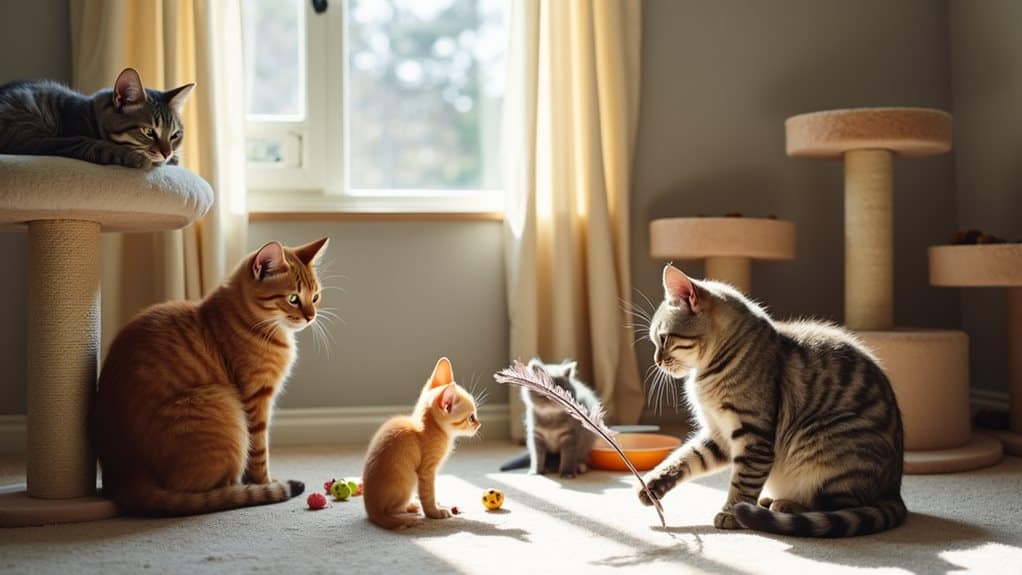
Managing cats of different ages requires creating designated spaces for each life stage. You’ll need kitten-safe play areas, adult cat climbing zones, and senior-friendly resting spots with easy access. Set up separate feeding stations with age-appropriate nutrition, and establish a medication tracking system for seniors. Create a household calendar for varying vet appointment schedules, and introduce cats gradually with supervised sessions. The right balance of separation and togetherness will transform your multi-generational cat home into a harmonious feline community.
Understanding Each Life Stage: Needs and Behaviors
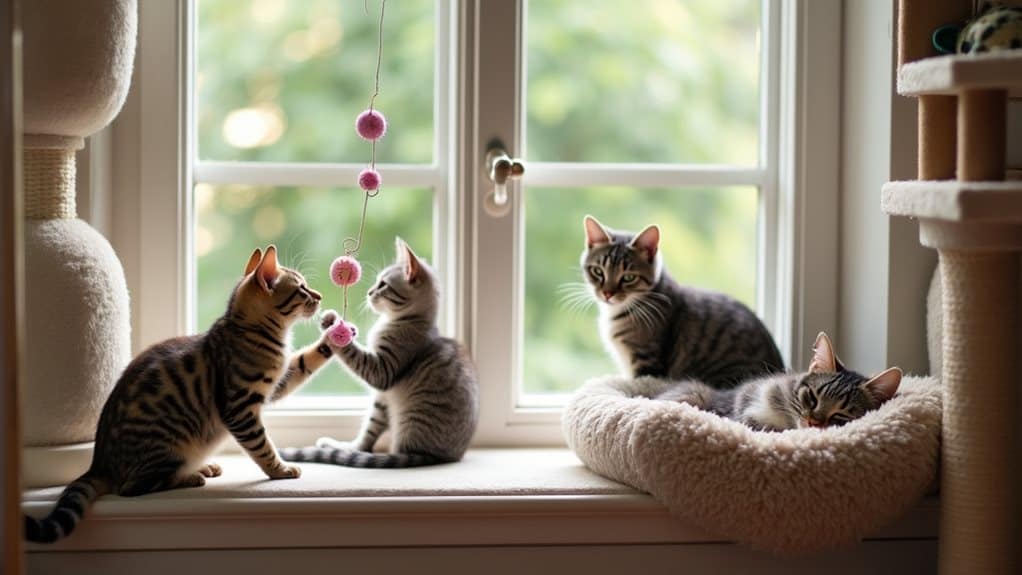
Just as humans change dramatically from infancy to old age, your feline friend will go through distinct life stages with unique needs and behaviors. Understanding these differences is essential when managing a multi-cat household with varying ages.
Kittens burst with energy, requiring frequent play sessions that satisfy their curious nature and develop proper social dynamics. Their play styles often involve pouncing and wrestling, which older cats might find overwhelming.
Meanwhile, adult cats benefit from consistent training techniques and established grooming habits.
Your senior cats need special attention too! They typically prefer gentler interactions and may require modified environments to accommodate joint stiffness. It’s also important to monitor their litter box habits to ensure their health remains optimal as they age.
While younger cats might zoom around the house, seniors appreciate quiet spaces for undisturbed rest.
Creating Age-Appropriate Zones in Your Home
When you share your home with cats of different ages, creating designated spaces for each life stage becomes essential for harmony and wellbeing.
Your zone layout should include raised perches for agile adults, while guaranteeing ground-level resting spots for seniors with mobility issues. Kittens need safe play areas with appropriate toys that won’t frustrate older cats.
Age-appropriate zones create a peaceful multi-cat household—elevated spots for adults, floor retreats for seniors, and safe play areas for kittens.
Consider safety features like baby gates to separate feeding stations, preventing energetic kittens from disrupting your senior’s mealtime.
Soft bedding in quiet corners gives older cats a retreat from playful youngsters, while window seats can entertain everyone. Additionally, maintaining a clean environment in these zones can help minimize infection risk and ensure the health and well-being of all your feline friends.
You’ll find that thoughtful space division reduces tension and stress for all your feline friends.
Feeding Strategies for Mixed-Age Cat Households
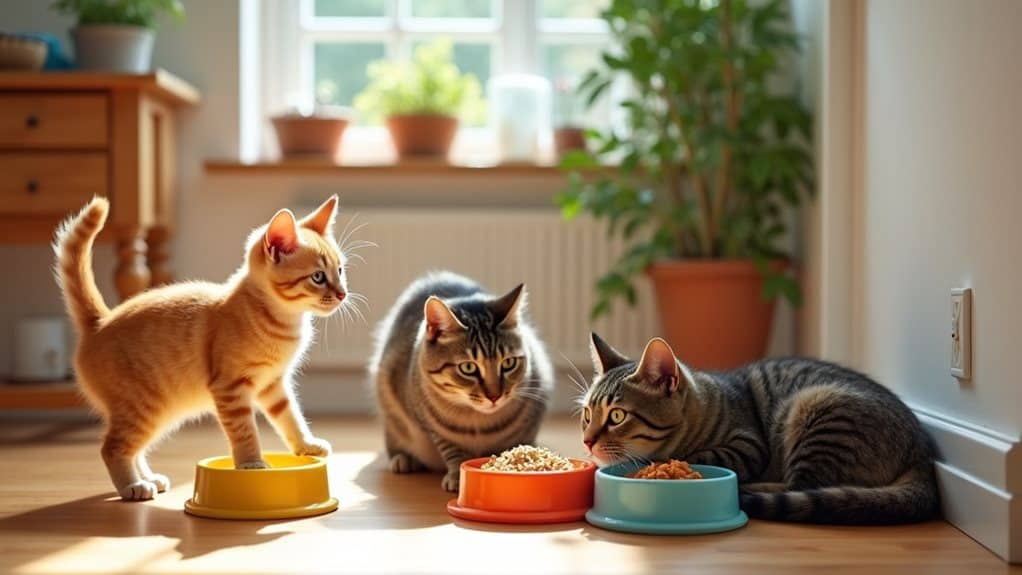
When you’re managing a home with cats of different ages, creating controlled meal stations helps guarantee each feline gets the right nutrition without competition.
You’ll want to establish age-specific nutrition zones where your senior cats can eat their specialized food without your playful kittens stealing their meals.
These separate feeding areas don’t need to be elaborate—simply placing food bowls in different rooms or using microchip-activated feeders can make mealtime less stressful for everyone. Additionally, ensuring increased water intake through accessible fresh water sources can further support the urinary health of all age groups.
Controlled Meal Stations
Creating separate feeding areas becomes essential in homes with cats of different ages and dietary needs. You’ll find that designated eating zones help prevent food stealing while making sure each cat receives proper nutrition.
Consider your cats’ meal timing and food preferences when setting up these stations—kittens need frequent small meals, while seniors might prefer quiet, accessible dining spots.
- Use baby gates, cat doors, or height differences to create age-specific feeding zones
- Try microchip-activated feeders that only open for specific cats
- Schedule staggered feeding times to monitor who’s eating what
With controlled meal stations, you’ll reduce mealtime stress and maintain peace in your multi-generational cat household. Additionally, monitoring each cat’s food intake supports their overall health and dietary needs. Plus, you’ll quickly notice if anyone’s appetite changes—often the first sign something’s not right with your feline friend.
Age-Specific Nutrition Zones
Because cats of different ages have unique nutritional needs, establishing age-specific nutrition zones can transform your feeding routine from chaotic to harmonious.
Create designated areas where each cat can access their age-appropriate food without interference from others.
For kittens, set up a raised feeding station they can reach but seniors might avoid.
Kitten nutrition requires higher protein and calories to support rapid growth and boundless energy. You’ll want to feed them 3-4 times daily with specially formulated kitten food.
For your golden oldies, create ground-level feeding zones that accommodate senior needs like joint stiffness.
Their food should contain fewer calories but more omega fatty acids and antioxidants.
Consider puzzle feeders for adults to slow them down and prevent them from raiding the kitten or senior stations!
Additionally, maintaining good dental health with regular brushing is essential for overall health, supporting longevity and quality of life in cats of all ages.
Managing Health Care When Cats Are at Different Stages
When you’re caring for cats at different life stages, you’ll need to manage their healthcare routines separately, with kittens requiring more frequent check-ups than your adult cats. Your senior feline friends will need specialized wellness visits focusing on age-related concerns like arthritis or kidney function, while your younger cats might need more preventative care. You’ll find it helpful to create a medication chart if you’re juggling multiple treatments, keeping track of which cat needs what medicine and when. Additionally, being aware of HCM symptoms can help you catch potential heart issues early in your senior cats.
Distinct Veterinary Protocols
Caring for cats at different life stages requires customized veterinary approaches that evolve as your feline companions grow from playful kittens to dignified seniors.
You’ll need to track different veterinary vaccinations and health screenings based on each cat’s specific needs and age.
- Kittens: Schedule frequent visits (every 3-4 weeks) for initial vaccinations, deworming, and early health assessments.
- Adult cats: Maintain annual wellness exams, dental cleanings, and core vaccine boosters.
- Senior cats: Increase to semi-annual check-ups with thorough bloodwork to catch age-related conditions early, as regular vaccinations are necessary to safeguard their health.
When you’re juggling appointments for multiple cats, consider creating a household health calendar.
Many vets offer “family appointments” where you can bring all your cats in on the same day—saving you time while guaranteeing each furry family member gets age-appropriate care.
Age-Specific Wellness Checks
Managing multiple cats at different life stages presents unique healthcare challenges that you’ll need to navigate with thoughtful planning.
While your kitten requires frequent kitten vaccinations and growth monitoring every few weeks, your senior cat needs biannual senior screenings to catch age-related issues early.
Create a calendar system that tracks each cat’s appointment schedule. You’ll find it’s easier to coordinate with your vet when you’re organized about which cat needs what care. Some clinics even offer multi-pet discounts when you bring several cats on the same day!
Don’t forget that wellness checks vary dramatically between age groups. Your kitten’s quick examination focuses on development milestones, while your senior cat might need bloodwork, dental assessments, and arthritis evaluations. Additionally, being aware of zoonotic respiratory infections can help protect the health of all your cats.
Being prepared for these different appointment types will save you stress and guarantee each furry family member gets appropriate care.
Medication Management Tips
Successful medication routines become particularly challenging as your household’s cats enter different life stages with varying health needs.
Keeping track of who needs what can feel like solving a daily puzzle! You’ll need a system that guarantees dosage accuracy while preventing mix-ups between your kitten’s preventatives and your senior cat’s arthritis medication.
- Create a color-coded chart with medication timing for each cat, placing it near where you store their meds
- Use pill organizers labeled with each cat’s name and photo to avoid confusion
- Set alarms on your phone to maintain consistent medication schedules
- Regularly consult a veterinarian for targeted treatment options based on each cat’s health needs to ensure they receive appropriate care.
Fostering Positive Relationships Between Generations
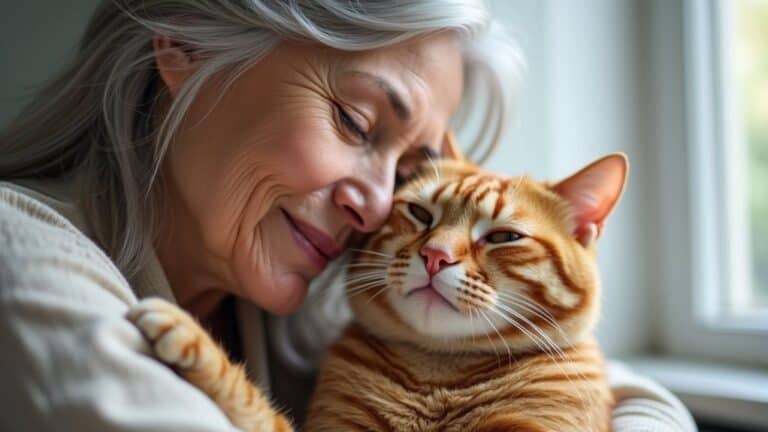
When families share the responsibility of cat care, magical connections can form between grandparents, parents, and children. Your multi-generational household can strengthen bonds through cat-centered activities that everyone enjoys.
Try scheduling intergenerational play sessions where grandparents can share their wisdom while children bring energy and enthusiasm to the mix.
You’ll notice how cats naturally bridge age gaps, creating shared experiences that family members cherish.
Create a rotating care schedule where each generation contributes their unique strengths—perhaps grandparents excel at medication time, parents handle vet visits, and children manage playtime and grooming.
These bonding activities build respect and understanding across generations. When your family works together caring for cats of different ages, you’re not only raising healthy pets—you’re weaving meaningful connections that span generations. Additionally, the emotional benefits of interacting with cats can further enhance overall emotional well-being for all family members involved.
Exercise and Enrichment Across the Age Spectrum
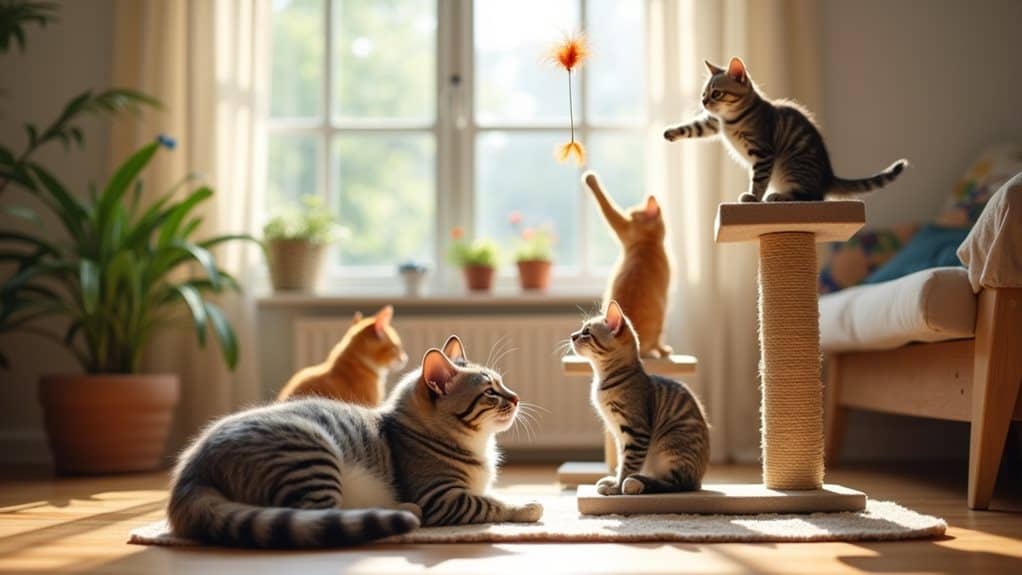
Just as humans need different types of exercise throughout their lives, cats require age-appropriate activities to stay healthy and engaged.
Age-appropriate exercise keeps your cat thriving at every life stage, just like it does for us.
You’ll notice your kitten craves high-energy playtime, while your senior cat might prefer gentler interactions. Creating customized activities for each age group guarantees every feline family member thrives under your care.
- Kittens benefit from frequent, short bursts of playful interactions with toys that satisfy their hunting instincts.
- Adult cats enjoy a mix of physical challenges and mental stimulation, like puzzle feeders or climbing structures.
- Senior cats appreciate low-impact activities that maintain joint flexibility without causing strain.
When you encourage cross-generational play, you’ll build bonds between your cats while respecting their individual energy levels.
When to Separate vs. When to Encourage Interaction
Managing multiple cats of different ages requires thoughtful consideration about when they should socialize and when they need their own space.
You’ll want to establish clear interaction boundaries while still promoting healthy relationships between your feline family members.
When introducing cats of different ages, start with short, supervised sessions. Your senior cat might need breaks from playful kittens, so create raised resting spots where older cats can retreat when they’re feeling overwhelmed.
Don’t force socialization—instead, use positive reinforcement when they interact peacefully.
Mealtime often requires separation, especially if your senior cat has dietary restrictions or your kitten needs special nutrition.
However, playtime can be a great opportunity for bonding if you choose activities that appeal to all energy levels.
Watch their body language closely—it’s your best guide to successful socialization strategies.
Frequently Asked Questions
How Do Cat Personalities Change When New Generations Are Introduced?
You’ll notice personality shifts as established cats may become more territorial, protective, or withdrawn. Behavioral dynamics evolve with new generations – some cats become mentors while others need time to adjust to the changed hierarchy.
Can Kittens Learn Appropriate Behavior From Senior Cats?
Your little feline apprentices often blossom under experienced paws. Senior influence shapes kitten behavior greatly—they’ll learn boundaries, grooming rituals, and social etiquette. You’ll notice your youngsters mimicking their wise elders remarkably quickly.
Do Mixed-Age Households Reduce Stress for Single Kittens?
Yes, mixed-age dynamics typically reduce stress for single kittens. Your older cats provide companionship, security and modeling that builds kitten confidence. They’ll feel less lonely and learn social boundaries more naturally than solo kittens.
Is Adopting Siblings Better Than Cats of Different Ages?
Adopting siblings often creates better sibling dynamics due to established relationships, but cats of different ages can offer excellent age compatibility too. You’ll find benefits either way depending on your household needs and energy levels.
How Long Does It Typically Take for Multi-Generational Cats to Bond?
Like stars aligning in a constellation, your multi-generational cats typically need 2-4 weeks to form initial bonds. You’ll notice age differences affect the bonding timeline, with younger cats usually adapting faster than seniors.
Final Thoughts
While your senior cat naps peacefully in her sunny window perch, your kitten might be bouncing off the walls—yet these opposite energies can coexist beautifully in your home. You’ll find that understanding each cat’s life stage is not merely practical; it’s the key to harmony. With thoughtful spaces, customized nutrition, and balanced interactions, you’re not merely managing a multi-generational cat household—you’re creating a thriving feline family that enriches everyone’s lives.