The Best Fluffy Pancakes recipe you will fall in love with. Full of tips and tricks to help you make the best pancakes.

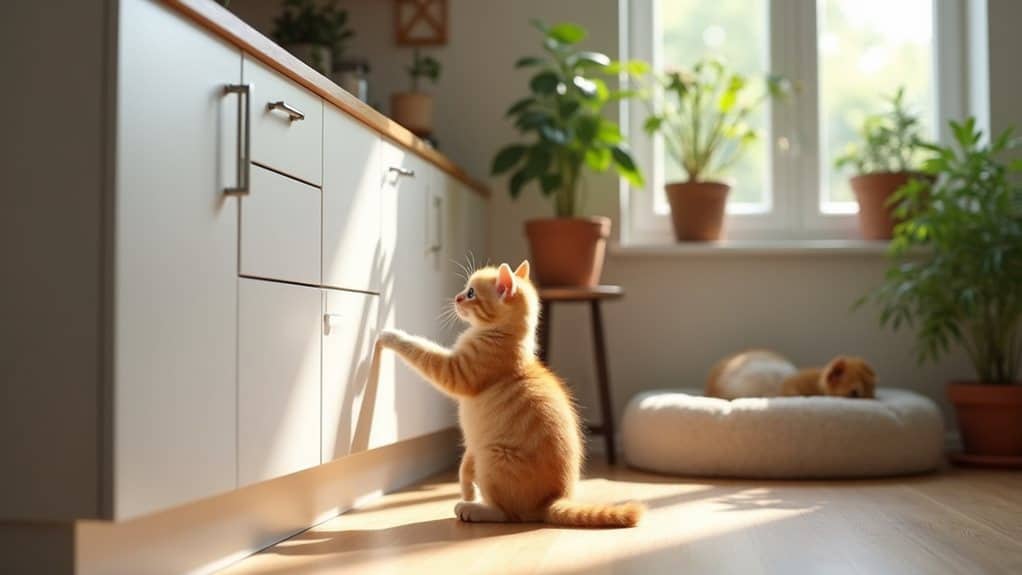
Cat-proofing your home protects your furry friend from common hazards. Secure medications and chemicals in locked cabinets, cover electrical cords, and remove toxic plants like lilies and tulips. Create safe climbing spaces with cat trees and shelves while guaranteeing windows have sturdy screens. Don’t forget to check for potential escape routes and install childproof latches on cabinets containing harmful items. These simple steps will transform your space into a feline paradise where your new companion can safely explore.
Securing Hazardous Household Chemicals and Medications

When cat-proofing your home, one of the most critical areas to address is your collection of household chemicals and medications.
Cats are naturally curious creatures who’ll investigate every corner, cabinet, and container within reach. You’ll need to establish a secure chemical storage system, preferably in cabinets with childproof locks or in rooms your feline friend can’t access.
Never underestimate your cat’s determination! They can knock over bottles, chew through plastic, and even paw open partially closed drawers.
Proper medication disposal is equally important—don’t leave pills on countertops or in accessible containers. Even a single pain reliever tablet can be deadly to cats. Additionally, ensuring that your home is free of hazardous chemicals is vital for your cat’s safety and well-being.
Managing Electrical Cords and Blind Strings
You’ll need cord covers to protect your curious cat from chewing on dangerous electrical wires throughout your home.
Consider tucking cords behind furniture or using cord management systems that keep tempting wires out of paw’s reach.
Don’t forget to secure those dangling blind strings by tying them up high, as they pose serious strangulation risks to playful felines who might see them as the perfect toy. Additionally, using cord management solutions can help to minimize potential hazards and enhance overall safety.
Cord Covers Essential
Dangling cords present irresistible temptations for curious cats who see them as the perfect playthings. To guarantee cord safety throughout your home, you’ll need to invest in cord covers or cable management solutions. These protective sleeves not only prevent your kitty from chewing through electrical wires but also improve your cord organization strategy. Additionally, securing wires can deter your cat from exploring your computer area.
| Cord Cover Type | Best For | Protection Level | Price Range |
|---|---|---|---|
| Spiral Wrap | Multiple cords | Medium | $10-15 |
| Split Tubing | Thick cables | High | $15-25 |
| Cord Concealers | Wall mounting | Very High | $20-30 |
| Fabric Sleeves | Decorative areas | Medium | $8-18 |
Don’t wait until your cat has already shown interest in cords—be proactive! Remember, it’s much easier to install covers now than to deal with a chewed cord (or a vet bill) later.
Hidden Cord Management
Beyond protective covers, effective cord management creates a safer environment for your cat and a cleaner look for your home.
Consider using cord organization systems that bundle wires together and secure them to walls or furniture. You’ll find specialized cord management boxes that hide power strips completely, eliminating the temptation for curious paws.
For ideal cord safety, route cables behind furniture whenever possible. Those dangling blind strings are equally hazardous – tie them up high or replace them with cordless options.
Remember, cats are natural climbers who’ll investigate every nook of your home! Observing their scratching behavior can also guide your efforts in creating a safer space for your furry friend.
Don’t forget about less obvious cords like phone chargers. When not in use, store them in drawers instead of leaving them plugged in.
Your furry friend will thank you for creating these safer spaces, and you’ll enjoy the added bonus of a tidier home.
Tying Up Dangers
Although the previous section mentioned cord management, the dangers associated with electrical cords and blind strings deserve special attention. Cats love to bat, chew, and play with dangling objects, which can lead to serious hazards in your home.
Secure all blind cords by wrapping them around cleats or cutting them short, as they’re potentially fatal if your curious kitty gets tangled. For toy safety, inspect cat toys regularly for loose parts that could be swallowed. Don’t leave string toys out unsupervised—they’re a choking risk!
While considering furniture stability, remember that bookcases, TV stands, and shelving units should be anchored to walls. Your athletic feline’s climbing adventures could turn dangerous if heavy furniture topples. Additionally, enhancing your home with environmental enrichment can provide cats with safe outlets for their curiosity, reducing their inclination to play with risky items.
You’ll sleep better knowing you’ve tied up these loose ends and created a safer playground for your furry friend.
Creating Safe Spaces for Climbing and Scratching
Since cats are natural climbers and scratchers, providing appropriate outlets for these behaviors is essential for your feline friend’s happiness and your furniture’s survival.
When designing your cat’s environment, consider strategic placement of cat trees and scratching posts throughout your home—especially in areas where your cat already likes to hang out.
Here’s what you’ll need for a cat-friendly space:
- Sturdy cat trees with multiple levels that won’t tip over during enthusiastic climbing sessions
- Various scratching posts with different textures (sisal, cardboard, carpet) to satisfy your cat’s preferences
- Window perches that offer safe outdoor viewing—cats love bird watching!
- Dedicated shelving or “cat highways” along walls for exploration without disrupting your living space
In addition to this, regular grooming helps maintain a shiny coat which can enhance your cat’s overall comfort in their new environment.
Your furniture will thank you for these investments in your cat’s enrichment!
Identifying and Removing Toxic Plants
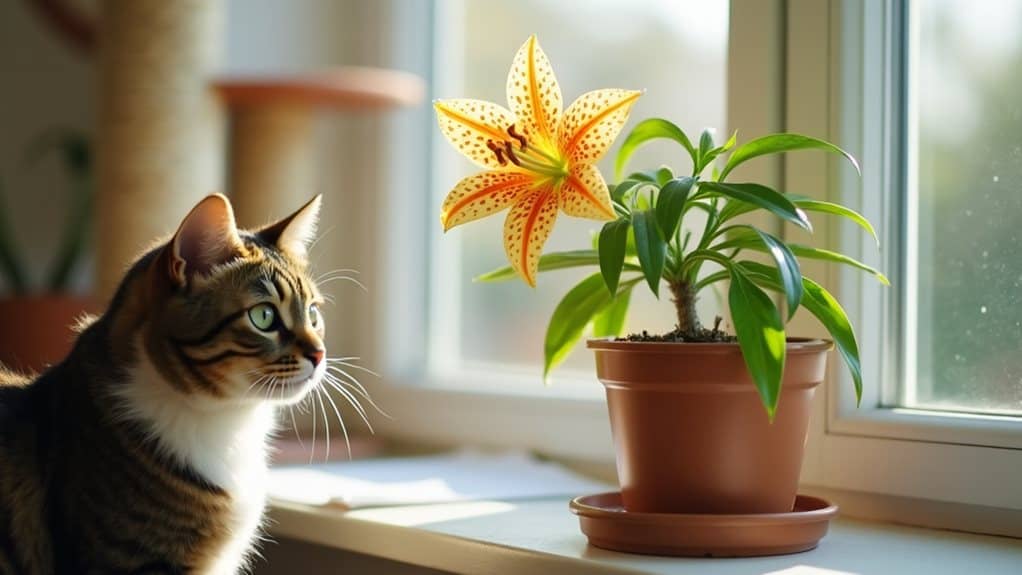
While your cat enjoys climbing and scratching in their designated spaces, their curious nature doesn’t stop there. Many common houseplants can be dangerous or even deadly if your feline friend decides to take a nibble.
Toxic plant identification is essential for keeping your cat safe. Remove lilies, tulips, sago palms, and aloe vera immediately—these are particularly harmful to cats.
Don’t worry, you don’t need a plant-free home! Consider safe plant alternatives like spider plants, Boston ferns, and cat grass. These provide greenery without the danger, and some even satisfy your cat’s urge to munch on vegetation.
When bringing new plants home, always check their safety first. Allergy treatments can help provide additional support if your cat’s curiosity leads to any allergic reactions from their environment. Your local veterinarian can provide a thorough list of cat-safe options, or you can download a toxic plant identification app for quick reference while shopping.
Preventing Escape Routes and Window Dangers
You’ll need to secure window screens to prevent your curious cat from pushing through and falling from dangerous heights.
Don’t forget to check for hidden exits, like gaps behind appliances or loose vents, where your feline escape artist might squeeze through.
If your home has high windows, consider installing window guards or limiting how far they can open, as cats don’t always land on their feet despite the popular myth. Additionally, providing safe spaces within your home can help reduce anxiety and prevent your cat from attempting to escape by creating a more secure environment.
Secure Window Screens
Cats view windows as portals to an exciting outside world, but these openings can quickly become dangerous escape routes without proper precautions.
To keep your curious feline safe, you’ll need to invest in secure window screens that can withstand determined paws and claws.
- Reinforced window screen materials like pet-resistant mesh are 7 times stronger than standard screens and can handle your cat’s scratching habits.
- Tension-mounted window screen types offer easy installation without damaging window frames.
- Metal mesh screens provide maximum security for persistent cats who’ve mastered the art of screen climbing.
- Sliding window locks prevent screens from being pushed out when your cat leans against them.
Don’t wait for a close call before upgrading your screens—it’s a simple fix that’ll give you peace of mind while letting your cat enjoy the view safely.
Block Hidden Exits
Beyond the obvious window screens, clever felines can discover escape routes throughout your home that you’ve never even noticed.
Check for gaps behind appliances, loose vents, and spaces in cabinets where determined cats might squeeze through. You’d be surprised how small an opening your cat can fit into when they’re feeling adventurous!
Inspect crawl spaces, utility rooms, and forgotten storage areas for potential exits. If you have cat doors installed for multi-pet households, make certain they’re properly secured when not in use. Some clever cats learn to pry these open even when locked.
Don’t forget to examine hidden spaces beneath sinks and behind furniture, where wall gaps might exist. Neutering your cat can significantly reduce their desire to escape, as it helps control unwanted behaviors related to territorial instincts.
When having guests over, remind them to close doors quickly. Your sneaky companion is likely waiting for just the right moment to make their great escape!
Window Height Precautions
While blocking hidden exits keeps your cat inside, windows present a different kind of challenge altogether. Cats are naturally drawn to windows, where they can watch birds and soak up sunshine. However, their feline curiosity can lead to dangerous falls, especially from higher floors.
To guarantee window safety for your furry friend:
- Install sturdy window screens that can withstand your cat’s weight if they lean or push against them.
- Consider window guards for added protection, especially in high-rise buildings.
- Keep windows closed or opened no more than 4 inches when you’re not supervising.
- Create comfortable window perches that satisfy your cat’s desire for elevation while keeping them safe. Additionally, ensure that you understand your cat’s body language to prevent situations where they might feel threatened and attempt to jump out of the window.
Cat-Proofing Kitchen and Laundry Areas
When considering household safety, the kitchen and laundry areas present some of the greatest hazards for your curious feline friends.
Guarantee your countertops and other cat friendly surfaces are free from harmful items like cleaning products, medications, and toxic foods (chocolate, onions, and grapes are particularly dangerous). Store these items in secure cabinets with childproof latches.
Pay special attention to kitchen appliance safety by keeping appliance doors closed, especially refrigerators, dishwashers, and washing machines. Your clever kitty might jump inside when you’re not looking!
Cover stovetop knobs or remove them when not in use—cats can accidentally turn on burners while exploring.
Also, secure trash cans with locking lids, as they contain tempting but dangerous items like chicken bones and plastic wrappings that could harm your feline explorer.
Setting Up Pet-Safe Feeding and Litter Box Zones
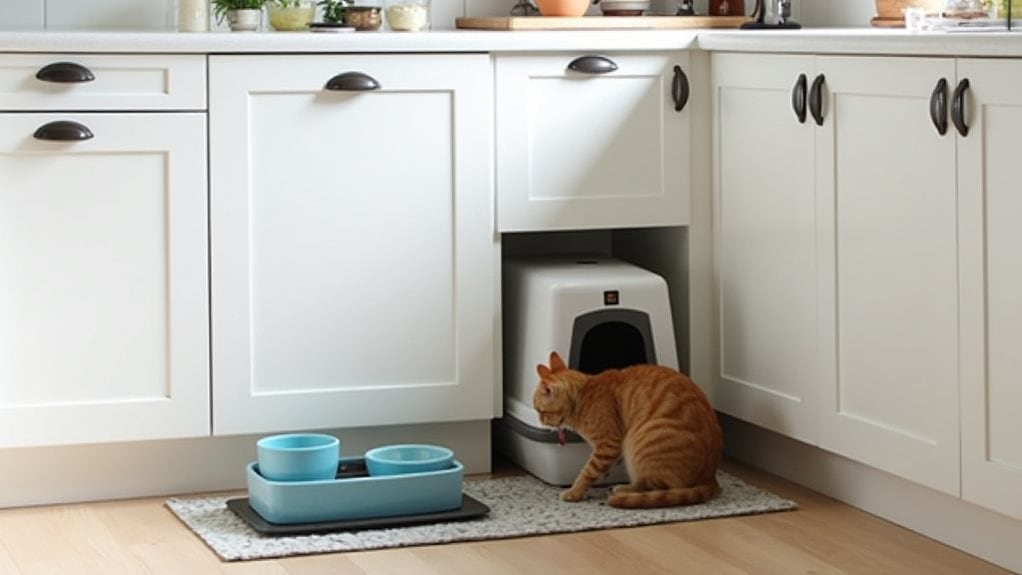
Creating a dedicated space for your cat’s feeding and litter box needs is essential for both their health and your home’s cleanliness.
When setting up these areas, you’ll want to take into account both convenience and your cat’s comfort.
For ideal feeding and bathroom arrangements, focus on:
- Choose feeder placement away from high-traffic areas, but not so isolated that you’ll forget to check food and water levels daily.
- Position the litter box in a quiet, accessible location—never near food areas (cats don’t like to eat where they eliminate!).
- Think about automatic feeders for portion control if you’re away during feeding times.
- Use litter box mats to catch scattered litter and prevent tracking throughout your home.
You’ll find your cat appreciates these thoughtful arrangements, and they’ll make your life easier too!
Frequently Asked Questions
How Do I Introduce a New Cat to Existing Pets?
You’ll need to plan safe introductions between your pets. Start with gradual acclimation by keeping them separated, swapping scents, then allowing supervised visual contact before direct interaction. Go slowly and reward calm behavior.
Can Cats Safely Interact With Fish Tanks or Small Pet Cages?
No, they can’t safely interact unsupervised. Secure fish tank safety with tight-fitting lids and place pet cage precautions like locks on small animal habitats. You’ll need to monitor all interactions between cats and smaller pets.
How Can I Prevent My Cat From Damaging Furniture?
Provide scratching posts near furniture your cat targets. Use furniture covers for protection. You’ll also want to trim your cat’s claws regularly and try double-sided tape on surfaces they’re damaging to deter them.
What Should I Include in a Cat First-Aid Kit?
As the morning light illuminates your new cat’s curious eyes, you’ll need bandage types like gauze and self-adhesive wraps, plus antiseptics, tweezers, and a pet thermometer. Follow medication guidelines from your vet carefully.
How Often Should I Replace Cat Toys for Safety Reasons?
You should inspect your cat’s toys weekly and replace them every 1-3 months depending on toy durability. Always discard damaged toys immediately. Look for toys meeting safety standards to guarantee your pet’s wellbeing.
Final Thoughts
Cat-proofing your home isn’t just a one-time task, it’s an ongoing commitment to your feline friend’s safety. You’ll sleep a million times better knowing your curious companion is protected from household hazards. As you implement these safety measures, you’re creating a nurturing environment where your cat can thrive. Remember, a safe cat is a happy cat, and a happy cat makes for an even happier home.