The Best Fluffy Pancakes recipe you will fall in love with. Full of tips and tricks to help you make the best pancakes.

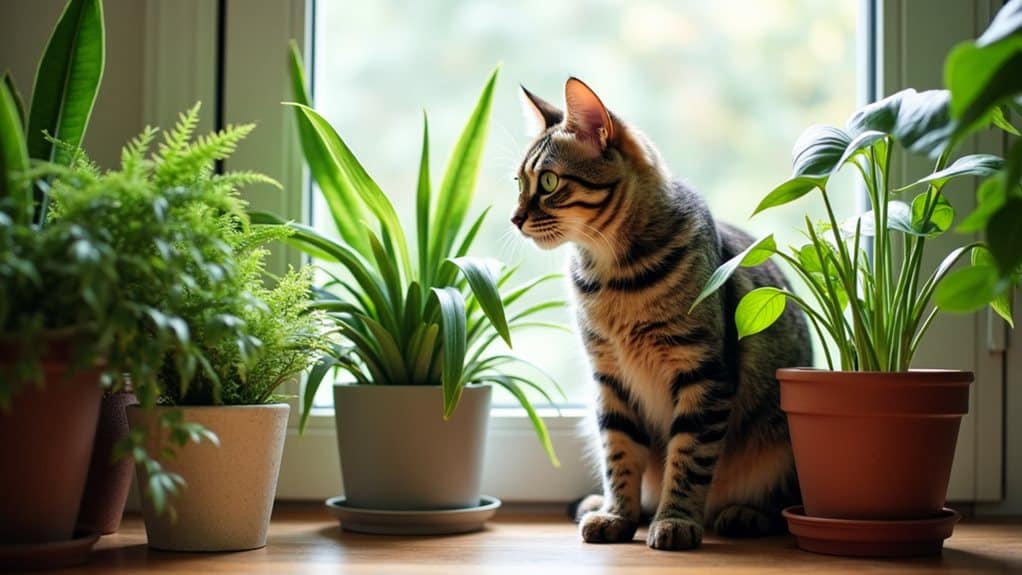
Cat-proofing your home requires knowing which plants pose dangers to your curious feline. Lilies can cause kidney failure, while spider plants and cat grass are safe alternatives. You’ll need to recognize poisoning symptoms like vomiting or lethargy, and respond quickly by contacting your vet. Try creating designated cat gardens or using hanging planters to keep toxic plants out of reach. With the right strategies, you can maintain both your green thumb and your cat’s safety.
Understanding Why Cats Are Attracted to Houseplants
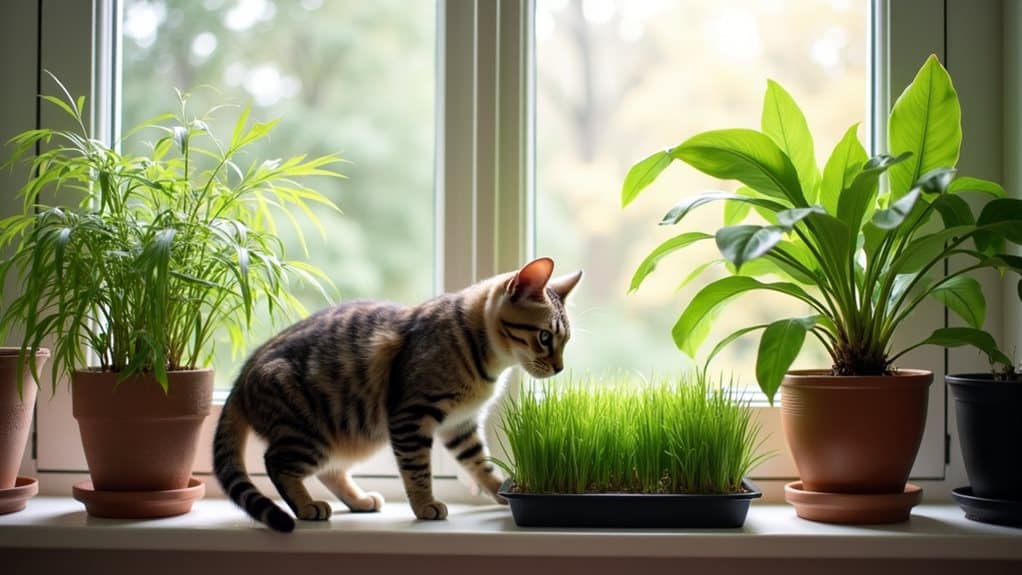
Cats are naturally curious creatures with hunting instincts that make dangling leaves and stems irresistible playthings. Your plant’s movement, especially when disturbed by a breeze, triggers their predatory nature.
Plus, many cats enjoy the texture of soil for digging or—let’s be honest—as an alternative bathroom!
Cats see your carefully tended potting soil as both playground and litter box. Boundaries needed!
Plant preferences vary among cats, but many are drawn to grassy textures that satisfy their instinctual need to chew vegetation, which aids their digestion.
Others simply appreciate plants as raised perches or hiding spots during their daily adventures around your home. Additionally, scent marking behaviors in cats may lead them to explore and interact with houseplants as a way to communicate safety and ownership.
Top 10 Most Dangerous Toxic Plants for Cats
Knowing which plants pose serious threats to your cat’s health could literally save their life. Many common houseplants contain chemicals that can cause severe reactions in our feline friends.
Lilies top the danger list—even small exposures can lead to kidney failure within 72 hours. Other highly toxic culprits include sago palms, azaleas, oleander, dieffenbachia, autumn crocus, castor bean, cyclamen, kalanchoe, and yew.
Watch for toxic plant symptoms like vomiting, drooling, difficulty breathing, lethargy, or seizures. These cat plant interactions require immediate veterinary attention. Additionally, it’s important to be aware of serious diseases that could arise from other parasites in your home environment, as they can pose additional risks to your cat’s health.
You don’t need to give up on indoor greenery entirely—just be smart about what you bring home! Remember, your curious kitty might see that potted plant as both a snack and playground, so choose wisely.
Warning Signs Your Cat Has Ingested a Toxic Plant
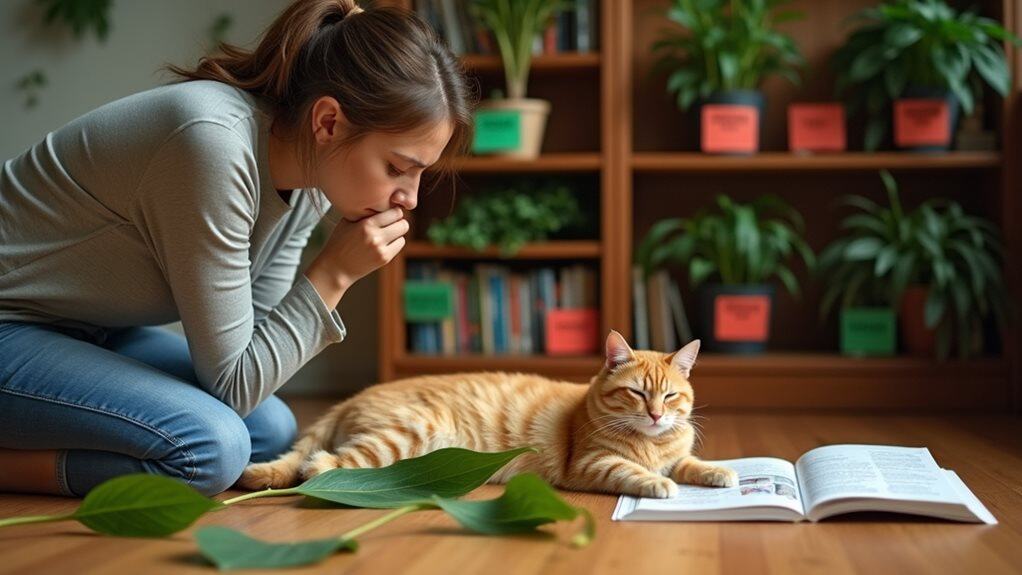
Recognizing the symptoms of plant poisoning quickly can make all the difference for your cat’s recovery. If your curious feline has been exploring your houseplants, you’ll need to watch for specific warning signs that indicate they’ve eaten something harmful.
Swift recognition of plant poisoning symptoms is crucial for saving your cat’s life when houseplants become dangerous temptations.
Pay close attention to any sudden behavioral changes, as these are often the first symptoms to observe.
- Digestive distress – vomiting, drooling, diarrhea, or pawing at the mouth
- Respiratory issues – difficulty breathing, coughing, or rapid breathing
- Neurological signs – dilated pupils, confusion, staggering, seizures, or unusual lethargy
When you notice these warning signs, immediate actions are vital. Contact your vet right away, and if possible, bring a sample of the plant your cat might’ve eaten. Additionally, grooming behavior, where cats may lick their hair, can signal stress or discomfort, as it serves as a method of self-soothing technique. Don’t wait to see if symptoms improve—plant toxicity can escalate quickly!
Beautiful But Safe: Pet-Friendly Houseplants for Cat Owners
You don’t need to sacrifice beauty for safety when choosing houseplants as a cat owner.
Spider plants, Boston ferns, and African violets are stunning non-toxic options that’ll let your feline friend roam freely without worry. Regularly checking for skin issues and parasites ensures your cat stays healthy while enjoying your indoor garden.
If your curious cat still can’t resist batting at leaves, try hanging planters or decorative shelving to keep your greenery safely out of paw’s reach while adding vertical interest to your space.
Non-Toxic Indoor Favorites
While indoor plants breathe life into your home, finding ones that won’t harm your curious feline can feel like a challenge.
Luckily, many beautiful options exist that are completely safe for your four-legged friend. You’ll love how these cat-friendly alternatives still provide that lush, green aesthetic without any worries.
- Spider plants – These air-purifying beauties with their arching leaves are non-toxic and actually fun for cats to bat at (without causing harm).
- Cat friendly herbs – Catnip isn’t the only herb your kitty can safely enjoy; try cat grass, basil, or thyme.
- Safe succulents – Options like Haworthia and Christmas cactus provide that trendy succulent look without the toxicity of their aloe cousins.
These pet-friendly plants let you create a jungle vibe that’s safe for even the most curious whiskers! Additionally, being aware of lactose intolerance in cats can help you choose treats that won’t upset your kitty’s stomach.
Hanging Plant Solutions
Now that you’ve explored cat-safe plants for your home, let’s look upward for another brilliant strategy. Hanging plants offer a perfect solution for keeping greenery out of curious paws’ reach while adding dimension to your space. By varying hanging plant heights, you’ll create visual interest and maximize protection. Additionally, consider monitoring your cat’s behavior to ensure they don’t feel stress relief due to the confinement of hanging plants.
| Hanging Height | Planter Material | Best For |
|---|---|---|
| High (7+ feet) | Macramé | Spider plants |
| Medium (5-6 feet) | Ceramic | Boston ferns |
| Low (4-5 feet) | Plastic | String of pearls |
Choose hanging planter materials based on your décor and safety needs. Lightweight plastic works well in bathrooms, while stylish macramé adds bohemian flair to living spaces. Ceramic offers elegance but requires secure mounting. Remember, even with hanging arrangements, stick to non-toxic varieties—cats are surprisingly determined climbers when they want to be!
Creating Designated Cat Gardens and Grass Stations
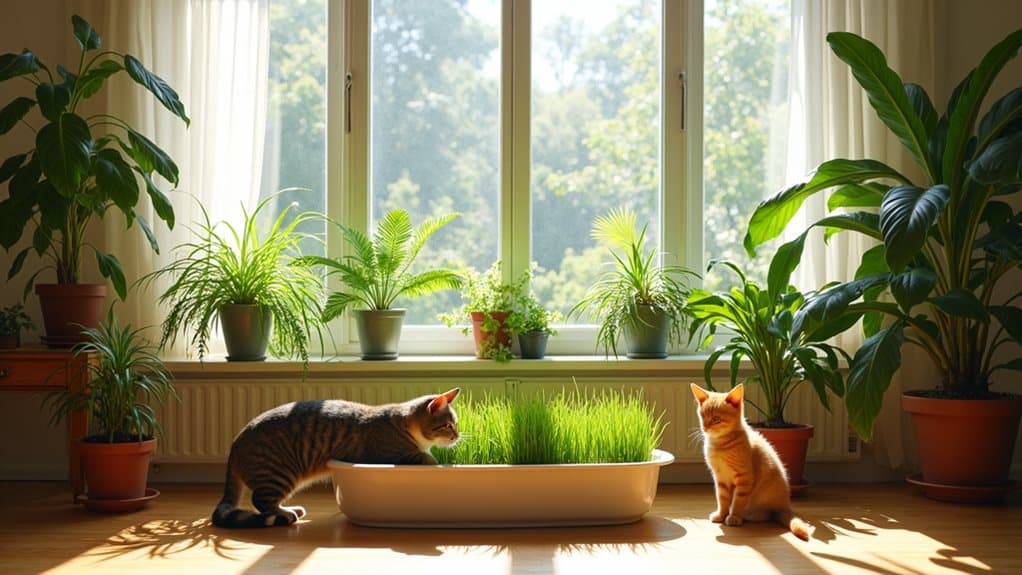
Since cats naturally gravitate toward plants, creating a dedicated space just for their botanical exploration can transform your home into a feline paradise.
You’ll find that cat friendly herbs like catnip, cat thyme, and wheatgrass provide safe options while keeping your feline friends away from toxic houseplants. Setting up designated play areas with these herbs gives your cats a healthy outlet for their plant-munching instincts and can also contribute to their overall well-being, particularly when combined with a balanced diet.
- Plant a shallow container with cat grass seeds and place it near a sunny window for easy access.
- Create a tiered herb garden with safe plants at different heights to encourage natural climbing behaviors.
- Rotate your cat-friendly plants regularly to maintain your cat’s interest and prevent overgrazing.
You’ll be amazed at how quickly your cats learn which plants are “theirs” to enjoy!
Practical Plant Protection Strategies for Multi-Pet Homes
As cats and dogs explore your home with different instincts and behaviors, protecting your plants becomes twice the challenge in multi-pet households.
You’ll need to implement multi-layered strategies that account for both climbers and diggers!
Consider sturdy plant barriers that work for all your furry friends—mesh coverings keep cats from pawing at soil while preventing dogs from digging.
Raise plants on shelves cats can’t jump to but dogs can’t reach.
Don’t forget that consistent pet training makes a huge difference; reward both species when they ignore your greenery. Additionally, seeking community support resources can provide further assistance in managing your pets and their interactions with your home environment.
Emergency Response: What to Do If Your Cat Eats a Toxic Plant
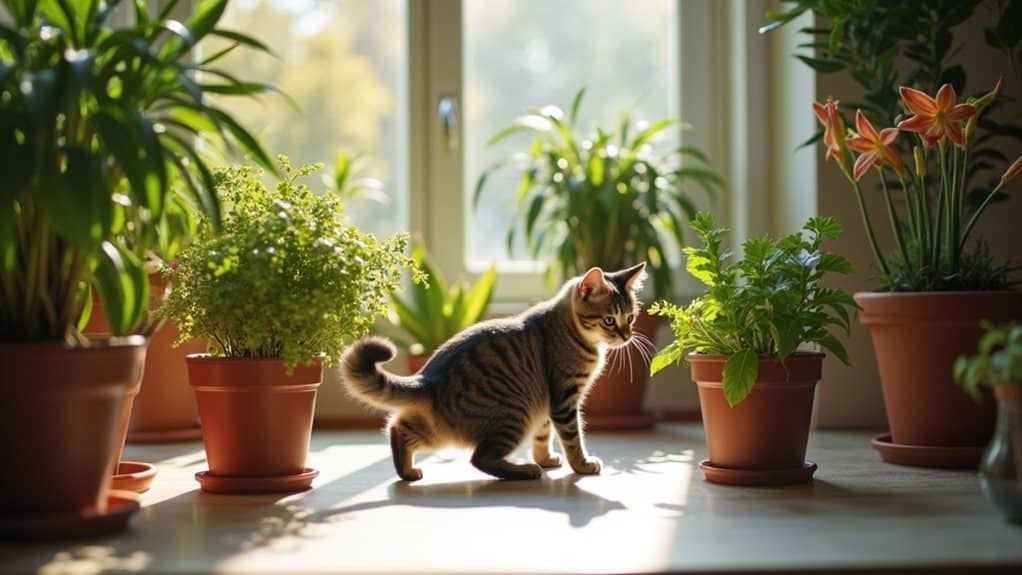
Despite your best prevention efforts, you might someday face a scenario where your curious cat has nibbled on a toxic plant. Knowing how to respond quickly can make all the difference. Don’t panic—follow these steps instead.
Preparation is key, but knowing how to act fast when your cat encounters toxic plants could save their life.
- Remove your cat from the plant immediately and check their mouth for remaining plant material. Brush their teeth or wipe their gums with a damp cloth if possible.
- Call your vet or animal poison control right away—keep emergency contacts on your refrigerator or saved in your phone. Describe the plant, how much was eaten, and when.
- Provide first aid as directed by professionals while you prepare for transport. Never induce vomiting without veterinary guidance, as this can sometimes cause more harm. It’s also important to be aware of potential signs of ringworm infection in your cat, which can complicate recovery if there is skin contact with plant material.
Decorative Alternatives: Artificial Plants and Cat-Safe Decor Options
While protecting your feline friend is your top priority, you don’t need to sacrifice style and greenery in your home. High-quality artificial plants have come a long way, offering realistic-looking decorative alternatives without the toxic risks. Today’s artificial greenery includes silk, plastic, and fabric options that can fool even the most discerning eye!
Consider cat-friendly décor like cat grass gardens, wall-mounted shelves for climbing, or window perches that satisfy your cat’s natural instincts while adding character to your space. Additionally, understanding your cat’s emotional expressions through their behaviors can guide your choices in home decoration, ensuring both comfort and safety for your pet.
Hanging macramé plant holders can raise artificial plants out of paw’s reach, creating visual interest and dimension. You might also explore cat fountains that double as water features or stylish cat trees that complement your furniture rather than clash with it.
With these alternatives, both you and your kitty can enjoy a beautiful, safe living environment.
Frequently Asked Questions
How Long Does Plant Toxicity Last in a Cat’s System?
Plant toxicity duration varies from hours to days in your cat’s system. You’ll notice symptoms timeline changing based on plant type, amount consumed, and your cat’s size. Seek immediate vet care when poisoning occurs.
Can Cats Develop Immunity to Toxic Plants Over Time?
Curiosity may have nine lives, but your cat won’t develop immunity to toxic plants. Their feline dietary habits don’t allow for plant toxicity adaptation. You’ll need to keep dangerous greenery out of reach permanently.
Do Outdoor Cats Instinctively Avoid Toxic Plants Better Than Indoor Cats?
No, outdoor cats don’t inherently avoid toxic plants better. While outdoor instincts may develop through experience, cat behavior remains similar – both indoor and outdoor cats will chew on plants regardless of toxicity.
Are Plant Fertilizers and Pesticides More Dangerous Than the Plants Themselves?
Yes, they’re often more hazardous. You’ll find fertilizer toxicity and pesticide dangers pose greater risks to your cats than many plants themselves. Always store these products securely and follow application instructions carefully.
Can Pregnant Cats Pass Plant Toxins to Their Unborn Kittens?
Yes, your pregnant cat can pass toxins to unborn kittens through placental toxicity transmission. You’ll want to prevent prenatal exposure by keeping toxic plants away from expectant felines throughout their pregnancy for safety.
Final Thoughts
You’ve made it through the plant-parent-cat-owner gauntlet! Congratulations on learning how to keep your feline from turning your botanical paradise into their personal salad bar. Remember, your cat’s not trying to give you a heart attack—they’re just naturally curious about the jungle you’ve created. Balance is possible: your home can be both a stylish plant haven and a safe space for your furry overlord. The secret? Knowledge, preparation, and maybe just a touch of surrender.