The Best Fluffy Pancakes recipe you will fall in love with. Full of tips and tricks to help you make the best pancakes.

Protect your cat year-round by staying alert to seasonal dangers. In winter, watch for antifreeze and holiday decorations; spring brings toxic plants and cleaning chemicals; summer threatens with heat stroke and parasites; while fall introduces Halloween hazards and rodenticides. Keep toxic items secured, guarantee proper ventilation, provide shade and water during hot months, and create safe spaces during celebrations like fireworks displays. Understanding these seasonal threats will help you create a safer environment for your feline friend.
Winter Threats: Antifreeze, Holiday Decorations, and Cold Weather Dangers
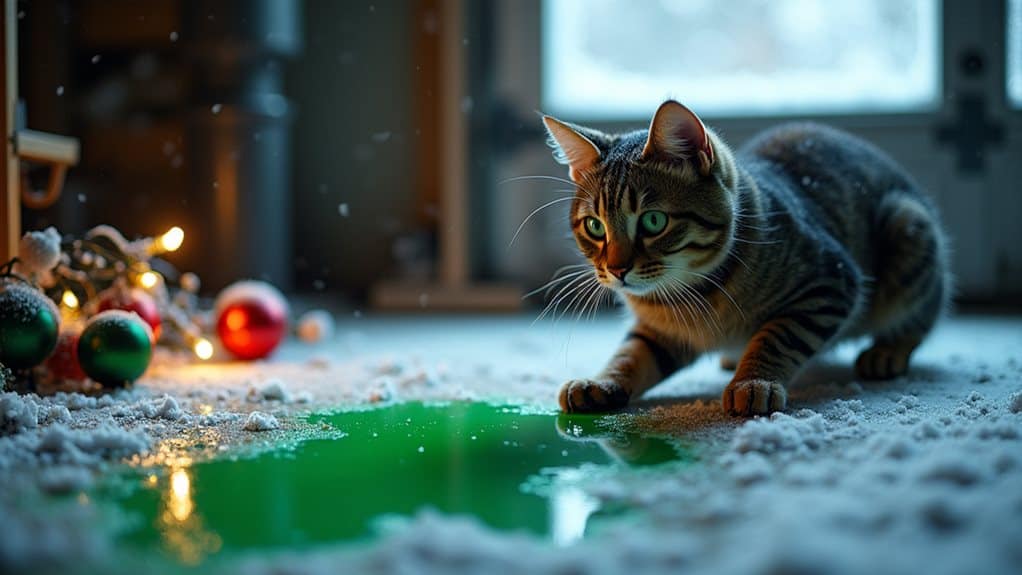
While the winter holidays bring joy and festivities to your home, they also introduce several hidden dangers for your curious cat. Antifreeze poisoning presents one of the deadliest risks, as cats are attracted to its sweet taste but even a small amount can cause fatal kidney failure. Always clean spills immediately and store chemicals where your feline can’t access them.
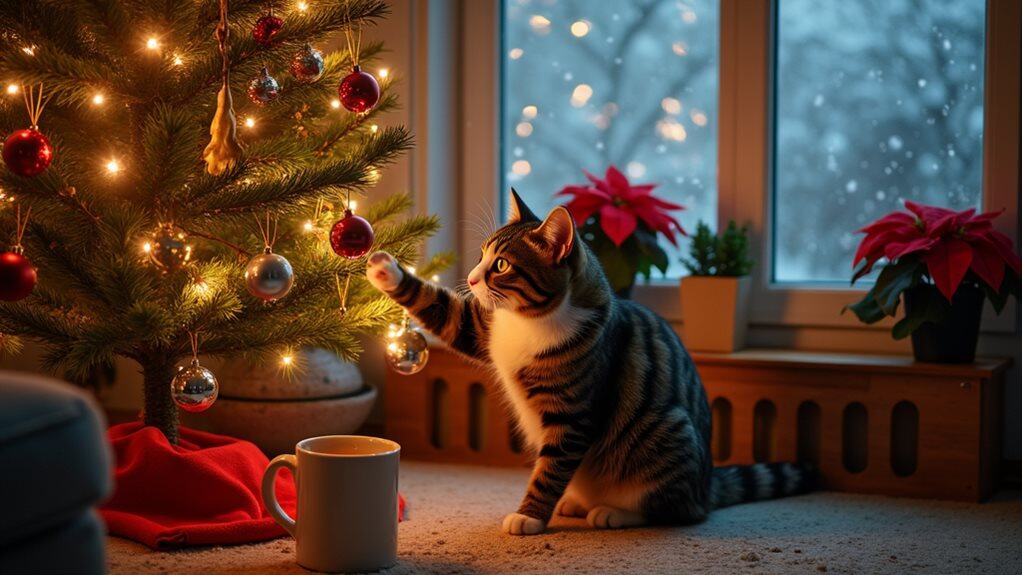
Your twinkling decorations pose hazards too—cats love batting at ornaments, chewing on tinsel, and climbing trees, which can lead to injuries or intestinal blockages. Secure your tree to prevent tipping and consider pet-safe decoration alternatives.
Don’t forget about cold exposure! Though cats have fur coats, they’re still vulnerable to frostbite and hypothermia. Provide warm shelter and limit outdoor time during freezing temperatures to keep your kitty safe and comfortable. Additionally, regular claw trimming minimizes destruction caused by scratching, promoting a safer environment during the holiday season by maintaining good hygiene.
Spring Perils: Toxic Plants, Cleaning Products, and Open Windows
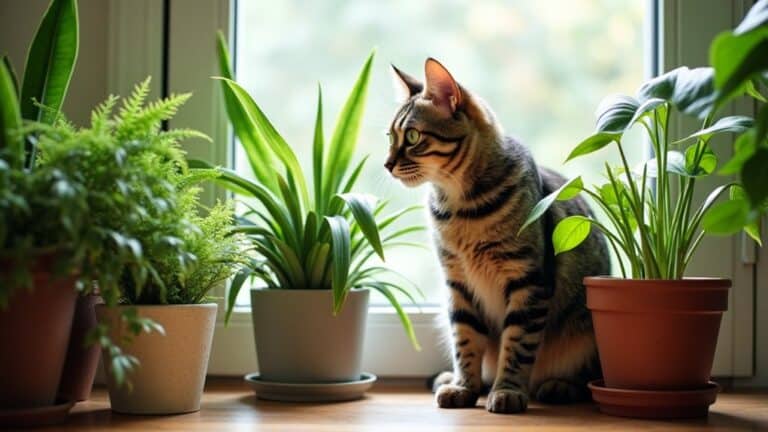
As spring flowers bloom, your cat faces new dangers from toxic plants like lilies, daffodils, and tulips that can cause severe illness if ingested.
Your spring cleaning routine introduces another hazard, as many household cleaners contain chemicals that can harm your curious feline if they walk through wet surfaces and later groom their paws.
Don’t forget that open windows without secure screens present a falling risk for cats who might be tempted by chirping birds or the scent of fresh air. Additionally, be aware that some pets are allergic to poison ivy, which can pose a risk if they come into contact with the plant in your yard or nearby areas.
Toxic Spring Blooms
Spring’s colorful revival brings new hazards into your cat’s environment that shouldn’t be overlooked. Many popular spring flowers can be toxic to your curious feline.
Lilies are particularly dangerous – even a small amount can cause kidney failure in cats. Tulips, daffodils, and hyacinths also pose serious risks if your kitty decides to take a nibble.
Don’t forget that spring allergies aren’t just for humans! Your cat might develop itchy skin, watery eyes, or sneezing fits from pollen and other seasonal irritants.
If you notice your pet pawing at their face or excessive grooming, it could be allergy-related.
When bringing fresh flowers home, research which ones are cat-safe or keep them in rooms your furry friend can’t access. Additionally, be mindful that a balanced diet is crucial for your cat’s overall health and can help mitigate the effects of seasonal irritants.
Spring Cleaning Dangers
When deep cleaning your home for the new season, you’ll want to be mindful of the hidden dangers lurking in everyday products. Many common cleaning solutions contain chemicals that can harm your curious cat if ingested or even walked through and later licked from their paws.
Keep your feline friend safe with these spring cleaning tips: store all products in locked cabinets, allow surfaces to dry completely before allowing cat access, and consider switching to pet-safe cleaning alternatives like vinegar and baking soda. Additionally, engaging in regular playtime can help reduce your cat’s destructive scratching behaviors during spring cleaning, keeping them occupied and safe.
Also, be cautious with open windows during your cleaning spree—cats love fresh air but can easily fall from unsecured screens.
Summer Hazards: Heat Stroke, Parasites, and Outdoor Chemicals
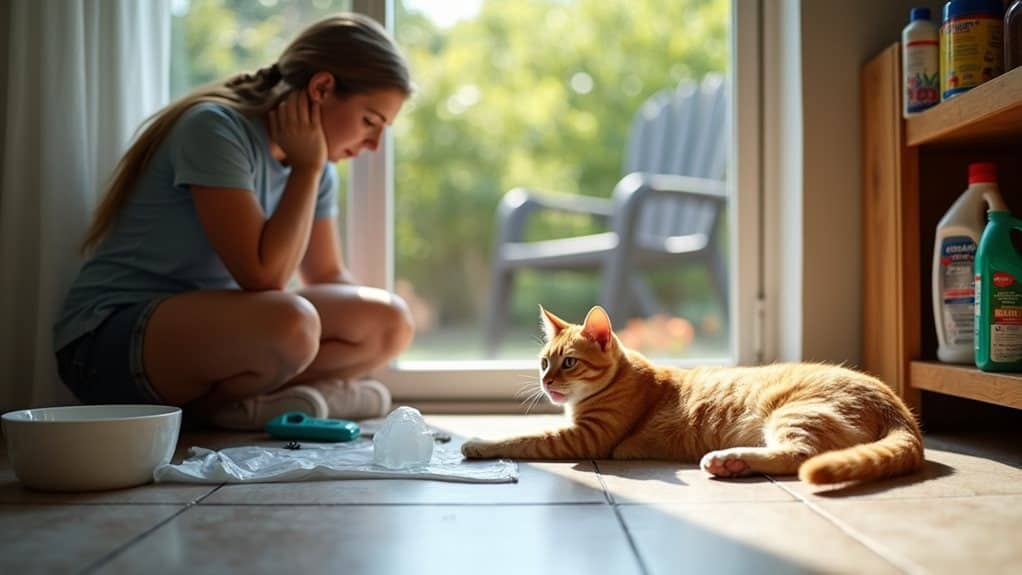
Summer heat can turn dangerous for your cat, with temperatures above 85°F potentially causing heat stroke if they don’t have access to shade and water.
You’ll need to protect your furry friend from parasites that thrive in warm weather, including fleas, ticks, and heartworms, through regular preventative treatments.
Remember to keep your cat away from outdoor chemicals like lawn fertilizers, pesticides, and pool treatments, which can be toxic if they walk through treated areas and then groom their paws. Additionally, ensuring your cat stays hydrated is crucial to maintaining urinary health, especially during the hotter months when they might be at risk of dehydration.
Heat Dangers Overview
The scorching temperatures of summer pose serious risks to your feline friends, who can’t regulate their body heat as efficiently as humans. When temperatures climb, cats become vulnerable to heat exhaustion, which can quickly escalate to life-threatening heatstroke.
Watch for excessive panting, drooling, lethargy, or vomiting—these are warning signs your kitty is overheating.
Hydration tips to keep your cat cool include placing multiple water bowls throughout your home, adding ice cubes to water, and even creating frozen treats with cat-safe ingredients. Offering ice cubes can help boost water intake, especially in hot weather when hydration is crucial.
Consider investing in a pet fountain, as many cats prefer running water. Remember to brush your cat regularly, especially if they’re long-haired, as matted fur traps heat.
Never leave your feline in a parked car, even with windows cracked—temperatures can soar to deadly levels within minutes.
Parasite Prevention Essentials
As temperatures climb, parasites become increasingly active and pose a considerable threat to your cat’s health and comfort.
You’ll need to step up your flea prevention and tick control efforts during the warmer months to keep your furry friend safe.
Don’t wait until you spot unwanted hitchhikers in your cat’s fur! Apply veterinarian-recommended flea treatments monthly, and check your outdoor explorer regularly for ticks, especially after adventures in grassy or wooded areas.
Remember, these tiny terrors can transmit serious diseases that might leave your kitty feeling miserable. Flea prevention strategies are essential for keeping your cat healthy during this time.
If your cat shows excessive scratching, hair loss, or unusual lethargy, they might be fighting a parasite battle.
Contact your vet immediately—catching these problems early makes treatment much easier and more effective!
Fall Risks: Halloween Decorations, Rodenticides, and Seasonal Allergies
Fall brings a host of hidden dangers for your curious cat, from festive Halloween decorations to chemical threats that emerge as the weather cools.
When setting up Halloween décor, keep string lights, fake cobwebs, and small plastic pieces out of paw’s reach. Your cat could easily become entangled or ingest these items, leading to choking or intestinal blockages.
Hidden dangers lurk in Halloween decorations—keep all tangling hazards and small items away from your curious feline.
For proper Halloween safety, store treats—especially chocolate—in sealed containers away from your feline friend.
As temperatures drop, rodents seek shelter indoors, prompting increased use of rodenticides. These poisons are extremely toxic to cats, causing internal bleeding or seizures. Create cat-safe barriers around any bait stations.
Don’t forget allergy management during fall. Cats can develop seasonal allergies to ragweed, mold, and dust. If you notice excessive grooming, sneezing, or ear scratching, consult your vet for relief options. Additionally, be aware that some high care costs associated with allergies may lead families to consider rehoming their pets.
Holiday-Specific Dangers: From Christmas Trees to Fourth of July Fireworks

Holiday celebrations throughout the year present unique hazards for your cat, expanding beyond the autumn concerns we’ve covered.
During Christmas, those twinkling lights and shiny ornaments might look like irresistible toys to your curious feline. Keep Christmas decorations like tinsel, ribbon, and small ornaments out of paw’s reach, as they can cause intestinal blockages if swallowed.
Don’t forget about Christmas plants—poinsettias, mistletoe, and holly are toxic to cats. Additionally, ensure your home is free from incense smoke as it can pose serious respiratory risks for your cat during festive gatherings.
When summer rolls around, firework safety becomes essential. The loud noises can terrify your cat, potentially causing them to bolt or hide for days.
Create a quiet sanctuary in your home before celebrations begin, complete with familiar toys and a cozy bed.
Consider keeping your cat indoors during firework displays, and make sure their microchip information is updated, just in case.
Creating a Year-Round Safety Plan for Your Feline Companion
While seasonal hazards come and go, keeping your cat safe requires a consistent, year-round approach that adapts to changing circumstances.
Start by implementing preventive measures throughout your home—secure toxic plants, properly store chemicals, and check for hidden dangers like small toys or loose wires each season.
Develop emergency protocols that everyone in your household understands.
Post your vet’s number, the nearest emergency clinic, and pet poison control contacts on the fridge.
Keep a pet first aid kit handy, and practice what you’ll do if your curious kitty gets into trouble. Additionally, creating a stress-free environment can significantly contribute to your cat’s overall well-being during stressful times.
Frequently Asked Questions
How Do I Recognize Signs of Seasonal Depression in Cats?
Watch for behavioral changes like decreased grooming, lethargy, appetite changes, and excessive sleeping. You’ll notice your cat responding to environmental triggers such as reduced daylight hours, less playtime, or altered household routines during winter months.
Can Cats Develop Allergies to Seasonal Changes?
Like clockwork, yes, cats can develop seasonal allergies. You’ll notice cat symptoms including excessive grooming, sneezing, watery eyes, and skin irritation. Watch for these signs when seasons change to keep your feline friend comfortable.
Is Pet Insurance Worth It for Seasonal Emergency Care?
Pet insurance is worth it if you can’t afford unexpected seasonal emergency care. You’ll find peace of mind with emergency coverage, though some plans have seasonal premiums that increase during high-risk months.
How Do Stray Cats Survive Extreme Seasonal Conditions?
While you might think they’re helpless, stray cats are remarkably resilient. They’ll find makeshift stray shelters under porches or in abandoned buildings, rely on various food sources, and huddle together for warmth during extreme weather.
Are Certain Cat Breeds More Vulnerable to Seasonal Hazards?
Yes, certain breeds are more vulnerable. Persian and Sphynx cats have poor climate adaptability, while short-haired breeds have fewer cold weather protections. Breed sensitivities affect how you’ll need to protect them during seasonal extremes.
Final Thoughts
You’ve survived this seasonal cat-hazard crash course, and now you’re practically a feline safety ninja! Remember, your furry overlord expects protection year-round, not merely when you’re feeling particularly responsible. So keep this guide handy, stay vigilant, and you’ll avoid those middle-of-the-night emergency vet visits. Your cat may never thank you, but they’ll continue judging you from slightly safer perches throughout all four seasons.