The Best Fluffy Pancakes recipe you will fall in love with. Full of tips and tricks to help you make the best pancakes.

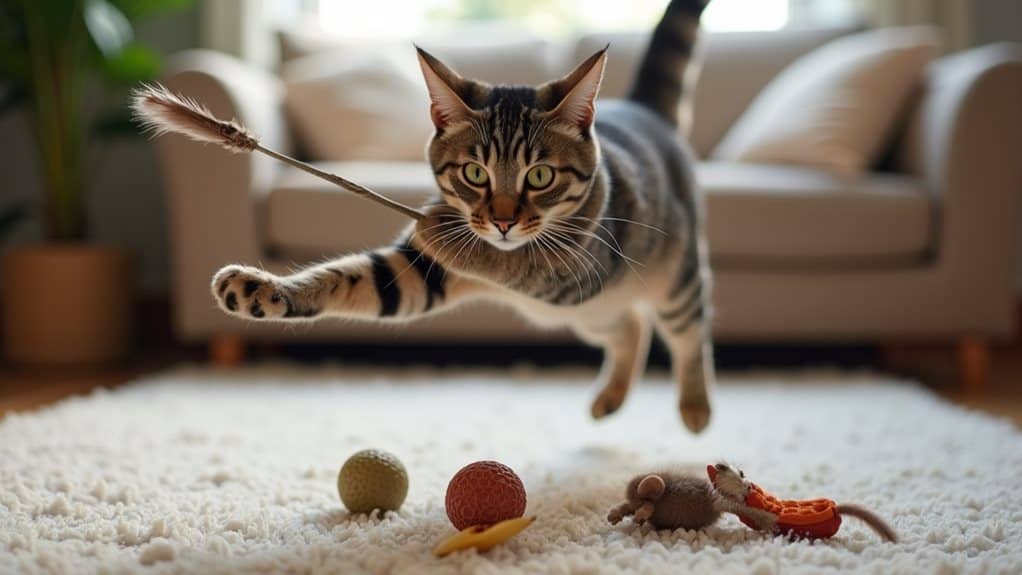
Indoor hunting games are crucial for your cat’s well-being, not merely entertainment. Even well-fed cats need to express their natural predatory instincts to prevent boredom and anxiety. Try interactive wand toys with fluttering movements, puzzle feeders that make meals challenging, or DIY cardboard mazes. Rotate toys every few days to maintain interest and observe your cat’s unique hunting style to choose the best games. The right hunting enrichment will transform your feline’s indoor experience.
Why Cats Need to Hunt (Even When Well-Fed)
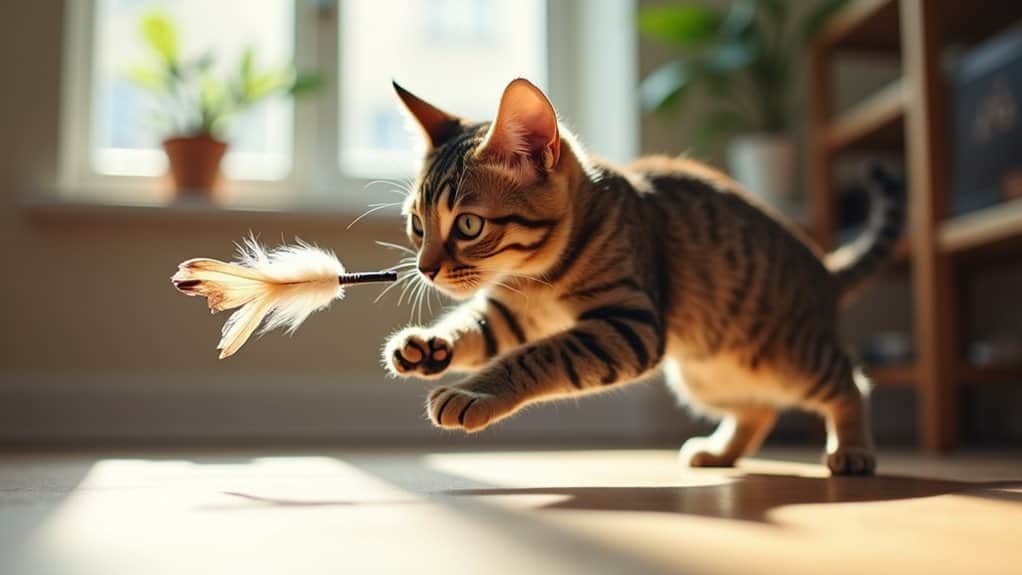
Even though your cat’s bowl might be overflowing with premium kibble, they’ll still stalk that toy mouse across your living room with the intensity of a wild predator.
This isn’t a sign of ingratitude—it’s hardwired feline behavior that dates back thousands of years.
Your cat’s hunting instincts remain deeply embedded in their DNA, regardless of domestication.
When cats don’t get to express these natural behaviors, they often become bored, anxious, or even destructive.
Think of proper feline enrichment as mental exercise that’s just as important as physical activity. Engaging in indoor hunting games can help satisfy those instincts and provide your cat with essential stimulation.
The Science Behind Feline Predatory Behavior
Understanding your cat’s hunting behaviors involves more than just observing their cute pounces and stalks. These actions are deeply rooted in feline instincts that have evolved over thousands of years. Your fluffy companion isn’t just playing—they’re expressing behaviors hardwired into their DNA!
Your cat’s playful attacks are ancestral behaviors—millions of years of predatory instinct wrapped in fur and whiskers.
When your cat crouches, wiggles their hindquarters, and suddenly pounces on a toy, you’re witnessing predatory evolution in action. Cats haven’t changed much from their wild ancestors who relied on stealth and quick reflexes to survive.
Research shows that domestic cats still follow the same hunting sequence: stalk, pounce, grab, bite, and “kill.” Interestingly, these behaviors can sometimes lead to inter-male aggression when multiple cats are present, making understanding their instincts vital for a harmonious home.
You’ll notice your cat’s pupils dilate during play—that’s their brain releasing the same chemicals that would fire during an actual hunt in the wild.
Interactive Wand Toys: Mimicking Birds and Insects
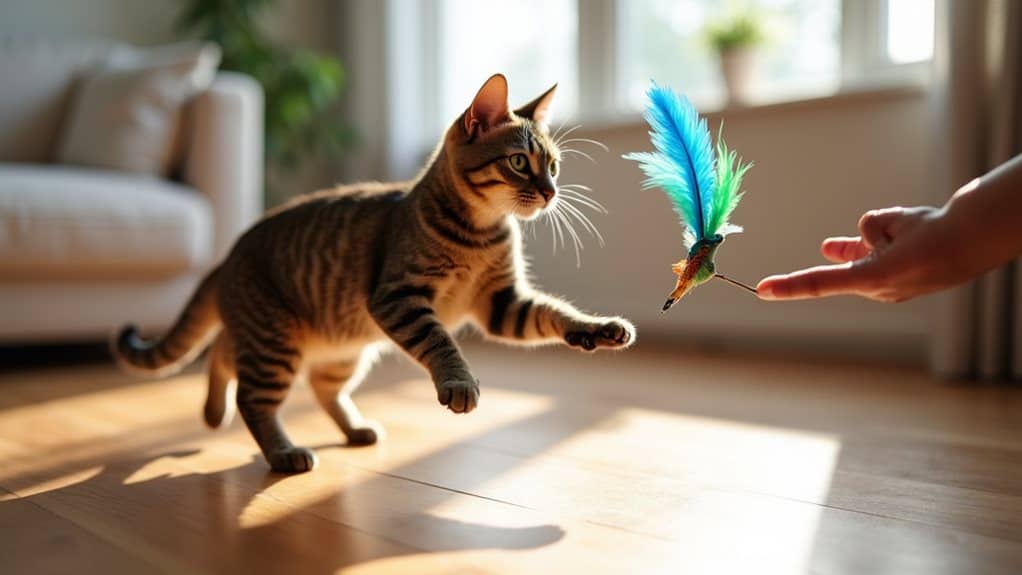
When you’re playing with butterfly-style wand toys, you’ll notice how their fluttering motion instantly triggers your cat’s hunting instincts. You can create more realistic bird or insect movements by flicking your wrist quickly, making the feathers dart unpredictably like actual prey. Raising the toy above your cat’s eye level mimics how real prey might fly or climb, encouraging your feline to leap and pounce as they’d in the wild. These interactive toys not only fulfill your cat’s natural instincts but also provide mental stimulation, enhancing their overall well-being.
Butterfly Flutters Engage Cats
Interactive wand toys that mimic butterflies and other flying insects can transform your living room into an enchanting hunting ground for your feline friend. When you wave these toys, they create natural flutter patterns that trigger your cat’s hunting instincts. The butterfly colors are particularly enticing, with bright blues and oranges often capturing your cat’s attention most effectively.
| Butterfly Toy Features | Benefits | Cat Reaction |
|---|---|---|
| Vibrant colors | Visual stimulation | Intense focus |
| Unpredictable movement | Mental engagement | Stalking behavior |
| Crinkly wings | Auditory cues | Ear perking |
| Feather accents | Tactile satisfaction | Pouncing |
| Adjustable wand length | Customized play | Extended exercise |
You’ll love watching your cat’s pupils dilate as they track these fluttering toys across the room. It’s not merely fun—it’s fulfilling their natural needs through grooming behavior, enhancing the bond between you and your cat!
Fast-Moving Feather Techniques
Three key feather techniques can transform your interactive wand toy play and send your cat into a hunting frenzy.
When you master proper feather movement, you’ll notice your cat’s eyes dilate with excitement as their predatory instincts kick in.
Think of yourself as a bird or insect, making the feather dance erratically rather than predictably. Advanced lure techniques mimic the desperate escape attempts of prey, triggering your cat’s natural hunting response.
- Keep the wand low to the ground, then suddenly flick it upward like a startled bird
- Create a “wounded prey” effect by making the feather twitch and pause intermittently
- Drag the feather around corners to maintain the mystery and surprise factor
- Try the “hide and peek” method, disappearing the feather under furniture briefly
Additionally, engaging in these types of play helps fulfill your cat’s natural hunting instincts, which is essential for their overall well-being.
Height Adds Hunt Realism
To truly captivate your cat’s hunting instincts, elevating your wand toy play to different heights transforms an ordinary play session into an immersive predatory experience.
When you swing toys above your cat’s head, you’ll notice their heightened excitement as they calculate jumps and pounces, mimicking how they’d hunt birds in nature.
Try dangling toys from doorways, atop cat trees, or even from shelves to create vertical challenges that stimulate your feline’s natural stalking abilities. Your cat will strengthen their muscles while engaging their hunting brain, all within the safety of your home.
Remember to vary heights frequently—sometimes low along the floor like scurrying mice, other times high above like fluttering birds. This simple adjustment adds tremendous value to playtime, keeping your clever hunter mentally sharp and physically satisfied. Additionally, incorporating interactive play into your routine not only enhances the thrill of the hunt but also fosters a stronger bond between you and your cat.
Puzzle Feeders: Making Your Cat Work for Their Meals
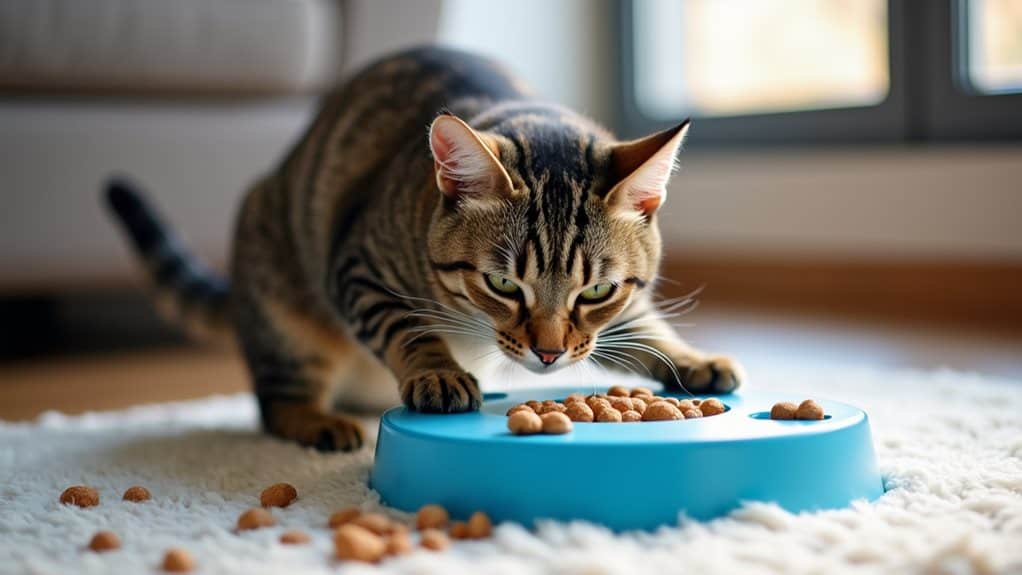
Puzzle feeders represent one of the most effective ways to engage your cat’s natural hunting instincts while satisfying their appetite. Instead of simply placing food in a bowl, you’re creating a challenge that mimics how cats would naturally work for their meals in the wild.
This food enrichment strategy taps into your cat’s meal motivation, encouraging them to think, paw, and problem-solve before enjoying their reward. Incorporating positive reinforcement during these feeding games can further enhance your cat’s confidence in exploring new puzzles.
- Start with simple puzzle feeders and gradually increase difficulty as your cat masters each level
- Rotate between different puzzle types to keep your cat’s interest peaked
- Use your cat’s regular food in puzzles to maintain their nutritional balance
- Set aside 5-10 minutes to observe your cat’s first interactions with a new puzzle
DIY Hunting Games You Can Create at Home
While commercial toys can entertain your cat, creating homemade hunting games offers an inexpensive and personalized way to satisfy their predatory instincts.
You’ll be amazed at how everyday household items can transform into feline entertainment centers!
Try creating a maze of cardboard obstacles where your cat can stalk and pounce on toys hidden throughout.
Cut holes in boxes of different sizes, connect them with tubes, and place treats or toys inside for your furry hunter to discover.
For a more sensory experience, establish scent trails around your home using catnip or treats.
Place small amounts in strategic locations, creating a hunting path that’ll keep your cat engaged for hours.
This mimics how cats would naturally track prey in the wild, stimulating both their nose and brain while they exercise their bodies. Additionally, incorporating interactive playtime enhances the quality of life for your feline companion.
Electronic and Battery-Operated Prey Simulators
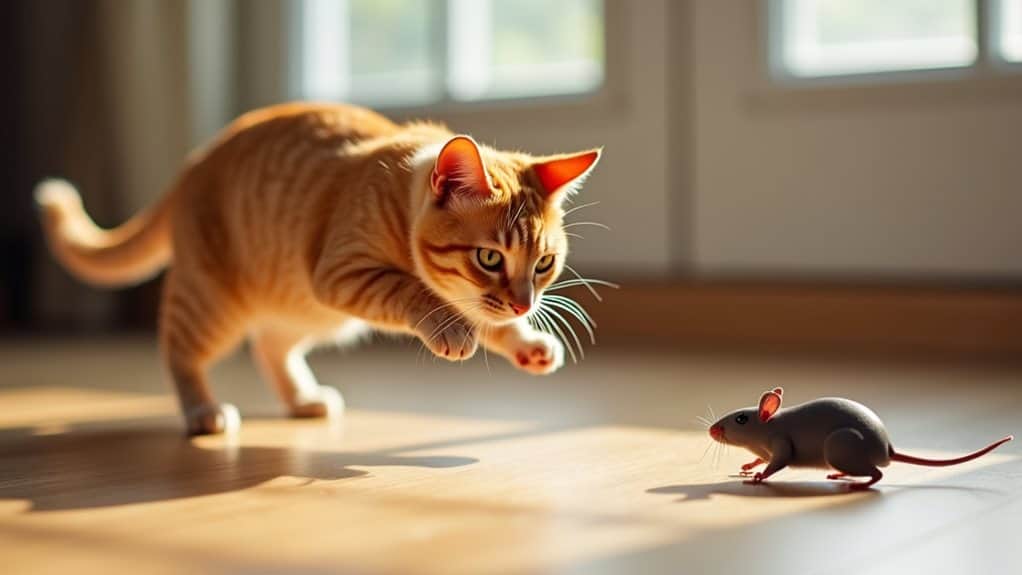
Technology has revolutionized the world of cat toys, bringing predatory play to new heights with electronic and battery-operated prey simulators.
These sophisticated toys mimic the erratic movements of real prey, engaging your cat’s hunting instincts while you’re busy or away. When selecting an electronic hunting toy, consider the battery life—you’ll want something that lasts through multiple play sessions without constant recharging.
- Motion-activated toys that spring to life when your cat approaches
- Laser-based simulators that create unpredictable prey movement patterns
- Robotic mice that scurry across the floor with realistic stopping and starting
- App-controlled toys you can operate remotely to engage with your cat while at work
Incorporating these toys into your cat’s playtime reinforces their natural predatory instincts and provides essential mental stimulation. Your feline friend will appreciate these high-tech options that keep the hunting experience fresh and exciting!
Rotation Strategies to Keep Hunting Games Fresh
Just as your cat quickly loses interest in a stationary toy, even the most exciting hunting games can become predictable over time.
That’s where a smart hunting rotation strategy comes in handy! Don’t leave all your cat’s toys available 24/7—instead, cycle them every few days to maintain the element of surprise.
Try these game variations to keep things fresh:
Monday might feature wand toys, Wednesday could introduce puzzle feeders, and weekend play might spotlight electronic mice.
You’ll notice your cat’s enthusiasm spike when familiar toys make their triumphant return after a brief absence. Safe spaces can also provide a comforting place for your cat to relax between play sessions, further enriching their overall experience.
Observing and Adapting to Your Cat’s Hunting Style
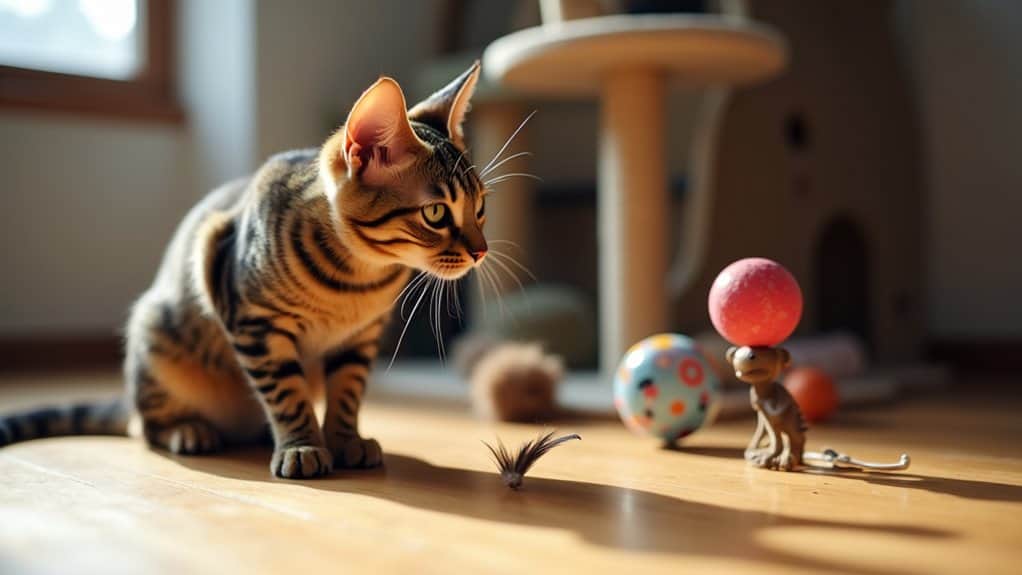
Watching your cat’s unique hunting style, whether they’re a pouncer who springs from below or an ambusher who waits patiently above, will help you create more fulfilling playtime experiences.
You’ll notice patterns in how they approach their “prey,” which toys capture their attention longest, and what movements trigger their hunting instincts most effectively.
Once you’ve analyzed these preferences, you can tailor your play sessions to match their natural style, making your interactive games more engaging and satisfying for your feline friend.
Pouncer vs. Ambusher
Every cat has a unique hunting personality that reveals itself during playtime, falling broadly into two categories: the energetic pouncer or the calculating ambusher.
Understanding your cat’s natural style will help you provide more satisfying play experiences. Pouncers tend to chase, leap, and pounce directly on moving toys, while ambushers prefer to hide, stalk, and wait for the perfect moment to strike.
- Pouncer techniques work best with toys that dart and bounce unpredictably
- Ambusher tactics require hiding spots and prey that occasionally pauses
- Mix up play styles to keep your curious hunter mentally stimulated
- Watch your cat’s body language to determine which approach they prefer
You’ll notice your cat’s eyes light up when you match their preferred hunting style, leading to more fulfilling play sessions and a happier feline companion.
Play Preference Analysis
Now that you’ve identified your cat’s hunting personality, it’s time to sharpen your observation skills to truly customize their play experience.
Watch how your cat interacts with different toys – do they prefer feathers on strings, small mechanical mice, or crinkly balls? Their playtime preferences reveal valuable insights into their natural hunting style.
Keep a mental log of which toys generate the most excitement and engagement. You’ll notice patterns emerge: some cats maintain intense toy engagement for short bursts, while others enjoy longer, methodical stalking sessions.
Don’t be discouraged if your furry friend ignores an expensive new toy – cats can be delightfully picky! Instead, adapt your approach based on what you observe.
Frequently Asked Questions
How Often Should I Engage My Cat in Hunting Games?
You should engage your cat in hunting games daily. Aim for 2-3 short sessions of about 10-15 minutes each. This daily playtime satisfies their natural hunting frequency and prevents behavioral issues from developing.
Can Senior Cats Still Enjoy Predatory Play?
My 15-year-old Mittens still pounces on feather toys weekly. Senior cats benefit from gentler predatory play that matches their agility level while providing cognitive stimulation. You’ll just need to adjust intensity and duration for them.
Are Certain Breeds More Responsive to Hunting Games?
Yes, sociable breeds like Bengals and Abyssinians often love hunting games more than others. You’ll find that naturally playful kittens, regardless of breed, typically respond enthusiastically to these activities that mimic prey capture.
Do Hunting Games Help Reduce Destructive Behaviors?
Yes, hunting games greatly reduce destructive behaviors by providing crucial behavioral enrichment. When you engage your cat’s predatory instincts through play, you’ll notice they’re less likely to scratch furniture or exhibit aggression.
Can Multiple Cats Share Hunting Toys Safely?
As cats circle a feather wand, yes, they can share hunting toys safely. Supervise play sessions, provide multiple toys for toy sharing, and implement safety measures like removing string toys after playtime to prevent accidents.
Final Thoughts
Just as a lion doesn’t lose its roar in captivity, your house cat hasn’t lost its hunter’s heart. By incorporating these indoor hunting games, you’re not merely entertaining your cat—you’re honoring their wild ancestry. When you watch your kitty stalk a feather toy with the same intensity as a leopard tracking gazelle, you’ll see it’s worth every minute. Your well-fed feline still needs to hunt, so help them accept their natural instincts today.