The Best Fluffy Pancakes recipe you will fall in love with. Full of tips and tricks to help you make the best pancakes.


Cats communicate constantly through subtle body language that you can learn to interpret. Watch their ears (forward means curiosity, flat signals fear), tail positions (upright shows confidence, twitching indicates irritation), and vocalizations (purrs aren’t always happiness, they can signal stress too). Notice facial expressions, especially whisker positions and eye narrowing, as these reveal their emotional state. By tuning into these feline signals, you’ll develop a deeper understanding of what your furry friend is trying to tell you.
Decoding Your Cat’s Body Language
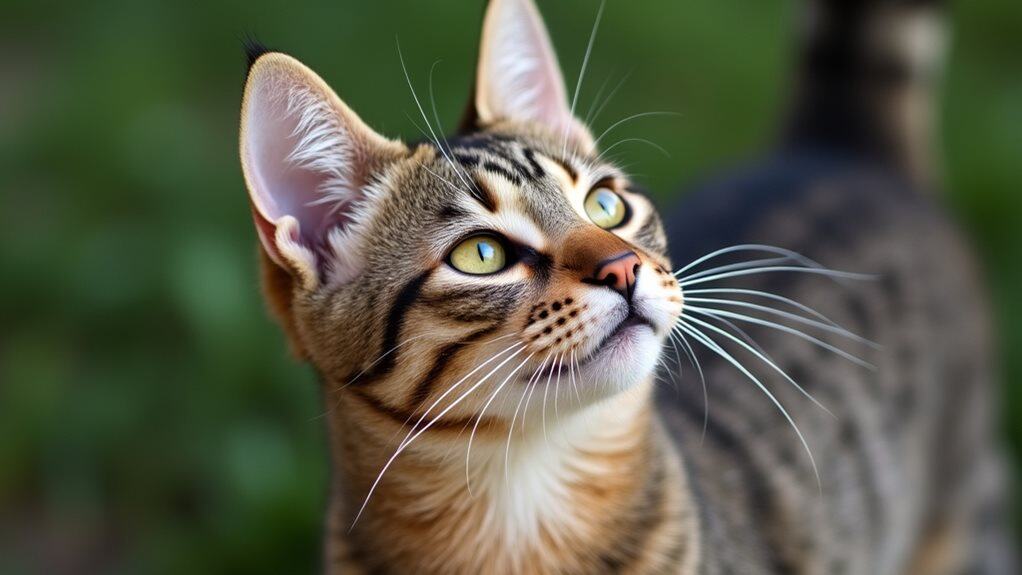
Felines, those mysterious companions who share our homes, communicate volumes without saying a word. Your cat’s body tells a story if you know how to read the signs. When your furry friend’s ears point forward, they’re curious or content, but flattened ears signal fear or aggression—a warning you shouldn’t ignore.
Understanding purring meanings can transform your relationship. While purring often indicates happiness, it can also signal stress or even pain. Your cat might purr when injured as a self-soothing mechanism.
Watch for accompanying signals: relaxed whiskers and half-closed eyes suggest contentment, while a twitching tail with purring might mean overstimulation. By observing ongoing tail movements, you can gain deeper insights into their emotional states.
You’ll become fluent in cat-speak by noticing these subtle cues, making your bond stronger. Isn’t it amazing how much they’re telling you without a single meow?
Vocalizations: More Than Just Meows
When your cat purrs, it’s not always about contentment. Purring meanings can range from expressing pain or anxiety to self-soothing in stressful situations. That rumbling sound actually promotes healing and bone growth! Purring serves as a self-soothing behavior during anxiety or stress, creating a comforting environment during discomfort.
The healing hum of your cat’s purr might signal distress, not just delight—it’s their built-in therapeutic mechanism.
Meanwhile, those fascinating chirping signals you hear when they spot birds aren’t failed hunting calls—they’re expressions of excitement or frustration when prey is inaccessible.
You’ll also notice differences in meows. Short meows typically say “hello,” while drawn-out ones might indicate concern or complaint.
Listen carefully to your cat’s vocal repertoire—they’re constantly communicating their needs, wants, and observations about their world.
Facial Expressions and What They Reveal
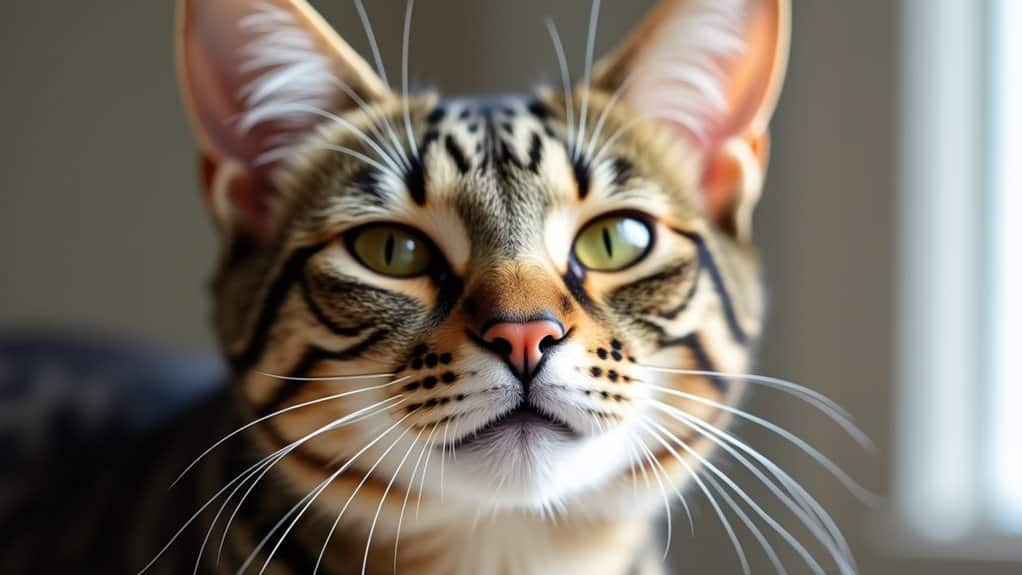
Have you ever wondered what’s behind those expressive feline faces? Your cat’s subtle facial cues can reveal volumes about their mood and intentions.
Pay close attention to ear positioning—forward-facing ears indicate curiosity or contentment, while flattened ears signal fear or aggression. When those ears swivel like little radar dishes, your cat is processing sounds from different directions.
Whisker movement is equally telling. Relaxed, forward-pointing whiskers suggest your cat is calm and comfortable in their environment.
When those whiskers pull back against their cheeks, however, they’re likely feeling threatened or anxious. You’ll notice their whiskers fan forward when they’re excited or hunting prey. Understanding these signals can also help you recognize signs of potential whisker fatigue, which may affect your cat’s feeding behaviors.
Learning to read these facial signals helps you understand what your cat needs—whether it’s space, comfort, or playtime.
Tail Positions and Their Hidden Meanings
Your cat’s tail serves as a dynamic mood barometer, constantly signaling their emotional state through various positions and movements. By learning to interpret this specialized tail language, you’ll gain valuable insights into what your feline friend is feeling.
When your cat’s tail stands straight up with a slight curve at the tip, they’re expressing confidence and contentment. A puffed-up tail indicates fear or aggression, while rapid twitching at the tip often signals excitement or irritation.
Pay attention to those slow, sweeping tail movements – they’re classic tail signals of your cat’s growing annoyance.
Don’t miss the adorable “question mark” tail (curved like a hook at the top), which shows your cat is feeling playful and friendly. A tucked tail? That’s your cue they’re feeling anxious or submissive and might need some space. Understanding cat huffing can further clarify their emotional state beyond just tail signals.
Behavioral Patterns That Signal Specific Needs

Your feline friend has evolved specific behaviors that signal when they’re hungry, bored, or seeking attention.
Cats communicate through subtle cues, telling us exactly what they need when we learn to listen.
When you notice these distinct patterns, you’ll become fluent in cat-speak:
- Morning zoomies – Those pre-dawn sprints around your bedroom often indicate pent-up hunting instincts that need an outlet through interactive play behavior. Additionally, interactive play serves as a crucial way to release that energy constructively.
- Bringing “gifts” – When your cat delivers toys (or worse, dead mice) to your doorstep, they’re displaying natural hunting instincts and seeking your approval.
- Kneading your lap – This behavior, sometimes called “making biscuits,” is a comforting ritual from kittenhood that signals contentment and security.
Frequently Asked Questions
Can Cats Understand Human Language or Just Our Tone?
Cats don’t understand human language but recognize your tone. Your feline friend responds to vocal patterns and emotions rather than words. They’ve developed their own cat language while mastering tone recognition through your interactions.
Why Does My Cat Bring Me Dead Animals as “Gifts”?
You’ve received another macabre gift? Your feline’s natural hunting instincts are at play. They’re actually sharing their prized catch with you—a sign of affection in their world of feline behavior.
Do Cats Feel Guilt When They Misbehave?
No, your cat doesn’t feel guilt. What you’re interpreting as a guilty expression is actually fear or anxiety from your reaction. Cats don’t understand right or wrong in cat behavior—they’re responding to your emotions instead.
Can Cats Communicate With Other Species of Animals?
Yes, cats can communicate with other species. You’ll notice your cat’s feline behavior includes vocalizations, body language, and scent marking during inter-species interactions. They’ve adapted to communicate basic needs and boundaries with humans and other animals.
How Do Deaf Cats Compensate for Lack of Auditory Communication?
Deaf cats rely heavily on visual cues and body language. You’ll notice they become more attentive to vibrations, facial expressions, and environmental changes. They’ll watch you closely and may use more pronounced physical gestures when communicating.
Final Thoughts
Your feline friend is speaking volumes without saying a word! As you’ve seen, cats communicate through a symphony of signals—from ear positions to purrs, tail flicks to facial expressions. By tuning into these subtle cues, you’ll build a stronger bond with your furry companion. Remember, understanding your cat isn’t rocket science—it’s about patience and observation. You’re now equipped to translate your cat’s secret language, transforming your relationship from mystery to meaningful connection.