
The Best Fluffy Pancakes recipe you will fall in love with. Full of tips and tricks to help you make the best pancakes.

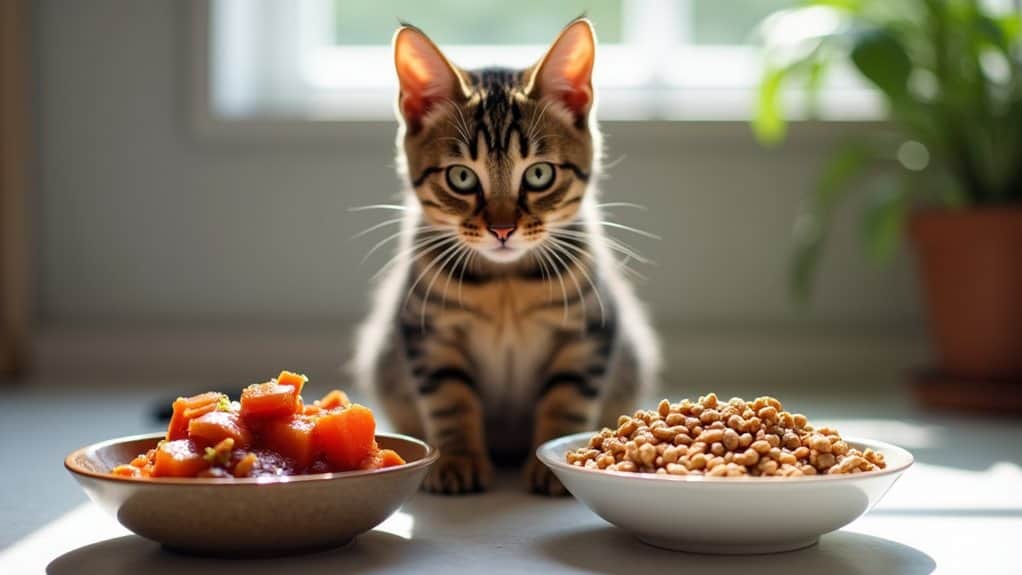
Neither wet nor dry food is universally better — the right choice depends on your cat’s health, age, and circumstances. Wet food is superior for hydration and is strongly preferred for cats prone to urinary or kidney problems. Dry food is more practical and economical for daily feeding. Most cats do best on a combination of both. Here’s what the evidence actually shows.
Wet Food vs Dry Food: The Core Differences
| Factor | Wet Food | Dry Food |
|---|---|---|
| Moisture content | 70–80% | 8–10% |
| Protein content | Higher (typically 8–12% as fed) | Lower per serving (25–35% dry matter) |
| Carbohydrates | Low (usually <5%) | Higher (25–35%) |
| Calorie density | Lower — typically 25–35 kcal per oz | Higher — typically 90–110 kcal per oz |
| Cost per day | Higher | Lower |
| Shelf life (opened) | 1–2 hours at room temperature | Days to weeks |
| Suitability for free-feeding | No | Yes (with caution) |
Understanding What Cats Actually Need
Cats are obligate carnivores — they are biologically required to get specific nutrients from animal tissue that they cannot synthesise themselves. This shapes how to evaluate any cat food.
Taurine is the most critical example. Cats cannot produce taurine from other amino acids the way dogs and humans can. Without adequate taurine in the diet, cats develop dilated cardiomyopathy (a form of heart disease) and central retinal degeneration that leads to blindness. All commercially complete cat foods — wet and dry — are required to contain adequate taurine, but it is worth checking that any food you use carries an AAFCO “complete and balanced” statement on the label.
Arachidonic acid is another fatty acid cats cannot synthesise, making animal fat a non-negotiable part of their diet rather than an optional addition.
High protein from animal sources, adequate moisture, and minimal carbohydrates broadly characterise what cats evolved to eat. Both wet and dry foods can meet nutritional requirements — the differences lie in how they deliver those nutrients and the health trade-offs involved.
The Case for Wet Food
Hydration: The Most Important Practical Advantage
Cats evolved in arid environments and have a naturally low thirst drive. Unlike dogs, cats do not compensate well for a dry diet by drinking more water — studies consistently show that cats on dry food have lower total water intake than cats on wet food, even when a water bowl is freely available.
This matters because chronic, mild dehydration is a significant contributor to feline urinary tract disease, kidney disease, and constipation. A cat eating wet food gets most of its daily water requirement from its food. A cat on dry food must actively drink enough to compensate — and many do not.
Lower Carbohydrate Load
Cats have limited ability to digest starch efficiently. Dry kibble requires starch as a binding agent during manufacturing, resulting in carbohydrate levels of 25–35% by dry matter — significantly higher than a cat’s natural diet. Wet food typically contains less than 5% carbohydrates. For cats with diabetes or weight issues, this difference is clinically relevant.
Weight Management
Wet food is more satiating at a lower calorie count. The high moisture content means a larger volume of food per calorie, which helps cats feel full. Overweight cats often benefit from switching to measured portions of wet food, particularly since dry food is easy to over-serve and frequently left out for free-feeding.
Best for These Conditions
- Chronic kidney disease: Increased fluid intake slows disease progression. Wet food is strongly recommended — many vets consider it essential.
- Feline lower urinary tract disease (FLUTD) and urinary crystals: Better hydration reduces urinary concentration and crystal formation.
- Diabetes: Lower carbohydrate content supports more stable blood glucose.
- Constipation: Higher moisture intake improves gut transit.
- Dental pain or missing teeth: Wet food requires no chewing and is easier to eat.
The Case for Dry Food
Cost and Convenience
Dry food costs significantly less per daily serving than wet food — an important factor for multi-cat households or owners on a budget. It can be left in a bowl for hours without spoiling, making it suitable for cats who graze rather than eat scheduled meals. It stores easily and generates less waste.
The Dental Claim: What the Evidence Actually Shows
You will often see dry food marketed as good for dental health. The reality is more nuanced. Most cats swallow kibble whole or shatter it minimally — it provides little meaningful plaque removal. The British Veterinary Dental Association notes that standard dry food has no significant dental benefit.
The exception is prescription dental diets (such as Hill’s t/d or Royal Canin Dental), which are formulated with a specific fibre matrix designed to mechanically clean the tooth as the cat bites through the kibble. These are different from standard dry food and have clinical evidence behind them. Dental treats (such as Greenies) similarly have some evidence. Standard kibble does not.
If dental health is a priority, the evidence-based approach is tooth brushing (the gold standard), dental treats, and/or dental prescription diets — not relying on the texture of ordinary dry food.
How to Read a Cat Food Label
The label tells you more than the marketing on the front of the pack. Key things to check:
- “Complete and balanced” + AAFCO statement: This means the food meets established nutritional standards for the stated life stage. If this statement is absent, the food is intended as a supplement or treat only.
- First ingredient: Should be a named animal protein — chicken, salmon, turkey — not a by-product meal or grain. “Meat by-products” can be acceptable if they include organ meat, but vague descriptions are a quality signal.
- Guaranteed analysis: Shows minimum protein and fat, and maximum moisture and fibre. For comparison across wet and dry foods, convert to dry matter basis: divide the as-fed percentage by (100 minus the moisture percentage) and multiply by 100.
- Taurine: Should appear in the ingredient list or as a declared nutrient. All complete cat foods contain it, but it is worth verifying on novel or non-mainstream brands.
Feeding by Life Stage
Kittens have high energy needs and require food labelled for “growth” or “all life stages” — not adult formulas, which typically have lower protein and calorie density. Kittens generally do well on a mix of wet food (for hydration and high protein) with some dry. Feed three to four small meals daily up to 6 months, then twice daily.
Adult cats — typically 1–7 years — maintain well on either format or a combination, as long as total calorie intake is managed. Monitor weight regularly; obesity is common in indoor cats on dry food.
Senior cats (7+) often benefit from moving toward more wet food as kidney function declines with age, digestion becomes less efficient, and some develop dental issues that make hard kibble uncomfortable. Caloric needs typically decrease, but protein needs remain high — avoid senior formulas that simply reduce protein content.
Combining Wet and Dry: A Practical Approach
Feeding both is a reasonable default for most healthy adult cats. A common approach: wet food once or twice daily as a main meal, with a small measured portion of dry food available separately. This provides hydration benefits from wet food while keeping cost and convenience manageable.
When introducing new food, do so gradually over 7–10 days — replace 25% of the current food with the new food every few days. Abrupt changes frequently cause digestive upset.
Frequently Asked Questions
Do vets recommend wet or dry food for cats?
Most vets recommend wet food as the primary diet, or a combination of wet and dry. The hydration benefit of wet food is well-established, and the lower carbohydrate content is closer to a cat’s natural diet. Pure dry feeding is generally considered acceptable for healthy cats but is not optimal, particularly as cats age.
Can cats live on dry food only?
Yes — many cats do so throughout their lives without obvious problems. However, dry-food-only cats are at higher long-term risk of urinary issues, kidney disease, and obesity compared to cats with higher moisture intake. If feeding dry food only, a water fountain (cats are more attracted to moving water than a static bowl) can help encourage drinking.
Is grain-free cat food better?
Not necessarily. Cats do not require grains, but “grain-free” does not mean low-carbohydrate — many grain-free kibbles substitute legumes or potatoes, which produce similar carbohydrate levels. Focus on protein quality and the AAFCO completeness statement rather than grain-free marketing. There is no strong evidence that grain-free is superior for cats without a specific grain intolerance.
How much wet food should I feed my cat per day?
A typical adult cat (4–5 kg) needs roughly 200–250 kcal per day. A standard 85g (3oz) pouch of wet food contains approximately 70–90 kcal, so most adult cats need 2–3 pouches daily depending on the brand. Always check the feeding guide on the specific product and adjust based on your cat’s weight and activity level.
Can I add water to dry food to increase moisture?
Yes — adding warm water to kibble is a legitimate way to increase moisture intake for cats resistant to wet food. Some cats find this more palatable. Be aware that wet kibble spoils faster and should not be left out for more than 30–60 minutes.
My cat will only eat dry food — how do I transition to wet?
Many cats, especially those raised on dry food, initially reject wet food. Strategies: warm the wet food slightly (enhances aroma), start with a tiny amount mixed into the dry food, try different proteins or textures (pâté vs. chunks in gravy), and be patient — the transition can take weeks. Do not withhold dry food as a forcing mechanism; cats that go without food for 24–48 hours risk hepatic lipidosis (fatty liver disease).