The Best Fluffy Pancakes recipe you will fall in love with. Full of tips and tricks to help you make the best pancakes.

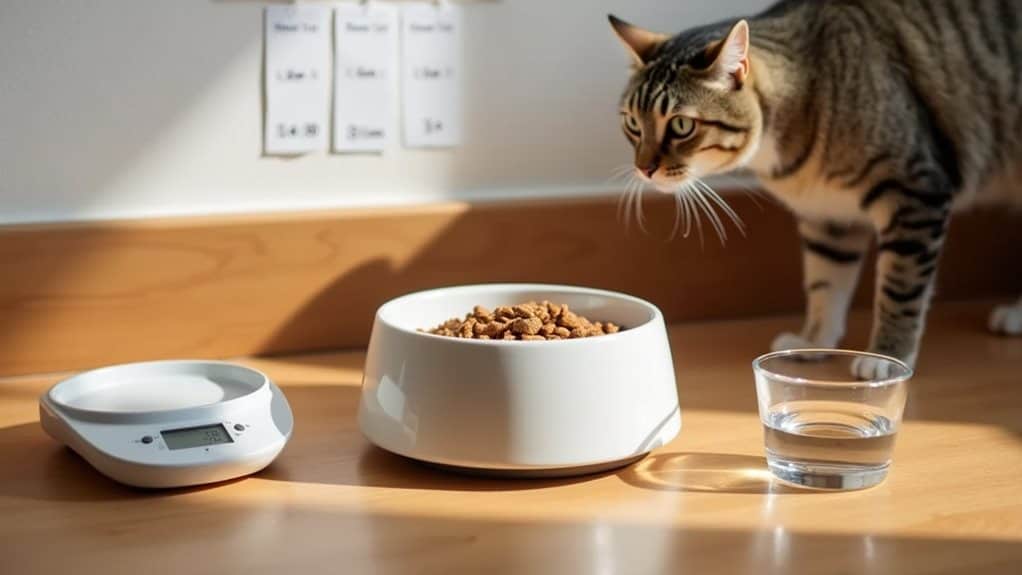
Cats thrive on multiple small meals that match their natural hunting instincts. For kittens, offer 3-4 meals daily with nutrient-rich food, while adult cats need twice-daily feedings with careful portion control. Senior cats benefit from smaller, more frequent meals that are easier to digest. Whether you choose free feeding or scheduled meals depends on your cat’s self-control and your lifestyle. Watch for weight changes and behavioral cues to know if your feeding approach needs adjustment. The perfect schedule awaits below!
Understanding Your Cat’s Natural Feeding Patterns
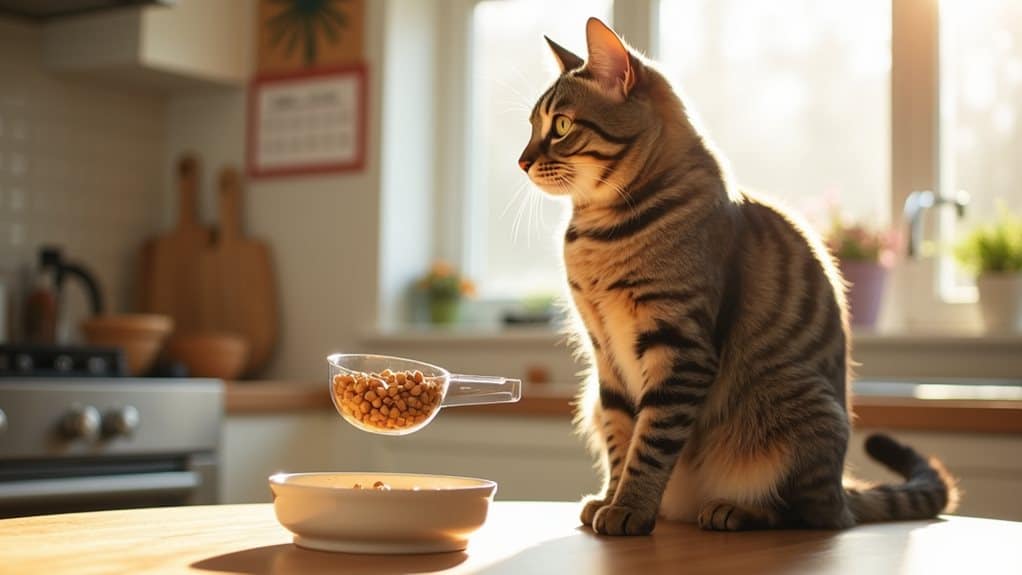
When you bring a cat into your home, you’re welcoming a creature with feeding instincts deeply rooted in their wild ancestry. Your feline friend still carries the natural instincts of their bigger cousins, preferring to eat multiple small meals throughout the day rather than one or two large ones.
In the wild, cats engage in hunting behavior up to 20 times daily, catching small prey whenever opportunity strikes. This explains why your kitty might seem hungry at dawn and dusk – prime hunting hours!
You’ll notice they prefer to eat alone and in peace, another leftover trait from their predator days. Understanding these instinctual patterns helps you create a feeding schedule that works with your cat’s biology, not against it. Additionally, recognizing your cat’s nutritional needs is crucial for ensuring they receive the appropriate diet for optimal growth and health.
Your cat will thank you for respecting their ancient programming!
The Age Factor: Feeding Requirements From Kitten to Senior
Your cat’s natural feeding instincts evolve considerably throughout their life path.
Kittens require special attention to kitten nutrition, needing 3-4 small meals daily to fuel their rapid growth and boundless energy. They’ll benefit from food specifically formulated with higher calories and vital nutrients for developing bodies. The weaning process is crucial during this stage, as it helps kittens transition from milk to solid food, promoting healthy growth.
Those tiny tiger cubs demand premium fuel to power their growth spurts and playground antics.
As your furry friend matures into adulthood (around 12 months for most cats), you’ll shift to twice-daily feeding with adult formulations. Their metabolism slows, so portion control becomes important to prevent the dreaded “middle-age spread.”
When your companion reaches their golden years (typically 7+), senior dietary needs change again. They’ll appreciate smaller, more frequent meals that are easier to digest, with adjusted protein levels and supplements for aging joints.
Free Feeding vs. Scheduled Meals: Pros and Cons
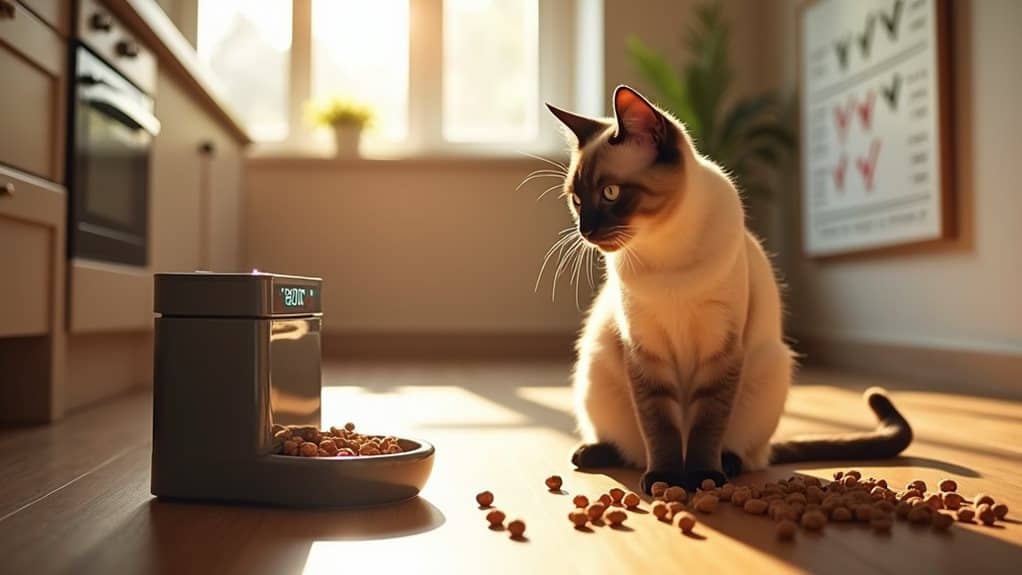
Many cat owners find themselves torn between two fundamental feeding approaches: free feeding and scheduled meals. Each method has its merits and drawbacks that you’ll want to evaluate for your feline friend.
Free feeding benefits include convenience and accommodating your cat’s natural grazing instinct. Your kitty can eat whenever hunger strikes, potentially reducing begging behaviors. However, it’s difficult to monitor exactly how much your cat consumes, which can lead to obesity in less active or food-motivated cats.
Scheduled meals give you precise control over portion sizes and help establish a routine your cat can rely on. You’ll also notice health changes faster since you’re tracking intake daily. Additionally, providing a clean litter box during feeding times can encourage consistent bathroom habits and reduce inappropriate urination.
The main scheduled meals drawbacks? Your cat might become anxious around feeding times, and you’ll need to be present for each meal – not always practical with busy schedules.
Portion Control: Calculating the Right Amount for Your Cat
Determining the right amount of food for your cat starts with understanding their weight and age-specific needs.
Your cat’s current weight helps you establish a baseline for portion control, while their age—kitten, adult, or senior—significantly impacts how many calories they require daily.
You’ll want to adjust these portions based on your vet’s recommendations, especially if your furry friend needs to gain or lose weight for ideal health. Additionally, considering regular vet visits for routine healthcare can help ensure your cat’s dietary needs are being met effectively.
Weight Matters
While cute chubby cats might dominate internet memes, maintaining a healthy weight is crucial for your feline’s long-term health. Monitoring your cat’s weight helps you adjust their caloric needs and prevents obesity-related diseases like diabetes and arthritis.
Effective weight management includes:
- Regular weigh-ins – monthly checks help you spot trends before they become problems
- Body condition scoring – you should be able to feel ribs without pressing hard
- Adjusting portions based on activity level – indoor seniors need fewer calories than playful kittens
- Consulting your vet – they’ll help establish ideal weight goals for your cat’s specific breed and build
If your cat needs to lose weight, don’t crash diet them! A slow, steady approach with proper nutrition guarantees they’ll reach a healthy weight without compromising their wellbeing. Additionally, taking into account your cat’s specific insurance costs can factor into budgeting for their ongoing health needs.
Age-Specific Requirements
As your cat travels through different life stages, their nutritional needs shift dramatically.
Kittens require more frequent feeding—typically 3-4 times daily—with food specially formulated for kitten nutrition that supports rapid growth and development.
Adult cats generally thrive on two meals per day, with portions adjusted based on activity level and metabolism.
Watch for changes in weight and adjust accordingly.
When your furry friend reaches their golden years (around age 11), it’s time to reflect on a senior diet.
Older cats often need fewer calories but more protein to maintain muscle mass.
Their aging bodies may struggle with digestion, so smaller, more frequent meals can help. Additionally, regular vet check-ups are essential for monitoring urinary health and adjusting dietary needs as they age.
Signs Your Current Feeding Schedule Isn’t Working
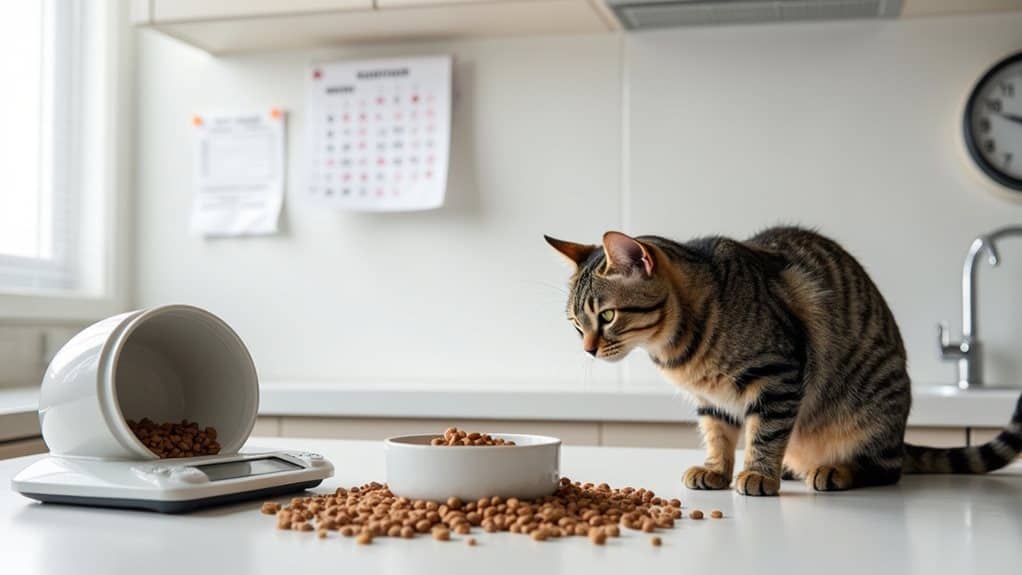
Even the best-planned feeding schedule might need adjustments if you notice certain warning signs in your cat.
You’ll want to watch for notable weight changes, unusual behavioral shifts like aggression or lethargy around mealtimes, and digestive problems such as vomiting or irregular bowel movements. These indicators suggest it’s time to reassess how, when, or what you’re feeding your feline friend. Additionally, keeping an eye on your cat’s stool frequency can help identify any digestive issues that may arise from the current feeding regime.
Weight Fluctuations
When your cat’s weight begins to change unexpectedly, it’s often a clear indicator that your feeding schedule needs adjustment. Proper weight management depends greatly on feeding frequency, so monitoring your cat’s body condition is crucial for their overall health. Watch for these warning signs that your feeding routine might need modification:
- Your cat’s ribs become either too prominent (weight loss) or impossible to feel (weight gain)
- A swing of more than 10% in body weight within a month
- Changes in your cat’s energy levels alongside weight fluctuations
- A visibly altered silhouette when viewing your cat from above. Additionally, ensuring proper hydration levels through adequate water intake can play a significant role in maintaining a healthy weight and preventing weight-related issues.
Behavioral Changes
Weight changes often surface alongside telling behavioral shifts that can help you spot feeding schedule problems. If your cat’s suddenly developed new behavioral triggers, it’s likely their feeding habits need adjustment. You’ll notice these changes quickly if you’re paying attention.
| Behavior | Possible Cause | Solution |
|---|---|---|
| Excessive meowing | Hunger or irregular timing | Consistent feeding schedule |
| Food aggression | Competition or inadequate portions | Separate feeding areas or adjust amounts |
| Lethargy | Overfeeding or poor nutrition | Measure portions and improve food quality |
Watch for cats who wake you up earlier each morning, steal food from counters, or seem fixated on their empty bowl. These behaviors aren’t just annoying—they’re your cat’s way of communicating that something’s off with their current feeding routine. Additionally, improper feeding habits can lead to issues like hairball formation, causing further distress for your feline friend.
Digestive Issues
Your cat’s digestive system often reveals the first warning signs that your feeding schedule needs adjustment.
Paying attention to these signals can help maintain your kitty’s digestive health and overall well-being.
Watch for these common signs of feeding problems:
- Vomiting shortly after meals, which might indicate eating too much too quickly
- Frequent hairballs that could suggest insufficient feeding intervals
- Diarrhea or constipation that may point to food allergies or improper portion sizes
- Excessive gas or bloating, often a result of poor food quality or rushed eating
If you notice these symptoms persisting, consider adjusting your feeding schedule or consulting your vet. Additionally, regular veterinary check-ups can help identify underlying health issues that may affect your cat’s digestive health.
Special Considerations for Multi-Cat Households
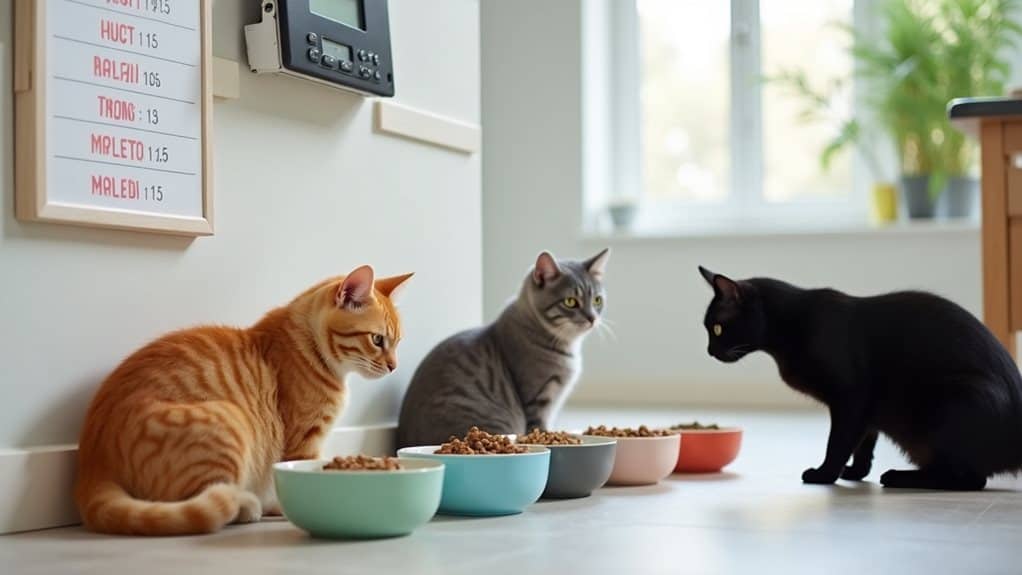
Feeding multiple cats in the same household presents unique challenges that require thoughtful planning and observation. Cats naturally establish a hierarchy, which directly impacts feeding dynamics. You’ll notice some cats assert dominance at mealtime, potentially preventing timid cats from getting enough nutrition.
Consider creating separate feeding stations in different rooms to reduce competition. Position food bowls away from high-traffic areas, giving each cat their peaceful dining space.
You might also need to adjust your feeding method—some households thrive with free-feeding while others need supervised, scheduled meals to guarantee fairness.
Watch for changes in eating patterns or weight, as these could signal that your feeding system isn’t working.
Adjusting Feeding Routines for Health Conditions
When a cat develops health issues, their dietary needs often change dramatically, requiring thoughtful adjustments to their feeding routine.
You’ll need to work closely with your vet to create a plan that addresses your furry friend’s specific health condition adjustments while guaranteeing they still enjoy mealtime.
Consider these important modifications for cats with health challenges:
- Portion control – Measure food precisely to manage weight-related conditions like diabetes or obesity.
- Timing adjustments – Feed cats with urinary issues more frequent, smaller meals throughout the day.
- Food consistency – Switch to wet food for cats with dental problems or kidney disease.
- Medication integration – Schedule meals around medication requirements, especially for dietary restrictions.
Creating a Consistent Feeding Routine That Works
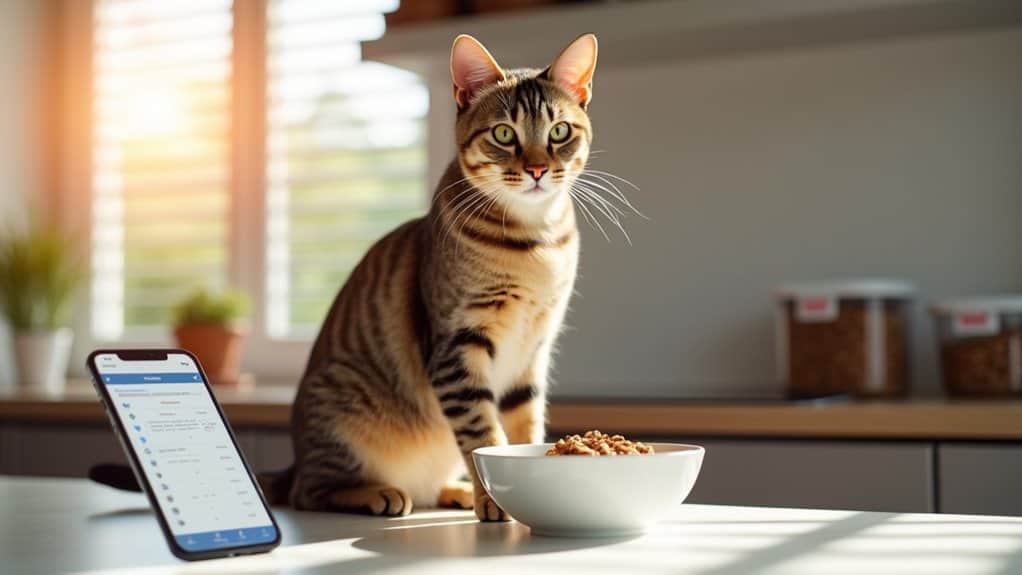
Although cats have a reputation for independence, they actually thrive on predictable routines, especially when it comes to mealtime. Your feline friend will appreciate knowing exactly when breakfast and dinner are served, reducing anxiety and preventing those middle-of-the-night wake-up calls demanding food.
To create customized routines that work, consider your cat’s natural feeding preferences and your schedule. Some cats prefer several small meals throughout the day, while others do well with two larger feedings.
Watch how your cat approaches their bowl—do they eat everything at once or graze throughout the day? Once you’ve established a routine that suits both of you, stick with it! Even on weekends, try to maintain consistent feeding times.
Your cat’s internal clock is surprisingly accurate, and they’ll certainly let you know if you’re running late!
Frequently Asked Questions
Can I Feed My Cat Human Food as Occasional Treats?
Yes, you can occasionally give your cat some human foods safely. Remember to focus on human food safety by avoiding toxic items and practice treat portioning by limiting these extras to less than 10% of their diet.
Should I Warm up Refrigerated Cat Food Before Serving?
Yes, you should! Cold cat food straight from the fridge isn’t just unpleasant—it’s unappealing. Warming refrigerated cat food to room temperature improves aroma and texture, aligning with your cat’s natural feeding preferences. They’ll thank you!
How Long Can Wet Cat Food Sit Out Safely?
Don’t leave wet cat food out for more than 4 hours. Food spoilage occurs quickly at room temperature. You’ll want to refrigerate leftovers promptly to prevent bacteria growth. Proper wet food storage guarantees your cat’s safety.
What Feeding Tools Can Help Slow Down Fast Eaters?
You can use slow feeders with ridges or maze patterns, puzzle feeders that dispense kibble gradually, food-dispensing toys, or divided dishes. These tools force your cat to eat more deliberately, preventing digestive issues.
Can Feeding Schedule Changes Affect My Cat’s Behavior?
67% of cats show behavioral improvements with consistent feeding frequency. You’ll notice your cat’s reduced aggression, decreased begging, and better sleep patterns when you establish a predictable routine. Sudden schedule changes often trigger anxiety-related behavior changes.
Final Thoughts
With the right feeding schedule, you’ll see your cat transform from a hungry prowler to a content companion. Picture those satisfied eyes closing slowly after a perfectly portioned meal. Remember, it’s not merely about what’s in the bowl, but when it’s there. Trust your instincts, watch your cat’s cues, and don’t be afraid to adjust. You’re not simply filling a dish—you’re nurturing the bond between you and your feline friend.