The Best Fluffy Pancakes recipe you will fall in love with. Full of tips and tricks to help you make the best pancakes.


Transform your home into a cat paradise with everyday items! Create cardboard box mazes, toilet paper roll puzzle feeders, or sock catnip kickers to engage your feline’s natural instincts. Paper bag crinkle toys, cereal box scratching pads, and hanging basket hammocks provide endless entertainment without breaking the bank. You’ll strengthen your bond while watching your cat enjoy these simple DIY projects. Discover how these easy crafts can dramatically improve your cat’s mental and physical wellbeing.
Cardboard Box Hideaway Maze
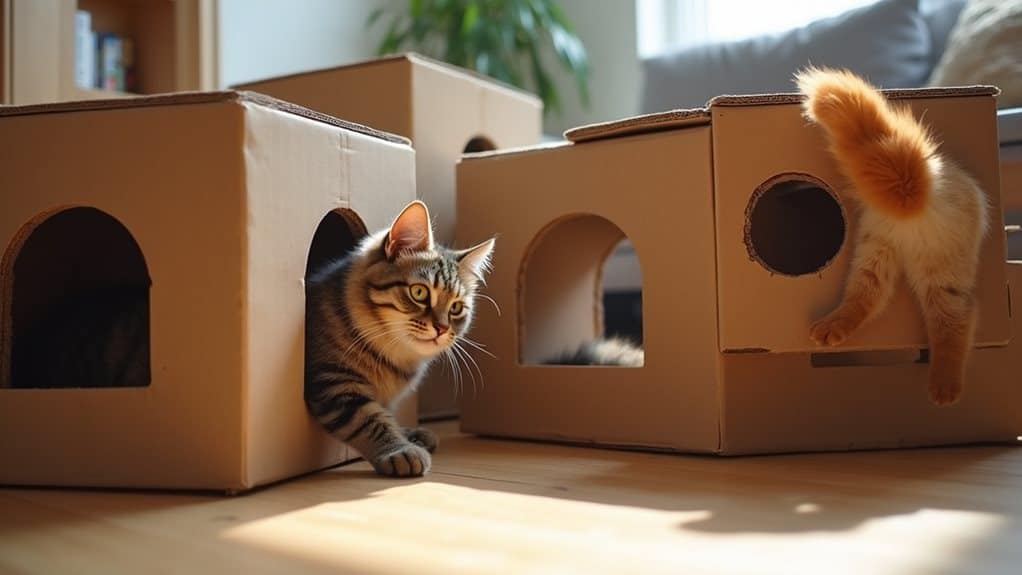
A cardboard box hideaway maze isn’t just a creative way to recycle—it’s a feline paradise waiting to happen! Your cat’s natural instincts crave hideaway exploration, and you can satisfy this need with materials already in your home.
Start by collecting boxes of various sizes. Cut doorways and windows in each one, then connect them with tape to create an intricate cardboard maze. Add blankets in some sections for cozy napping spots, and sprinkle catnip throughout to entice your curious companion.
The beauty of this project is its flexibility—you can expand the maze as you collect more boxes! Your cat will love darting through tunnels, ambushing toys from hidden corners, and claiming new territory. Providing enrichment in their environment enriches their overall well-being, fostering happier and healthier indoor cats.
Plus, you’ll enjoy watching your furry friend engage with something you’ve created specifically for their enjoyment and mental stimulation.
Paper Bag Crinkle Toys
While most cat toys cost a small fortune, paper bag crinkle toys deliver just as much entertainment without the hefty price tag. Your feline friend will go crazy for the crinkle sound these homemade toys create, triggering their natural hunting instincts.
To make these toys, simply take a paper lunch bag, place a few treats inside, and crumple it up. For extra excitement, add small bells or a sprinkle of catnip. You’ll be amazed at how something so simple provides hours of sensory play for your kitty. Incorporating playful activities into their routine will boost mental health and productivity.
Don’t throw away those grocery bags! They’re perfect for creating larger crinkle toys that your cat can pounce on, roll around with, and even crawl inside.
It’s recycling and pet entertainment rolled into one delightful package.
Sock Catnip Kickers
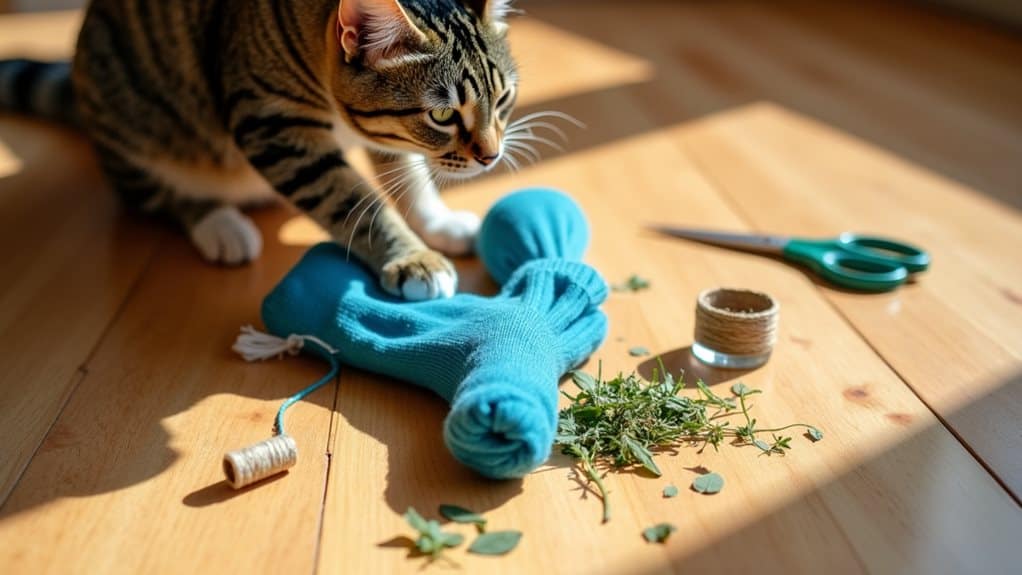
Moving from paper to fabric, those old mismatched socks in your drawer can transform into your cat’s favorite toy! Creating a sock catnip kicker is simple and will keep your feline friend entertained for hours.
Start by taking a clean sock and filling it with sock stuffing – cotton balls work great too! Add a tablespoon of dried catnip in the middle, or try catnip alternatives like valerian root or silvervine if your cat doesn’t respond to traditional catnip.
Tie off the open end with a secure knot, or sew it closed for extra durability.
The beauty of these kickers is how they encourage your cat’s natural hunting instincts. They’ll grab, kick, and wrestle with their new toy, getting exercise while having fun. Engaging in enrichment activities is essential for preventing boredom and promoting well-being in your cat.
Plus, you’ll feel great giving those lonely socks a second life!
Toilet Paper Roll Puzzle Feeder
Transforming empty toilet paper rolls into puzzle feeders offers your cat both mental stimulation and tasty rewards. This simple project requires minimal supplies but delivers maximum entertainment for your curious feline.
Start by folding in the edges of a clean toilet paper tube to create closable ends. Cut small holes or slits along the sides, making them just large enough for treats to fall through when batted around.
Make the tube’s ends pliable, then add just-right openings so treats tumble out only with your cat’s clever intervention.
Place a few of your cat’s favorite dry treats inside, fold the ends closed, and watch the fun begin!
This puzzle idea engages your cat’s natural hunting instincts as they work to retrieve the hidden goodies. You’ll love watching them figure out how to manipulate the roll to release treats, and they’ll enjoy the satisfaction of earning their snack. Engaging your cat with DIY enrichment fosters emotional support and trust, further enhancing the bond between you and your pet.
T-shirt Cat Tent
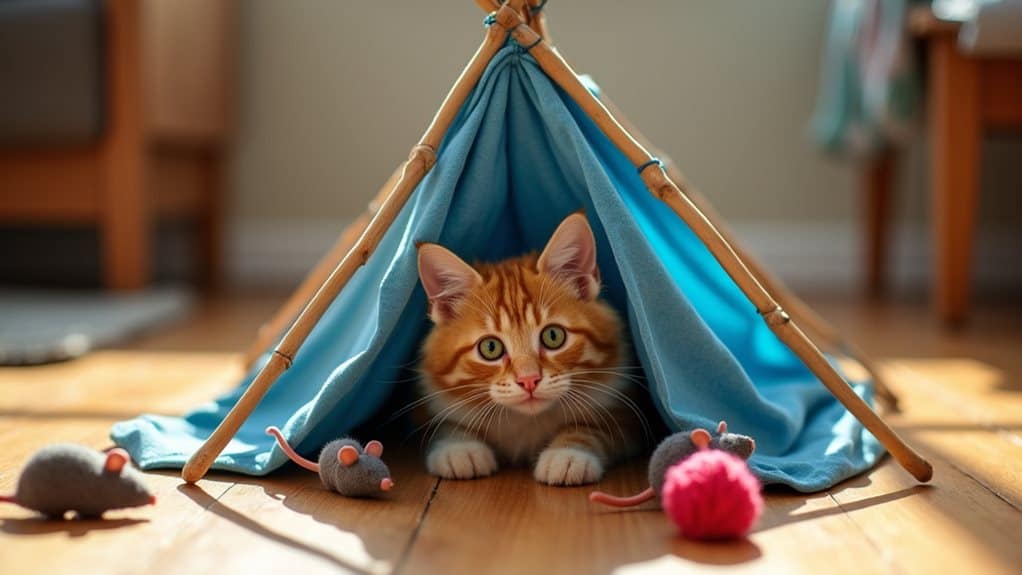
A cozy retreat awaits your cat with this simple t-shirt tent project. Transform an old t-shirt into a comfy hideaway your feline friend will adore. The fabric choices are endless – cotton works best for breathability, but any t-shirt you’re willing to part with will do the trick!
For ideal tent stability, you’ll need:
- Two wire hangers, bent into full circles
- Cardboard square (about 16″ x 16″) for the base
- Safety pins to secure fabric in place
- Tape to attach hangers to the cardboard
Providing a safe space like this tent can help reduce anxiety and promote well-being, satisfying your cat’s natural instinct to hide while keeping an eye on their domain.
You’ll love watching your cat discover their new personal space. The tent provides the perfect blend of security and visibility, satisfying your cat’s natural instinct to hide while keeping an eye on their domain.
It’s a win-win – you declutter your closet, and your kitty gets a custom retreat!
DIY Window Perch
While your cat may enjoy retreating to their t-shirt tent, they’ll absolutely love having a dedicated spot to watch the world outside.
Creating a DIY window perch gives your feline friend the perfect vantage point for bird watching, sunbathing, and neighborhood surveillance!
Transform your window into the ultimate feline entertainment center where your cat can bask in sunshine while keeping tabs on the neighborhood.
You’ll need a sturdy shelf, mounting brackets, and soft bedding to craft this kitty paradise.
For proper cat window safety, verify your brackets can support up to 20 pounds and attach them securely to wall studs.
Consider various perch design options based on your window size—floating shelves work wonderfully for narrow windows, while corner designs maximize space in bay windows.
Don’t forget to add a non-slip surface and cozy cushion that matches your décor. Additionally, regular grooming benefits contribute to your cat’s overall well-being, making them even more content in their new perch.
Your cat will thank you with contented purrs as they claim their new favorite spot!
Homemade Wand Toys
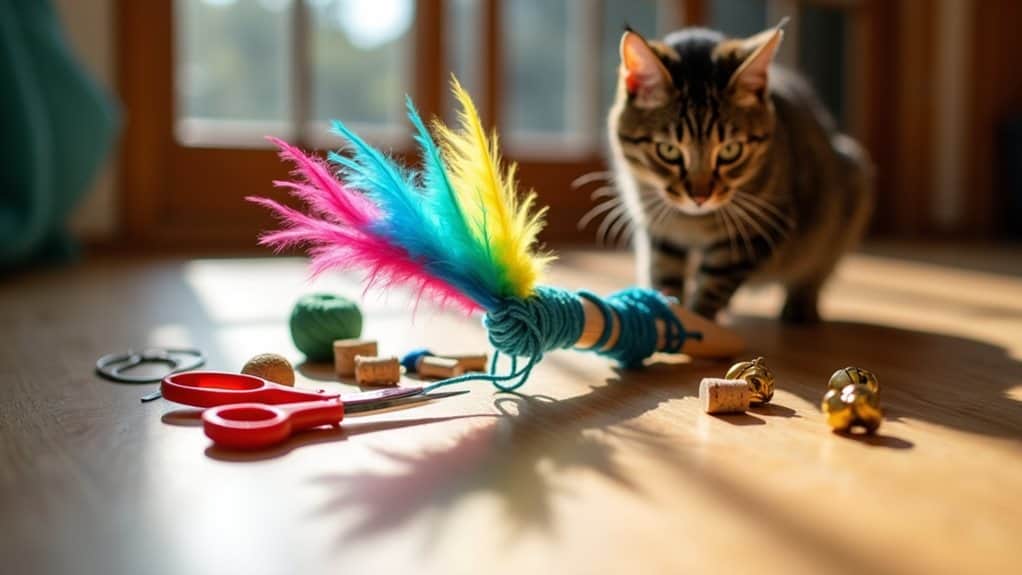
Once you’ve created a cozy window perch for your cat, you’ll want to engage their natural hunting instincts with some interactive play.
Making your own wand toys is surprisingly easy and uses items you probably already have around the house!
Your cat will go wild for these simple DIY creations:
- Attach colorful ribbon, yarn, or shoelaces to a wooden dowel or old ruler for interactive string play that mimics prey movement.
- Add DIY feather additions by securing craft feathers or even trimmed feathers from an old duster to the end of your wand.
- Tie small bells or crinkly paper to increase sensory appeal.
- Create different wands with various attachments to keep your kitty guessing.
Incorporating play with these DIY toys is essential for strengthening the bond between cat and owner, as it promotes their physical and mental well-being.
These homemade toys won’t just save you money—they’ll strengthen your bond through playtime!
Upcycled Climbing Wall
Many cats dream of scaling new heights, and you’ll be amazed at how easily you can transform unused household items into an exciting vertical playground for your feline friend.
With a few simple climbing wall materials, you can create a custom cat superhighway that satisfies their natural instincts.
Start with sturdy shelves, old wooden crates, or small side tables. Secure them at different heights on your wall, creating a staggered pathway upward.
Repurpose everyday items into vertical stepping stones, transforming your walls into a feline climbing adventure.
Always prioritize wall safety by using proper anchors and guaranteeing each platform can support your cat’s weight. Add carpet scraps or sisal rope to provide traction and scratching opportunities.
Don’t forget to include cozy spots for resting at various levels—your cat will appreciate having multiple vantage points to survey their domain from above. Engaging in non-food activities promotes natural instincts and prevents boredom.
Egg Carton Treat Puzzle
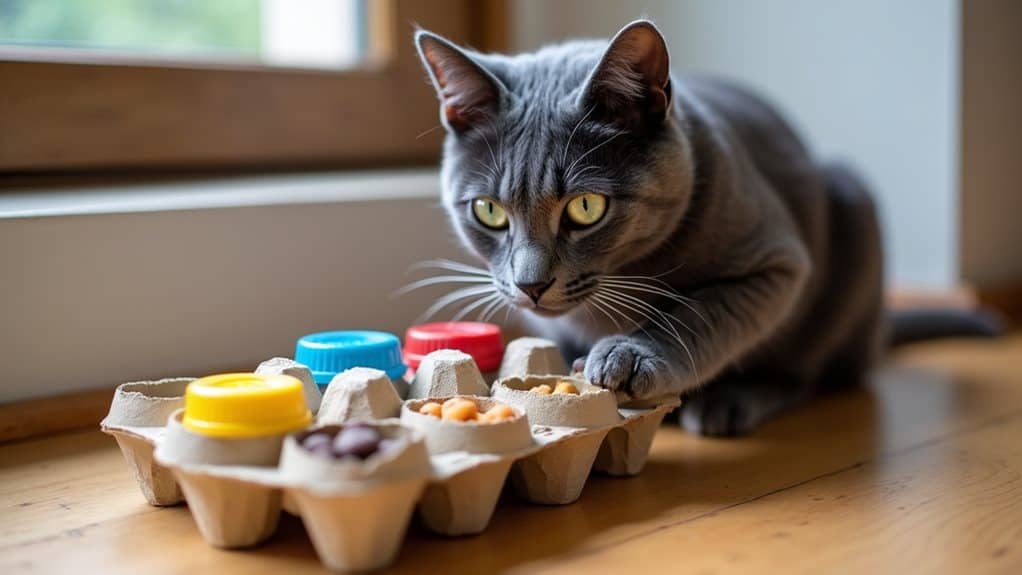
An empty egg carton can become your cat’s favorite puzzle toy with just a few simple modifications. This budget-friendly project challenges your feline friend’s problem-solving skills while providing tasty rewards.
With some creativity in egg carton stacking, you’ll create a treat retrieval game that keeps your cat entertained for hours.
To make your puzzle:
- Cut small holes in the top of the egg carton, just big enough for your cat to reach a paw inside
- Place treats in different compartments and close the lid
- For advanced puzzles, try stacking multiple egg cartons with holes aligned
- Secure the cartons with pet-safe glue or tape for stability
Watch your cat’s delight as they figure out how to access the hidden goodies! Their treat retrieval skills will improve with each play session. Interactive cat toys enhance mental stimulation for indoor cats, making this project a fantastic addition to their playtime!
No-Sew Fleece Blanket Fort
Creating a cozy fleece blanket fort for your cat requires just a few simple materials: two yards of fleece fabric, scissors, and some sturdy boxes or chairs.
You’ll want to start by draping the fleece over your structure, securing it with heavy books or clips to create a cave-like hideaway that satisfies your cat’s natural instinct to seek enclosed spaces. For added comfort, fold some excess fleece inside to make a soft bed where your feline friend can curl up and feel secure in their new personal retreat. Engaging your cat in this cozy fort can also provide important emotional support while alleviating stress.
Materials Needed
The perfect cat fort doesn’t require advanced crafting skills or expensive materials—just a few simple items you’ll likely have around the house. When gathering supplies, consider both environmental impact and safety precautions by choosing non-toxic, pet-friendly materials.
You’ll need:
- 2 yards of soft fleece fabric (or repurpose old blankets)
- Scissors (sharp enough to cut fabric cleanly)
- A sturdy box or laundry basket for structure
- Optional: catnip or favorite toys to entice your cat
These simple materials transform into a cozy hideaway your furry friend will adore. The beauty of this project is its flexibility—you can adjust the size based on what you have available. Plus, when it gets too furry, just toss the fabric in the washing machine for a quick refresh!
Assembly Steps
Building your no-sew fleece blanket fort takes just four simple steps that you’ll master in under 30 minutes.
First, lay both fleece pieces flat with wrong sides together. Cut 4-inch squares from each corner, then make 4-inch-deep fringe cuts around all edges, about 1 inch apart.
Next, tie the matching fringe pieces together with double knots, working your way around the blanket. Leave one side partially untied to create the fort entrance.
Finally, drape your creation over chairs or a table to form a cozy hideaway.
This fort provides numerous enrichment benefits by satisfying your cat’s natural instincts for security and exploration.
Understanding cat behavior tells us they crave protected spaces where they can observe their surroundings safely. You’ll be amazed how quickly your feline friend claims this new territory!
Plastic Bottle Rolling Toys
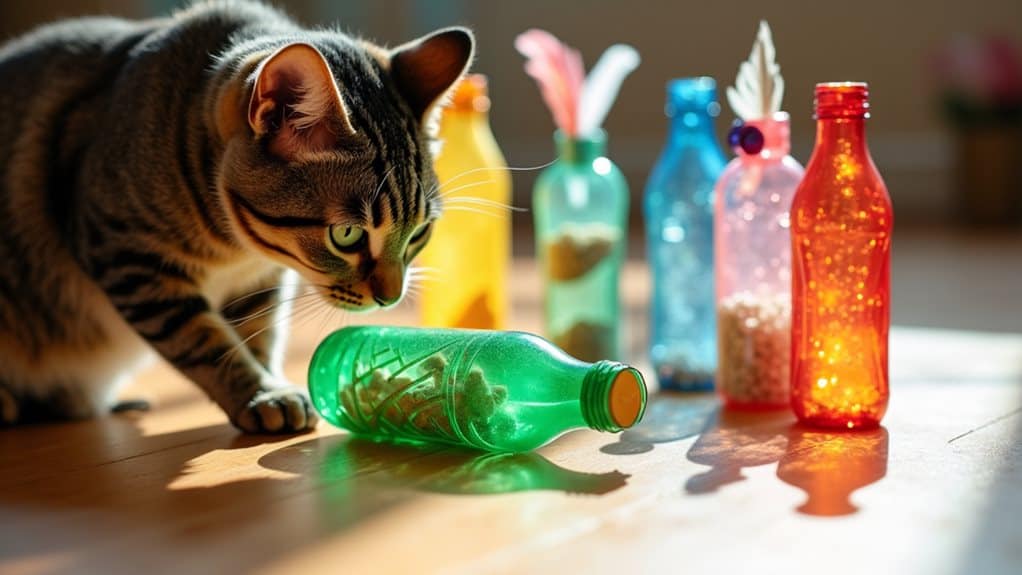
Surprisingly versatile, plastic bottles make fantastic DIY cat toys that’ll keep your feline friend entertained for hours.
You can create engaging bottle cap chase games or rolling ball fun activities with just a few simple modifications. Your cat will love batting these homemade treasures across the floor!
Here’s what you’ll need to create these toys:
- Empty plastic bottles (water or soda bottles work great)
- Colorful bottle caps for chase games
- Small bells or crinkly paper for sound stimulation
- Non-toxic decorative elements like ribbons or feathers
Simply clean the bottles thoroughly, remove labels, and add small treats or noise-making objects inside.
Secure the cap tightly to prevent your curious kitty from accessing the contents.
These toys aren’t just budget-friendly but also environmentally conscious, giving new life to items you’d otherwise recycle.
Yarn Ball Obstacle Course
You’ll create hours of feline fun with a yarn ball obstacle course featuring three exciting challenges.
Set up a “Tunnel Vision Challenge” with cardboard tubes, suspend yarn in a grid pattern between furniture legs for climbing adventures, and arrange yarn balls at different heights for your cat’s batting practice.
Your kitty will love jumping, weaving, and pouncing through this homemade playground that engages their natural hunting instincts.
Tunnel Vision Challenge
When your feline friend needs a challenge that combines exercise and mental stimulation, the Tunnel Vision Challenge offers the perfect solution. This DIY project takes advantage of your cat’s natural tunnel exploration benefits while providing creative hiding spots that keep them engaged for hours.
Creating your own cat tunnel system is easier than you think:
- Repurpose paper grocery bags by cutting out the bottoms and taping them together
- Transform cardboard boxes into connected passageways using scissors and tape
- Use old t-shirts stretched over wire hangers bent into circular frames
- Place treats and toys throughout the tunnels to encourage exploration
You’ll notice your cat’s confidence growing as they master their new playground. The mental stimulation helps prevent boredom-related behaviors, and there’s nothing cuter than watching your kitty’s excitement when they pounce through their homemade tunnels!
Yarn Grid Suspension
Feline athletes of all activity levels can enjoy the suspended challenge of a Yarn Grid Obstacle Course, transforming your living space into an aerial playground.
Create a network of crisscrossing yarn between furniture legs or across hallway corners where your cat can maneuver through the spaces.
Choose different yarn colors to make the course visually stimulating and mix yarn textures for sensory variety.
Remember, yarn safety is paramount—secure all ends tightly and inspect regularly for fraying that could entangle your cat’s claws.
When playtime ends, proper yarn storage prevents household hazards and keeps materials ready for the next setup.
You’ll be amazed watching your kitty twist, leap, and squeeze through your handcrafted maze, exercising both body and mind while satisfying their natural climbing instincts.
Batting Practice Setup
While the Yarn Grid creates vertical challenges, the Batting Practice Setup brings the excitement down to ground level with boundless possibilities for feline fun.
This DIY project transforms ordinary household items into the perfect feline exercise station, encouraging your cat’s natural hunting instincts.
To create your batting practice arena, you’ll need:
- An empty shoebox with entry holes cut on opposite sides
- 3-4 lightweight yarn balls (homemade or store-bought)
- A flat surface near a wall for containment
- Optional bells to insert inside yarn balls for audio stimulation
Your cat will spend hours improving their batting skills, pouncing on the yarn balls as they roll across the floor.
It’s adorable to watch them calculate trajectories before striking!
This simple setup provides excellent cardio exercise while satisfying their predatory instincts.
Cereal Box Scratching Pad
If you’ve ever watched your cat destroy a cardboard box, you’ll understand why cereal box scratching pads are such a brilliant DIY option. Your feline friend gets to satisfy their natural scratching instinct while you’re giving new life to packaging that would otherwise end up in the trash.
The cereal box benefits are numerous—they’re free, readily available, and perfectly sized for a cat’s scratching needs.
Plus, cardboard recycling becomes a fun project rather than just another chore. Simply flatten the box, remove any plastic liners, and secure several boxes together with non-toxic glue.
For extra appeal, sprinkle some catnip between the layers.
You’ll be amazed at how quickly your cat gravitates toward their new scratching pad, especially when they realize it’s something they’re actually allowed to destroy!
Paper Plate Ring Toss Game
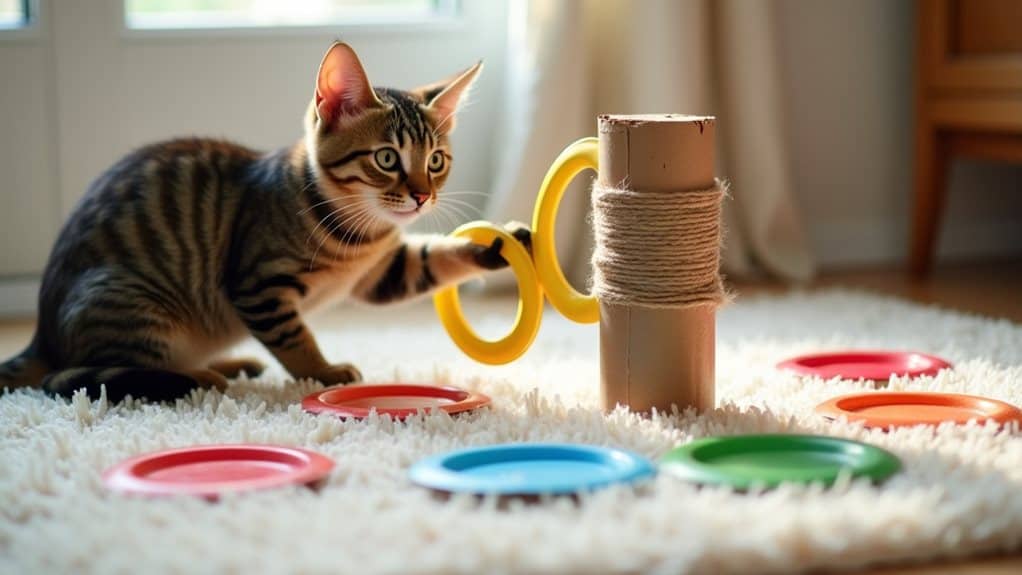
Scratching isn’t the only activity your cat enjoys—they’re also natural hunters who love to pounce and grab at moving objects.
While scratching satisfies their natural instincts, cats are born hunters craving the thrill of the chase and capture.
This simple paper plate ring toss game improves cat agility while creating moments of playful interaction between you and your feline friend.
To create this engaging toy:
- Cut out the centers of 3-4 paper plates, leaving rings of different sizes
- Decorate the rings with non-toxic markers or paint for visual appeal
- Attach strings of varying lengths to each ring
- Mount the strings to a hanger or dowel rod for easy storage
Dangle the rings at different heights and watch your cat leap into action!
Move the rings in unpredictable patterns to mimic prey movements. You’ll be amazed at how quickly your cat develops impressive jumping and grabbing skills.
Hanging Basket Cat Hammock
When installing your hanging basket cat hammock, you’ll want to secure it to ceiling joists or sturdy hooks rated for your cat’s weight, rather than drywall anchors.
You can use adjustable straps to find the perfect height, making it easy for your feline friend to hop in and out without struggling.
Remember to check the weight limit of your basket and hardware, as an overly ambitious kitty might test its limits during playtime!
Easy Installation Tips
The three key steps to installing your cat’s hanging basket hammock won’t take more than 30 minutes of your time.
With quick setup in mind, you’ll have your feline friend lounging in style before you know it!
For installation safety, always check these necessities first:
- Confirm your ceiling hook can support at least 20 pounds—cats plus hammock
- Position the hammock away from shelves that could become launching pads
- Hang the basket at a comfortable height for your cat to jump in and out
- Test the stability by gently pressing down before letting kitty try it
Remember to tighten all hardware securely.
Your cat will be snoozing in their new raised paradise before you’ve even put away your tools!
Weight Support Considerations
Making certain your cat’s hammock can safely bear weight is critical before you let your furry friend hop aboard.
Test the weight capacity by placing a small bag of rice or flour (about 10-15 pounds) in the hammock and leaving it overnight. This simulates your cat’s weight and helps verify the structural integrity of your creation.
Don’t forget that cats move around, jump, and stretch in their hammocks. The attachment points need to handle not only static weight but dynamic movement too!
Select mounting hardware rated for at least twice your cat’s weight to provide a solid safety margin.
If you’ve used a wicker basket, reinforce the bottom with a piece of sturdy cardboard or thin plywood.
Your kitty will thank you for the extra effort when they’re lounging comfortably without any unexpected drops to the floor!
Frequently Asked Questions
How Do I Keep My Cat Interested in Homemade Toys?
Rotate your homemade toys regularly to prevent boredom. Engage in interactive play sessions daily, adding new textures or sounds for sensory stimulation. Sprinkle catnip on toys occasionally, and hide treats inside to maintain your cat’s interest.
Are Household Adhesives and Paints Safe for Cat Projects?
Want to create safe toys for your furry friend? Most household adhesives and paints aren’t cat-safe. Choose non-toxic, pet-safe alternatives specifically labeled for animal use to avoid paint toxicity and adhesive safety concerns.
What Alternatives Work for Cats Uninterested in Catnip?
Try herbal alternatives like valerian root, silver vine, or honeysuckle for catnip-resistant cats. You’ll also find interactive toys with motion, sounds, or treats engage their hunting instincts effectively. Different cats respond to different stimuli.
How Often Should DIY Enrichment Items Be Replaced?
As time marches on, so should your cat’s toys. You’ll want to replace DIY enrichment items every 2-4 weeks based on toy lifespan, visible wear, and your cat’s continued interest in them.
Can These Projects Help Reduce Destructive Behavior in Cats?
You’ll find that DIY enrichment projects can greatly reduce destructive behavior by addressing cat boredom. When your feline has appropriate outlets for natural instincts, they’re less likely to damage your furniture or belongings.
Final Thoughts
You’ve just spent hours crafting homemade toys for your cat, who’s now completely ignoring them to play with the packaging they came in. Isn’t it ironic? But don’t worry—your feline friend will eventually discover these treasures when you’re not looking. Remember, enrichment isn’t just about the toys; it’s about the time you’ve spent creating something special. Your cat may not say “thank you,” but those slow blinks speak volumes.