The Best Fluffy Pancakes recipe you will fall in love with. Full of tips and tricks to help you make the best pancakes.


Indoor cats need enrichment across all senses to thrive. You can provide visual stimulation through window perches or light toys, play cat-specific music for their sensitive ears, and create scent trails with herbs or spices. Don’t forget to offer various textures for tactile exploration and introduce new flavors beyond regular kibble. This all-encompassing approach keeps your feline friend mentally engaged and physically active. Discover how each sense can transform your cat’s indoor world.
Understanding Your Cat’s Sensory Experience
Many of us think our indoor cats have it made – soft beds, guaranteed meals, and protection from outdoor dangers.
But have you considered how your home environment affects your cat’s unique sensory experience?
Cats perceive the world differently than we do. Their heightened senses can easily lead to sensory overload in environments we find perfectly comfortable.
Your cat’s whiskers detect subtle air movements, their ears pick up ultrasonic frequencies, and their noses are 14 times more sensitive than yours.
Even their paw pads contain sensory receptors!
Understanding feline perception helps you create a truly enriching home. Whisker fatigue can dramatically affect a cat’s eating behavior and overall well-being, further highlighting the importance of careful environmental design.
That “annoying” behavior might be your cat’s response to sensory stimulation you can’t detect.
Visual Stimulation: The Predator’s Perspective
Your cat’s razor-sharp vision is designed for hunting, with moving objects immediately grabbing their attention and triggering their predatory instinct.
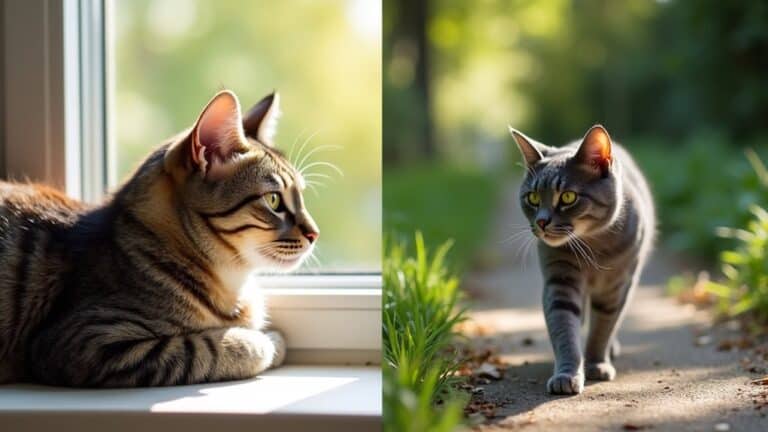
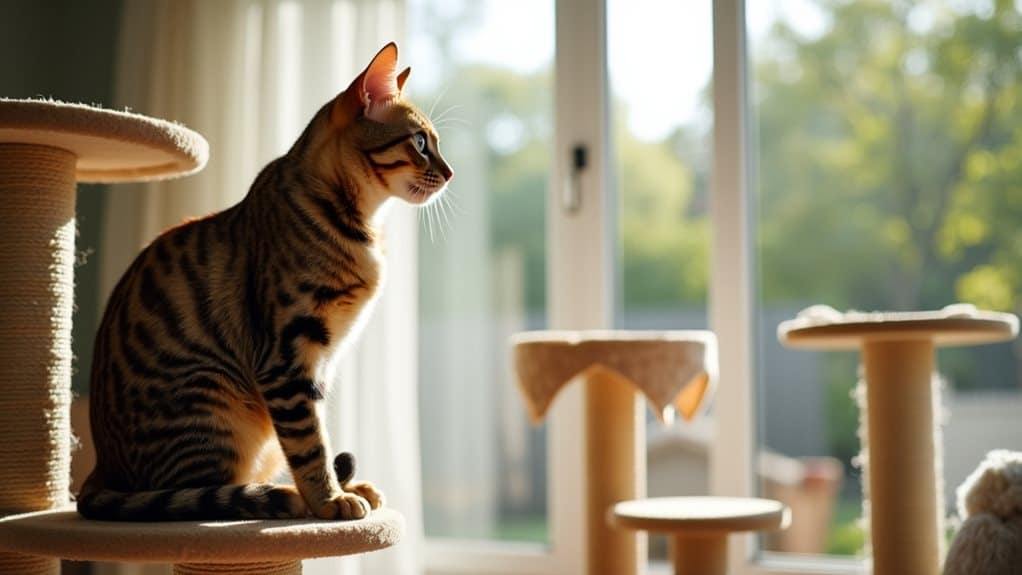
Setting up cozy perches near windows creates natural “cat TV,” giving your feline friend hours of entertainment watching birds, squirrels, and neighborhood activity.
You can also improve their visual world with interactive light toys, like laser pointers or light-reflecting objects, which mimic the darting movements of prey and provide stimulating playtime that satisfies their innate hunting drive. Additionally, engaging their senses can lead to a stronger bond and enhance their emotional connection with you, enriching their overall quality of life.
Movement Triggers Hunting Instinct
Three distinct movements can instantly transform your lazy, napping cat into a focused predator ready to pounce. Small, quick movements resembling scurrying prey trigger your cat’s predatory behavior most effectively.
You’ll notice their eyes dilate, ears perk forward, and their body lower into hunting position.
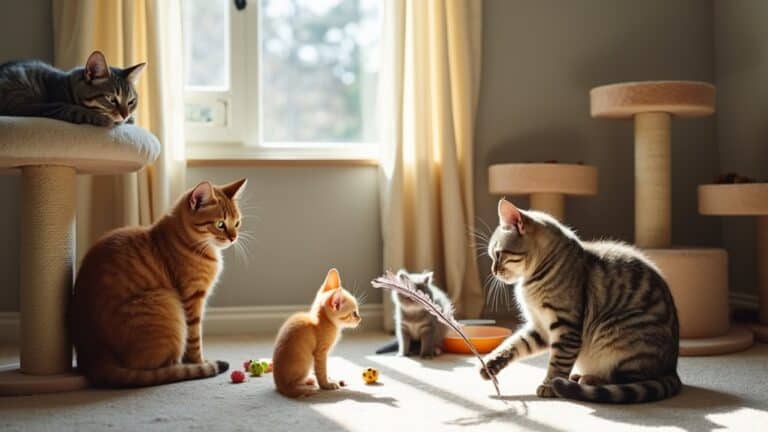
Irregular, erratic movements—like a feather toy darting unpredictably—captivate cats more than predictable patterns. This mimics the panicked escape attempts of prey and satisfies their instinctual play needs.
Don’t forget about vertical movement! Cats are naturally drawn to objects that flutter or bounce upward, like birds taking flight.
Try dangling toys at different heights to engage this hunting response. Engaging toys can significantly improve indoor cat activity levels, promoting their overall well-being.
Strategic Window Perches
Strategic window perches transform an ordinary view into a mesmerizing wildlife documentary for indoor cats.
Your feline friend deserves a front-row seat to the outside world where they can safely track birds, squirrels, and passing cars.
When designing your cat’s perfect window setup, consider both window safety and perch design to create their dream observation post.
Create the ultimate viewing experience with these key elements:
- Install a sturdy shelf or commercial cat perch that supports your cat’s full weight when they’re stretching or pouncing.
- Add soft bedding that entices lounging while watching the “cat TV” outside.
- Make certain window screens are secure and can’t be pushed out by an excited hunter.
By providing this safe space, you’ll notice your cat spending hours engaged with this natural entertainment, satisfying their predatory instincts without leaving home.
Interactive Light Play
Light-based toys trigger a cat’s natural hunting drive, transforming your living room into an exciting safari. When you introduce laser pointers into playtime, you’ll witness your feline friend’s incredible agility and focus as they chase that elusive red dot across floors and walls.
Remember to reward their “catches” with treats to prevent frustration.
Beyond laser pointers, try glow sticks in darkened rooms for a gentler light experience. Place them inside clear containers for safety while creating mesmerizing movement that captivates your cat’s attention.
You can even create shadow puppets on walls using flashlights for an interactive game that strengthens your bond. Incorporating interactive play not only satisfies your cat’s instincts but also adds variety to their indoor activities.
The key is variety—alternate between different light toys to keep your cat mentally stimulated and physically active, satisfying their predatory instincts without ever leaving home.
Auditory Enrichment: Music and Sounds for Feline Ears
You’ll find that cats respond differently to music than humans do, with studies showing they prefer species-specific tunes featuring frequencies similar to those in purring or bird chirping.
Consider playing specialized “cat music” or natural sound recordings that mimic outdoor environments, such as gentle rainfall or chirping birds.
These auditory experiences can reduce stress and provide mental stimulation for your indoor cat, especially when you’re away from home. Incorporating slow grooming techniques can also help create a calming atmosphere that further enhances your cat’s relaxation during these auditory sessions.
Feline-Friendly Musical Genres
Music for cats isn’t just a novelty concept—it’s backed by scientific research showing our feline friends have distinct musical preferences.
When selecting cat music, focus on calming melodies that mimic the frequencies cats respond to naturally—typically higher than human preferences.
Three genres your cat might enjoy:
- Classical music with string instruments—violins and harps create gentle, high-frequency sounds that cats find soothing.
- Nature-based soundtracks featuring chirping birds or gentle water sounds—these trigger your cat’s natural curiosity.
- Specially composed feline music with purring undertones and prey-like squeaks—designed specifically for cat ears.
You’ll know you’ve hit the right note when your cat relaxes, purrs, or shows interest rather than running away. Grooming behavior can also influence your cat’s mood and overall relaxation, making the right soundscapes even more essential in their environment.
Every cat has unique preferences, so don’t be afraid to experiment!
Natural Sound Recordings
Beyond music, natural sound recordings offer another dimension of auditory enrichment for your indoor cat. These natural soundscapes can transport your feline friend to outdoor environments they rarely experience, stimulating their curious minds and keen senses.
Try recordings of chirping birds, rustling leaves, or gentle rainfall—sounds that might trigger your cat’s hunting instincts without frustration.
Many cats respond positively to these authentic sounds, often perking their ears or investigating the source with wide-eyed wonder. Unlike artificial noises, these recordings mimic what cats would naturally encounter in the wild.
You’ll find calming melodies interwoven with nature sounds particularly effective during thunderstorms or fireworks when anxiety runs high. Start with short sessions to see which sounds captivate your cat most, and you’ll soon discover an inexpensive way to expand their sensory world. Additionally, pairing these sounds with interactive toys can further enhance your cat’s enrichment experience.
Olfactory Adventures: Creating a Scent-Rich Environment
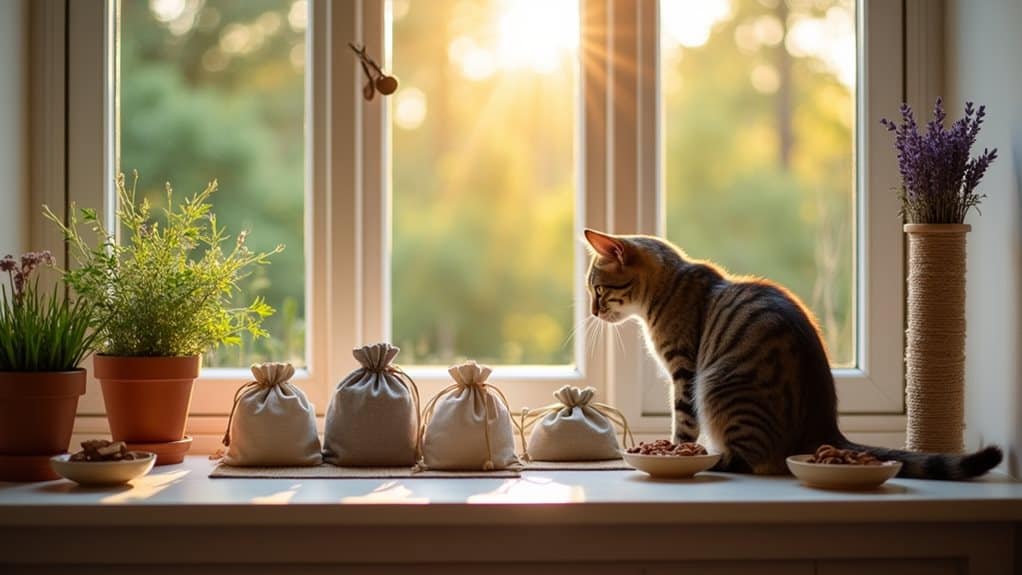
Creating scent trails with different textures and smells mimics the outdoor exploration they naturally crave.
Here’s how to craft a scent-rich environment:
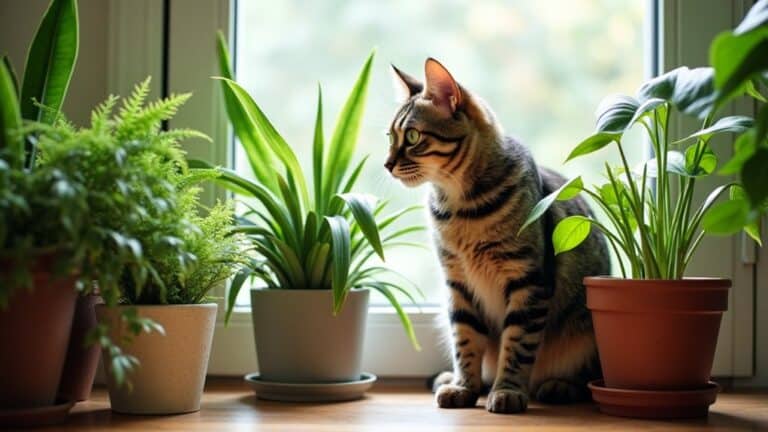
- Grow indoor herb gardens with cat-safe plants like catnip, cat grass, and silver vine—these provide changing scents as they grow and mature.
- Rotate toys by storing them in containers with different herbs or spices, giving familiar objects new olfactory dimensions.
- Create scent stations around your home using cardboard boxes with dried leaves, feathers, or pine cones from outside.
These simple additions will transform your home into an olfactory playground your cat will love. Additionally, be mindful of your cat’s whisker sensitivity, as this can enhance their overall comfort during play and exploration.
Tactile Satisfaction: Textures That Cats Crave
Cats experience the world through their paws, whiskers, and fur, making tactile stimulation essential for their mental and physical wellbeing. When you’re setting up tactile enrichment, think beyond basic cat toys to create a wonderland of textures your feline friend can explore.
Incorporate fabric variety throughout your home—plush blankets in one spot, sleek silk in another, and perhaps a woolly throw somewhere else.
Don’t underestimate the importance of diverse scratching surfaces either. Cardboard, sisal, carpet, and wood each offer different sensations that satisfy your cat’s natural scratching instincts.
Try introducing sensory mats with various textures like silicone nubs, crinkly materials, or rubber bristles. Your cat will love kneading, pawing, and rolling on these different surfaces, keeping their curious minds engaged and their bodies active. Furthermore, regular grooming can complement their tactile experience by providing them with a shiny coat and reducing shedding.
Taste Exploration: Beyond the Kibble Bowl

Although commercial cat food provides balanced nutrition, indoor cats rarely experience the taste diversity their outdoor counterparts enjoy through hunting.
While we strive to nourish our indoor cats completely, they miss the varied flavors that hunting provides to outdoor felines.
You can introduce flavor variety through simple taste testing sessions at home. Your feline friend might discover new favorites that stimulate their senses and provide mental enrichment.
Try these three approaches to expand your cat’s culinary horizons:
- Offer small samples of cat-safe human foods like plain cooked chicken, unseasoned fish, or a dab of plain yogurt.
- Explore commercial cat treats with different protein sources—turkey, duck, or rabbit.
- Create “hunting opportunities” with puzzle feeders containing different flavored treats.
Frequently Asked Questions
Can Sensory Enrichment Help Reduce Destructive Behavior in Cats?
Yes, sensory enrichment can greatly reduce your cat’s destructive behavior by addressing environmental factors that cause boredom and stress. You’ll notice fewer scratched furniture pieces when you’re engaging all their senses daily.
How Much Time Should I Dedicate to Sensory Activities Daily?
Time flies when your cat’s engaged! You should dedicate at least 15-20 minutes to sensory activities daily, but splitting this into multiple short sessions throughout your day works best for your feline’s enrichment needs.
Can Sensory Enrichment Help My Senior Cat Stay Mentally Sharp?
Sensory enrichment provides substantial cognitive benefits for your senior cat. It helps maintain mental agility by creating new neural pathways. You’ll notice your older feline staying more alert and engaged when regularly stimulated.
Will Sensory Stimulation Help My Extremely Shy/Anxious Cat?
Like a timid mouse emerging from its burrow, your anxious cat can benefit from gentle sensory stimulation. You’ll see anxiety reduction and confidence building as they gradually explore new experiences at their own comfortable pace.
Should I Rotate Sensory Toys or Keep Favorites Consistently Available?
Rotate most toys weekly to maintain interest, but keep your cat’s favorite toys consistently available. This toy rotation strategy prevents boredom while providing comfort through familiar items they’ve bonded with.
Final Thoughts
You might worry that creating a sensory-rich environment for your indoor cat seems overwhelming, but you don’t need to transform your home overnight. Start small—add a bird feeder by the window, play nature sounds during the day, or introduce a new texture for exploration. Your cat’s physical and mental health will flourish with these simple additions. When you see those contented purrs and playful pounces, you’ll know it’s worth every effort.