The Best Fluffy Pancakes recipe you will fall in love with. Full of tips and tricks to help you make the best pancakes.


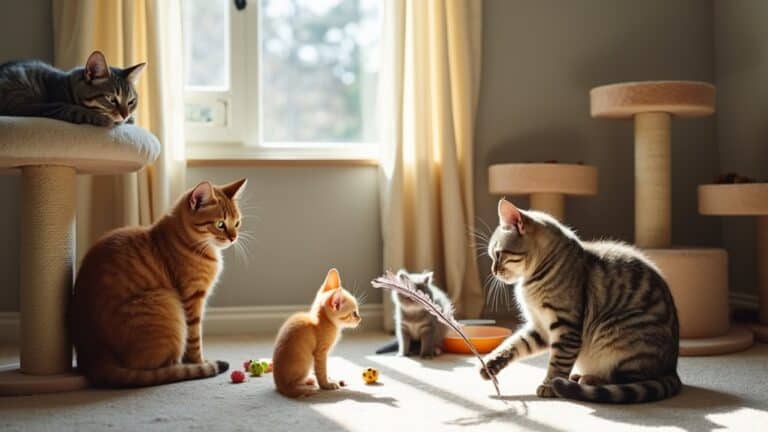
To keep your indoor cat mentally stimulated, rotate toys weekly to maintain interest, and use puzzle feeders that make mealtime a challenge. Create vertical adventures with cat shelves and trees, while window perches offer wildlife-watching entertainment. Try setting up hunting simulations with hidden treats or feather wands that mimic prey. Even short training sessions using clicker training can teach your cat new tricks. These enrichment activities satisfy your cat’s natural instincts and prevent destructive behaviors from boredom.
Puzzle Feeders: Making Mealtime a Mental Challenge
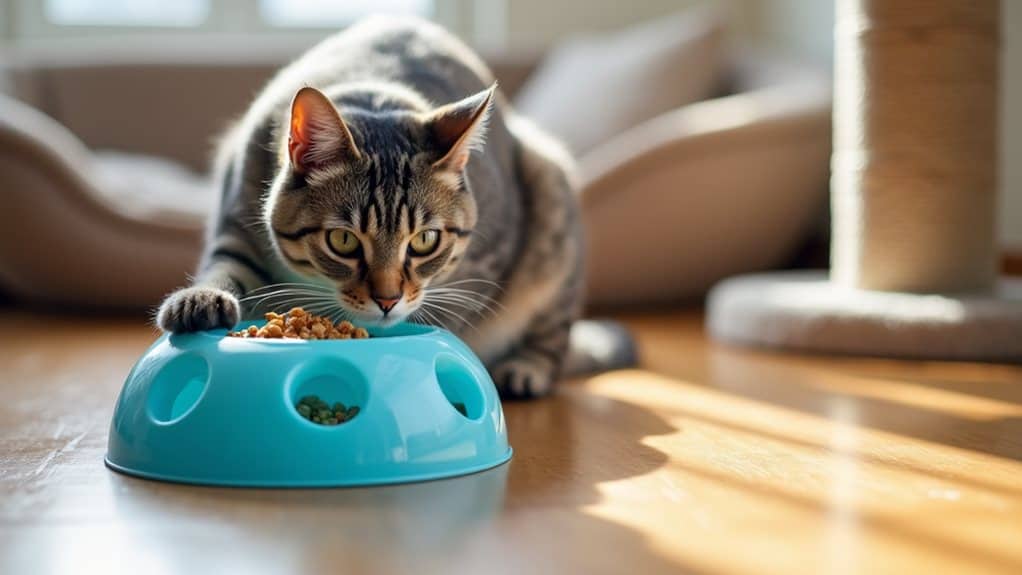
Why not transform your cat’s mundane mealtime into an exciting adventure? Cats are natural hunters, and puzzle feeders tap into this instinct while preventing boredom. Instead of serving meals in a regular bowl, try food puzzles that require your feline to work for their kibble.
Engage your cat’s wild side by making them hunt for dinner instead of serving it in a boring bowl.
You’ll find various treat dispensers that roll, wobble, or need paw manipulation to release food. Start with simpler designs if your cat’s new to the concept. They’ll quickly learn that batting, pushing, or rolling these toys yields delicious rewards.
These clever devices don’t just feed your cat’s body—they nourish their mind too! Many owners report their cats seem more satisfied after “hunting” for their food. Additionally, incorporating interactive cat toys can further enhance their playtime experience and engagement levels.
As an added bonus, puzzle feeders can help slow down fast eaters and support weight management.
Vertical Space: Climbing Adventures for Curious Cats
Cats naturally crave vertical territory, and you’ll find your feline friend thrives when you transform your home into a three-dimensional playground.
Installing wall-mounted shelves creates exciting “cat highways” that connect to multi-level cat trees, giving your curious climber safe paths to explore their domain.
Window perches offer the dual benefits of sunshine-basking spots and entertainment centers where your cat can watch birds, squirrels, and neighborhood activity unfold like their own personal nature channel. Additionally, placing cat trees near windows enhances engagement and encourages exploration, enriching your cat’s environment with natural stimuli.
Shelves As Cat Highways
When you transform your walls into feline playgrounds, you’re not just decorating—you’re creating an entirely new dimension for your cat’s world.
Installing staggered shelves at various heights lets your curious companion traverse your home from above, satisfying their natural instinct to observe from raised positions.
For successful shelf design, consider sturdy materials that can support your cat’s weight, with non-slip surfaces for confident leaping. Cat safety should be your priority—secure all shelves properly to wall studs and round any sharp corners.
You’ll want to create gradual ascents and descents, as most cats prefer taking manageable jumps between levels.
Don’t forget to strategically place these highways near windows or bird feeders! Your cat will thank you with endless entertainment as they patrol their raised domain, keeping boredom at bay. Additionally, maintaining a clean environment through regular grooming routines not only ensures your cat’s comfort but also enhances their overall wellbeing.
Multi-Level Cat Trees
While wall shelving gives your cat aerial pathways, a multi-level cat tree serves as their personal adventure playground right in the middle of your living space.
These towering structures offer countless cat tree benefits, from scratching posts that save your furniture to cozy hiding spots where your feline can retreat when they need alone time.
You’ll notice your cat’s natural climbing instincts kick in as they engage in multi-level exploration, leaping from platform to platform with impressive agility.
Cat trees provide the vertical territory cats crave, allowing them to survey their domain from different heights.
They’ll spend hours perched on the highest platform, watching the world go by with that mysterious cat gaze we all know and love.
It’s not only entertainment—it’s enrichment that keeps your indoor kitty physically active and mentally stimulated. Additionally, constructing a vertical space like a cat tree promotes natural behaviors that are crucial for your cat’s well-being.
Window Perch Benefits
Ever wondered why your feline friend seems magnetically drawn to windows? It’s not merely curiosity—windows offer prime entertainment value for indoor cats.
Installing a comfortable window perch creates a dedicated spot where your cat can soak up sunny spots while satisfying their natural instincts.
The birdwatching benefits can’t be overstated! Your cat gets front-row seats to nature’s own reality show, complete with squirrels, birds, and passing pedestrians. This visual stimulation provides mental exercise that helps prevent boredom and destructive behaviors.
You’ll notice your cat spending hours perched by the window, tail twitching in excitement as they track movement outside. It’s like cat TV, but better!
Plus, those warm sunny spots offer the perfect napping location after an exciting birdwatching session—combining entertainment with comfort. Additionally, while observing outdoor activities, your cat may engage in territorial behaviors that enhance their sense of security and belonging.
Sensory Gardens: Bringing the Outdoors In
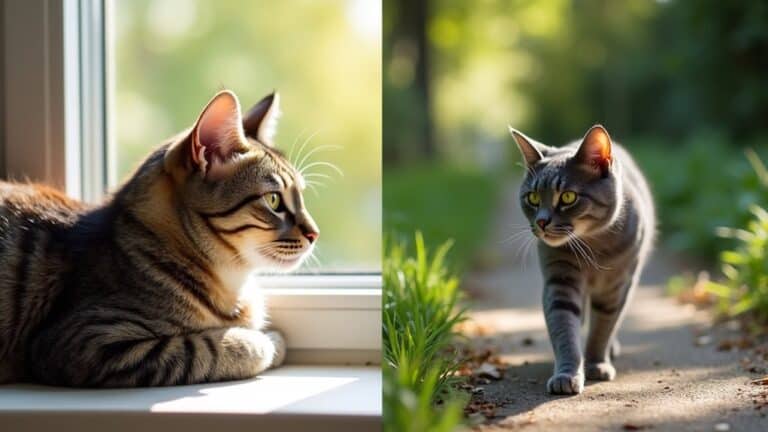
Many indoor cats miss out on the natural stimulation that outdoor environments provide, but you can create a miniature oasis right inside your home.
A cat sensory garden offers a taste of nature’s playground while keeping your feline friend safe from outdoor dangers.
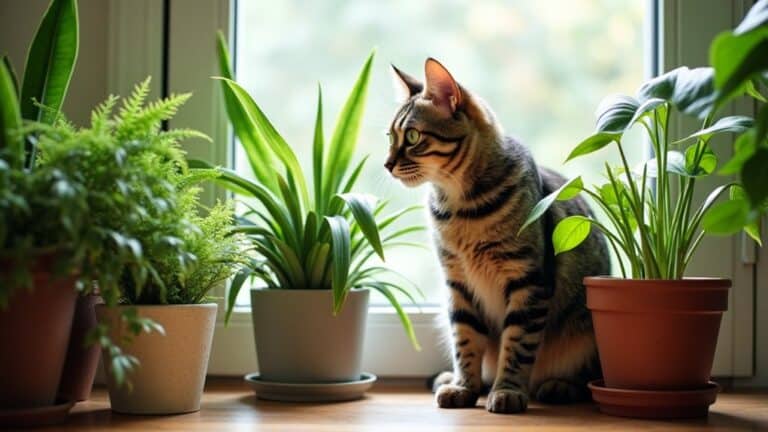
Start by selecting pet-safe herb plants like catnip, cat grass, or silver vine that encourage sensory exploration.
Place them in sturdy containers where your cat can sniff, paw, and even nibble safely.
Add different textures—smooth stones, soft moss, or crunchy mulch—to create varied tactile experiences.
You’ll be amazed how quickly your cat gravitates to this indoor nature spot!
It’s not merely entertainment—it provides mental stimulation, reduces stress, and satisfies natural instincts that keep your indoor kitty content and engaged. Additionally, incorporating cat-friendly plants into your home environment can significantly enhance your cat’s well-being.
Rotation System: Keeping Toys Fresh and Exciting
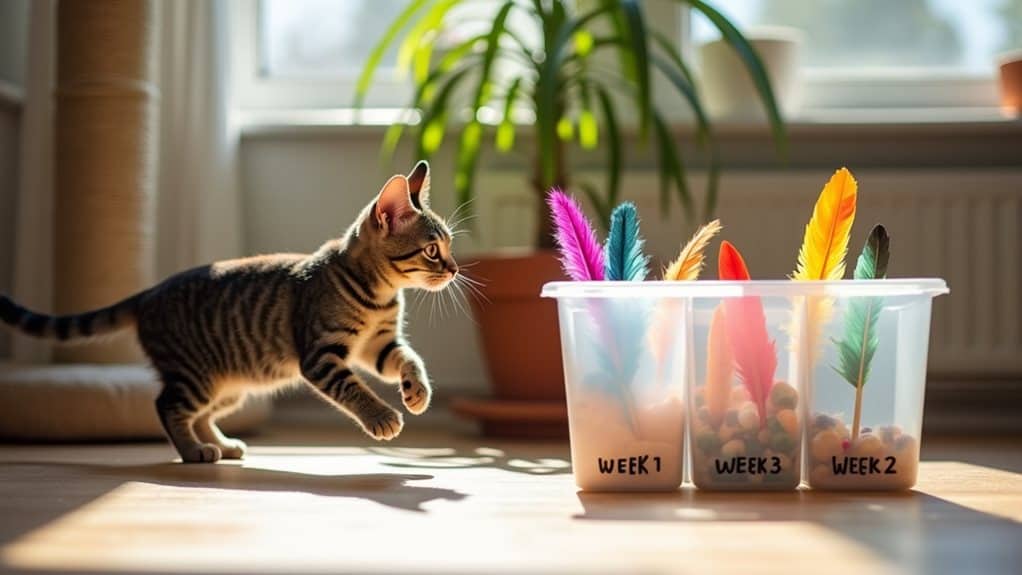
You’ll keep your cat’s interest alive by setting up a strategic toy storage system, where favorites can rest before making their triumphant return.
Create a simple weekly swap schedule, perhaps on Sunday evenings, replacing current toys with those that have been hidden away.
This rotation tricks your cat’s brain into thinking they’re getting brand-new toys each time, sparking fresh excitement and preventing the boredom that comes from seeing the same mouse or feather wand day after day. Incorporating interactive toys enhances mental stimulation and keeps playtime engaging for your cat.
Strategic Toy Storage
A strategic approach to toy management can transform your cat’s playtime experience from mundane to magical. When you implement smart toy organization systems, you’ll notice your feline friend showing renewed interest in items they’d previously ignored. Storage solutions don’t need to be fancy—just effective!
Consider categorizing toys by type and keeping them in rotation with this simple system:
| Week | Active Toys | Hidden Toys | Special Occasion |
|---|---|---|---|
| 1 | Mouse toys | Feather wands | Catnip toys |
| 2 | Feather wands | Crinkle balls | Mouse toys |
| 3 | Crinkle balls | Catnip toys | Feather wands |
| 4 | Catnip toys | Mouse toys | Crinkle balls |
| 5 | Start over! | Refresh all | Add something new |
Incorporating interactive toys into your rotation can further enhance mental stimulation and alleviate boredom in your cat.
Weekly Swap Schedule
Because cats quickly lose interest in toys they see every day, implementing a weekly swap schedule will revolutionize your pet’s play experience.
Divide your cat’s toys into three or four groups, then rotate them weekly so your furry friend always has something “new” to discover. This simple strategy triggers their hunting instincts and natural curiosity.
Don’t forget to include cat furniture in your rotation plan! Move scratching posts to different locations or adjust climbing trees to create fresh pathways. Your cat will appreciate these environmental changes as much as new toys. Additionally, observe your cat’s scratching behavior to gain insights into their preferences during playtime.
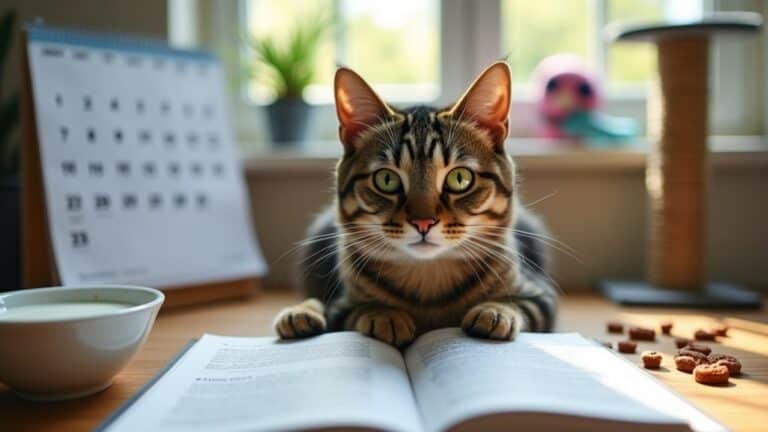
Try syncing your play schedules with toy rotations—introduce the “new” toys during interactive sessions to maximize excitement. Mark your calendar or set phone reminders for swap day, and you’ll never again wonder why your cat seems bored with their once-favorite mouse toy!
Training Sessions: Teaching New Tricks and Commands
Contrary to popular belief, cats can indeed be trained to perform tricks and follow commands, making training sessions an excellent way to prevent boredom. Your feline friend has the capacity to learn through clicker training, which pairs a clicking sound with rewards to reinforce desired behaviors.
Start with simple commands like “sit” or “high five,” and you’ll be amazed at what your cat can accomplish! Regular training not only provides mental stimulation but also helps to enhance overall well-being in your cat.
Consistency is key in command reinforcement, so keep training sessions short (5-10 minutes) and end on a positive note. You’ll strengthen your bond while giving your cat’s mind a healthy workout.
Remember, patience goes a long way—cats learn at their own pace. When your kitty successfully performs a trick, celebrate with appropriate treats and praise.
You’re not only preventing boredom; you’re building a smarter, happier pet!
Hunting Simulations: Satisfying Predatory Instincts
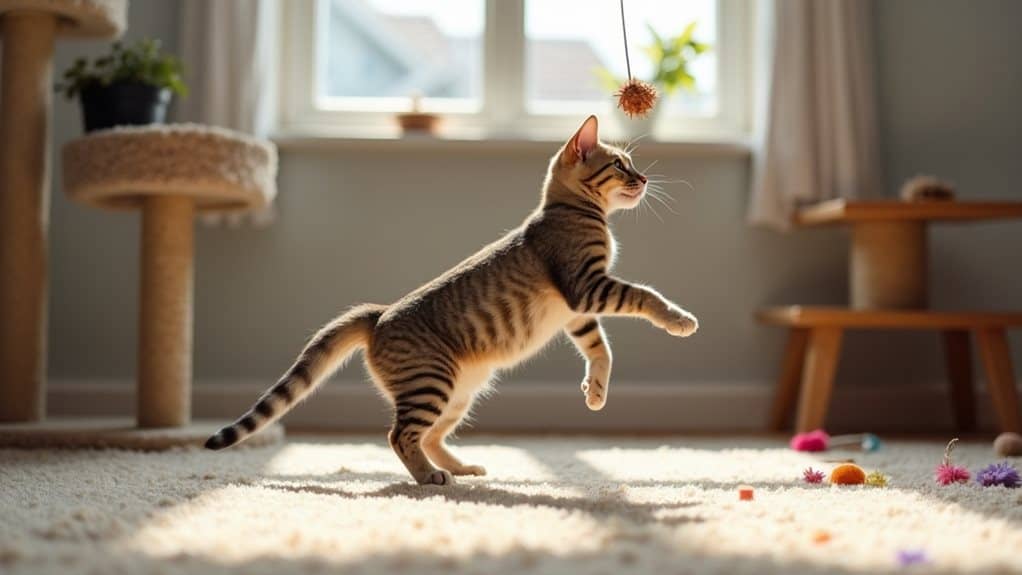
Domestic cats, despite their cushy indoor lives, retain powerful hunting instincts that need proper outlets. Without proper stimulation, your cat might become frustrated or bored. Creating hunting games can transform your home into a playground that satisfies your feline’s natural desires.
Try setting up scent trails with treats or catnip, giving your kitty a chance to track and “capture” their prey. You’ll notice their eyes light up when they get to stalk, pounce, and conquer!
| Hunting Game | Benefits to Your Cat |
|---|---|
| Feather wands | Mimics flying birds |
| Treat puzzles | Rewards problem-solving |
| Scent trails | Activates tracking instincts |
| Motion toys | Encourages chasing behavior |
| Hiding treats | Simulates hunting for food |
Window Entertainment: Creating Wildlife Viewing Stations
While indoor cats may be safe from outdoor hazards, they still crave visual stimulation from the natural world outside. Creating a wildlife viewing station near a window gives your feline friend front-row seats to nature’s theater.
Position comfortable perches where natural light streams in, allowing your cat to bask in sunshine while watching outdoor activities.
Install a bird feeder within viewing distance of your cat’s favorite window. The movement of birds, squirrels, and other wildlife provides hours of entertainment for your curious companion.
You’ll notice your cat’s tail twitching and ears perking up as they track these visitors—it’s like cat TV!
For added comfort, place a soft cushion on the windowsill or position a cat tree nearby. This simple setup satisfies your cat’s curiosity while keeping them safely indoors.
Interactive Playtime: Strengthening Your Bond Through Play
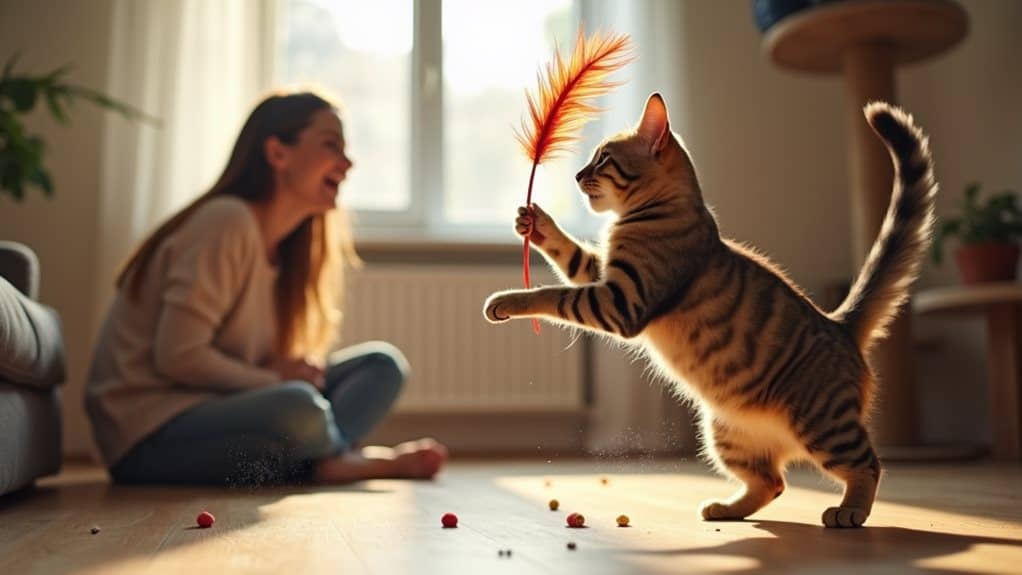
Beyond window entertainment, your cat craves active engagement with you. Setting aside merely 15 minutes twice daily for interactive play can dramatically reduce behavioral problems while strengthening your bond.
Grab those wand toys, laser pointers, or feather teasers and watch your feline friend transform into a miniature hunter before your eyes!
Interactive toys that mimic prey movements are particularly effective bonding exercises. Try varying your play style—sometimes quick and erratic, other times slow and stalking—to keep your cat mentally engaged.
Remember, it’s not solely about physical exercise; it’s about fulfilling their natural hunting instincts.
Don’t forget to reward successful “hunts” with treats or praise. Your cat doesn’t merely want toys; they want you involved in their playtime adventures.
This shared activity creates lasting connections between you both.
Frequently Asked Questions
How Can I Tell if My Cat Is Already Bored?
You’ll notice boredom signs like excessive grooming, destructive behavior, or lethargy. Your cat may also lose interest in toys, sleep more than usual, or show decreased playful behavior during your typical interaction times.
Do Elderly Cats Need Different Stimulation Than Younger Ones?
Yes, elderly cats do need different stimulation. You’ll notice age-related preferences develop as they slow down. Make activity modifications by offering gentler play sessions, comfortable perches, and puzzles that don’t require intense physical effort.
Can Cats Get Overstimulated From Too Many Activities?
Yes, your cat can get overstimulated. Watch for overstimulation signs like tail flicking, dilated pupils, or aggression. You’ll need to find the right activity balance that keeps them engaged without overwhelming them.
How Do Multi-Cat Households Balance Individual Enrichment Needs?
You’ll need to schedule individual playtime for each cat while monitoring their social interactions. Provide multiple resources in different locations so each cat can engage with toys or rest based on their unique preferences.
Will Enrichment Activities Help Reduce Destructive Behavior?
You’ll see substantial enrichment benefits as proper stimulation addresses your cat’s natural instincts. When cats are mentally engaged, they’re less likely to resort to destructive behavior modification is rarely needed afterward.
Final Thoughts
You’re now equipped to transform your cat’s indoor life from mundane to magnificent. Enrich their days with puzzle feeders that challenge, vertical spaces that invite exploration, and sensory gardens that stimulate. Keep toys fresh, minds sharp with training, and hunting instincts satisfied. Create window wonders, and most importantly, play together. Your efforts will reward you with a healthier, happier companion who’s engaged, content, and truly thriving in their indoor kingdom.