The Best Fluffy Pancakes recipe you will fall in love with. Full of tips and tricks to help you make the best pancakes.

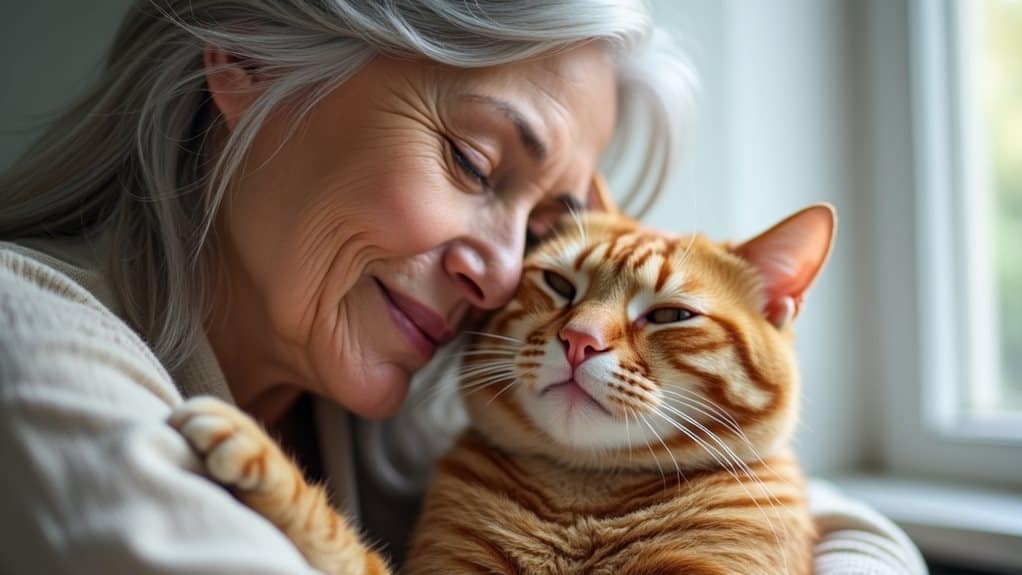
Cat purring operates at 25-150 Hz frequencies that do more than signal contentment. For cats, these vibrations promote bone healing, reduce inflammation, and manage pain—essentially providing a built-in health mechanism. You’ll benefit too, as purring lowers your blood pressure, reduces stress hormones, and triggers oxytocin release for emotional well-being. This special sound creates a biochemical bond between you and your feline friend, offering mutual healing that science is just beginning to understand.
The Mechanics of Purring: How Cats Generate This Unique Sound
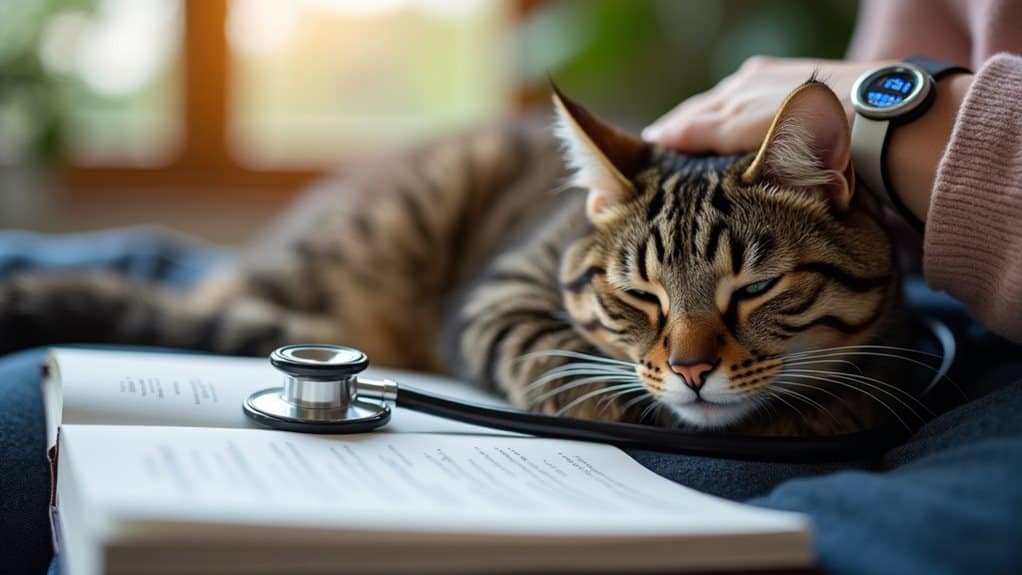
While many cat owners find their feline’s purring to be a soothing melody, few understand the fascinating biological mechanism behind this unique sound. Your cat’s purring anatomy involves a complex interplay between their laryngeal muscles and neural signals from the brain. These muscles rapidly open and close the glottis, creating vibrations as air passes through during both inhalation and exhalation.
What makes purring truly remarkable is its sound frequency, typically ranging between 25 and 150 Hertz. You’ll notice this consistent rhythm remains steady whether your cat is breathing in or out—a feat unique to felines!
This continuous vibration resonates throughout their body, almost like an internal massage. Purring acts as a secret code from their emotions, revealing deeper connections between cats and humans. While scientists haven’t completely decoded every aspect of purring, you’re witnessing a specialized skill that domestic cats have perfected over thousands of years of evolution.
Evolution’s Purpose: Why Cats Developed the Ability to Purr
Although scientists haven’t fully agreed on a single explanation, the evolution of purring in cats likely served multiple survival advantages.
You might be surprised to learn that a cat’s purr originally developed as a mother-kitten communication tool, creating an important evolutionary advantage for feline survival.
When kittens are born blind and helpless, they find their way to their mother’s warmth through her purring vibrations. This sound represents more than just contentment—it’s a fundamental mechanism for social bonding between cats.
Beyond family connections, purring may have evolved as a self-healing mechanism, with the specific frequency (25-150 Hz) potentially promoting bone growth and tissue repair.
Additionally, the vibrations produced during purring may stimulate natural healing processes in cats, showcasing its multifaceted benefits.
That’s right, your cat’s soothing rumble might actually be a built-in healing device perfected over thousands of years of evolution!
Healing Frequencies: The Physical Benefits Cats Receive From Their Own Purrs
You might be surprised to learn that your cat’s soothing purr actually helps them heal their own bodies through specialized frequencies.
Their purrs vibrate at 25-150 Hz, a range that’s been linked to improved bone density and regeneration, which helps cats recover from injuries faster than many other animals.
This natural healing mechanism also serves as built-in pain management, allowing cats to comfort themselves during illness or recovery, which explains why cats often purr when they’re not feeling their best. Additionally, it’s important to note that environmental enrichment significantly impacts cognitive development, further aiding their overall well-being and recovery processes.
Bone Regeneration Mechanisms
The vibrations cats produce during purring aren’t just soothing to hear—they’re actually working some remarkable magic on feline bones. Research suggests purring frequencies (between 25-150 Hz) stimulate bone healing and cellular regeneration. You’ve probably noticed your cat purring when relaxing or even when injured—that’s their built-in healing mechanism at work! Interestingly, this behavior also reflects their instinctual needs for comfort and security that can enhance their overall well-being.
| Frequency Range | Bone Effect | Healing Timeframe |
|---|---|---|
| 25-50 Hz | Stimulates osteoblasts | 1-2 weeks |
| 50-100 Hz | Reduces inflammation | 2-3 days |
| 100-150 Hz | Improves tissue repair | 3-7 days |
| 25-100 Hz | Increases bone density | 3-4 weeks |
| 30-80 Hz | Accelerates fracture healing | 2-4 weeks |
This natural vibration therapy helps explain why cats recover quickly from injuries and maintain strong skeletal systems throughout their lives—they’ve fundamentally got a built-in therapeutic device!
Pain Management Properties
Beyond repairing bones, cat purring offers remarkable pain management benefits for our feline friends. When your cat is injured or recovering from surgery, you’ll notice they purr more frequently—this isn’t coincidence, it’s self-medication! The vibrations created during purring stimulate endorphin release, acting as natural painkillers that can greatly reduce discomfort.
You’ve probably seen your cat purring while resting after a rough day, intuitively using these healing frequencies for pain relief. Research suggests the 25-50 Hz frequency range of purring creates a natural analgesic effect that reduces inflammation and soothes muscle aches. This ability to release endorphins and oxytocin during purring further supports their emotional well-being and comfort.
This purring benefit extends beyond acute injuries to managing chronic conditions like arthritis in older cats. Next time your feline friend is purring during recovery, they’re not merely expressing contentment—they’re actively participating in their healing process!
Feline Therapy: How Purring Reduces Human Stress and Anxiety
While scientific research on the therapeutic effects of cat purring remains limited, many cat owners report substantial stress reduction when spending time with their purring companions.
You’ve probably noticed it yourself—when your cat curls up on your lap and begins that rhythmic rumble, your shoulders relax and your breathing slows.
Feline companionship offers a unique form of stress reduction that’s hard to replicate. When you’re anxious after a long day, your purring cat doesn’t judge or ask questions—they simply provide comfort.
There’s something magical about a cat’s presence—silent understanding when words would only add to your overwhelm.
The gentle vibrations and consistent sound create a calming atmosphere that can lower your blood pressure and release tension. It’s like having a living, breathing stress-relief machine that also happens to love you unconditionally! Additionally, interactions with cats often lead to an increase in oxytocin release, promoting bonding and enhancing feelings of happiness.
Medical Applications: Cat Purring in Clinical and Therapeutic Settings
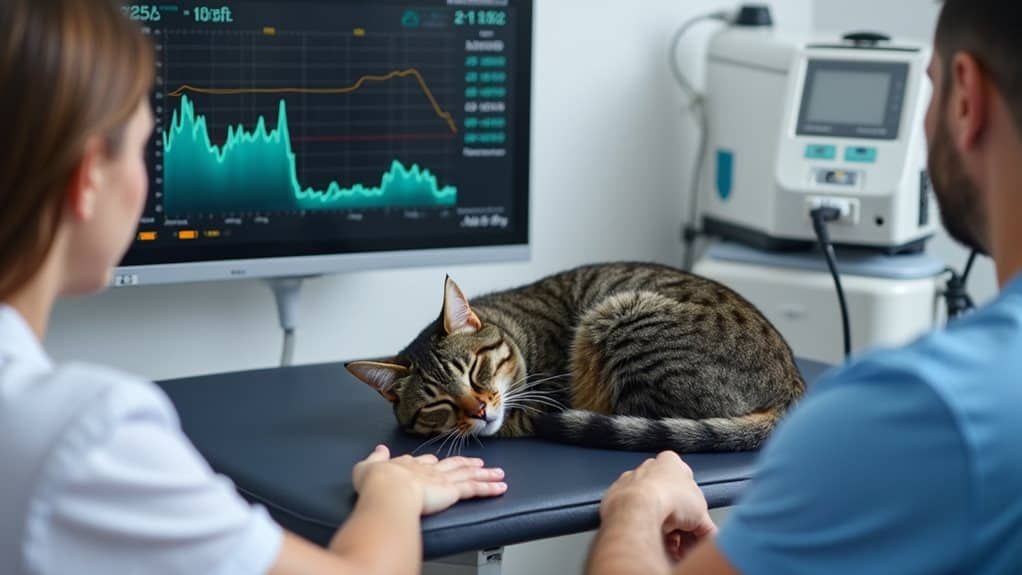
Despite growing interest in animal-assisted therapy, medical settings have yet to formally incorporate cat purring as a recognized treatment method.
While you might hear claims about purring frequency having healing properties, scientific evidence doesn’t support these assertions. Some wellness centers have experimented with “purr therapy” sessions, but these remain anecdotal rather than clinically validated approaches.
You won’t find cat purring listed in medical textbooks or prescribed by your doctor, despite enthusiastic testimonials online.
The therapeutic benefits often attributed to purring—bone healing, pain reduction, and improved recovery times—haven’t been substantiated through rigorous clinical trials.
That doesn’t mean your feline friend’s comforting purr isn’t valuable—emotional support certainly has its place in wellness—but we should be careful not to confuse correlation with causation when discussing purring’s medical applications.
Beyond Relaxation: Surprising Ways Purr Vibrations Affect Human Physiology
The physical effects of cat purring extend far beyond the simple relaxation we often associate with our feline companions.
When you’re cuddling with your purring cat, you’re actually experiencing a fascinating interaction with specific purring frequencies that influence your human physiology in surprising ways.
- Your body’s stress hormones decrease measurably when exposed to purring sounds between 25-150 Hz
- Your blood pressure can drop by up to 20% during a 15-minute session with a purring cat
- Your brain waves shift toward patterns associated with meditation and healing states
- Your immune system shows improved responses after regular exposure to purring vibrations
- Feline relaxation is enhanced for both you and your cat, creating a mutually beneficial environment for well-being.
You’ll notice these benefits aren’t just psychological but deeply physical—your entire system responds to these vibrations in ways scientists are just beginning to understand, making your cat both a companion and an unexpected health ally.
Building Stronger Bonds: How Purring Strengthens the Human-Cat Relationship
When your cat purrs on your lap, you’re not only enjoying a peaceful moment—you’re engaging in a biochemical exchange that releases oxytocin in both of you, creating powerful bonds through shared experience.
These purr vibrations, traveling between your bodies at frequencies of 25-150 Hz, work like a natural healing bridge, synchronizing your physiological states in subtle but meaningful ways.
You’ll notice this connection strengthens over time, as your nervous systems become more attuned to each other’s presence, making those purring sessions not only comforting but transformative for your relationship. Additionally, the emotional benefits of interacting with your cat can further enhance these moments, promoting overall well-being for both of you.
Biochemical Bonding Mechanisms
Biochemical magic happens when your cat purrs against your lap, triggering a cascade of hormonal responses that strengthen your bond in ways you might never have imagined.
Your body’s biochemical pathways respond to the gentle vibrations, releasing oxytocin—often called the “love hormone”—while reducing stress hormones like cortisol.
The purr-human connection activates several key responses:
- Your sensory receptors detect the calming 25-150 Hz frequency range
- Both you and your cat experience synchronized endorphin release
- Your blood pressure naturally lowers during extended purring sessions
- The vibrational frequency stimulates your parasympathetic nervous system
Additionally, engaging in regular grooming enhances emotional well-being, further solidifying the bond you share.
This natural chemical conversation between species explains why cat owners often feel such deep attachments to their feline friends.
You’re not merely imagining that special connection—you’re experiencing a genuine biochemical bond that nature has perfected over thousands of years.
Shared Healing Vibrations
Three remarkable healing mechanisms occur when your cat’s purring vibrations sync with your body’s natural frequencies, creating a therapeutic exchange that benefits both of you.
When you cuddle with your purring feline, these shared vibrations can lower your blood pressure and reduce stress hormones like cortisol. This vibrational harmony isn’t just calming—it’s establishing healing connections at a cellular level.
You’ll notice your mood improves after these purring sessions, as your brain releases feel-good chemicals in response to the rhythmic sound. Additionally, cat grooming behavior reinforces this bond, as your cat expresses affection through licking, contributing to the overall sense of well-being.
Many cat owners report better sleep when their purring companion joins them at bedtime. The mutual benefits strengthen your bond: your cat feels secure while providing you with natural sound therapy.
It’s nature’s perfect example of a relationship where comfort and healing flow both ways.
Frequently Asked Questions
Can Cats Control When They Purr?
Yes, your cat can control when they purr. They’ll adjust their purring patterns based on emotional triggers like contentment, stress, or when they want something from you. It’s a deliberate form of communication.
Do All Cat Species Purr?
No, not all cat species purr. Surprisingly, about 70% of felines can produce true purrs. You’ll find purring mechanics differ between big cats, with purring frequency limitations in those that roar like lions and tigers.
Can Older Cats Lose Their Ability to Purr?
Yes, your older cat might lose their purring ability as aging effects can impact purring mechanics. You’ll notice changes in purr intensity or frequency as vocal cord elasticity decreases and neurological functions change with age.
Do Deaf Cats Purr Differently Than Hearing Cats?
Silent world, vibrating throat—deaf cats purr just like hearing cats. You won’t notice differences in their purring mechanics since this behavior doesn’t depend on hearing. Your deaf feline companion vibrates with the same comforting rumble.
Is a Cat’s Purr Volume Related to Its Size?
Yes, a cat’s size generally affects its purr volume. You’ll notice larger cats often have deeper purr frequencies, while smaller cats produce higher-pitched sounds. The purr mechanics work similarly regardless of size, just with different acoustic properties.
Final Thoughts
You’ve just discovered that your cat’s purr isn’t merely adorable—it’s a powerful health tool for both of you. Studies show that cat owners have a 40% lower risk of heart attack than non-cat owners, partly due to the stress-reducing effects of those soothing vibrations. Next time your feline friend curls up and starts their engine, remember you’re not merely enjoying a sweet moment—you’re participating in an ancient healing ritual that benefits you both.