The Best Fluffy Pancakes recipe you will fall in love with. Full of tips and tricks to help you make the best pancakes.


Contrary to popular belief, your cat doesn’t have nine lives, and that bowl of milk isn’t doing them any favors. Many cats actually enjoy water, and they’re not the antisocial creatures we’ve made them out to be. Regular vet visits and proper vaccines are crucial, not optional. With positive reinforcement, your feline friend can learn tricks like high-fives or leash walking. Discover these truths, and you’ll become the pet parent your cat deserves.
The “Nine Lives” Myth: Understanding Feline Mortality and Safety

One of the most persistent cat myths you’ve probably heard is that cats have nine lives. While it’s a charming notion, the truth is that our feline friends have just one life, and it’s our job to help them live it to the fullest.
Cats are remarkably agile and resilient creatures, which might explain how this myth originated. They can survive falls from impressive heights and wiggle out of tight spots, but they’re certainly not invincible.
Understanding the actual feline lifespan—typically 12-18 years for indoor cats—helps you set realistic expectations for your pet’s health path. Additionally, recognizing signs of medical issues can ensure timely intervention and care for your cat’s well-being.
Did you know? Indoor cats typically enjoy lifespans of 12-18 years when given proper care and attention.
Instead of relying on mythical extra lives, focus on safety precautions: keep toxic plants out of reach, secure window screens, and schedule regular vet visits.
Your cat will thank you for it!
Dietary Misconceptions: Milk, Raw Fish, and Other Feeding Fallacies
Why do cartoon cats always lap up saucers of milk with such delight? In reality, most adult cats are lactose intolerant! That bowl of milk can cause uncomfortable digestive issues like diarrhea and stomach pain.
If your feline friend seems to crave dairy, consider specially formulated milk alternatives made just for cats. Understanding lactose intolerance can help you make better dietary choices for your pet.
Another common mistake is feeding cats raw fish. Despite their reputation as fish lovers, certain types pose serious fish toxicity risks. Raw fish contains thiaminase, an enzyme that destroys crucial B vitamins, potentially leading to neurological problems.
Some fish, especially tuna, may contain high mercury levels when fed regularly.
You’ll do your kitty a favor by sticking to quality commercial cat food that meets all their nutritional needs rather than these problematic human foods.
Behavioral Myths: Do Cats Really Hate Water and Love Being Alone?
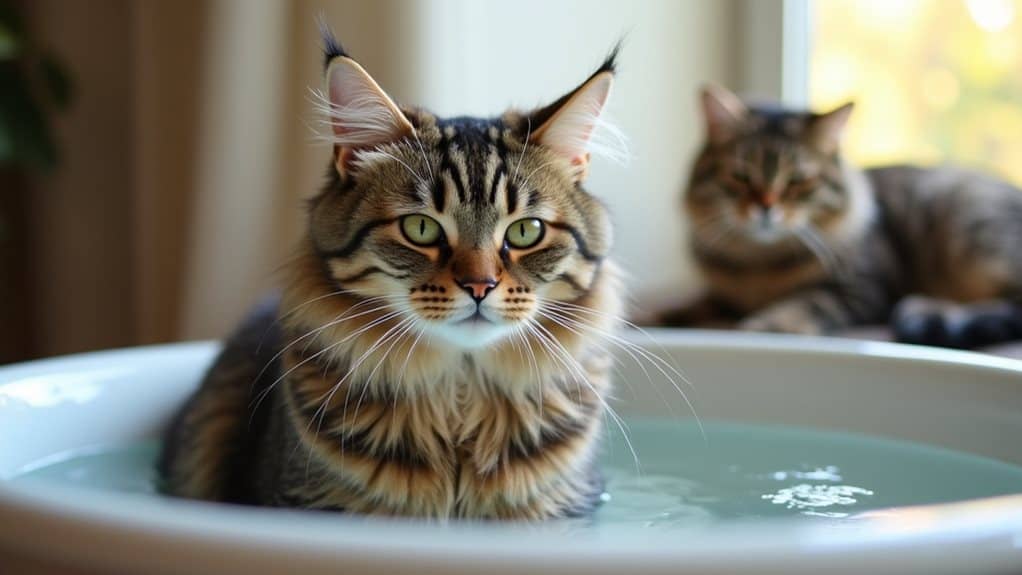
Perhaps the most persistent myths about our feline friends center around their supposed hatred of water and preference for solitude. The truth is more nuanced than these stereotypes suggest. Many cats actually show surprising water tolerance, with breeds like Maine Coons and Turkish Vans even enjoying swimming! Your cat’s relationship with water often depends on their individual personality and early experiences.
Similarly, cats aren’t the antisocial loners they’re portrayed to be. They’ve genuine social needs that vary by individual. You might notice your cat following you from room to room or seeking attention through headbutts and purrs.
Many cats suffer from separation anxiety when left alone too long. Understanding these behavioral patterns helps you provide better care and strengthen your bond with your feline companion. Creating a calming atmosphere in their sleeping environment can also help in reducing anxiety and promoting better rest.
Health Fallacies: Debunking Common Medical Misconceptions
When it comes to cat health, misinformation spreads almost as quickly as cat videos online.
You’ve probably heard that cats don’t need regular vet visits because they’re “naturally healthy” – that’s completely false! Your feline friend needs consistent checkups to catch issues early.
Vaccine misinformation is particularly harmful. Contrary to internet rumors, cat vaccines don’t cause autism (cats can’t even develop autism!), and they’re crucial for preventing deadly diseases like rabies and feline leukemia.
Don’t fall for myths about parasite prevention either. Some believe indoor cats don’t need flea or worm treatments, but parasites can hitch rides on your shoes or clothing.
Even apartment-dwelling kitties need protection! Regular flea treatment is essential for their health and well-being, even if they seem to be indoors all the time.
Training and Communication: Myths About What Cats Can and Cannot Learn
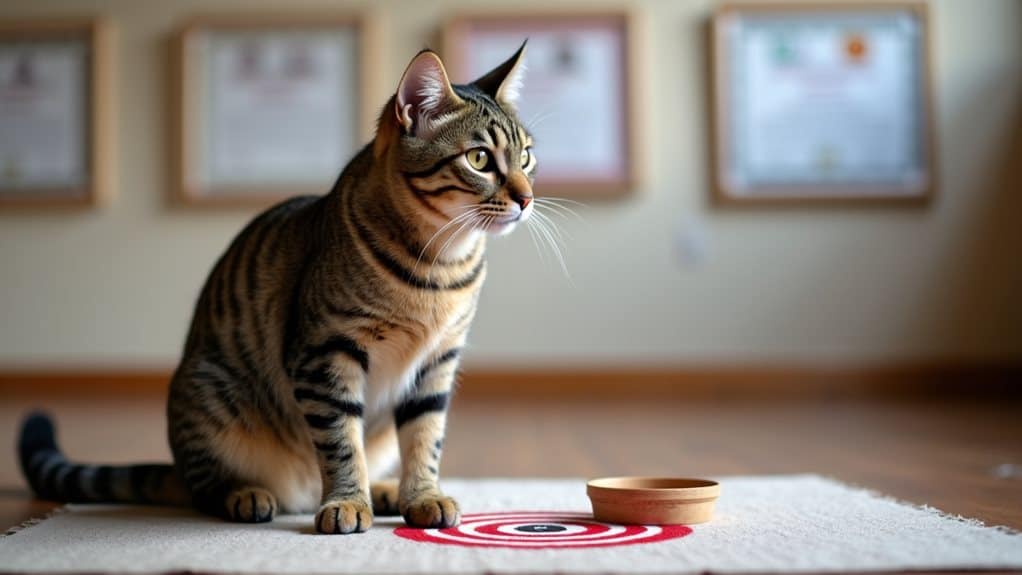
Your feline companion can understand and respond to your cues better than you might think. Effective cat communication involves understanding their natural behaviors and working with, not against, their instincts.
Here’s what you should know about feline training:
- Cats respond best to positive reinforcement—treats, praise, and play work wonders.
- They can learn tricks including high-fives, sitting on command, and even walking on leashes.
- Short, consistent training sessions (5-10 minutes) yield better results than lengthy ones.
Additionally, ignoring root behavioral causes can lead to frustration and continued unwanted behaviors.
You’ll find that with the right approach, your “untrainable” cat might surprise you with their learning abilities!
Frequently Asked Questions
Can Cats See in Complete Darkness?
No, cats can’t see in complete darkness. Your feline friend’s night vision is exceptional due to unique feline anatomy, but they still need some light—about 1/6 of what you’d need to see clearly.
Do Cats Always Land on Their Feet When Falling?
Graceful aerial dancers don’t always stick the landing. Your kitty’s falling mechanics typically enable them to right themselves, but it’s not guaranteed. Feline agility has limits—they can sustain injuries from considerable falls.
Is Purring Always a Sign That Cats Are Happy?
No, purring isn’t always a sign of happiness. Your cat’s purring reasons include stress, pain, or self-soothing. It’s a complex form of feline communication that can express comfort, healing needs, or contentment.
Are Certain Cat Breeds Hypoallergenic for People With Allergies?
No cat breed is truly hypoallergenic. While breed differences exist with some producing fewer cat allergens, you’ll find reduced reactions with breeds like Siberian, Balinese, or Sphynx, but not complete allergy elimination.
Do Cats Have a Better Sense of Smell Than Dogs?
No, your feline friend’s nose isn’t as gifted as canines. While cats have impressive olfactory abilities, dogs surpass them in scent detection comparisons with 40 times more scent receptors than your whiskered companion.
Final Thoughts
You’ve now seen through the mountain of myths that have clouded cat care for centuries! Armed with facts, you’re ready to be the most incredible cat parent on the planet. Remember, your feline friend isn’t just surviving with you—they’re thriving because of you. By ditching these outdated beliefs, you’ll create a healthier, happier relationship with your cat that’s built on understanding, not fiction.