The Best Fluffy Pancakes recipe you will fall in love with. Full of tips and tricks to help you make the best pancakes.


When introducing a new cat, patience is your best friend. Start by keeping cats separated for 1-2 weeks, exchanging scents through swapped bedding and toys. Once they’re comfortable with each other’s smell, allow visual contact through a baby gate or cracked door. Monitor body language closely during supervised interactions, keeping sessions short at first. Provide separate resources (food, litter boxes, beds) throughout the process. The more time you invest in this gradual approach, the stronger their future relationship will become.
Before You Bring the New Cat Home: Essential Preparations

When you’ve decided to welcome a new cat into your home, proper preparation isn’t just helpful—it’s vital. Planning your integration timeline beforehand will save you countless headaches later. Most experts recommend allowing 1-2 weeks for cats to adjust to each other’s presence, so patience is key!
Before your new feline arrives, gather all necessary supplies: separate food bowls, litter boxes, beds, and toys. Remember, cats are territorial creatures—they don’t share well at first!
Set up a dedicated “safe room” where your newcomer can decompress without feeling overwhelmed.
Don’t forget to cat-proof this space by securing loose wires, removing toxic plants, and checking for tiny hiding spots where a scared kitty might wedge themselves. Additionally, keeping in mind the importance of creating a safe home environment can further ease the transition for your new cat.
Your thoughtful preparation now will set the stage for a more seamless transition when those whiskers finally come through your door!
The First 48 Hours: Setting Up Separate Territories
The moment your new cat arrives home marks the beginning of a carefully orchestrated introduction process.
During these vital first two days, establish clear territory boundaries between your resident pet and newcomer. Set up a quiet room with all necessities—litter box, food, water, toys, and a cozy bed—where your new cat can decompress without feeling overwhelmed.
Don’t rush this separation phase! It allows both cats to become familiar with each other’s scents without the stress of face-to-face meetings. Additionally, creating safe spaces is essential for both cats to retreat when feeling anxious or overwhelmed.
You might notice some hissing or growling through the door—that’s completely normal!
This gradual approach respects your cats’ natural territorial instincts and builds the foundation for a successful friendship.
Scent Exchange: Building Familiarity Without Direct Contact
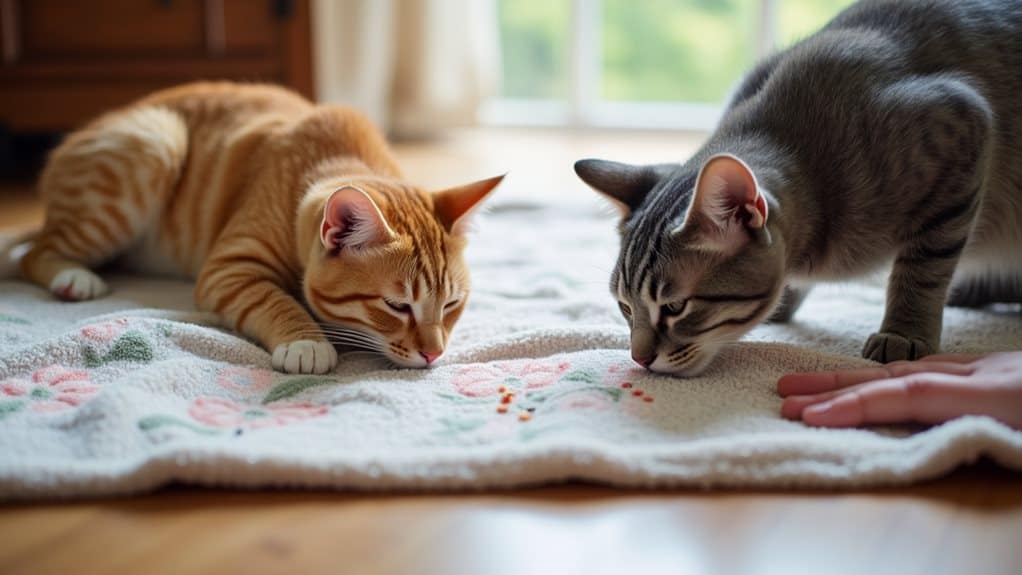
After keeping your cats in separate spaces, you’ll want to start familiarizing them with each other’s scents before any face-to-face meetings.
Try swapping their bedding every day, allowing each cat to sleep on blankets or cushions that carry the other’s scent. You can also rotate their toys between spaces, which helps create positive associations as they connect the new cat’s scent with playtime and enjoyment.
Additionally, introducing familiar scents can help ease the transition process for both cats.
Swap Bedding Regularly
Exchanging bedding between your resident cat and newcomer creates a powerful scent bridge, helping both felines become familiar with each other before they ever meet face-to-face.
The bedding benefits are notable since cats rely heavily on their sense of smell to understand their environment and potential companions.
Every two days, swap blankets, beds, or towels that each cat has slept on. This regular exchange promotes scent familiarity in a non-threatening way.
You’ll likely notice both cats investigating the “new” bedding with interest – that’s exactly what you want! They’re learning about each other through scent cues.
Don’t wash these items during the introduction period. The whole point is to preserve those distinctive cat smells that communicate so much information.
Your cats are fundamentally having silent conversations through scent while safely separated. Establishing a daily routine helps provide predictability for cats, which can further ease their introduction process.
Shared Toys Method
While bedding swaps focus on sleeping areas, sharing toys between your cats creates another powerful opportunity for scent exchange in their play spaces. This method helps your felines become familiar with each other’s scent during positive experiences, associating it with fun rather than stress. Establishing clear boundaries through consistent boundaries when introducing the toys can further enhance their comfort with one another.
| Toy Type | Rotation Schedule | Playtime Benefits |
|---|---|---|
| Wand toys | Every 2-3 days | Builds positive scent associations |
| Plush toys | Daily exchange | Carries concentrated scent markers |
| Puzzle feeders | Weekly swap | Combines food rewards with scent |
You’ll notice your cats becoming increasingly curious about each other’s scent as you implement this shared toys method. Don’t rush this process—let your cats explore these scent-marked items at their own pace. Many owners report their cats showing less anxiety and more playful interest in the newcomer’s territory after consistent toy exchanges.
Controlled Visual Contact: The First Face-to-Face
Once you’ve completed the scent exchange process, it’s time for a vital moment in your cats’ relationship voyage – their first face-to-face meeting.
This step requires patience and careful management of visual boundaries between your feline friends.
Begin with gradual exposure, using a baby gate or cracked door that allows them to see each other without full contact.
Keep these sessions short—about 5-10 minutes—and always supervise them closely.
Watch their body language: relaxed tails and ears are good signs, while hissing or growling means you should end the session. Remember, hissing signals fear or discomfort that may require you to slow down the introduction process.
Don’t rush this process!
Some cats might need several days or even weeks of these controlled visual introductions.
Supervised Interactions: Managing Initial Meetings
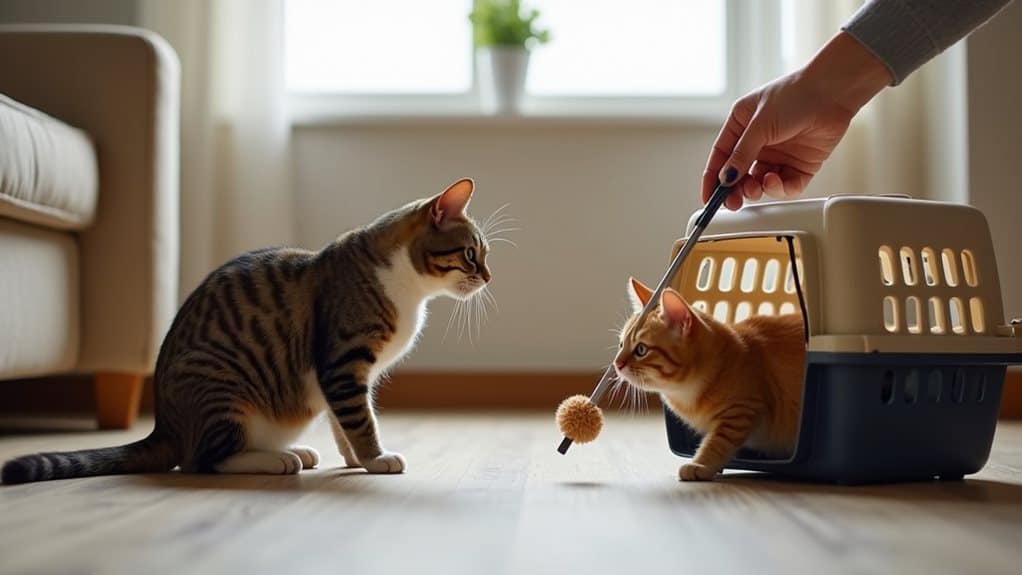
When you’re ready to let your cats meet face-to-face, always prioritize safety by keeping escape routes open and having a towel nearby to separate them if needed.
Watch their body language closely—flattened ears, puffed tails, or growling are clear signals to end the session before tensions escalate.
Start with brief, 5-10 minute meetings, gradually increasing the time as they become more comfortable with each other’s presence. Providing multiple resources can also help reduce competition and tensions, making initial meetings smoother.
Safety First Approach
After you’ve prepared separate spaces for your new and resident cats, it’s time to coordinate their first face-to-face meetings with a safety-first mindset.
Always have safety precautions in place before these initial introductions begin. Keep a large towel or blanket nearby to separate cats if tensions escalate, and wear long sleeves to protect yourself from potential scratches.
Develop clear emergency plans for worst-case scenarios. Know which rooms you’ll use to separate the cats if needed, and have treats ready to distract and redirect their attention.
Consider keeping a spray bottle with water as a last resort to break up any confrontations. Additionally, be observant of body language cues during these interactions to help identify early signs of stress or aggression.
Body Language Signals
Understanding four key feline body language signals will greatly improve your ability to monitor and manage initial cat meetings.
Pay close attention to body posture—a relaxed cat has loose muscles, while an arched back with raised fur indicates fear or aggression.
Tail signals tell you volumes: a straight-up tail shows confidence, while a puffed tail means your cat feels threatened.
Watch ear position carefully; forward-facing ears signal curiosity, while flattened ears mean trouble’s brewing.
Finally, observe eye contact—slow blinks indicate trust, while dilated pupils with direct staring suggests aggression.
Don’t forget vocal cues and facial expressions too!
Purring usually signals contentment, while hissing or growling means “back off.”
When you can read these subtle communications, you’ll know exactly when to intervene or when to let your cats continue their getting-acquainted process. Additionally, observing subtle signals fosters a harmonious relationship based on trust.
Timing Each Session
The length of initial cat meetings plays a vital role in creating positive associations between your feline friends. When timing sessions for a gradual introduction, start with just 5-10 minutes of supervised interaction.
Watch closely for any signs of stress or aggression, and don’t hesitate to separate them if tensions rise.
As your cats become more comfortable, you can slowly extend these sessions. Add 5-10 minutes each day, but only if previous meetings went seamlessly.
Remember, there’s no perfect timeline—some cats become buddies within days, while others need weeks or even months to adjust. Trust your instincts!
If either cat seems overwhelmed, it’s perfectly fine to take a step back and shorten the next session. Your patience during this gradual introduction process will pay off with a peaceful household. Additionally, taking necessary precautions to prevent escapes during this period is essential to ensure their safety and comfort.
Handling Common Challenges and Setbacks

Even the most careful introduction process can hit unexpected bumps along the way, so don’t be discouraged if your cats aren’t becoming best friends overnight. Effective stress management for both you and your cats will help guide this shift effortlessly.
| Challenge | Possible Cause | Solution |
|---|---|---|
| Hissing/growling | Territory defense | Restart slower introductions |
| Hiding behavior | Overwhelming fear | Create more safe spaces |
| Litter box issues | Stress response | Add extra boxes in quiet areas |
| Food refusal | Anxiety | Feed in separate, calm locations |
| Aggressive attacks | Resource guarding | Temporarily separate and consult vet |
When behavioral issues arise, remember they’re normal reactions to change. If aggression persists beyond two weeks or escalates to fighting, consult your veterinarian. Many cats simply need more time to adjust to their new family member.
Creating Long-Term Harmony in Your Multi-Cat Household
Once your cats have made it through the introduction phase, you’ll want to focus on maintaining the peace for years to come. Understanding cat behavior is key to preventing territory disputes that can disrupt your home’s harmony. Pay attention to their social dynamics and intervene before small issues become serious conflicts.
Create positive bonding activities that help your cats associate good things with each other. Consistent feeding routines prevent resource guarding, while interactive playtime strategies strengthen their relationships.
Don’t forget about stress reduction techniques like providing multiple resting spots, scratching posts, and litter boxes throughout your home.
Regular health monitoring is crucial, as a sick cat may display aggression or withdrawal that other cats might misinterpret. When you’re attentive to each cat’s needs while respecting their individual personalities, you’ll create a balanced household where everyone—humans and felines alike—can thrive together.
Frequently Asked Questions
How Long Does the Typical Cat Integration Process Take?
You’ll typically need 2-4 weeks for cat integration timeline, though it can extend to 3 months. Your cats’ personalities and prior socialization will greatly impact their behavior during this gradual adjustment process.
Should I Introduce Kittens Differently Than Adult Cats?
You might wonder what awaits… Yes, kittens require slightly different introductions. They’re more adaptable with playful kitten behavior, while adult cats need slower integration based on their established adult temperament. Still follow the basic steps though.
Can I Integrate Cats of Vastly Different Ages?
Yes, you can integrate cats of vastly different ages. Watch for age compatibility as kittens may overwhelm seniors with energy. Adjust introduction pace to accommodate behavioral differences, giving older cats extra quiet spaces when they’re tired.
Will Previously Bonded Cats Reject Each Other After Separation?
Cats may show initial hesitation during reunion behavior, but they often remember past experiences with former companions. You’ll typically find they reconnect quickly, though some may need time to rebuild their bond after separation.
How Do I Handle Cat Integration When Moving to a New Home?
When moving, introduce your cats to the new home gradually. Start by confining them to separate rooms, then slowly allow supervised interactions. They’ll adjust better to new environments when given time and space to acclimate.
Final Thoughts
You’ve now maneuvered the feline equivalent of Romeo and Juliet—minus the tragic ending! Remember, patience isn’t just a virtue; it’s your secret weapon. Like Rome, cat friendships aren’t built in a day. Trust the process, celebrate small victories, and don’t rush perfection. Soon enough, you’ll find your cats sharing sunbeams and plotting against the vacuum cleaner together. Your multi-cat household isn’t just possible—it’s on its way to becoming purr-fectly harmonious.