The Best Fluffy Pancakes recipe you will fall in love with. Full of tips and tricks to help you make the best pancakes.

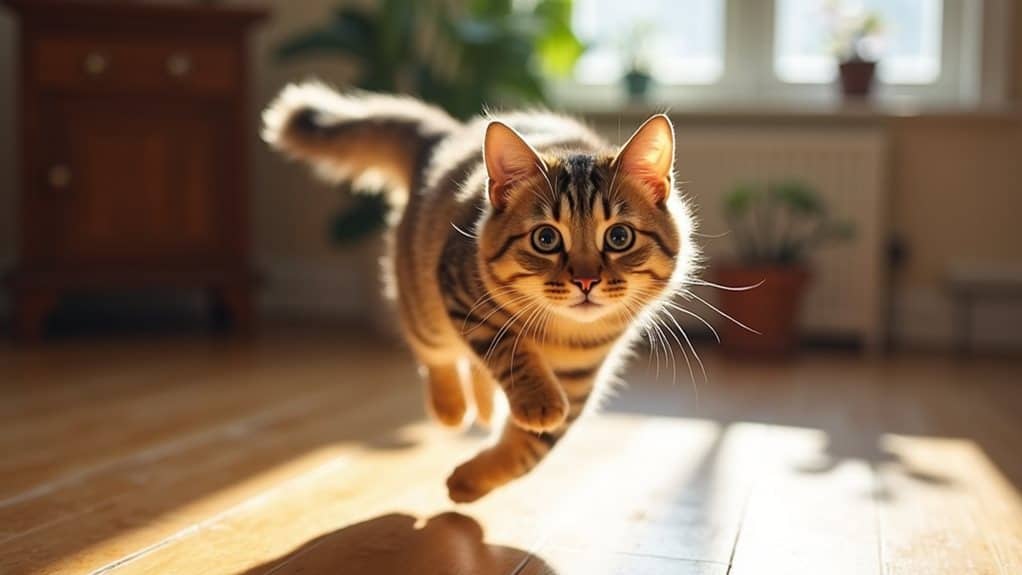
Cat zoomies are perfectly normal energy bursts rooted in your pet’s wild ancestry. These frantic sprinting episodes typically occur at dawn and dusk, mimicking natural hunting times, or after using the litter box. They help your indoor cat maintain muscle tone, reduce stress, and satisfy instinctual needs. While usually harmless, excessive zoomies or unusual behavior patterns might signal underlying issues. Establishing regular play routines and creating vertical spaces can help channel this natural feline energy constructively.
What Exactly Are “Zoomies”? The Science Behind Feline Frenzies
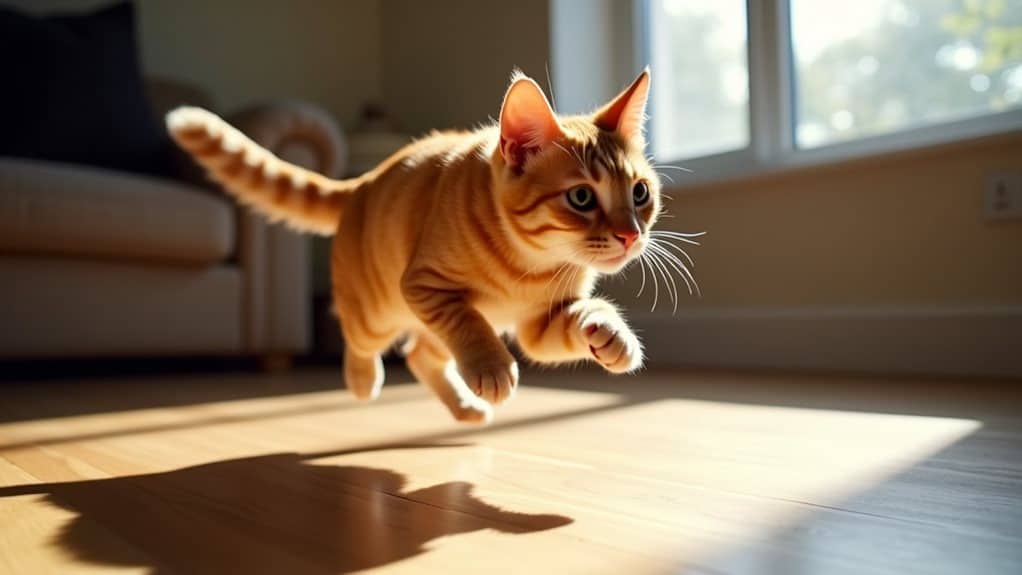
Frenzied energy bursts, commonly known as “zoomies,” are those wild moments when your typically calm cat suddenly transforms into a furry tornado racing through your home.
Cat zoomies—those magical moments when your peaceful feline morphs into a high-speed blur of fur and chaos.
In feline psychology, these episodes are actually normal behaviors that help cats release pent-up energy.
Your cat isn’t going crazy—they’re simply finding energy outlets for their natural predatory instincts. In the wild, cats hunt multiple times daily, but our indoor companions don’t have the same opportunities. Instead, they store that energy and release it in short, intense bursts.
You’ll notice these zoomies often occur at dawn and dusk, when cats would naturally hunt. They might also happen after using the litter box, during play, or when they’re feeling particularly happy or excited. Engaging in regular play sessions is essential for managing hyperactivity and preventing Frenetic Random Activity Periods.
Evolutionary Origins: How Wild Cat Behaviors Manifest in Your Living Room
Although your domestic cat lounges comfortably on your sofa, their wild ancestry still runs through their veins.
When your kitty suddenly tears through the house, you’re witnessing ancient wild instincts at play—behaviors that once helped their ancestors survive in the wilderness.
Those midnight zoomies? They’re echoes of the crepuscular hunting patterns cats developed thousands of years ago.
Despite centuries of domestic adaptations, your feline friend still carries the genetic programming that once helped wild cats catch prey and escape predators.
You’ll notice these bursts often happen at dawn and dusk—prime hunting times for wild cats.
Your living room has become their savanna, and that toy mouse might as well be dinner!
These behaviors remind us that beneath that purring exterior beats the heart of a tiny wild hunter. Additionally, engaging in play helps provide mental stimulation, ensuring your cat remains happy and healthy.
Common Triggers for Cat Zoomies: Time of Day, Environment, and Mood
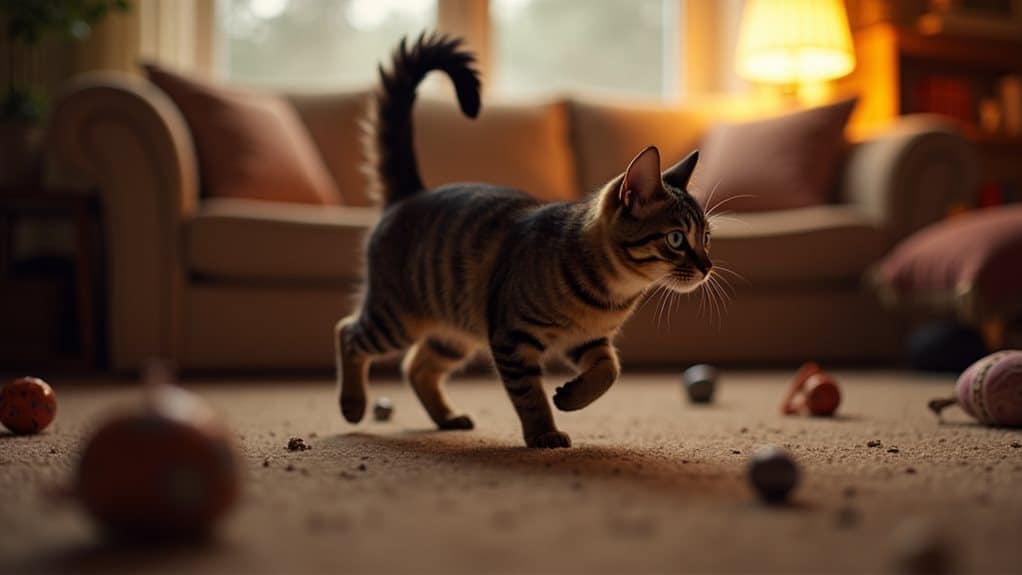
When do those wild cat zoomies tend to strike? You’ve probably noticed your feline friend has specific time triggers for these energy explosions. Most cats experience zoomies during dawn and dusk—their natural hunting hours—when their predatory instincts kick into high gear.
Environmental factors play a huge role too. A freshly cleaned litter box, new toys, or simply rearranged furniture can spark an impromptu racing session.
Even temperature changes might send your cat dashing through the house!
Your cat’s mood also influences zoomie frequency. Pent-up energy from a day of napping, excitement after you return home, or even mild stress can trigger these frantic episodes. Incorporating interactive play into your cat’s routine ensures they have an outlet for their energy.
Don’t worry—these bursts are typically healthy expressions of your cat’s natural behaviors, though excessive zoomies might indicate boredom or anxiety.
The Physical Benefits of High-Energy Bursts for Indoor Cats
Indoor cats desperately need those wild zoomie sessions for their physical health. When your feline friend darts around the house like a furry tornado, they’re actually getting essential exercise that helps maintain a healthy weight and strong muscles.
These burst energy moments compensate for the limited space of indoor living, allowing cats to stretch their bodies and engage their natural hunting instincts.
You might notice your cat seems more relaxed after a good zoomie session—that’s because this indoor exercise releases pent-up energy and reduces stress. The quick sprints and sudden stops improve your cat’s coordination and balance too. Engaging in regular physical activity is vital for indoor cats’ overall health and wellness, promoting a longer lifespan and better quality of life.
Even older cats benefit from these playful episodes, though they might opt for shorter bursts. So next time your cat transforms your living room into a racetrack, remember they’re just staying fit the feline way!
When to Worry: Distinguishing Normal Zoomies From Stress or Health Issues
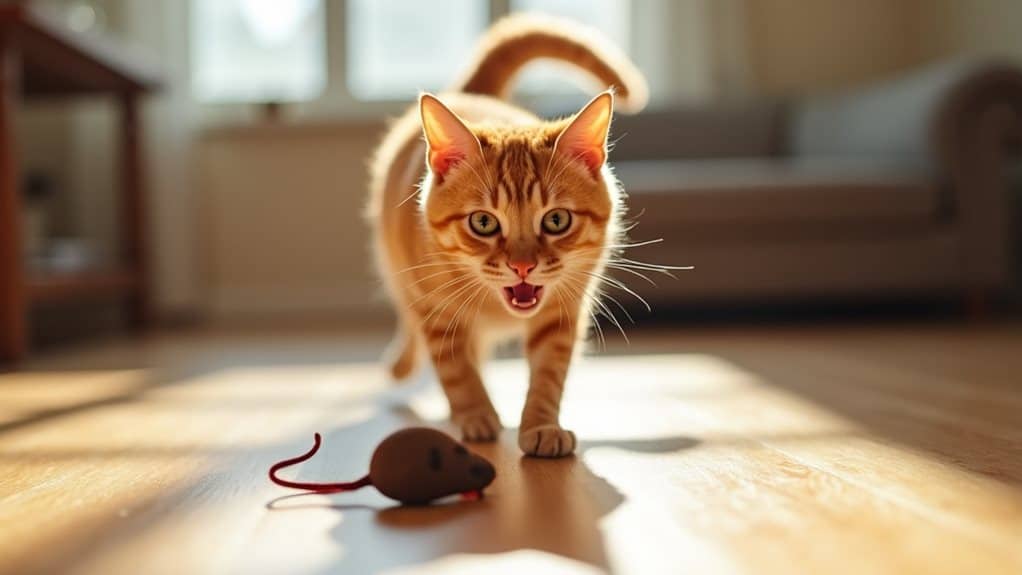
While most zoomies are perfectly normal, you’ll want to watch for red flag behaviors that might indicate stress rather than playful energy. Your cat’s body language during these episodes can tell you a lot—flattened ears, dilated pupils, and a puffed tail might suggest anxiety rather than fun. If your cat’s zoomies consistently happen after specific triggers or seem excessive, it’s worth checking in with your vet to rule out underlying health issues. Additionally, providing a stress-free environment can help mitigate anxiety and promote well-being during these energetic bursts.
Red Flag Behaviors
Although most cat zoomies are perfectly normal, distinguishing between harmless energy bursts and potential red flag behaviors can make all the difference in your cat’s health.
When your cat’s zoomies seem unusual, pay attention to these health indicators:
- Excessive scratching or biting at a specific body part during zoomies
- Zoomies that occur immediately after using the litter box
- Frantic running accompanied by yowling or unusual vocalizations
- Zoomies that happen at the same time every day with military precision
- Running patterns that appear uncoordinated or include stumbling
If you notice these behaviors, it’s time for a vet visit. This could be a sign of underlying health issues that may require prompt attention.
Your furry friend might be trying to tell you something’s wrong in the only way they know how—through their seemingly playful antics.
Stress vs. Play
Play behavior typically occurs when your cat is well-rested and in a safe environment. You’ll notice relaxed ears, a gently swishing tail, and periods of rest between bursts of activity. Your cat might even invite you to join the fun by bringing toys or playfully pouncing near you.
Stress-induced zoomies, however, come with different signals. Watch for dilated pupils, flattened ears, puffed fur, or a rapidly thrashing tail. These stress signals often appear alongside other concerning behaviors like excessive grooming or hiding.
Your cat might also vocalize more with stressed meows or growls. It’s important to recognize that licking behavior can also indicate the cat’s need for emotional support during stress, adding another layer to understanding their emotional state.
If you’re unsure, try engaging your cat with a toy during zoomies. A playful cat will respond, while a stressed one may ignore it completely.
Supporting Your Cat’s Energy Needs: Play, Environment, and Routine
Since your cat’s zoomies are a natural part of their behavior, providing appropriate outlets for this energy is essential for their wellbeing.
Creating a cat-friendly environment with plenty of interactive toys and energy outlets helps your furry friend express their natural instincts in healthy ways.
- Set up a consistent daily play schedule with wand toys or laser pointers
- Create vertical spaces like cat trees where they can climb and perch
- Rotate toys regularly to maintain interest and prevent boredom
- Consider puzzle feeders that make mealtime more engaging
- Leave time for independent play with self-entertaining toys during your absence. Additionally, incorporating interactive cat toys can enhance mental stimulation and engagement for your pet.
Frequently Asked Questions
Can Zoomies Indicate My Cat Is Trying to Communicate Something Specific?
Yes, your cat’s zoomies can be behavioral signals rather than vocal communication. They’re usually expressing excitement, pent-up energy, or playfulness rather than trying to convey a specific message to you.
Do Cats Outgrow Zoomies as They Age?
Mrs. Anderson’s 12-year-old tabby still races through her living room weekly. You’ll notice your cat’s zoomies typically decrease with age as energy levels naturally decline, but many cats don’t completely outgrow this playful behavior.
Are Certain Cat Breeds More Prone to Zoomies Than Others?
Yes, you’ll notice more energy bursts in high-energy breeds. Siamese energy is legendary, Bengal bursts are frequent, while Maine Coon playfulness and Abyssinian activity often manifest as impressive zoomies throughout their lives.
Can I Train My Cat to Have Zoomies at Convenient Times?
In a million years, you can’t force a zoomie schedule! You can influence timing by creating play sessions for energy management, but cats ultimately follow their own natural rhythms when deciding when to zoom around.
How Do Multiple Cats Influence Each Other’s Zoomie Behaviors?
You’ll notice cats trigger each other’s zoomies through social interaction. They’ll feed off one another’s excitement in an energy exchange, creating a domino effect where one cat’s playful burst inspires the entire group to join in.
Final Thoughts
You’ll never feel more like a wildlife photographer than when your furry friend tears through the house at lightning speed! Cat zoomies are a natural, healthy expression of your pet’s wild instincts and pent-up energy. By understanding their triggers and providing appropriate outlets through play and environment, you’re helping your cat thrive. Don’t worry about occasional frenzies—they’re just your little predator’s way of staying physically and mentally fit in their domestic jungle.