The Best Fluffy Pancakes recipe you will fall in love with. Full of tips and tricks to help you make the best pancakes.

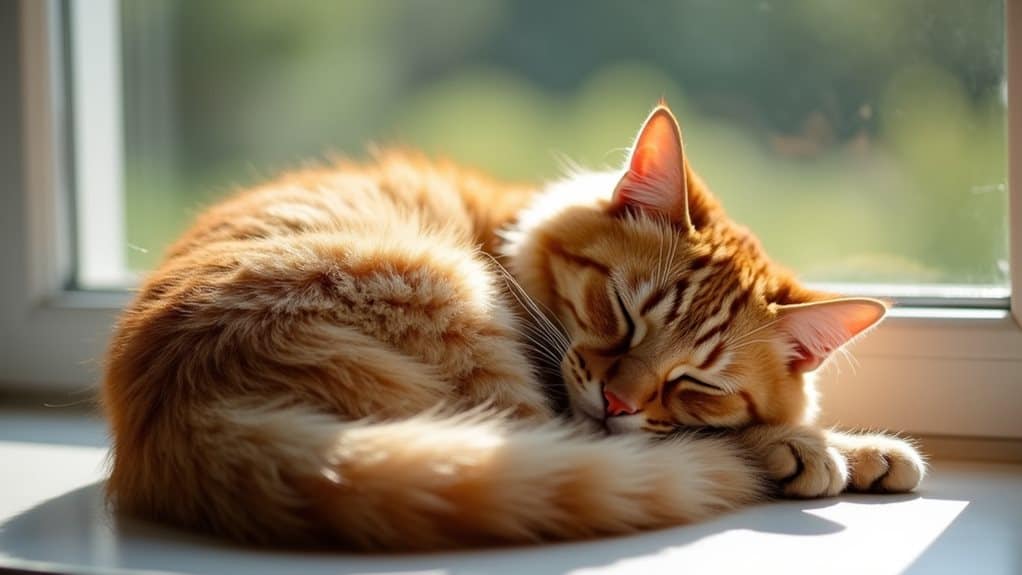
Cats sleep 12-16 hours daily because they’re wired like their wild ancestors who needed to conserve energy between hunts. Your feline friend isn’t just lazy—they’re following ancient instincts! As crepuscular creatures, they’re naturally most active at dawn and dusk, which explains those 3 AM zoomies that wake you up. Their sleep cycles are shorter than yours, and they remain semi-alert even while napping. Discover what those twitching whiskers during naptime really mean!
The Evolutionary Origins of Feline Sleep Habits
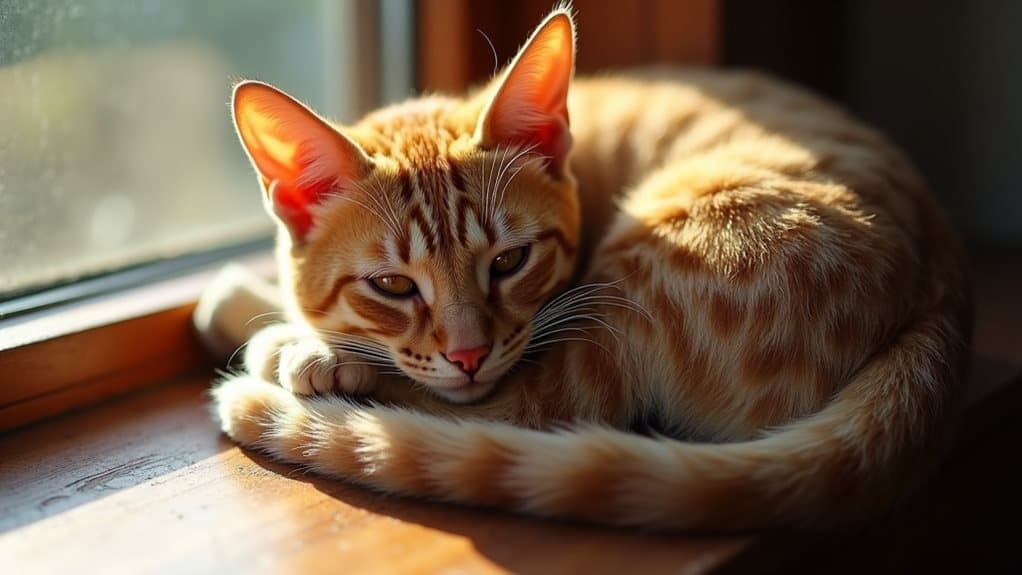
While we often marvel at our cats’ unusual sleep patterns, these habits didn’t develop overnight but evolved over thousands of years. Your feline’s tendency to snooze for 12-16 hours daily stems directly from their wild ancestors, who needed to conserve energy between hunts.
Modern house cats mirror their wild ancestors, conserving energy through extended sleep periods just as big cats do in nature.
Those nocturnal instincts you notice when your cat suddenly bolts around the house at 3 AM? That’s their natural hunting schedule shining through. Unlike humans, cats are crepuscular creatures, meaning they’re most active during dawn and dusk—prime hunting times in the wild.
You’ll notice your cat doesn’t sleep deeply for long periods as you do. Instead, they take multiple catnaps, remaining semi-alert to potential threats—a survival mechanism their feline ancestors perfected over generations. Sleeping between legs can also provide them with a sense of security and warmth, further enhancing their overall comfort during sleep.
Pretty impressive, isn’t it?
Understanding the Crepuscular Nature of Cats
Many cat owners mistake their pets for nocturnal animals, but that’s not quite accurate. Cats are actually crepuscular creatures, meaning they’re most active during dawn and dusk. This behavior stems from their natural hunting instincts in the wild, when prey is most abundant during these twilight hours.
You’ll notice your feline friend’s crepuscular activity patterns through:
- Early morning zoomies when you’re trying to sleep
- Increased playfulness and hunting behaviors as the sun sets
- Mid-day napping sessions when they seem practically comatose
When you understand your cat’s natural rhythms, you’ll better appreciate why they’re bouncing off the walls at 5 AM or pouncing on your feet at dusk. Their internal clocks are simply aligned with their ancestral hunting schedules! Additionally, as domesticated creatures, cats have retained some wild instincts that influence their behavior throughout the day.
The Science Behind 16-Hour Cat Naps

Cats have evolved as predators who need to conserve energy for hunting, which explains their lengthy napping habits. When you spot your cat curled up in that perfect sunbeam, they’re not merely being lazy—they’re following ancient instincts. Energy conservation is the name of the game for these efficient creatures. During sleep, cats cycle through light and deep sleep, with short periods of rapid eye movement (REM) that help restore their brains and bodies. Additionally, during REM sleep, cats may experience twitching that reflects their instinctual hunting behaviors, providing insight into their natural predatory instincts even in slumber.
How Cat Sleep Cycles Differ From Humans
Unlike humans who typically experience one long sleep period, your cat’s sleep cycles follow a completely different pattern throughout the day.
While you’re designed for 7-8 hours of continuous nighttime rest, cats alternate between short bursts of deep sleep and light dozing. Their unique sleep duration allows them to stay alert for potential threats or hunting opportunities.
Here’s how your cat’s sleep truly differs from yours:
- Cats spend about 70% of their lives sleeping, compared to humans’ 30%, but their REM sleep only makes up 25% of their total sleep time.
- Your kitty experiences sleep cycles lasting just 22-30 minutes, while yours last 90-110 minutes.
- Cats remain semi-alert even during sleep, with ears twitching and responding to sounds that wouldn’t disturb your deep slumber. This semi-alert state allows them to remain aware of their environment and potential dangers even while resting.
When to Worry About Your Cat’s Sleep Behavior

While most cat sleeping behaviors are perfectly normal, knowing when to worry about your cat’s sleep patterns can help you catch potential health issues early.
If your furry friend suddenly sleeps much more or less than usual, it might signal an underlying problem worth investigating.
Watch for abnormal behavior like difficulty settling down, excessive twitching, or unusual vocalizations during sleep. These could indicate sleep disorders that require veterinary attention.
Unusual sleep behaviors aren’t just quirky cat antics—they may signal health issues requiring professional assessment.
You’ll also want to note if your cat seems lethargic even after plenty of rest or if they’re sleeping in unusual places to avoid movement. Additionally, inappropriate urination could suggest a medical condition that needs immediate attention and may affect their sleep quality.
Frequently Asked Questions
Do Cats Dream During Sleep?
Yes, your cat does dream during sleep. When dreaming cats enter REM sleep cycles, you’ll notice their whiskers twitching and paws moving. They’re likely experiencing adventures in their feline dreamworld just like you do.
How Can I Help My Cat Sleep Better at Night?
You’ll help your cat sleep better by creating a comfortable sleep environment with cozy beds and proper temperature. Establish a consistent nighttime routine including play before bedtime to tire them out naturally.
Should I Wake My Cat up When They’re Sleeping?
No, you shouldn’t wake your cat while sleeping. Causing sleep disruption can lead to stress and irritability in your feline. Cats naturally regulate their rest cycles, so let them maintain their normal feline behavior patterns.
Do Indoor Cats Sleep More Than Outdoor Cats?
Yes, your couch-dwelling feline friends do catch more Z’s. Indoor cats typically sleep more due to their sheltered lifestyle, while outdoor cats’ natural exploration keeps them more active and alert throughout the day.
Can a Cat’s Sleeping Position Indicate Their Mood or Health?
Yes, your cat’s sleeping positions are mood indicators. When they’re curled up, they’re likely cold or anxious. If they’re stretched out, they’re comfortable. Unusual positions can signal pain or health issues.
Final Thoughts
As the saying goes, “let sleeping cats lie” – there’s a good reason your feline friend seems to doze the day away. You’re now equipped to understand your cat’s natural sleep cycles, their crepuscular tendencies, and when those lengthy naps might signal something more serious. By respecting your cat’s evolutionary sleep patterns, you’ll build a stronger bond with your furry companion while letting them catch all the Z’s they naturally need.