The Best Fluffy Pancakes recipe you will fall in love with. Full of tips and tricks to help you make the best pancakes.

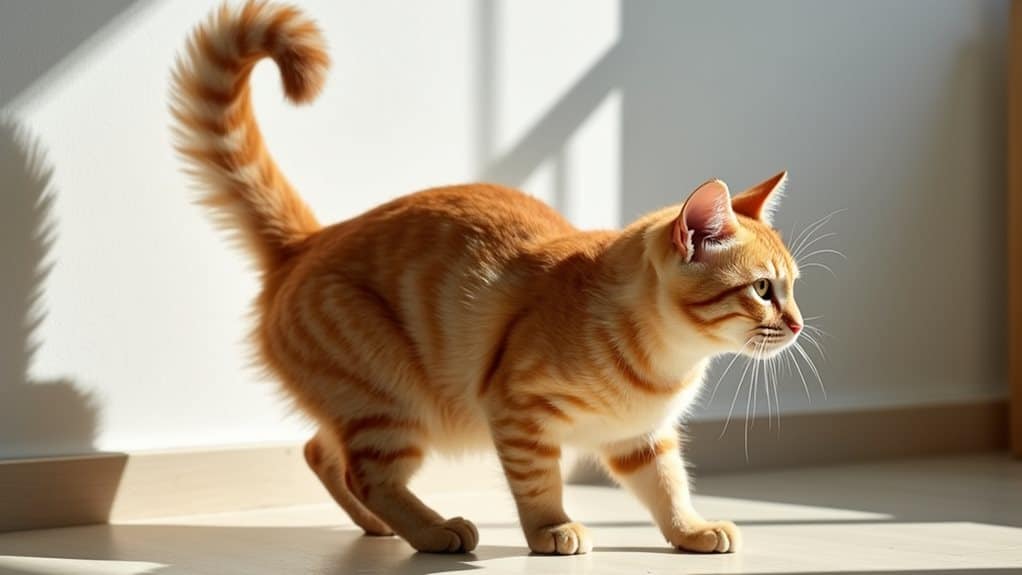
Cat marking differs from inappropriate urination, with small urine deposits on vertical surfaces indicating territorial behavior, not a litter box problem. Your cat may mark due to stress from new pets, changes in routine, or outdoor cats. First, rule out medical issues like UTIs, then create a stress-free environment with multiple resources for multi-cat homes. Clean marked areas thoroughly with enzymatic cleaners and consider pheromone diffusers. The right combination of environmental changes and positive reinforcement can help your feline friend feel secure again.
The Difference Between Marking and Inappropriate Urination
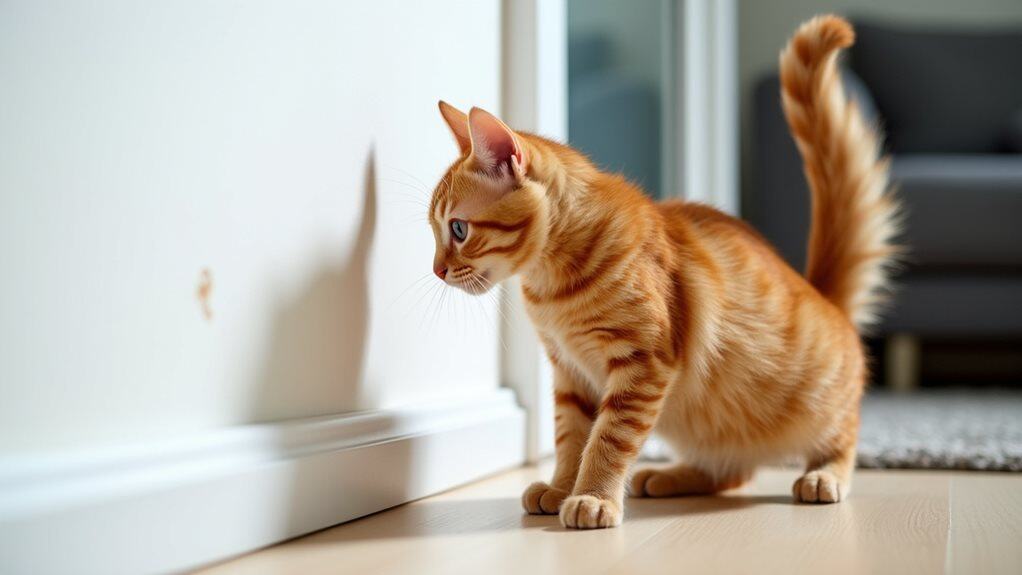
When your cat starts leaving unwanted “presents” around your home, it’s important to determine whether they’re marking territory or simply having bathroom issues.
These situations require different solutions, so telling them apart is your first step.
Marking behavior typically involves small amounts of urine on vertical surfaces like walls or furniture.
Territory marking reveals itself through tiny urine deposits on vertical surfaces—walls and furniture become your cat’s billboards.
Your cat will usually stand, tail quivering, and spray backward. It’s all about claiming territory, not relieving themselves.
Urination issues, however, happen on horizontal surfaces with larger puddles.
Your cat will squat normally, and it’s often caused by medical problems, litter box dissatisfaction, or stress. They’re trying to use the bathroom, just not where you want them to!
Additionally, understanding that spraying is a form of territory marking can help you address the behavior more effectively.
Watch your cat’s posture and habits—it’ll help you tackle the real problem behind those frustrating messes.
Why Cats Mark Territory: Behavioral Triggers
Why do cats feel compelled to leave their scent marks around your home? It’s all about their territorial instincts, which are deeply ingrained in their DNA.
Your cat isn’t being deliberately difficult—they’re simply engaging in natural feline communication.
Cats often mark when they feel their territory is threatened, perhaps by a new pet, baby, or even furniture. Stress triggers marking too—have you moved recently or changed your routine? Your cat might respond by spraying to feel more secure.
Unneutered males are particularly prone to marking, as they’re advertising their availability to females and warning off competitors.
Even neutered cats and females will mark if they spot neighborhood cats through windows or doors, activating their primal need to defend what’s theirs. Understanding types of aggression can help you address and manage this behavior effectively.
Signs Your Cat Is Marking Rather Than Having Litter Box Issues
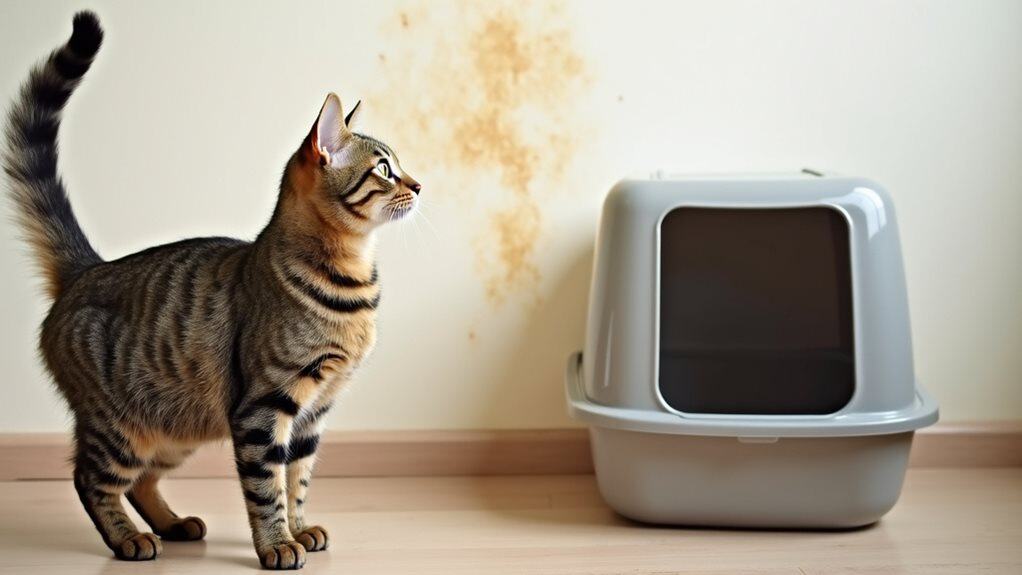
How can you tell the difference between a cat with a litter box problem and one that’s marking territory?
While both involve inappropriate elimination, marking behaviors have distinct characteristics that set them apart from simple litter box avoidance.
- Your cat uses the litter box regularly but also sprays vertical surfaces like walls or furniture.
- Small amounts of urine are deposited rather than full elimination.
- Your cat assumes a specific posture—standing with tail raised and quivering.
- Marking typically occurs in socially important areas (windows, doors, new items).
- Multiple cats in the household often trigger increased marking incidents.
Watch for these telltale signs to determine if you’re dealing with territorial marking instead of litter box issues. Additionally, understanding your cat’s body language can offer insights into their emotional state during these behaviors, which is crucial for providing emotional support to alleviate any underlying stress.
The distinction matters because the solutions for each problem differ considerably, requiring specific approaches for effective resolution.
Medical Causes That May Contribute to Marking Behavior
Although many cat owners assume marking is purely behavioral, underlying medical conditions often trigger or worsen this frustrating issue.
Your cat’s spraying might actually be a cry for help rather than simple territory marking.
Urinary tract infections, bladder stones, and kidney disease can all lead to inappropriate marking as your cat associates pain with the litter box.
That’s why medical evaluations should be your first step when marking begins suddenly.
Many veterinarians recommend thorough health screenings before trying behavioral solutions.
Don’t skip this essential step!
I’ve seen countless owners waste months on behavioral techniques when a simple antibiotic could’ve solved the problem. Additionally, underlying health issues can exacerbate your cat’s anxiety and marking, making veterinary assessments crucial.
Environmental Modifications to Reduce Territorial Anxiety
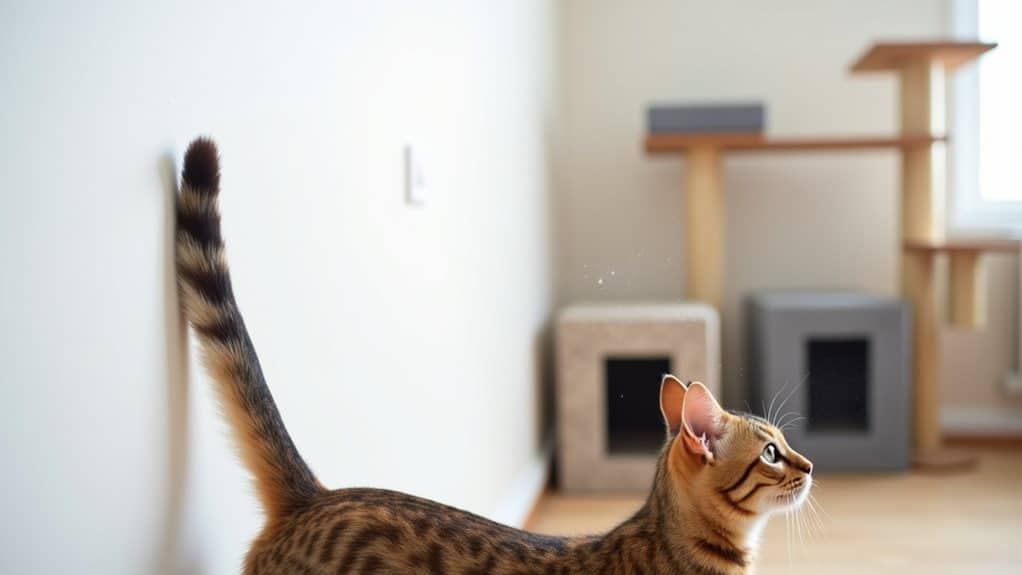
Creating a stress-free environment can greatly reduce your cat’s urge to mark territory.
You’ll want to set up your home to accommodate multiple cats with separate resources, block your cat’s view of outdoor strays that might trigger anxiety, and provide raised resting spots where your feline friend feels safe and secure.
These strategic changes help your cat feel less threatened and more confident in their space, often leading to a notable decrease in marking behavior. Additionally, providing multiple litter boxes can help enhance your cat’s sense of security and decrease territorial conflicts.
Multi-Cat Living Spaces
When multiple cats share the same living space, territorial anxiety can escalate quickly, leading to unwanted marking behaviors. Understanding multi-cat dynamics and feline hierarchy is crucial to creating harmony in your home.
Cats need their own resources and spaces to feel secure rather than threatened.
- Provide one litter box per cat, plus an extra one, placed in different locations
- Create multiple feeding stations to prevent resource guarding
- Install vertical spaces like cat trees where cats can escape and observe
- Set up separate resting areas with beds, blankets, or hiding spots
- Use pheromone diffusers throughout your home to create calming zones
Implementing environmental enrichment strategies will enhance your cats’ sense of security and reduce territorial conflicts.
You’ll notice a notable reduction in marking when each cat feels they’ve their own territory within your shared home.
Outdoor Intruder Management
Many indoor cats become stressed and mark territory when they spot outdoor felines through windows or glass doors. These territorial disputes often trigger spraying as your cat attempts to secure their domain against perceived threats.
| Strategy | Benefit |
|---|---|
| Motion-activated sprinklers | Deters visiting cats without harm |
| Window film or blinds | Blocks visual access to outdoor triggers |
| Orange/citrus peels around perimeter | Repels cats with natural outdoor scents |
| Strategic plantings (lavender, rue) | Creates natural cat deterrent barriers |
| Regular perimeter cleaning | Removes foreign cat scents from property |
You’ll notice notable improvement in your cat’s marking behavior when you reduce their exposure to outdoor visitors. By creating these protective barriers, you’re helping your furry friend feel more secure in their territory and less compelled to mark their indoor space. Additionally, incorporating natural deterrents can further enhance the effectiveness of your efforts in managing territorial anxiety.
Secure Resting Areas
Cats who feel insecure about their territory often resort to marking behavior, which is why secure resting areas serve as essential sanctuaries for your anxious feline.
Creating designated secure resting spots throughout your home gives your cat a sense of ownership and safety, dramatically reducing their need to mark. You’ll notice your cat’s confidence growing as they claim these special havens.
- Raised perches where cats can observe their domain without feeling threatened
- Cozy cat beds tucked into quiet corners away from household traffic
- Window seats with bird-watching opportunities for natural entertainment
- Cardboard boxes or cat caves that provide both comfort and privacy
- Soft blankets with your scent to reinforce feelings of security and cat comfort
In addition to these secure spots, consider that safe sleeping spots encourage your cat to feel more at ease and less likely to engage in territorial behaviors.
Cleaning Cat Marking Spots Effectively and Permanently
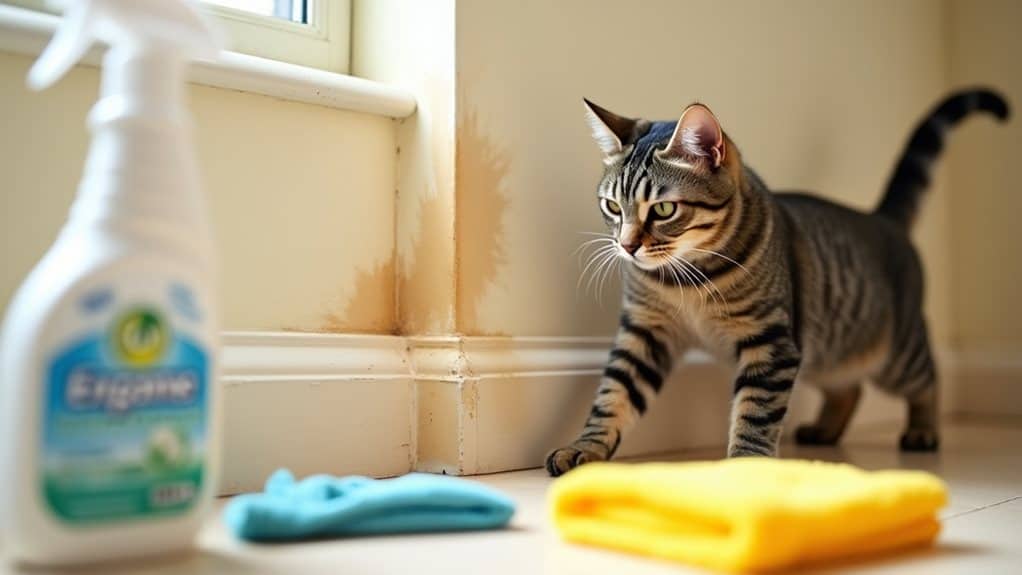
The lingering odor of cat urine can transform your beloved home into an unwelcoming space faster than you might expect. To effectively clean marked areas, you’ll need specialized cleaning products designed specifically for pet messes. Regular household cleaners won’t cut it because they don’t break down the uric acid crystals that cause persistent smells.
Start with enzymatic odor neutralizers, which work by breaking down the urine compounds at a molecular level. Apply these generously to affected areas, and don’t rush the drying process—most enzymes need time to work their magic. Prompt action is essential in preventing deep stains and lingering odors after a cat’s accident.
For stubborn spots, you might need multiple applications. Remember to test any cleaning products on a hidden area first to prevent damage to fabrics or flooring. Your nose mightn’t detect lingering scents, but your cat’s superior sense of smell will!
Behavioral Training Techniques to Stop Marking
While thorough cleaning removes the scent, addressing the root cause of marking behavior is your next step. Your cat needs consistent behavioral training to break this habit for good.
Positive reinforcement works wonders—reward your kitty when they use the litter box properly instead of punishing marking behavior.
Reward litter box success, not punishment, for lasting behavioral change in your feline friend.
- Place food bowls near previously marked areas (cats rarely soil where they eat)
- Try commercial or homemade scent deterrents like citrus oils on marking spots
- Create positive associations with previously marked locations using treats or play
- Reduce territorial triggers by blocking views of outdoor cats
- Establish a predictable daily routine to decrease anxiety-related marking
Additionally, recognizing signs of stress in cats can help you tailor your approach to better manage their behavior.
When to Consider Medication or Professional Help
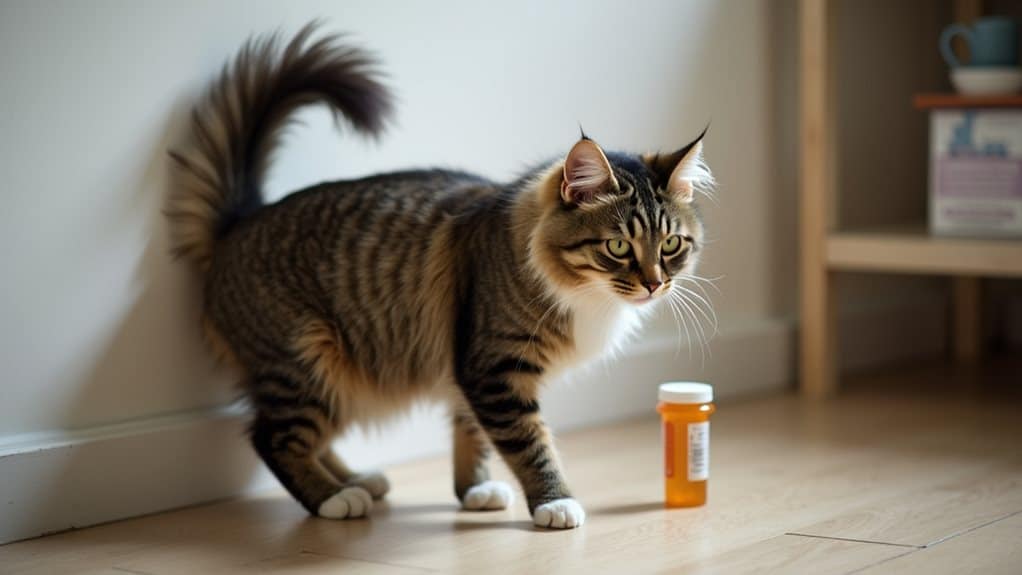
If your cat’s marking behavior doesn’t improve with training, your veterinarian might recommend medication options like anti-anxiety drugs or synthetic pheromones to help reduce the urge to mark.
Certified animal behaviorists can create customized plans that address the underlying causes of your cat’s marking, especially when it’s linked to complex emotional issues or multi-cat household dynamics.
You’ll get the most benefit from professional help when marking persists despite environmental changes, when it’s accompanied by other behavioral problems, or when your cat seems genuinely distressed.
Medication Options Available
Several medication options exist when behavioral modifications and environmental changes haven’t resolved your cat’s marking issues.
Your veterinarian might suggest anti-anxiety medications or selective serotonin reuptake inhibitors (SSRIs) to help reduce your cat’s stress levels. These medication types can decrease the urge to mark territory, though they may have side effects like lethargy or appetite changes.
- Fluoxetine (Prozac) – Often prescribed for anxiety-related marking behaviors
- Clomipramine – Helps reduce obsessive-compulsive behaviors in cats
- Buspirone – An anti-anxiety medication with fewer side effects
- Amitriptyline – Used for stress-related marking issues
- Feliway synthetic pheromone supplements – Not technically medication but often used alongside drugs
When Behaviorists Help Most
Consulting a certified animal behaviorist represents a powerful next step when your cat’s marking behavior persists despite your best efforts at home. These professionals conduct a thorough behavioral assessment of your home environment and your cat’s specific triggers.
| When to Call a Behaviorist | What They Provide |
|---|---|
| Multiple cats fighting | Custom territory expansion plans |
| Marking after moving | Environmental modification strategies |
| Persistent spraying | Personalized behavior modification protocols |
You’ll find that behaviorists offer solutions you might never have considered. They’ll evaluate your home’s “cat geography” and suggest ways to expand territory vertically or create safe zones. Don’t feel defeated if you need professional help—many cat parents do! Sometimes the combination of environmental changes, possible medication, and expert guidance creates the perfect formula for helping your cat feel secure enough to stop marking.
Frequently Asked Questions
Can Spayed or Neutered Cats Still Mark Territory?
Yes, spayed cats and neutered cats can still mark territory. While the surgery reduces this behavior considerably, about 10% of neutered males and 5% of spayed females continue marking due to habit or stress.
Do Female Cats Spray as Frequently as Male Cats?
No, female cats don’t spray as frequently as males. You’ll notice territorial behavior less often in females, though they can still exhibit female cat spraying when they’re in heat or feeling threatened.
Will Getting Another Cat Reduce or Worsen Marking Behavior?
Getting another cat typically worsens marking behavior. You’ll likely see increased territorial disputes and complicated social dynamics. Your existing cat may feel threatened and spray more to reestablish territory boundaries and dominance.
How Long Does Cat Marking Odor Typically Persist Without Treatment?
Just as you’re hoping it’ll fade, cat marking odor can persist for months. Without treatment, you’ll smell this territorial behavior for 3-6 months, though it’s affected by ventilation, surface type, and humidity.
Can Certain Cat Breeds Be More Prone to Territorial Marking?
Yes, some breeds can be more territorial. You’ll notice Siamese behavior often includes increased marking due to their assertive nature, while Maine Coon tendencies typically show less territorial spraying despite their size. All cats vary individually though.
Final Thoughts
You’re now equipped to tackle your cat’s marking behaviors! With patience and the right approach, you can restore harmony to your home. Did you know that nearly 30% of cats who mark will stop within three months of starting behavioral interventions? That’s encouraging news! Remember, whether you’re making environmental changes or seeking professional help, understanding why your cat marks is your first step toward a spray-free household.