The Best Fluffy Pancakes recipe you will fall in love with. Full of tips and tricks to help you make the best pancakes.


Cats communicate through an intricate language of body signals. Your feline’s tail position, ear orientation, and facial expressions reveal their emotional state—from a confidently raised tail showing contentment to flattened ears indicating fear. Vocalizations like purrs, chirps, and hisses each carry specific messages, while kneading demonstrates trust and comfort. By observing these subtle cues, you’ll recognize when your cat wants affection or needs space. The following insights will transform your connection with your mysterious companion.
The Secret Language of Tail Positions

When you observe your cat’s tail movements, you’re actually witnessing one of their most expressive communication tools. Your feline friend uses tail height to broadcast their emotional state to both you and other animals in their territory.
A confidently raised tail indicates your cat is feeling social and content, while a low or tucked tail suggests fear or submission.
Notice the subtle tail twitching when your cat spots a bird through the window? That’s their hunting instinct kicking in! A slow, gentle swish typically signals focused attention, but watch out for rapid twitching or a puffed-up tail—your kitty might be feeling threatened or agitated. Tail puffing as a stress response is a common reaction to feeling scared or threatened, and recognizing this can help you respond appropriately to your cat’s emotions.
Your cat’s tail reveals their innermost feelings – from the excited twitch of a hunter to the warning puff of agitation.
Learning to read these signals helps you understand your cat’s needs and moods, strengthening your bond while avoiding potential scratches!
What Your Cat’s Ears Are Telling You
Just as your cat’s tail reveals their emotions, their ears function as another remarkable mood barometer. When you’re trying to decode your cat’s mood, pay close attention to their ear positions and movements—they’re constantly broadcasting their feelings.
Forward-facing, upright ears typically signal a relaxed, curious cat who’s ready to engage with you. Notice how quickly those ears swivel? They’re catching sounds from all directions, showing your cat’s alert nature.
When those ears flatten against the head, however, your feline is feeling threatened or fearful—a clear warning sign to give them space.
The subtle ear movements between these extremes tell their own stories too. Slightly turned-back ears might indicate mild irritation, while ears that twitch rapidly suggest your cat is processing multiple stimuli.
Recognizing these ear positions helps you respond appropriately to your furry friend’s changing moods.
Deciphering Feline Facial Expressions
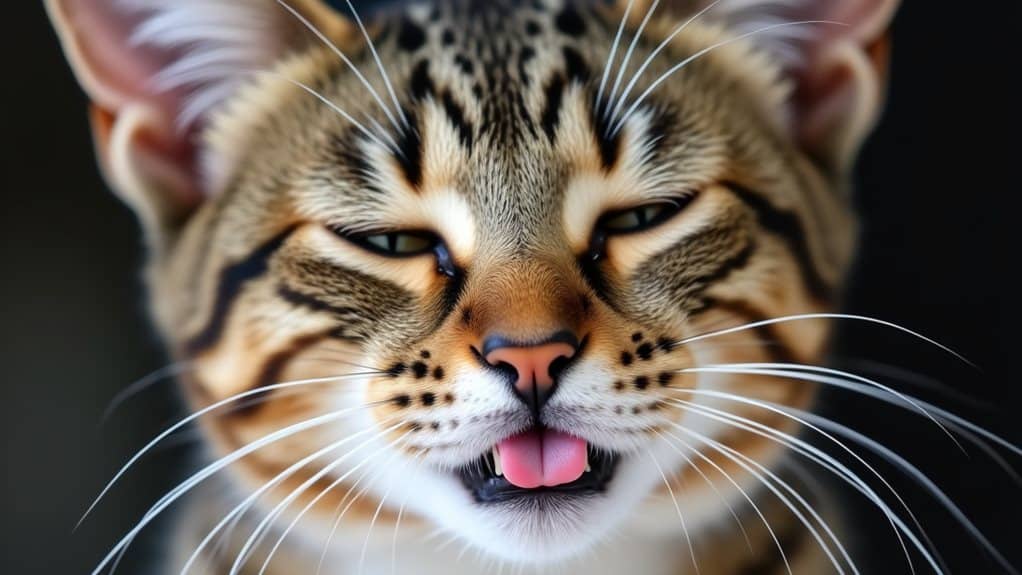
How often have you gazed into your cat’s face, wondering what’s happening behind those mysterious eyes? Cats communicate volumes through subtle facial cues that reveal their inner world of feline emotions.
A relaxed cat shows soft, forward-facing whiskers with almond-shaped eyes and a neutral mouth position. When your kitty slowly blinks at you, they’re actually sending “cat kisses” – a sign of trust and affection.
Notice those dilated pupils? They might indicate excitement or fear, depending on the context.
Pay attention to your cat’s mouth too. A slightly open mouth with teeth showing could signal stress, while a closed, relaxed mouth suggests contentment. Cats also exhibit affectionate behaviors like rubbing against you to express their bond.
Learning to read these facial expressions strengthens your bond and helps you respond appropriately to your furry friend’s changing moods.
Body Postures That Reveal Your Cat’s Mood
Beyond facial expressions, your cat’s entire body serves as a canvas for emotional expression. When your feline friend arches their back with tail straight up, they’re feeling confident and greeting you with affection.
In contrast, a flattened posture with ears back signals fear or aggression—give them space when you notice this stance.
Watch for those playful antics! A crouched position with wiggling hindquarters means they’re preparing to pounce, whether on a toy or your moving feet.
Their sleeping positions are equally revealing: a curled-up ball indicates they’re conserving warmth, while a stretched-out cat shows complete trust in their environment.
You’ll notice your cat’s tail is particularly expressive—quick flicks often signal irritation, while a gently swaying tail suggests curiosity and contentment. Understanding these body movements and vocalizations, like cat huffing, further enhances your ability to interpret their moods and needs.
Vocalizations: Beyond the Meow
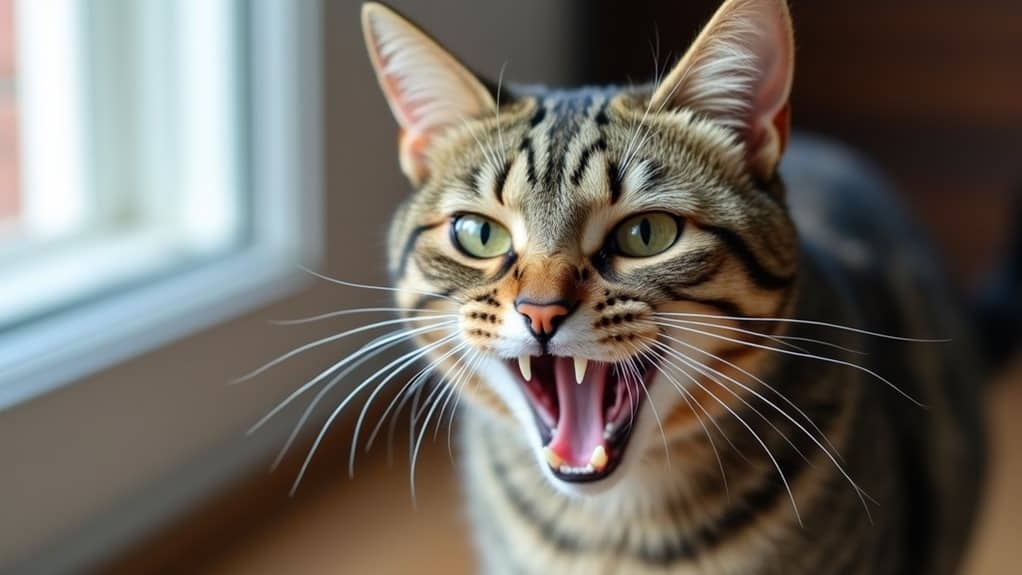
Your cat’s vocal repertoire extends far beyond simple meowing, with each sound conveying specific meanings you’ll come to recognize.
When your feline friend purrs, they might be expressing contentment, self-soothing, or even requesting something from you, depending on the context and intensity.
Hisses and growls signal your cat feels threatened or distressed, while those charming chirps and trills often represent excitement or a friendly invitation to follow them. Understanding the mechanics of cat purring can greatly enhance your bond with your furry companion.
Purrs Mean Many Things
Cats frequently communicate through purring, but this soothing sound conveys far more than simple contentment. You might notice your cat’s purring frequency changes depending on their needs—it’s not merely a one-tone expression. Pay attention to the purring context to better understand what your feline friend is trying to tell you.
When your cat purrs while kneading your lap, they’re likely expressing happiness. However, cats also purr when they’re anxious, in pain, or even giving birth. This self-soothing mechanism operates at a frequency between 25 and 150 Hz, which can actually promote healing. Understanding the emotional state of your cat can greatly enhance your bond with them.
Next time your cat purrs, consider what else is happening: Are they hungry? Seeking attention? In discomfort? By observing these subtle differences, you’ll become more fluent in your cat’s unique language.
Hisses Signal Distress
When a cat hisses, it’s displaying one of the most misunderstood vocalizations in its communication toolkit. Your feline isn’t being “mean” – they’re expressing fear or anxiety through these distress signals. Understanding the common hissing reasons can help you respond appropriately to your cat’s needs. Cats may exhibit hissing alongside signs of increased aggression or other stress-related behaviors; knowing these can help you assess their emotional state.
| Trigger | What’s Happening | How You Can Help |
|---|---|---|
| Strangers | Feeling threatened | Give space, slow introductions |
| Handling | Pain or discomfort | Check for injuries, visit vet |
| New pets | Territory defense | Separate, gradual introduction |
| Loud noises | Startled reaction | Reduce volume, create quiet zone |
| Children | Rough interaction | Teach gentle touching, supervise |
When you notice hissing, don’t punish your cat. Instead, identify the stressor and create distance between your cat and whatever’s causing distress. Their hiss is simply saying, “I’m scared and need space!”
Chirps and Trills
Have you ever noticed those adorable chattering sounds coming from your feline friend?
These distinctive vocalizations are called chirps and trills, and they’re actually packed with meaning! Your cat uses these unique sounds to communicate specific emotions and needs.
When you understand chirp meanings, you’ll recognize that your cat is trying to tell you something important:
- Excitement when spotting birds or squirrels outside
- A greeting when you come home after being away
- Encouragement for you to follow them (often to their food bowl!)
- Contentment during playtime or affectionate moments
Trill responses typically indicate happiness and sociability.
Unlike meows, which cats developed mainly for humans, chirps and trills are natural cat-to-cat communication. Additionally, these sounds may also be linked to your cat’s hunting instincts, as they can reflect excitement and frustration when observing potential prey.
Next time your kitty chirps at you, they’re sharing their inner thoughts!
Kneading, Purring, and Other Comfort Behaviors
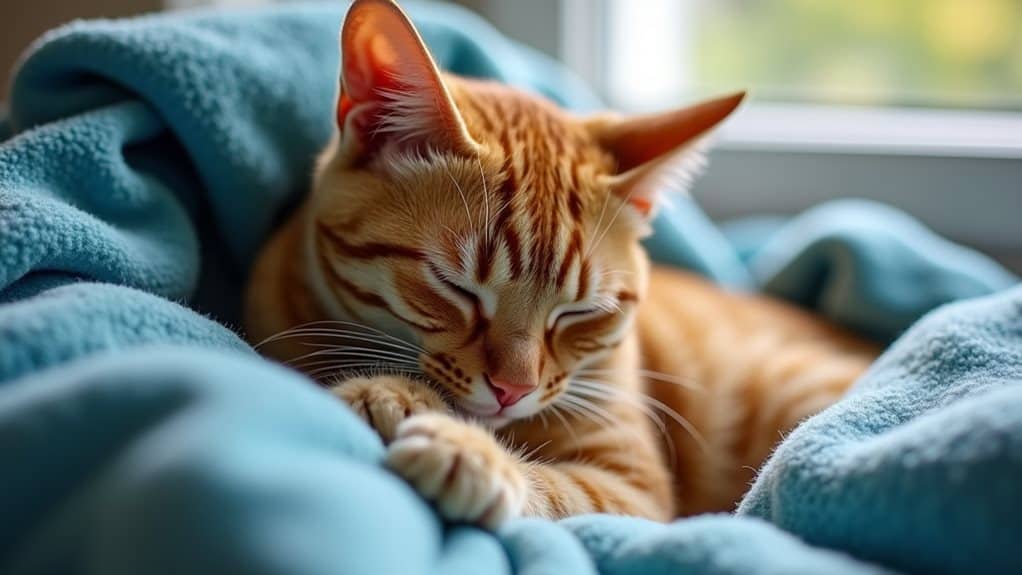
When your cat kneads your lap with rhythmic paw movements, they’re displaying a comforting behavior that originates from kittenhood, when they massaged their mother’s belly to stimulate milk flow.
Your cat’s purring, while often associated with contentment, can actually serve multiple purposes including self-soothing when injured or stressed, communication with other cats, and strengthening the bond between you two.
Those slow blinks your feline friend directs your way aren’t random—they’re actually “cat kisses,” a sign of trust and affection that you can return to communicate love in their language. This affectionate behavior, akin to a grooming technique, signifies the closeness and bond between you and your cat.
Why Cats Knead
Many cat owners have witnessed their feline companions pushing their paws rhythmically against soft surfaces, a behavior commonly known as “kneading.” This curious habit, which resembles a baker kneading dough, is one of the most endearing yet puzzling behaviors cats display.
Kneading actually stems from kitten behavior when nursing from their mother. Your cat’s continued kneading into adulthood offers several benefits:
- Creates comfort and security in their environment
- Marks territory through scent glands in their paws
- Prepares a soft resting spot (instinctual behavior from wild ancestors)
- Expresses contentment and happiness with you
When your cat kneads on your lap, they’re fundamentally saying, “You’re my trusted person.” Kneading also enhances overall well-being, as it activates endorphin release, contributing to your cat’s contentment.
While those tiny claws might sometimes dig in uncomfortably, remember it’s one of the highest compliments your cat can give you!
Purring Means More
Kneading often partners with another cherished feline behavior: purring. When your cat rumbles with that familiar vibrating sound, they’re not merely expressing contentment. Purring serves as a complex form of purring communication that goes beyond simple happiness.
You might notice your cat purrs during various situations—while receiving pets, nursing kittens, or even when they’re stressed or in pain. This versatile vocalization can be a self-soothing mechanism, as the vibrations create purring comfort that helps cats heal faster and reduce anxiety. It’s like their built-in therapy tool!
Next time your feline friend activates their internal motor, pay attention to the context. Are they settling into your lap, recovering from a stressful event, or seeking attention? Their purrs speak volumes if you know how to listen.
Slow Blinks Matter
Have you ever caught your cat gazing at you with half-closed eyes, slowly opening and closing them in a dreamy manner? This isn’t your kitty falling asleep—it’s actually a powerful form of feline communication!
Cat behaviorists call this the “slow blink,” and it’s your cat’s way of showing affection.
When your cat offers these slow blink signals, they’re demonstrating complete trust in you. You can respond in kind, strengthening your bond through this subtle eye contact.
Here’s what slow blinking with your cat accomplishes:
- Creates a silent “I love you” moment
- Reduces your cat’s anxiety in new situations
- Builds trust between you and your feline friend
- Shows respect for your cat’s communication style
Try initiating slow blinks yourself—you’ll be speaking your cat’s language and deepening your connection.
Warning Signs: When Your Cat Needs Space

Cats communicate their boundaries through several clear signals that you’ll want to recognize before reaching for a cuddle. When your furry friend flattens their ears, puffs up their tail, or growls, they’re displaying territorial signs that shouldn’t be ignored.
Pay attention to dilated pupils, a rapidly twitching tail, or a crouched position – these stress indicators mean your cat needs immediate space.
Watch for wide eyes, flicking tails, and defensive postures—your cat is telling you they need a moment to themselves.
You might notice your cat retreating to high perches or hiding spots when they’re feeling overwhelmed. These aren’t rejections of your affection, but necessary moments of feline decompression.
If you respect these boundaries, you’ll build greater trust with your pet. Remember, a cat that hisses isn’t being mean; they’re simply communicating in the only language they know. Your patience will be rewarded with a more relaxed companion.
Frequently Asked Questions
Why Does My Cat Suddenly Run Around the House Frantically?
Your cat’s experiencing “cat zoomies” – sudden bursts of energy they need to release. This playful behavior is normal and healthy. You’ll notice it often happens after napping or using the litter box.
How Can I Tell if My Cat Is Bonding With Me?
Your cat’s bonding with you when they purr during cuddles, keep a relaxed tail position near you, slowly blink, knead your lap, follow you around, or bring you “gifts.” These show trust and affection.
Do Cats Recognize Their Own Names When Called?
Like little furry royalty, cats do recognize their names! Your feline’s perked ears and attentive gaze reveal their name recognition. They’ll often respond, though they might choose when to acknowledge you—classic feline responses!
Why Does My Cat Stare at Me Without Blinking?
Your cat’s unblinking stare is a form of cat communication. Feline eye contact shows trust and curiosity. When they don’t blink, they’re intensely focused on you, often seeking attention or displaying affection.
Can Cats See in Complete Darkness or Just Low Light?
Cats can’t see in complete darkness. With six times our light sensitivity, your feline’s impressive night vision requires minimal light—just 1/6 of what you need. They’re exceptional in low light, not pitch black.
Final Thoughts
Like Sherlock Holmes solving a mystery, you’ll now recognize the subtle clues your feline friend leaves behind. You’re more than a cat owner—you’re a translator of purrs, tail flicks, and ear twitches. When you understand what your cat’s trying to tell you, you’ll build a stronger bond that’ll transform your relationship. So watch closely; your furry companion’s been speaking to you all along. You’ve just learned to listen.