The Best Fluffy Pancakes recipe you will fall in love with. Full of tips and tricks to help you make the best pancakes.

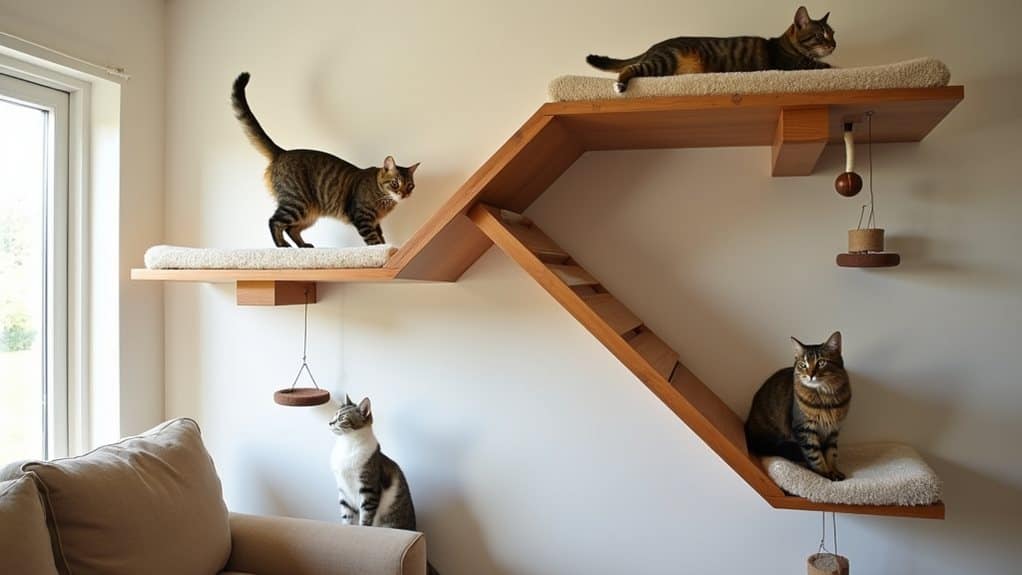
Cat highways satisfy your feline’s natural climbing instincts while preserving your floor space. To create one, map out routes that connect your cat’s favorite spots using wall-mounted shelves, bridges, and perches. Guarantee safety with non-slip surfaces and sturdy construction, aiming for 6-8 inch wide pathways. Match materials to your home décor for seamless integration, and provide multiple entry points in multi-cat homes. The perfect highway transforms ordinary walls into a feline adventure playground waiting to be explored.
Understanding Your Cat’s Natural Climbing Instincts
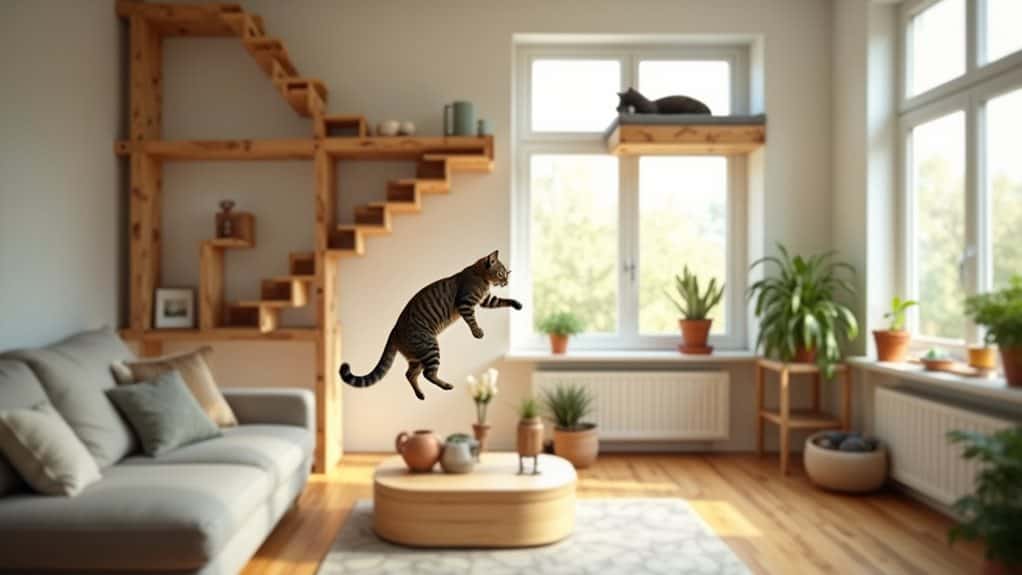
While you might see your cat as just a cuddly companion, there’s a wild athlete hiding beneath that adorable exterior. Your feline friend possesses deep-rooted natural instincts that drive their climbing behavior, directly inherited from their wild ancestors who scaled trees for safety and hunting advantages.
When your cat leaps onto your bookshelf or perches atop your refrigerator, they’re not being mischievous—they’re following ancient instincts. Cats naturally seek raised positions to survey their territory and feel secure. This climbing behavior also provides crucial exercise for their muscles and mental stimulation. Additionally, cats are drawn to warm spots for heat retention, which explains their affinity for high places that absorb heat.
Planning Your Cat Highway: Mapping Routes Through Your Home
When planning your cat’s highway system, you’ll need to carefully evaluate your home’s vertical space, looking for shelves, furniture tops, and window sills that can become part of an uplifted pathway.
Next, map out traffic flow by considering both your cat’s favorite lounging spots and your own movement patterns throughout the home, guaranteeing the highways don’t interfere with your daily activities.
Finally, identify strategic launch points—places where your cat can easily jump up to begin their expedition—such as sturdy bookcases, stable dressers, or dedicated climbing posts that provide easy access to the higher routes. Additionally, creating safe spaces within the highway can enhance your cat’s comfort and security as they explore their elevated pathways.
Evaluate Vertical Space
Before sketching any plans for your cat highway, you’ll need to assess the vertical territory in your home that’s currently going unused.
Look up at your walls and notice those empty spaces that could transform into pathways for enhanced exploration. Most homes have at least 6-7 feet of vertical space that cats would love to traverse!
Consider the height of doorways, windows, and furniture that can serve as natural launching points for your feline fitness course.
Remember that cats naturally seek high vantage points, so incorporating shelves at various heights creates an engaging experience.
Don’t overlook corners, which can become perfect vertical runways with strategically placed platforms.
Wall studs typically occur every 16 inches, giving you plenty of anchor points for secure installation.
Your ceiling height will ultimately determine how ambitious your cat highway can be. Additionally, integrating multi-level structures into your design can further enhance cat exploration and play.
Map Traffic Flow
Now that you’ve identified all that vertical potential, it’s time to map out the actual routes your cat will travel throughout your home. Understanding cat behavior is essential when designing your highway system. Cats naturally follow specific traffic patterns, often preferring paths that offer both security and observation points.
| Location | Cat Behavior | Design Consideration |
|---|---|---|
| Living Room | Perching, watching | Window access, viewing spots |
| Kitchen | Avoidance of busy areas | Overhead bypasses |
| Hallway | Fast transit zone | Straight runs, minimal obstacles |
| Bedroom | Quiet retreat | Cozy resting platforms |
| Bathroom | Curiosity spot | Safe distance from water |
Think about your cat’s daily routine. Where do they spend most time? Which areas do they avoid? Create connections between favorite spots while providing alternative paths around high-traffic human zones. You’ll want multiple entry/exit points so your cat never feels trapped. Additionally, incorporating vertical spaces into your design will ensure your cat feels safe while exploring.
Identify Launch Points
Strategic placement of launch points forms the foundation of any successful cat highway system. You’ll want to identify natural spots where your cat already likes to jump, such as window sills, sturdy furniture, or existing perches. These become your primary launch point materials, serving as gateways to the raised pathways you’re creating.
Height considerations are essential when planning these jump-off spots. Most cats can comfortably leap 4-5 feet vertically, but don’t push your feline to their limits! Start with conservative distances between platforms, especially for older or less athletic cats.
Remember, your furry acrobat might be daring, but they’ll appreciate thoughtfully spaced platforms. Incorporating scratching posts can enhance your cat’s highway experience while satisfying their natural instincts and providing a healthy outlet for their energy.
Look for corners and wall intersections too—they’re perfect for creating multi-directional options that keep your cat’s highway system interesting and dynamic.
Essential Components for a Safe and Engaging Elevated Pathway
When designing your cat’s aerial playground, you’ll need to include three vital components that guarantee both safety and enjoyment.
Wall-mounted shelving systems create the foundation of your cat highway, providing sturdy platforms where your feline friend can rest and observe their domain.
Secure bridges connect these perches, allowing for continuous travel routes, while non-slip surface materials are key to prevent your cat from sliding or falling during their exciting raised adventures. Additionally, incorporating environmental enrichment in your design can further stimulate your cat’s curiosity and playful instincts.
Wall-Mounted Shelving Systems
Wall-mounted shelving systems form the backbone of any successful cat highway, creating safe pathways for your feline friends to traverse your home from above.
When selecting shelves, consider both functionality and wall aesthetics to guarantee your cat highway complements your existing décor rather than clashing with it. You’ll find that wooden shelves offer a natural look while providing excellent grip for your cat’s paws, though metal and sturdy plastic options work well too.
Install shelves at staggered heights to create an engaging climbing experience, spacing them close enough for comfortable jumps based on your cat’s ability. Regular grooming can also enhance your cat’s comfort and ability to navigate these elevated pathways.
Don’t forget to secure each shelf properly into wall studs or use appropriate anchors – your curious climber’s safety relies on it! The best part? These shelves double as stylish home accents when not in use.
Secure Bridges Between Perches
Connecting your cat’s favorite perches with secure bridges takes their highway system to new heights of enjoyment. When designing these pathways, bridge stability should be your top priority. Choose sturdy materials like solid wood planks or commercially designed cat bridges that can support your feline’s weight, even during their most energetic zoomies.
For maximum cat safety, install guardrails along open sides of bridges or select tunnel-style connectors that prevent accidental falls. You’ll want to secure each bridge firmly to its connecting perches—wobbly passages will quickly become abandoned territory in your cat’s mental map.
The ideal bridge width is 6-8 inches, giving your kitty confidence to cross without feeling restricted. Remember, your furry friend’s natural instincts include evaluating path stability before committing to a crossing—so build something you’d trust yourself! To ensure a cleaner environment for both you and your pet, consider regular brushing and grooming to help minimize hair and dander in your home.
Non-Slip Surface Materials
Proper traction becomes essential once your cats start racing across their raised highways at top speed. Without it, your feline friends could slip, slide, or even fall—turning playtime into an emergency vet visit.
Choose materials that naturally grip tiny paws, such as carpet, sisal rope, or cork.
For even wooden shelves or platforms, apply non-slip coatings designed specifically for pet safety. These transparent options provide traction without sacrificing the aesthetic appeal of your cat highway.
Textured surfaces like outdoor carpet runners can be cut to size and attached with pet-safe adhesive, creating a comfortable runway that withstands daily zoomies. Additionally, ensuring your cats have a balanced diet helps support their coat health and reduces any associated shedding, making playtime even more enjoyable.
DIY vs. Commercial Cat Highway Solutions: Pros and Cons
When considering the creation of cat highways for your home, you’ll likely face the decision between building your own DIY structures or purchasing ready-made commercial solutions.
Both options have distinct advantages worth weighing.
DIY materials like shelves, brackets, and carpeted platforms offer customization and cost savings. You can match your exact décor and design a highway that fits your specific space perfectly.
However, they’ll require time, tools, and some construction skills.
Commercial options save you time and typically come with professional-grade durability and safety features. These ready-to-install systems often look sleeker and include specialized non-slip surfaces.
The downside? They’re usually more expensive and may not perfectly fit your unique space or aesthetic preferences.
Your choice ultimately depends on your budget, skills, and available time. Additionally, while building your highways, keep in mind the overall grooming benefits of having an engaging environment that promotes physical and mental stimulation for your cat.
Incorporating Cat Shelves and Perches Into Your Home Décor
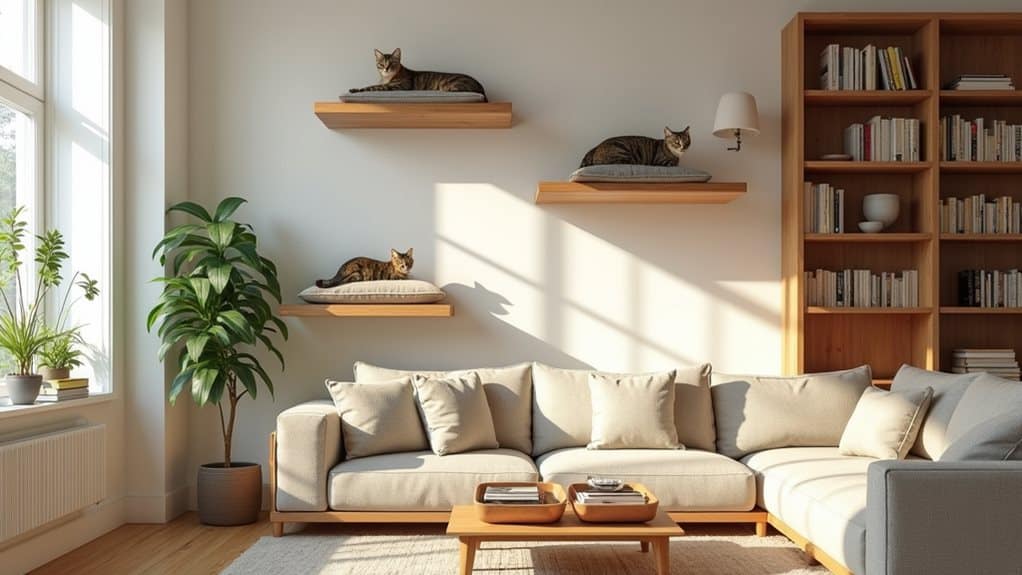
Although cat highways serve a functional purpose, they can also become striking design elements that enhance your home’s aesthetic appeal. You’ll find that cat aesthetics don’t have to clash with your existing décor—instead, they can complement it beautifully. Choose materials and colors that match your home’s palette for a seamless integration.
| Style | Materials | Design Inspiration |
|---|---|---|
| Modern | Glass, metal | Minimalist floating shelves |
| Rustic | Natural wood | Tree-like structures |
| Industrial | Pipes, metal | Geometric patterns |
Looking for design inspiration? Consider transforming wall-mounted shelves into cat perches by adding soft cushions, or installing decorative brackets that double as climbing supports. You’ll create functional cat spaces while maintaining your home’s style—a win-win for you and your feline friends.
Creating Strategic Rest Stops and Observation Points
Beyond integrating shelves and perches with your décor, you’ll need to think about where your cat will actually want to pause along their highway system.
Cats aren’t just looking for any spot to rest—they’re seeking strategic vantage points to survey their kingdom!
When planning rest stop design, consider your cat’s habits.
Do they love watching birds outside? Place a comfy perch by that window.
Are they fascinated by kitchen activity? Create an observation point placement that gives them a bird’s-eye view of your cooking area.
Multi-Cat Households: Designing Traffic Flow to Minimize Conflict
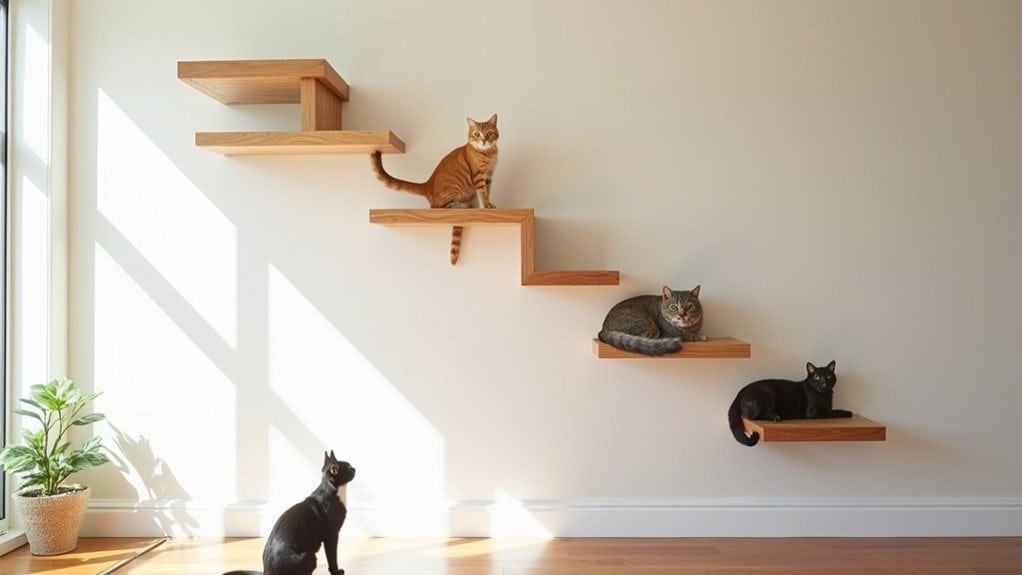
In multi-cat homes, you’ll need to create multiple entry points to your cat highway system, allowing each feline to access the paths without confrontation.
Maximizing vertical space gives your cats options to retreat upward when they need personal space, preventing territorial disputes that commonly occur at floor level.
You can strategically position these pathways to connect different rooms, giving your cats alternative routes to important resources like food, water, and litter boxes without forcing unwanted feline interactions.
Vertical Space Maximization
When multiple cats share a home, vertical space becomes your secret weapon for maintaining peace.
By creating pathways that extend upward, you’re fundamentally adding square footage to your cats’ territory without changing your home’s footprint.
The vertical space benefits are numerous—cats can retreat to different levels when they need space, observe their domain from safe perches, and satisfy their natural climbing instincts.
Pathway Entry Points
Strategic entry and exit points form the backbone of any successful cat highway system, especially if you’re managing multiple feline personalities under one roof. You’ll want to create multiple access routes that prevent territorial standoffs while improving your pathway aesthetics.
| Entry Point Type | Entry Safety Features | Cat Personality Fit |
|---|---|---|
| Floor-level ramps | Non-slip surfaces | Elderly or timid cats |
| Window perch jumps | Cushioned landings | Athletic, confident cats |
| Bookshelf steps | Secure anchoring | Methodical climbers |
| Hidden cubby holes | Soft entry padding | Anxious, security-seeking cats |
Consider placing entry points in quieter areas of your home where cats can assess the situation before committing to the highway. Remember, good entry design isn’t just about function—it’s about creating inviting gateways that your cats will actually use without compromising your home’s style.
Budget-Friendly Materials and Construction Tips
Creating cat highways doesn’t have to drain your wallet, especially when you’re equipped with the right knowledge and materials.
You’ll find plenty of recycled materials perfect for this project—from old shelves and wooden crates to unused PVC pipes. That bookshelf gathering dust in your garage? It’s a gold mine for your feline’s new adventure path!
Focus on smart installation techniques that won’t damage your walls. Command strips, bracket shelves, and tension rods can all secure components without major drilling.
When you’re shopping, check thrift stores first—they’re treasure troves for budget-conscious pet parents.
Weatherproofing Outdoor Extensions for Indoor-Outdoor Pathways
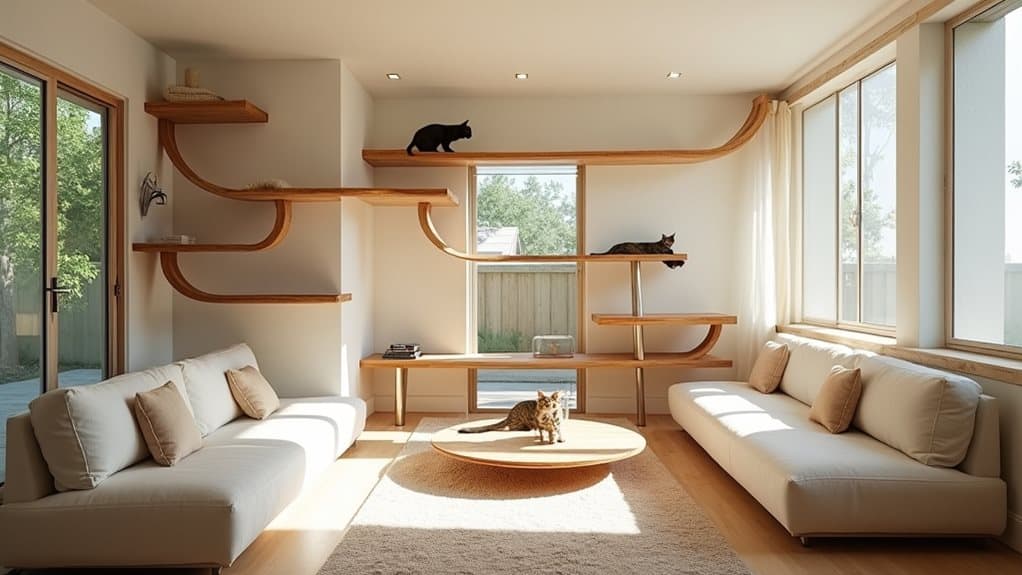
Extending your cat’s indoor highway to the outdoors requires thoughtful weatherproofing to guarantee your feline friend stays safe in all conditions.
When designing these pathways, you’ll need to select weatherproof materials that can withstand everything Mother Nature throws their way while maintaining outdoor safety standards.
Here are three crucial weatherproofing steps to follow:
- Choose marine-grade plywood or plastic shelving sealed with waterproof polyurethane for your platforms and walkways.
- Install clear acrylic panels or weatherproof awnings to protect paths from rain, snow, and intense sunlight.
- Add non-slip treads that drain effectively to prevent water pooling and ice formation.
Don’t forget to check your outdoor extensions regularly for weather damage!
Your cat will appreciate the freedom to explore outdoors while staying dry and comfortable year-round.
Encouraging Your Cat to Use Their New Highway System
Cats can be notoriously skeptical of new additions to their territory, even when you’ve built something specifically for them. To entice your feline friend onto their new highway, start with positive reinforcement techniques like placing treats at different points along the path.
When your cat investigates or uses any part of the system, reward them immediately with praise and pets.
Try playful engagement by dangling toys from strategic locations or creating games that incorporate the highway. A feather wand waved near an entrance or a treat-dispensing puzzle placed on a platform can spark curiosity.
Don’t force your cat—let them explore at their own pace. Some cats might take days to warm up to their new playground, while others might claim it within hours. Patience is key in this adjustment!
Frequently Asked Questions
How Do I Secure Pathways to Prevent Injuries if My Cat Falls?
You’ll need padded pathway materials like carpeted shelves and low-height installations. Add safety measures including guardrails, secure mounting, and soft landing zones beneath pathways. Test all fixtures to ascertain they’ll support your cat’s weight.
Can Cat Highways Cause Behavioral Changes or Territorial Issues?
Over 60% of multi-cat homes experience territorial disputes! You’ll likely see positive behavioral enrichment as cats gain vertical space, but monitor interactions closely when introducing highways to prevent resource guarding between feline housemates.
What Cleaning Methods Work Best for Maintaining Cat Highway Components?
You’ll want to use pet-safe cleaning materials like vinegar solutions or enzymatic cleaners for your cat highways. Vacuum regularly and wipe down surfaces weekly. For maintenance tips, check attachments monthly and replace worn fabric quarterly.
How Do Visitors Typically React to Elaborate Cat Highway Systems?
In a sea of reactions, you’ll find most visitors exhibit genuine curiosity. They’ll often ask about your inspiration, while cat enthusiasts respond with unbridled excitement. You’ll enjoy watching their surprised expressions as cats traverse overhead.
Will My Landlord Allow Installation of Wall-Mounted Cat Pathways?
You’ll need to check your lease and request written permission. Landlord policies vary widely regarding installation permissions for wall-mounted items. Consider removable options that won’t damage walls if you’re uncertain about approval.
Final Thoughts
Just as you wouldn’t want to live in a one-room house with no stairs or windows, your cat craves vertical freedom. You’re not only building shelves—you’re creating their kingdom in the clouds. As they leap from perch to perch, they’ll thank you in purrs and peaceful evenings. Your efforts have transformed your home into a feline paradise where they can rule from above while you enjoy life below.