The Best Fluffy Pancakes recipe you will fall in love with. Full of tips and tricks to help you make the best pancakes.

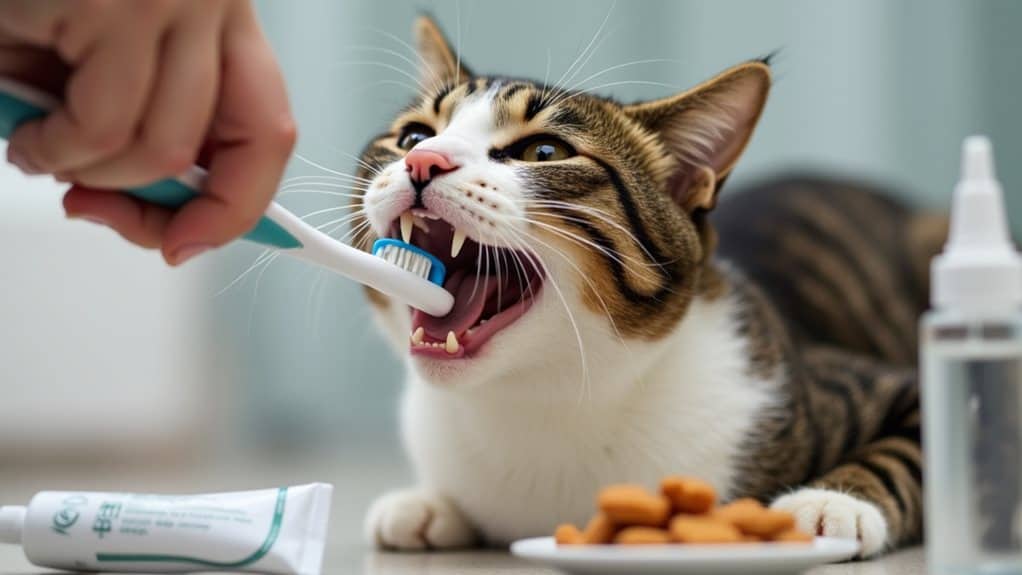
Regular brushing of your cat’s teeth is vital for preventing periodontal disease and bad breath. You’ll need a cat-specific toothbrush and toothpaste (never use human products). Watch for warning signs like red gums, tartar buildup, or changes in eating habits. If brushing isn’t possible, dental treats can help, but they’re not replacements for proper cleaning. Annual veterinary dental checkups catch problems early and save you money in the long run. Discover how your cat’s oral health connects to their overall wellbeing.
Understanding Feline Dental Anatomy
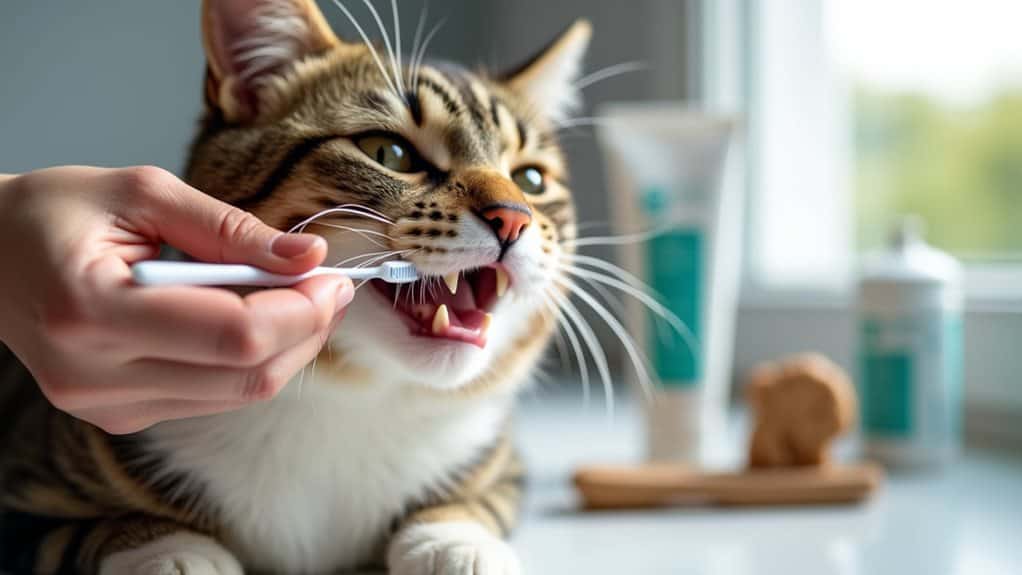
Cats, those mysterious creatures lounging in your home, have a dental structure that’s fascinatingly complex. Unlike your own teeth, your cat’s mouth contains 30 adult teeth designed specifically for their carnivorous lifestyle. Each tooth in the feline tooth structure serves a distinct purpose—from the sharp canines that grip prey to the specialized molars that slice through meat.
Your cat’s gum health is just as important as the teeth themselves. Those pink tissues surrounding each tooth create a protective seal that prevents bacteria from reaching the sensitive roots below. Regular brushing can help maintain the health of your cat’s gums and teeth and prevent periodontal disease.
You’ll notice a distinct line where the gums meet the teeth—this junction should be even and inflammation-free. When examining your cat’s mouth, healthy gums appear salmon-pink rather than bright red, which could signal problems requiring attention.
Signs of Oral Health Problems in Cats
Your cat’s persistent bad breath might be more than just “kitty morning breath” – it’s often the first sign of dental disease or infection.
Watch for physical warning signs like red, swollen gums, yellow-brown tartar buildup on teeth, or your cat pawing at their mouth.
If you notice these symptoms, along with changes in eating habits or excessive drooling, it’s time to schedule a veterinary checkup to address potential oral health problems. Cats with underlying health issues may also exhibit enhanced dental problems, emphasizing the importance of regular veterinary visits.
Bad Breath Causes
While many pet owners dismiss bad breath as normal, persistent foul odors from your cat’s mouth often signal underlying health issues that shouldn’t be ignored.
Your feline friend’s bad breath can stem from several conditions, with poor dental hygiene being the primary culprit.
When food particles become trapped between teeth, bacteria multiply, forming plaque and tartar. This bacterial buildup not only leads to that fishy smell but can result in gingivitis and periodontal disease.
Other causes include infections, digestive problems, or even kidney disease, which can produce a distinctive ammonia-like odor. Diabetes might give your cat’s breath a sweet, fruity scent, while liver issues often create a particularly foul smell.
Additionally, regular vet visits can help identify potential issues such as anal gland problems that may also affect your cat’s overall health and odor.
Don’t wait until your cat’s breath makes you wrinkle your nose – regular dental check-ups can catch these problems early!
Physical Warning Signs
Beyond unpleasant breath, several visible signs can alert you to your cat’s dental problems.
Watch for reddened gums, yellow-brown tartar buildup on teeth, or bleeding when your cat eats or grooms. You might also notice loose or missing teeth if you gently check your feline friend’s mouth.
Pay attention to dental behavior changes too. Is your kitty pawing at their mouth, dropping food while eating, or suddenly preferring soft food over kibble?
These aren’t just quirky cat habits—they’re distress signals! Some cats may even become irritable or withdraw when they’re experiencing oral pain. Notably, symptoms of tooth resorption such as jaw champing and difficulty eating can indicate a more serious underlying issue.
Don’t wait until these physical symptoms become severe. Many owners miss early warning signs because cats are masters at hiding discomfort.
Regular home checks can catch problems before they lead to more serious health issues.
Essential Tools for At-Home Dental Care
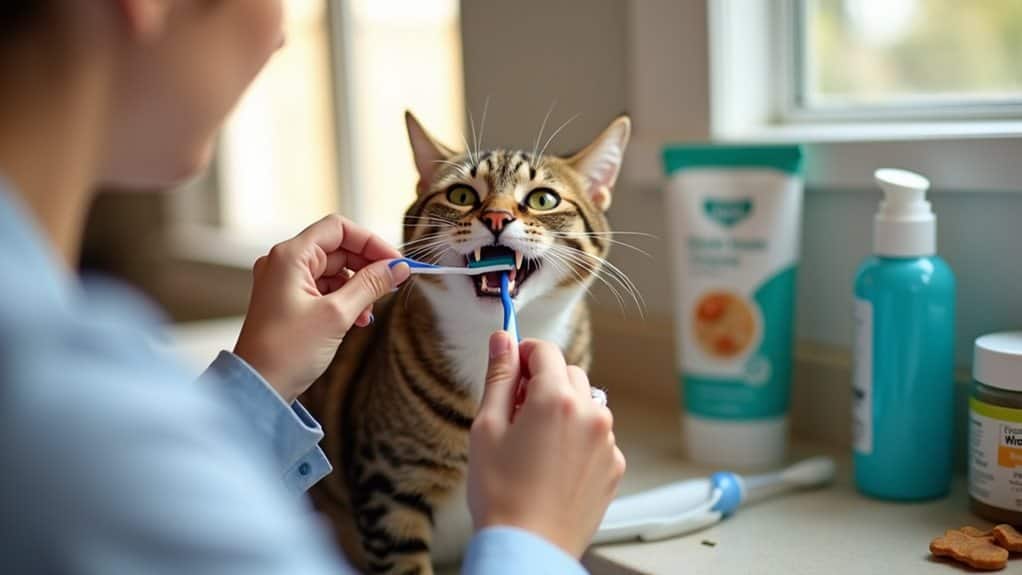
Three essential tools form the foundation of effective cat dental care at home, making regular maintenance both possible and practical.
First, you’ll need appropriate cat toothbrushes – either finger brushes that slip over your fingertip or small-headed brushes designed specifically for feline mouths. Both options help you reach those tricky back teeth where plaque loves to hide!
Second, invest in cat-specific toothpaste (never use human varieties as they contain harmful ingredients). These come in tempting flavors like chicken or fish that’ll make brushing less of a battle.
Finally, dental treats serve as helpful supplements between brushings. They’re designed to scrape away plaque while satisfying your cat’s snacking desires.
When you can’t brush, these treats provide a backup defense against tartar buildup.
Step-by-Step Guide to Brushing Your Cat’s Teeth
Now that you’ve gathered your dental toolkit, let’s walk through the actual process of brushing your cat’s teeth. Remember, patience is key when introducing your cat to this new routine.
| Step | Action | Time | Notes |
|---|---|---|---|
| 1 | Let your cat taste toothpaste | 1-2 mins | Use cat-specific toothpaste only |
| 2 | Gently lift lips | 5-10 secs | Start with front teeth |
| 3 | Brush with cat toothbrushes | 30-60 secs | Circular motions work best |
| 4 | Reward with dental treats | Immediately after | Reinforces positive experience |
Start by brushing just a few teeth and gradually increase as your cat becomes comfortable. Many cats never accept full brushing, so don’t get discouraged! Even brushing twice weekly can greatly reduce plaque buildup and keep those kitty teeth healthier longer. Regular dental hygiene promotes overall health and hygiene, which can prevent more serious oral diseases.
Alternative Dental Care Options When Brushing Isn’t Possible
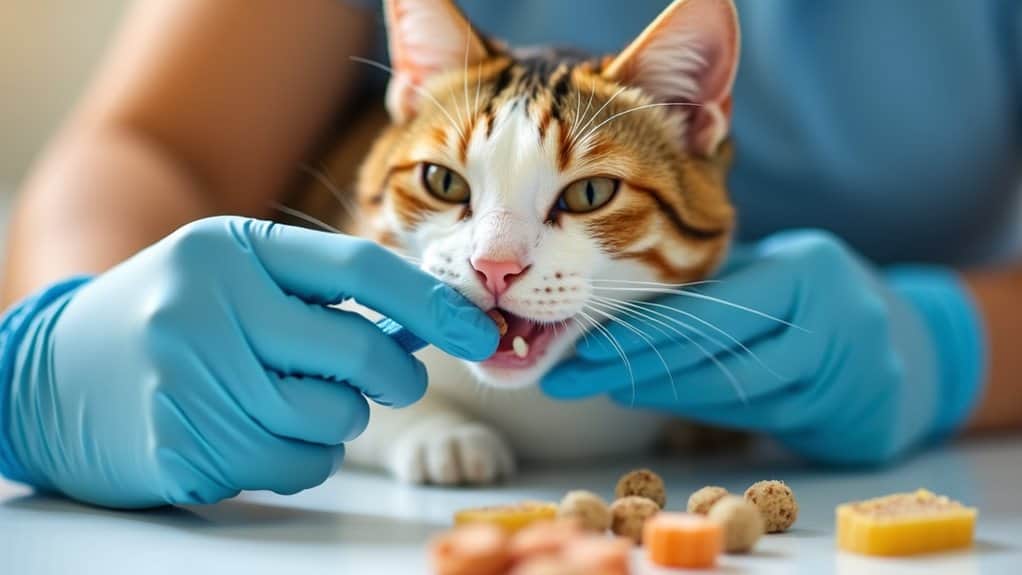
While brushing represents the gold standard for feline dental care, many cat owners find themselves faced with a stubborn kitty who simply won’t tolerate a toothbrush.
Don’t worry—you’re not alone in this struggle! Fortunately, several alternatives can help maintain your cat’s oral health.
Dental chew toys designed specifically for cats can remove plaque through the natural chewing motion. Look for products with textured surfaces that scrape against teeth as your cat plays.
Oral care treats are another excellent option, formulated with ingredients that reduce tartar buildup and freshen breath. These treats often contain enzymes that break down plaque before it hardens. Additionally, regular dental hygiene practices can prevent serious oral diseases and enhance your cat’s overall health.
When to Seek Professional Veterinary Dental Treatment
If you notice your cat has bad breath, bleeding gums, or seems reluctant to eat, it’s time to schedule a veterinary dental appointment right away.
Your vet will recommend annual dental checkups to catch problems early, even if your furry friend isn’t showing obvious symptoms.
After a professional cleaning, you’ll need to follow specific care instructions at home, which might include temporary soft food and pain medication to help your cat recover comfortably.
Warning Signs
Even the most diligent cat parents can miss early dental problems, so knowing when to call the vet is crucial. Watch for these warning signs that indicate your cat needs dental attention:
| Warning Sign | Possible Cause | Action Needed |
|---|---|---|
| Bad breath | Infection/decay | Vet visit within week |
| Bleeding gums | Gingivitis/injury | Immediate vet visit |
| Pawing at mouth | Pain/discomfort | Vet visit within 48 hrs |
| Drooling | Tooth pain/infection | Prompt vet assessment |
Pay attention to dietary impacts, like suddenly refusing hard food or dropping kibble while eating. Behavioral changes can also signal dental pain—your normally affectionate kitty might become irritable or withdraw when in discomfort. Additionally, maintaining urinary health is important, as it can influence your cat’s overall well-being. Don’t wait if you notice these signs; early intervention can prevent more serious health problems!
Annual Dental Checkups
Beyond watching for warning signs, regular professional dental care forms the backbone of your cat’s oral health regimen.
Veterinarians recommend annual dental checkups as part of your pet’s overall wellness plan, though some cats may need more frequent visits.
During a professional dental examination, your vet will:
- Perform a thorough oral assessment to check for hidden issues
- Clean below the gumline where brushing can’t reach
- Remove stubborn tartar buildup that home care can’t address
- Take dental X-rays to identify problems invisible to the naked eye
Most dental frequency recommendations suggest yearly cleanings, but your vet might suggest a different schedule based on your cat’s breed, age, and existing oral health. Additionally, maintaining proper cat allergic reactions can greatly enhance your cat’s overall health and comfort.
Don’t wait until problems develop—preventative care is always less expensive (and less stressful) than treating advanced dental disease!
Post-Cleaning Care Requirements
After your cat undergoes a professional dental cleaning, proper post-procedure care becomes essential for a seamless recovery and lasting oral health benefits.
You’ll need to monitor your furry friend closely for the first 24 hours, as they might be a bit groggy from anesthesia.
For the first few days, stick to soft foods that won’t irritate their sensitive gums. Your vet will likely suggest specific post-cleaning techniques customized to your cat’s needs.
Follow their dental product recommendations carefully – they might suggest special rinses or gels to promote healing.
Watch for any unusual symptoms like excessive drooling, reluctance to eat, or pawing at the mouth. These could signal complications requiring immediate attention.
Most cats bounce back quickly, but your attentiveness during recovery guarantees those pearly whites stay healthy longer! Additionally, maintaining regular veterinary visits ensures early detection of any potential dental or oral health issues.
Frequently Asked Questions
How Old Should Kittens Be Before Starting a Dental Care Routine?
You should introduce kitten dental care when they’re 8-12 weeks old. Getting your kitten comfortable with early dental habits during this period helps them accept teeth brushing as a normal part of their routine throughout life.
Can Certain Cat Foods Replace the Need for Dental Care?
No, food can’t fully replace dental care. While dry food benefits include some plaque removal, and dental treat effectiveness is documented, you’ll still need to brush your cat’s teeth for complete oral health.
Are Anesthesia-Free Dental Cleanings Effective for Cats?
Like skating on thin ice, anesthesia-free cleanings aren’t effective for your cat. They can’t address problems below the gumline where disease lurks. Professional cleanings with proper anesthesia risks assessment offer better cleaning techniques.
How Do Feral or Outdoor Cats Maintain Dental Health Naturally?
Feral cats maintain dental health through wild feline habits like hunting and eating whole prey. Their natural chewing behaviors on bones and tough meat help scrape away plaque, though they still often develop dental disease.
Can Cats Share Dental Products With Dogs or Humans?
NEVER share dental products! You’d risk poisoning your precious pet! Dogs, cats, and humans require species-specific products for dental product safety. Always purchase pet dental hygiene items formulated exclusively for cats to guarantee their wellbeing.
Final Thoughts
You’ve learned that your cat’s dental health isn’t just about fresh breath—it’s a window into their overall wellbeing. The theory holds true: preventative care truly saves both money and heartache down the road. Whether you’re brushing daily or offering dental treats, you’re giving your feline friend the gift of comfort and longevity. Remember, those purrs of contentment come easier when your cat’s mouth feels as good as it looks!