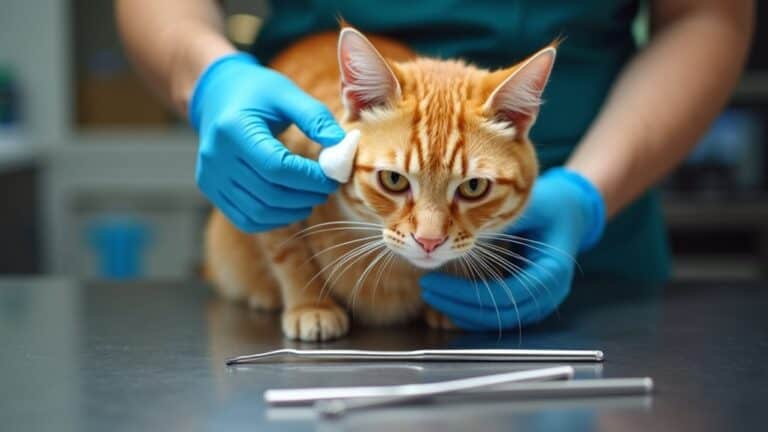
The Best Fluffy Pancakes recipe you will fall in love with. Full of tips and tricks to help you make the best pancakes.


Common cat skin issues include allergies (excessive grooming, redness), fungal infections (circular patches, hair loss), parasites (fleas, mites causing intense scratching), bacterial infections (swollen areas, discharge), and stress-related conditions (overgrooming). Watch for symptoms like persistent scratching, red skin, scabs, or unusual hair loss. Treatment varies from medication to environmental changes depending on the cause. Always consult your vet for proper diagnosis before attempting home remedies. The right approach can transform your feline friend’s comfort and health.
Feline Allergic Dermatitis: Symptoms and Triggers
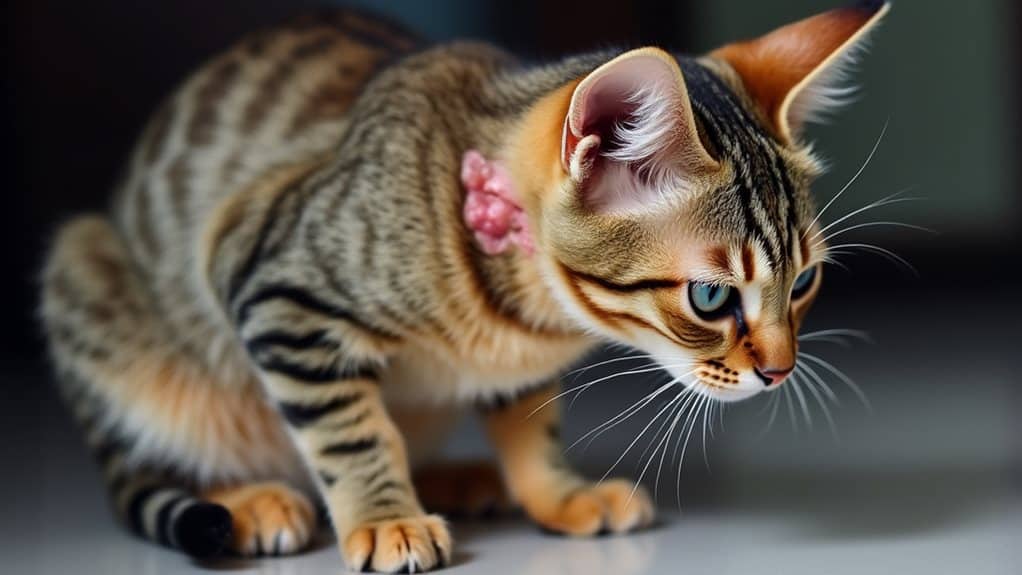
When your cat starts scratching excessively or developing mysterious skin irritations, feline allergic dermatitis might be the culprit. This common condition occurs when your feline friend’s immune system overreacts to everyday substances in their environment or diet.
Excessive scratching and skin irritations may signal your cat’s immune system is rebelling against everyday substances.
Watch for telltale signs: excessive grooming, hair loss, red or crusty skin, and small bumps or scabs. Common triggers include flea saliva, pollen, dust mites, certain fabrics, and food proteins. Understanding cat allergies can help you better manage your cat’s symptoms and avoid potential triggers.
You’ll need to work with your vet to pinpoint the exact cause, which might involve allergy testing to identify specific allergens.
Treatment typically combines addressing the immediate symptoms and eliminating triggers. Your vet might recommend dietary changes if food allergies are suspected.
Don’t worry—with proper diagnosis and management, your itchy kitty can find relief!
Ringworm and Fungal Infections in Cats
If your cat has circular patches of hair loss or scaly, crusty skin, they might be dealing with ringworm, a common fungal infection that’s actually not a worm at all. You’ll need to look for symptoms like reddened skin, excessive grooming, and dandruff-like flakes, which can spread to multiple areas of your cat’s body if left untreated. Getting prompt veterinary care is vital, as your vet can prescribe antifungal medications and recommend cleaning procedures to prevent the infection from spreading to other pets or even to you. Additionally, it is important to consider the contagious nature of ringworm, as it can spread rapidly among animals and humans, highlighting the need for effective quarantine measures.
Identifying Fungal Symptoms
How quickly can a tiny fungal infection transform your cat’s beautiful coat into a patchy, flaky mess? Ringworm, despite its misleading name, is actually a fungal infection that can spread rapidly across your cat’s skin. You’ll need to know what to look for to catch it early.
When examining your cat, watch for these telltale signs:
- Circular, crusty patches with hair loss, often with reddened skin underneath
- Dandruff-like scaling that persists despite regular grooming or bathing
- Excessive scratching or licking of affected areas, particularly around the face, ears, or paws
Modern fungal diagnosis techniques include using a special ultraviolet light that makes infected areas glow green. Fungal infections like ringworm can pose a risk to both your cat and other pets in the household.
Your vet might also recommend fungal treatment options like medicated shampoos, oral medications, or topical creams to clear the infection.
Treatment and Prevention
Treating your cat’s fungal infection effectively requires a multi-pronged approach that combines medication with environmental management. Your veterinarian will likely prescribe antifungal creams or oral medications, but don’t be surprised if the treatment extends for several weeks.
While these medications work their magic, you’ll need to thoroughly clean your home to prevent reinfection. Regular maintenance cleaning helps prevent recurrence of ringworm and supports a safe recovery for your cat.
Some pet parents find success supplementing conventional treatments with natural remedies like diluted apple cider vinegar rinses or coconut oil applications. Dietary supplements containing omega-3 fatty acids can also support skin healing and strengthen your cat’s immune system.
Remember, though, always consult your vet before trying any natural treatments!
Prevention is your best strategy – regular grooming, prompt treatment of any skin abnormalities, and keeping your cat’s living space clean will help keep those pesky fungal infections at bay.
Flea Infestation and Flea Allergy Dermatitis
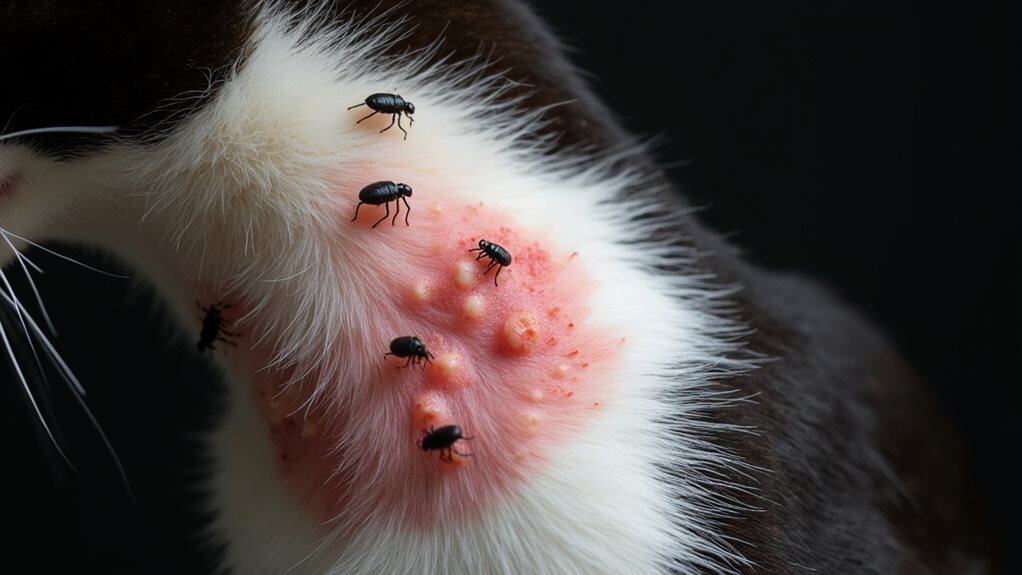
You’ll know your cat has fleas if you spot excessive scratching, small dark specks (flea dirt) in their fur, or red, irritated skin patches.
Treating flea infestations requires a multi-pronged approach: applying vet-recommended flea treatments to your cat, washing their bedding in hot water, and thoroughly vacuuming your home. Additionally, be aware that flea treatment recommendations from your veterinarian can offer tailored solutions for your cat’s specific needs.
Regular prevention through monthly flea medications and routine home cleaning can save your cat from the misery of these pesky parasites and the painful allergic reactions they often trigger.
Symptoms and Identification
Detecting fleas on your cat involves looking for several telltale signs that indicate an infestation or allergic reaction. Your cat’s skin irritation may appear as redness, scabbing, or small bumps, especially around the neck, base of tail, and lower back.
You’ll notice changes in grooming habits too—excessive licking, biting, or scratching often indicates your feline friend is uncomfortable.
Here are three visual clues to watch for:
- Tiny dark specks (flea dirt) that turn reddish when placed on a damp paper towel
- Small, fast-moving insects in your cat’s fur, particularly when you part the hair
- Hair loss patches or “hot spots” where your cat has overgroomed due to discomfort
Don’t wait until your cat’s miserable—early detection means quicker relief and less suffering. Regular flea treatment is vital for cat health and comfort, even if you don’t see any fleas.
Treatment and Prevention
Once you’ve spotted those telltale signs of fleas, it’s time to take action with effective treatment and prevention strategies.
Start by treating all pets in your household with vet-approved flea medications—these come as topical solutions, oral tablets, or collars that break the flea life cycle.
Don’t forget your home! Vacuum thoroughly, wash your cat’s bedding in hot water, and consider environmental treatments for severe infestations.
Many pet parents also explore holistic approaches like diatomaceous earth or vital oil sprays, though always check with your vet first.
Dietary considerations matter too. A well-nourished cat with a balanced diet rich in omega-3 fatty acids will have healthier skin that’s more resilient against parasites.
Regular grooming with a flea comb helps you catch problems early, keeping your furry friend comfortable and itch-free. Additionally, understanding the flea life cycle is crucial for effective control to prevent future infestations.
Parasitic Skin Conditions: Mites and Mange
While many cat owners dread the thought of parasites, understanding mites and mange is crucial for keeping your feline friend healthy. Mites complete their life cycle on your cat’s skin, where they feed, reproduce, and cause irritation.
Parasites may be unpleasant to think about, but knowing how mites affect your cat is essential for proper care.
When infestations worsen, they can develop into mange, characterized by hair loss, crusty skin, and intense itching.
Watch for these telltale signs:
- Red, irritated skin with visible scabs or lesions, especially around the ears and face
- Excessive scratching, head shaking, or rubbing against furniture
- Patchy fur loss with dandruff-like flakes on the coat
You’ll need a vet’s diagnosis to confirm the specific mite type affecting your cat. Effective treatment options can include antiseptic solutions that help prevent infection and soothe the skin.
Don’t worry—most parasitic skin conditions respond well to treatment when caught early!
Bacterial Skin Infections and Hot Spots
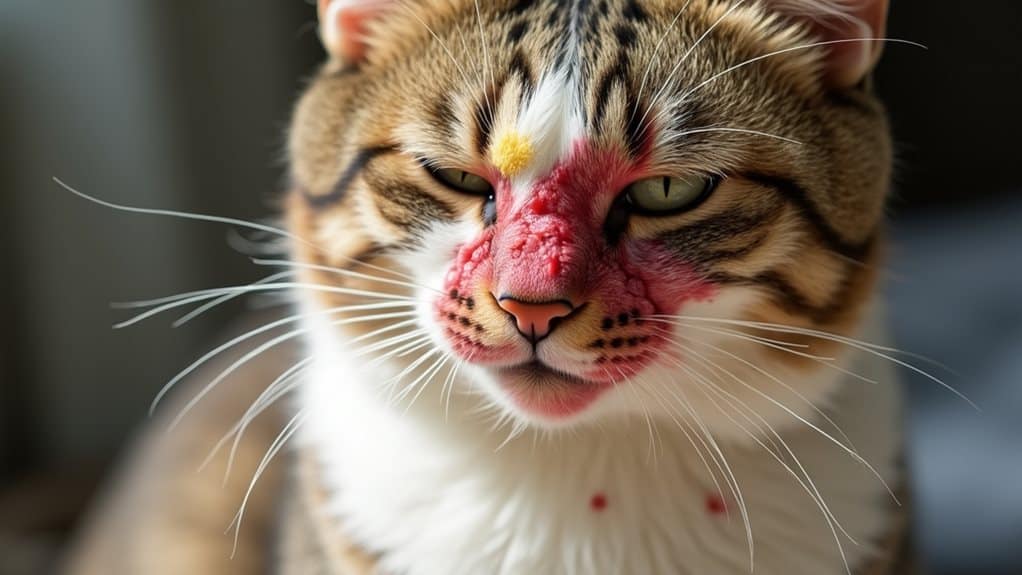
If your cat is scratching excessively or has red, swollen areas on their skin, bacterial infections might be the culprit.
You’ll need to watch for symptoms like pustules, hair loss, or moist, inflamed patches called “hot spots” that can develop quickly, especially in warm weather.
Your veterinarian can diagnose these conditions and recommend appropriate treatments, which may include topical antiseptics, antibiotics, or medicated shampoos depending on the severity of the infection.
Identifying Bacterial Infections
How can you tell if your cat’s skin irritation is caused by bacteria? Bacterial infection symptoms often appear as red, swollen areas that may ooze or have a foul odor. Your kitty might seem uncomfortable, constantly licking or scratching the affected spot, which can make the infection worse.
Look for these telltale signs:
- Circular crusty patches with hair loss and redness at the center
- Yellow or greenish discharge that may dry to form a crust
- Excessive grooming or sensitivity when you touch certain areas
Treatment options typically include antibiotics prescribed by your vet. It’s important to note that untreated skin infections can worsen and lead to more severe health issues.
Don’t try to treat serious bacterial infections with home remedies alone. Your vet might recommend special medicated shampoos or topical treatments to soothe your cat’s skin while fighting the infection.
Treatment Options Available
Once your veterinarian has diagnosed your cat with a bacterial skin infection or hot spots, you’ll need to follow an extensive treatment plan.
Most treatments involve a combination of antibiotics, topical creams, and medicated shampoos that target the specific bacteria causing the infection.
While prescription medications are crucial, some natural remedies can complement traditional treatments. You might try adding omega-3 fatty acid dietary supplements to your cat’s food, which can reduce inflammation and support skin healing.
Many pet parents also report success with diluted apple cider vinegar rinses to relieve itching and fight bacteria.
Don’t forget that your furry friend needs extra comfort during recovery! Create a calm environment, keep the affected areas clean, and use an E-collar if your cat won’t stop scratching. Additionally, consider their nutrition and hydration, which play a vital role in the healing process.
Your kitty will thank you with extra purrs!
Cat Acne: Causes and Treatment Options
While many cat owners assume acne only affects humans, your feline friend can develop this frustrating skin condition too.
Cat acne typically appears as small black dots on your cat’s chin, similar to blackheads, and may progress to red, inflamed bumps if left untreated. Poor cat hygiene often contributes to this condition, as does bacteria buildup on plastic food bowls and certain dietary factors that can trigger allergic reactions.
To effectively manage your cat’s acne:
- Switch to ceramic, glass, or stainless steel food and water bowls, washing them daily
- Gently cleanse your cat’s chin with a veterinarian-recommended wipe or solution
- Maintain a balanced diet free from potential allergens that might worsen skin reactions
For severe cases, don’t hesitate to consult your vet—they might prescribe antibiotics or specialized treatments to help clear up stubborn breakouts.
Stress-Related Skin Conditions and Overgrooming
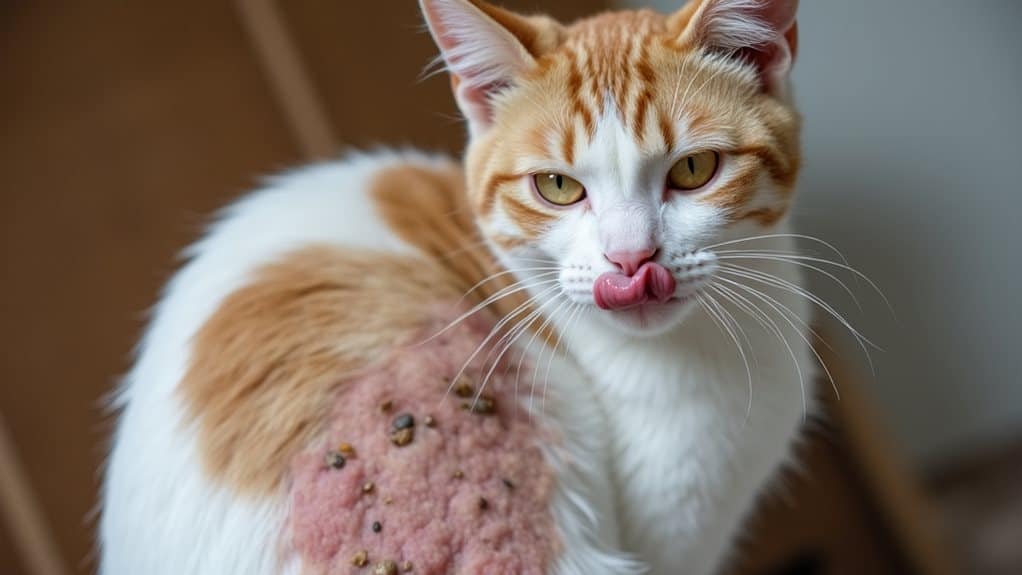
Cats often develop stress-related skin conditions that manifest as patches of thinning fur, redness, or even complete baldness in certain areas. Your feline friend might be grooming excessively when feeling anxious, leading to these visible skin issues.
Moving to a new home, changes in routine, or a new pet can trigger this behavior.
If you notice your cat licking or biting at the same spot repeatedly, it’s time for action. Effective stress management techniques include creating safe spaces, maintaining consistent routines, and using calming pheromone diffusers.
In severe cases, your vet might recommend behavioral therapy or anti-anxiety medication.
Don’t ignore these signs—your cat isn’t just being difficult. They’re communicating distress in the only way they know how.
With patience and proper intervention, most cats recover completely.
Autoimmune Skin Disorders in Cats
Beyond stress-related issues, autoimmune skin disorders represent a challenging category of feline skin conditions that every cat owner should recognize.
These occur when your cat’s immune system mistakenly attacks healthy skin cells, causing uncomfortable and sometimes serious symptoms.
While rare conditions like lupus vulgaris can affect cats, pemphigus foliaceus is the most common autoimmune skin disease in felines.
You’ll notice it through:
- Crusty, scaly patches around your cat’s face, ears, and footpads
- Red, inflamed areas that may weep or ooze clear fluid
- Painful lesions that cause your kitty to withdraw from being touched
If you spot these symptoms, don’t wait—contact your vet immediately.
Treatment typically involves immunosuppressive medications that can effectively manage these conditions when caught early.
Home Remedies vs. When to See the Vet
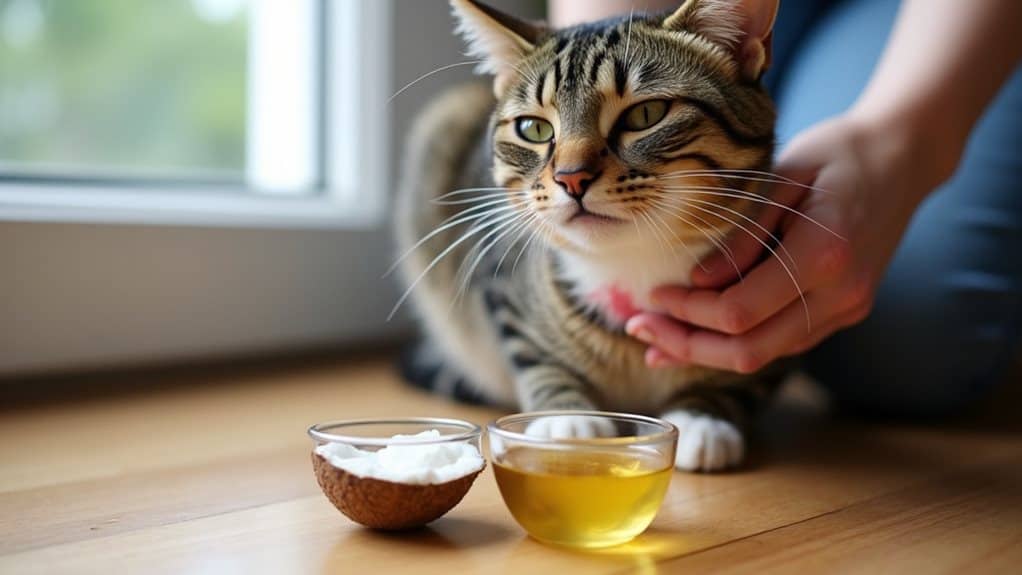
Although many minor skin irritations can be addressed at home, knowing when to try a home remedy versus when to rush to the veterinarian is crucial for your cat’s health.
For mild issues like small dry patches, you can try gentle home remedies like coconut oil or a warm oatmeal bath.
However, don’t hesitate to schedule a vet consultation if you notice your cat excessively scratching, has open wounds, hair loss, or shows signs of pain.
Warning: Excessive scratching, wounds, hair loss, or signs of pain require immediate veterinary attention—these aren’t DIY situations!
These symptoms could indicate serious conditions requiring professional treatment. Remember, what looks minor to you might be much more serious!
The golden rule? When in doubt, call your vet. They’d rather answer your “silly” question than have you wait until a small problem becomes a major health crisis for your furry friend.
Preventative Care for Healthy Feline Skin and Coat
Maintaining your cat’s skin and coat health is much easier than treating problems after they develop. Regular preventative care will keep your furry friend comfortable and reduce vet visits.
The dietary impacts on your cat’s skin can’t be overstated—quality food rich in omega fatty acids creates a natural barrier against infections.
Here’s how to keep your cat’s skin and coat in top condition:
- Brush your cat 2-3 times weekly using appropriate grooming techniques for their coat length (short-haired cats need soft brushes, while long-haired felines benefit from wide-toothed combs)
- Monitor for early signs of irritation like excessive scratching or redness
- Provide clean bedding and consider washing your hands before petting them if you’re allergic
Frequently Asked Questions
Can My Cat’s Diet Affect Its Skin Health?
Yes, your cat’s diet directly impacts skin health. Dietary allergies can cause itching and inflammation, while nutritional deficiencies may lead to dry, flaky skin. High-quality food with crucial fatty acids supports healthy skin.
Are Certain Cat Breeds More Prone to Skin Problems?
Nearly 20% of feline dermatological issues are breed-specific. Yes, your cat’s breed susceptibility greatly impacts skin health due to genetic factors. Persian, Sphynx, and Devon Rex cats often face more dermatological challenges than other breeds.
How Do Seasonal Changes Impact My Cat’s Skin Condition?
Seasonal changes can trigger allergies impacting your cat’s skin. You’ll notice more scratching during spring/fall when pollen increases, while winter’s dry air and summer’s heat can worsen existing conditions through weather changes.
Can Indoor Cats Develop Skin Issues Without Outdoor Exposure?
Yes, indoor cats can develop skin issues from dust mites, mold, household chemicals, and food sensitivities. Your cat’s allergies management should include monitoring stress factors, which can trigger excessive grooming and skin problems.
Is My Cat’s Skin Condition Contagious to Humans or Other Pets?
Imagine your cat’s irritated skin as a tiny battlefield. Yes, some conditions can spread to you or other pets. Fungal infections like ringworm and parasite transmission including scabies or mites are particularly contagious concerns.
Final Thoughts
Your cat’s skin health is as important as its playful nature. By staying alert to early signs of skin issues, you’ll catch problems before they spread like wildfire through your pet’s coat. With proper preventative care and swift action when needed, you’re giving your feline friend the best chance at comfort. Remember, you don’t need to tackle these challenges alone—your vet is always there to help you keep your cat’s skin purring with health.