The Best Fluffy Pancakes recipe you will fall in love with. Full of tips and tricks to help you make the best pancakes.

If you've ever watched your indoor cat stare longingly out the window for hours, dreaming of epic wildlife adventures, you're not alone. Your feline friend doesn't need to miss out on the thrill of the hunt just because they're living the cushy indoor life. By creating engaging scavenger hunts throughout your home, you'll tap into their natural hunting instincts while keeping them safe, entertained, and mentally sharp. Let's explore how you can transform your living space into an exciting playground that'll have your cat purring with satisfaction.
Why Indoor Cats Need Scavenger Hunts
While indoor cats enjoy the safety and comfort of home life, they still possess the same natural hunting instincts as their wild counterparts. If you've noticed your feline friend stalking toys or pouncing on imaginary prey, you're witnessing these innate behaviors in action. Products like Feliway diffusers can help cats feel more secure during enrichment activities. Additionally, providing adequate indoor environment enrichment can further enhance your cat's well-being and mental stimulation.
That's where the scavenger hunt benefits come into play. According to veterinary experts, over a third of cats in the UK struggle with weight issues due to insufficient activity.
Understanding your cat's behavioral instincts is key to providing enriching activities. Unlike dogs, cats are solitary hunters who thrive on independent exploration.
When you create engaging scavenger hunts, you're not just entertaining your cat – you're fulfilling their deep-rooted need to search, stalk, and discover. These activities prevent boredom, reduce destructive behaviors, and keep your indoor companion mentally sharp.
Plus, you'll love watching your clever kitty figure out each new challenge you create.
Health and Behavioral Benefits
Indoor scavenger hunts offer a remarkable array of health and behavioral benefits that'll transform your cat's life.
You'll notice improvements in both physical and mental well-being as your furry friend engages in these enriching activities. Through behavioral enrichment, your cat can maintain a healthy weight, prevent arthritis, and stay fit while having fun. Setting up activities that encourage your cat to climb and perch helps develop strength and agility. Creating a scavenger hunt using everyday household items makes enrichment accessible and affordable. Additionally, incorporating interactive toys into these activities adds an extra layer of stimulation and excitement.
Mental stimulation from these hunts helps reduce stress, anxiety, and those midnight zoomies that keep you awake.
If your cat's been climbing curtains or scratching furniture, these activities will channel that energy into positive behaviors. Plus, they'll satisfy your cat's natural hunting instincts, which means less destructive behavior and excessive meowing.
When you provide these engaging activities, you're not just entertaining your cat – you're investing in their long-term health and happiness.
Setting Up Your First Cat Scavenger Hunt
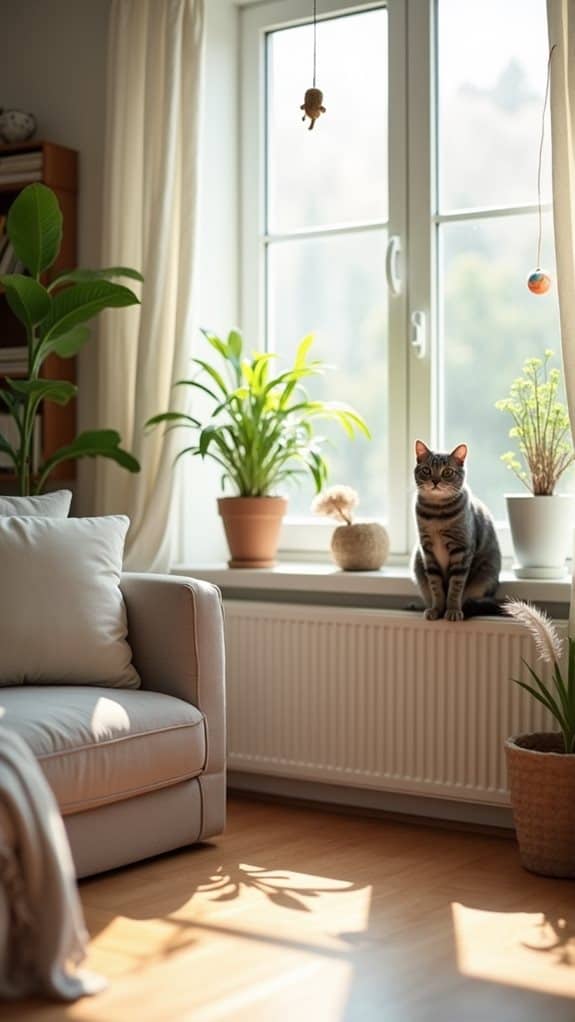
Before diving into your first cat scavenger hunt, you'll need to set up a successful game plan that'll keep your feline friend engaged and entertained. Your scavenger hunt preparation should start with selecting your cat's favorite treats or kibble, and finding safe, accessible hiding spots throughout your home. Using scent cues will help your cat learn to associate the treats with their locations. Dividing your cat's regular food into multiple small portions can make the hunt more engaging. Adding variety to the types of treats you use can further increase your cat's excitement during the hunt.
Remember to engage your cat's senses by letting them watch you hide the first few treats, helping them understand the exciting game they're about to play.
- Start with easy-to-spot locations, placing treats in plain sight to build your cat's confidence.
- Show your cat the hiding process, making excited sounds to spark their interest.
- Keep track of where you've hidden treats to prevent any forgotten morsels.
As you begin, stay close by to observe your cat's engagement and adjust the difficulty based on their response. Engaging in this type of play can significantly strengthen the bond between you and your cat by providing interactive play that both of you will enjoy.
Best Hiding Spots Around the House
Once you've introduced your cat to the concept of a scavenger hunt, it's time to explore the perfect hiding spots throughout your home.
Your cat's natural curiosity will guide your hiding strategies as you select locations that appeal to their adventurous spirit. Consider placing treats in warm, cozy spots like the top of the fridge or near the dishwasher, where the gentle hum of appliances adds intrigue. Fresh laundry areas can be particularly enticing since cats love to hide in freshly washed clothes. These spots allow cats to regulate stress levels through familiar surroundings and scents. Creating a designated hiding area can foster a sense of security and comfort for your cat.
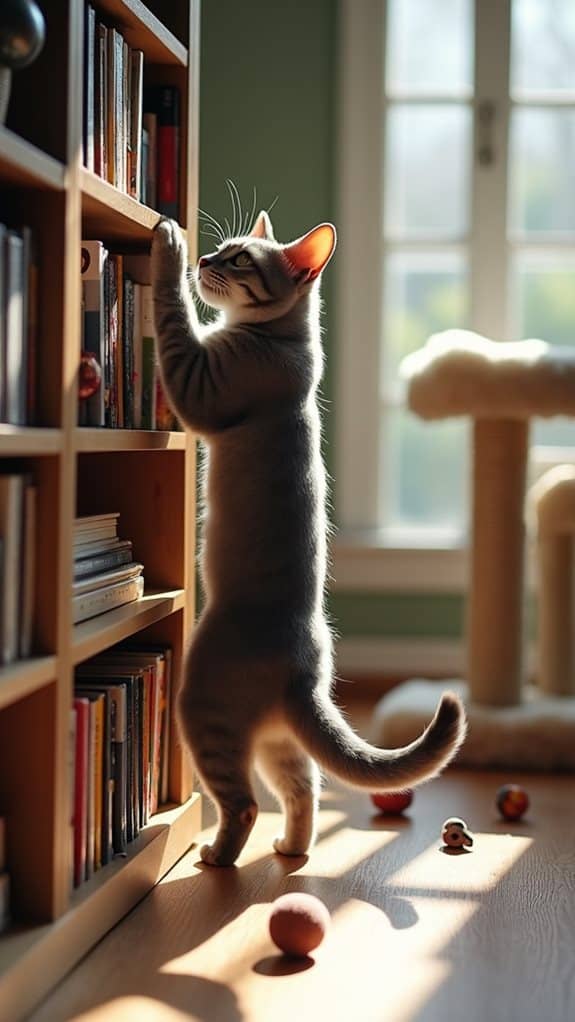
Elevated areas, such as bookshelves and high cabinets, make excellent hiding spots that tap into your cat's love of climbing.
Don't forget about concealed spaces – behind curtains, under beds, or inside empty boxes can create exciting discoveries.
Just remember to avoid potentially dangerous locations like inside appliances or HVAC systems.
Your cat will love this engaging blend of mental and physical exercise!
Choosing the Perfect Treats and Rewards
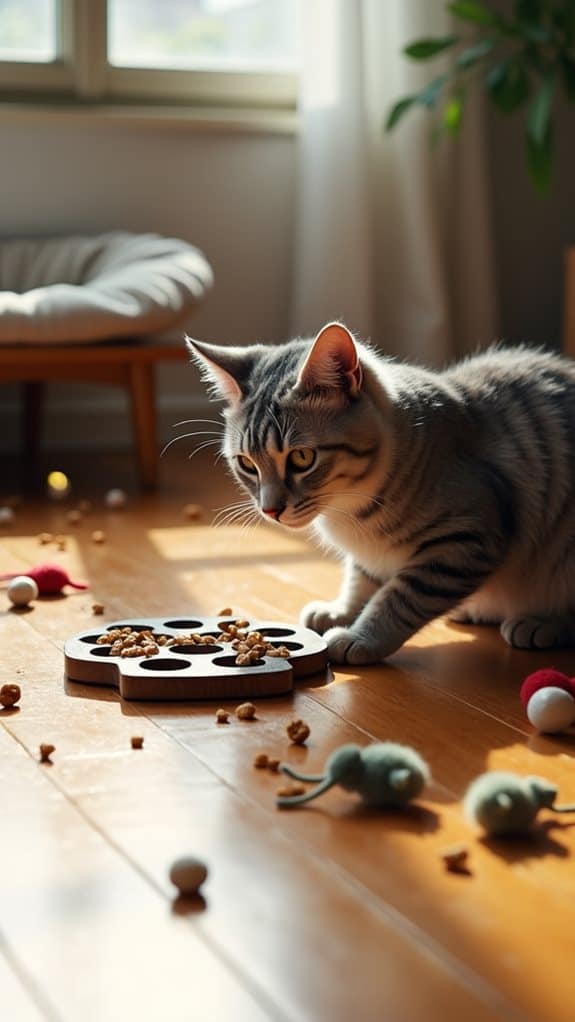
When you're planning a scavenger hunt for your feline friend, you'll want to pick treats that'll make their whiskers twitch with excitement while keeping their health in mind.
You can mix up the reward types by using small portions of their regular food, special therapeutic treats, or even homemade goodies that fit their dietary needs. Even though your cat may be well-fed, they will still display their natural hunting instincts during these activities. Try incorporating treats with different textures and smells to maximize your cat's interest and enrichment. Additionally, providing fresh, flowing water nearby ensures your cat stays well-hydrated while they explore for treasures.
The key is to place these enticing morsels strategically – whether it's inside puzzle feeders, scattered in challenging spots, or tucked into treat-dispensing toys – to bring out your cat's natural hunting instincts while keeping their daily calorie intake in check.
Healthy Treat Selection Tips
Selecting the right treats for your indoor scavenger hunt can make all the difference between a fun, enriching activity and a missed opportunity for health benefits. When choosing treat varieties, focus on nutritional balance by incorporating wholesome options like small pieces of cooked pumpkin, blueberries, or carrots.
You'll want treats that aren't just tasty but also support your cat's overall health and wellness.
- Mix protein-rich treats with vitamin-packed options, combining small pieces of cooked chicken with tiny carrot chunks.
- Choose treats that are easy to hide and won't spoil quickly, such as freeze-dried proteins or bite-sized fresh veggies.
- Keep portions small by breaking treats into tiny pieces – your cat will still enjoy the hunt while maintaining a healthy weight. Incorporating low-calorie snacks into the mix can further enhance your cat's health during the scavenger hunt.
Motivational Food Placement Methods
Successful treat placement can make or break your cat's indoor scavenger hunt experience. To boost your cat's food motivation, start by offering smaller, scheduled meals instead of leaving food out all day.
You'll want to discover your cat's treat preferences through careful experimentation with different textures and flavors, from freeze-dried chicken to meat-flavored baby food.
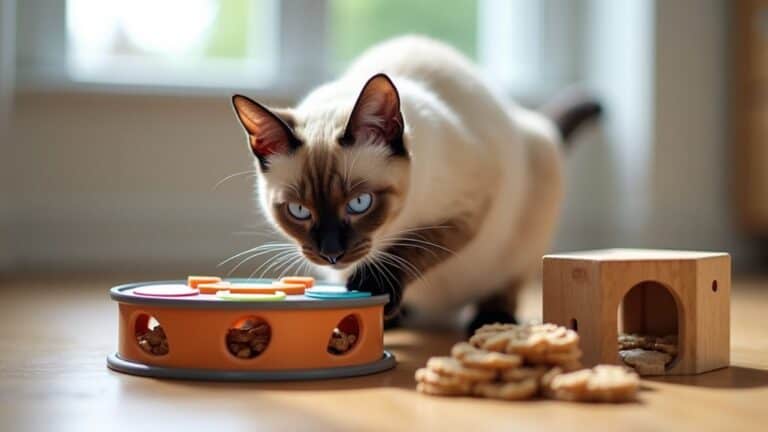
Mix things up by hiding treats in puzzle toys, snuffle mats, or paper bags around your home. Begin with easy-to-spot locations, then gradually increase the challenge as your cat becomes more confident.
Don't forget to pair these activities with positive associations – avoid using treats to lure or distract. Instead, focus on making the hunt itself an exciting adventure that strengthens your bond while providing mental stimulation for your curious companion. This enriching experience can also help fulfill their natural instincts, encouraging behaviors that promote well-being.
Making Hunts Age-Appropriate
Creating age-appropriate scavenger hunts for your cat isn't just about hiding treats – it's about understanding your feline friend's life stage and abilities.
Whether you have a playful kitten, active adult, or gentle senior, you'll want to tailor the hunt to match their energy and capabilities. Understanding cat behavior helps you design the perfect scavenger hunt that keeps them engaged without causing frustration.
Here's how to adapt hunts for different life stages:
- For kittens: Use simple hiding spots and familiar scents to build confidence.
- For adult cats: Gradually increase difficulty and divide regular meals into multiple locations.
- For seniors: Focus on mental stimulation with easy-to-reach spots and favorite treats.
Remember to watch your cat's response and adjust accordingly – they'll let you know what works best for them! Additionally, it's important to consider their nutritional needs as you incorporate treats into the scavenger hunts, ensuring the rewards are healthy and appropriate for their life stage.
Keeping Your Cat Engaged Long-Term
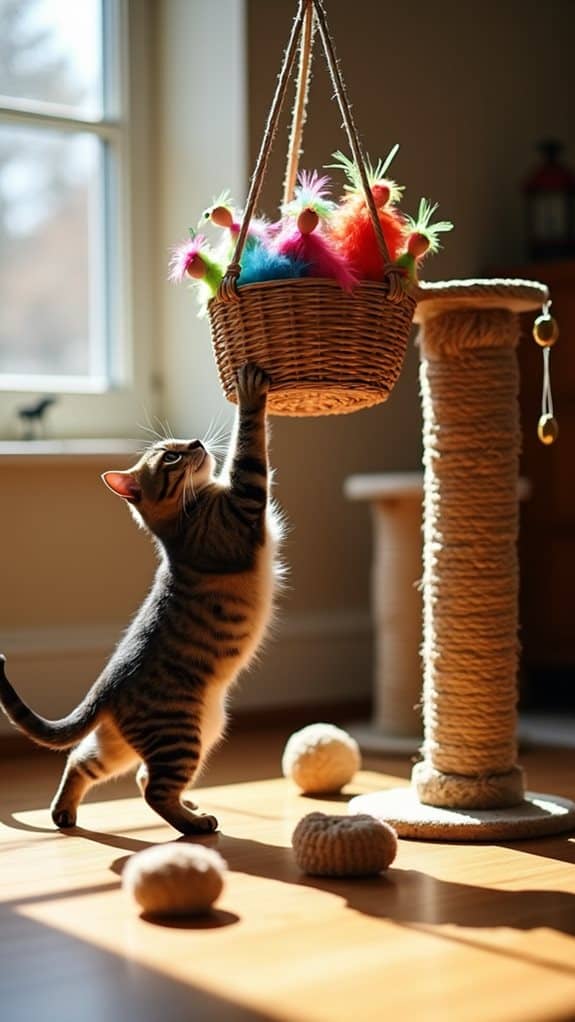
While it's exciting to start a new indoor scavenger hunt routine with your cat, maintaining their interest over time requires strategy and creativity.
To keep your cat engaged long-term, you'll want to implement various engagement strategies that keep the experience fresh and stimulating. Try rotating different toys and treats throughout the hunt, and don't forget to combine activities, like adding obstacle courses to your scavenger hunts.
You'll find success by monitoring your cat's preferences and adjusting activity variety accordingly. If they love certain toys or treats, incorporate these favorites alongside new elements to maintain excitement.
Store hunt items out of sight when not in use, and gradually increase difficulty levels as your cat masters each challenge. Remember, the key is to keep the experience unpredictable and rewarding. Additionally, incorporating interactive games can further strengthen the bond between you and your feline.
Safety Precautions During Scavenger Hunts
Making your cat's scavenger hunt safe is just as important as keeping it fun and engaging. As you plan your kitty's indoor adventure, focus on scavenger safety by carefully selecting hiding spots away from hazardous areas.
You'll want to avoid places with breakable items or toxic substances that could harm your curious explorer.
Here are three essential safety measures to implement:
- Document every treat location and remove any unfound items after the hunt.
- Keep plastic bags strictly off-limits as hiding spots.
- Stay within sight of your cat to prevent accidents or overexertion.
Remember to adjust the difficulty based on your cat's abilities, especially if they're elderly or have health conditions. Creating a comfortable environment that prioritizes comfort and security will enhance their scavenger hunt experience.
Combining Hunts With Other Enrichment Activities
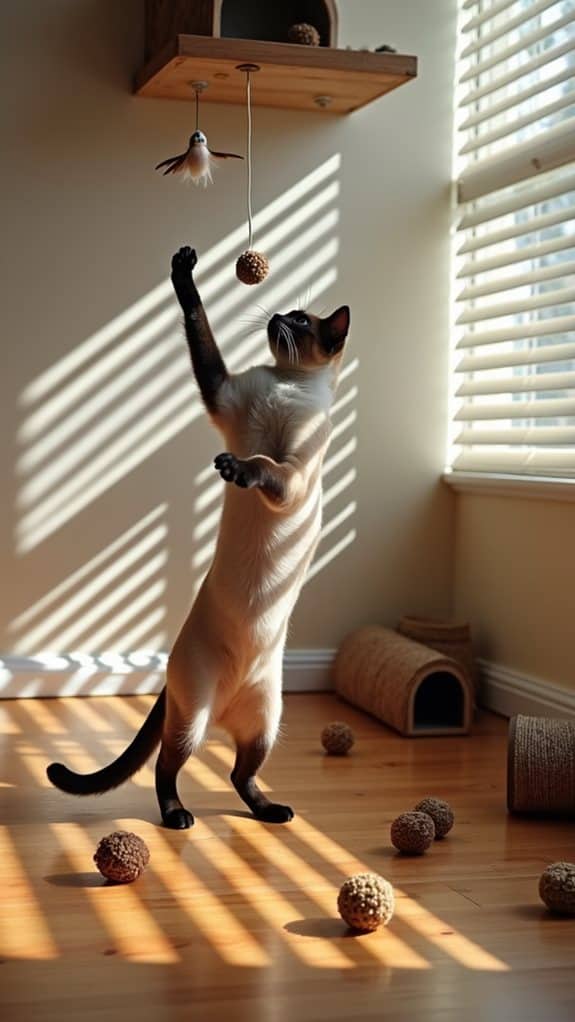
To maximize your cat's entertainment and enrichment, indoor scavenger hunts can be cleverly combined with other engaging activities.
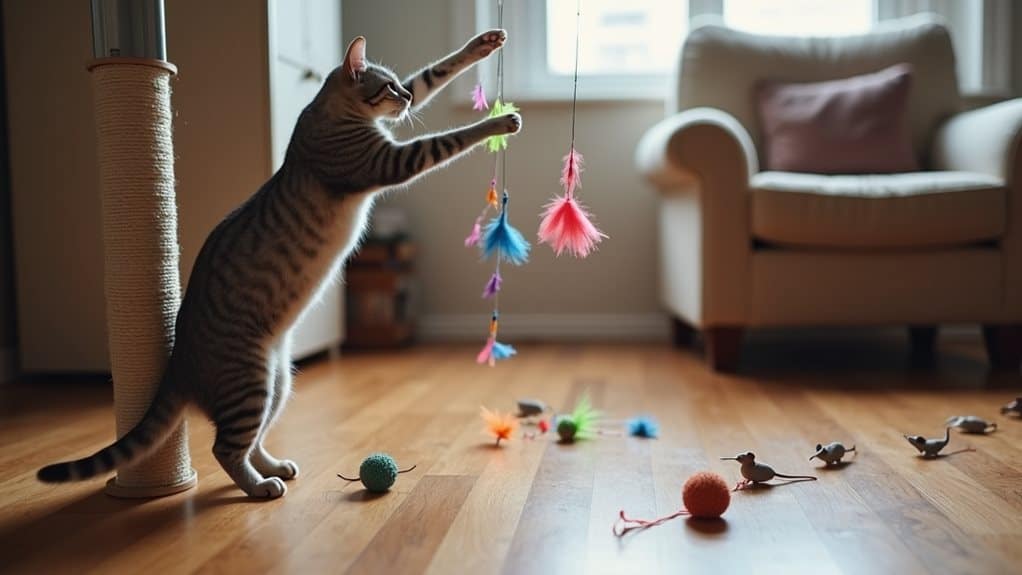
Try incorporating puzzle feeders and interactive toys to stimulate your cat's natural hunting instincts while they search for treats. You'll find that environmental changes, like rearranging furniture or adding vertical spaces, create exciting new territories for exploration.
Make hiding spots more intriguing by mixing in sensory stimulation – think crinkly bags, different textures, and enticing scents.
Don't forget to include chasing games with wand toys or balls to add physical exercise to the mix. For an extra challenge, introduce cognitive challenges by gradually increasing the difficulty of treat locations.
Troubleshooting Common Hunting Challenges
When you're setting up scavenger hunts for your cats, you'll likely face some common challenges that need careful attention and thoughtful solutions.
If you've got a timid cat who's hesitant to participate, or multiple cats who might get competitive over treats, you'll want to create separate hunting zones and maintain a calm, encouraging environment.
You can prevent food aggression and keep the peace by spacing out the treats, monitoring your cats' interactions, and making sure there are plenty of goodies to go around.
Handling Timid Cat Behavior
Since every cat has a unique personality, helping timid felines overcome their fears during indoor scavenger hunts requires a thoughtful and patient approach.
When working with shy cats, you'll want to focus on gentle socialization techniques that build their confidence gradually. By understanding your timid cat's body language and respecting their comfort zones, you can create positive experiences that encourage exploration and play.
- Start with simple hiding spots in familiar areas where your cat already feels safe.
- Use their favorite treats and toys as rewards to make the experience more enticing.
- Keep sessions brief at first, around 5-10 minutes, and gradually extend them as your cat becomes more comfortable.
Remember to celebrate small victories and never force interaction – let your cat set the pace for their confidence-building journey.
Preventing Food Aggression Issues
Food aggression in cats, while less common than in dogs, can become a challenging issue during indoor scavenger hunts if you don't take proper precautions.
To manage food aggression triggers, you'll want to create a calm, structured environment for your cat's hunting activities. Start by setting up feeding stations in quiet areas away from high-traffic spaces and other pets.
When implementing behavioral management strategies, focus on positive reinforcement and consistency. You can reduce anxiety by splitting your cat's daily food into smaller portions throughout the day, making the hunt more engaging and less stressful.
Try using puzzle feeders and treat balls to slow down eating and provide mental stimulation. Remember, if your furry friend shows signs of aggression during these activities, it's best to consult with your veterinarian for personalized guidance.
Managing Multi-Cat Hunt Dynamics
Although managing multiple cats during indoor scavenger hunts can be tricky, you'll find success by creating a well-structured environment that respects each cat's unique hunting style.
To minimize territorial behavior and keep hunt dynamics positive, you'll want to establish separate hunting zones while maintaining peaceful shared spaces.
- Set up designated hunting areas for each cat using different textures and scents, giving them their own special territory to explore.
- Schedule staggered hunting times throughout the day, preventing competition over the same toys or spaces.
- Create vertical hunting opportunities with cat trees and wall shelves, allowing your cats to satisfy their instincts at different heights.
Remember to monitor your cats during these activities and reward calm behavior.
When everyone has their own space and time to hunt, you'll see more harmonious interactions between your feline friends.
Final Thoughts
Just as you're setting up your cat's next indoor adventure, you'll notice something remarkable: your curious companion's already learned the routine! It's no coincidence that cats who participate in regular scavenger hunts show improved mood and decreased stress levels. You're not just creating a game – you're building a stronger bond while keeping your feline friend mentally sharp and physically active. Let's keep those paws moving and minds exploring!