The Best Fluffy Pancakes recipe you will fall in love with. Full of tips and tricks to help you make the best pancakes.

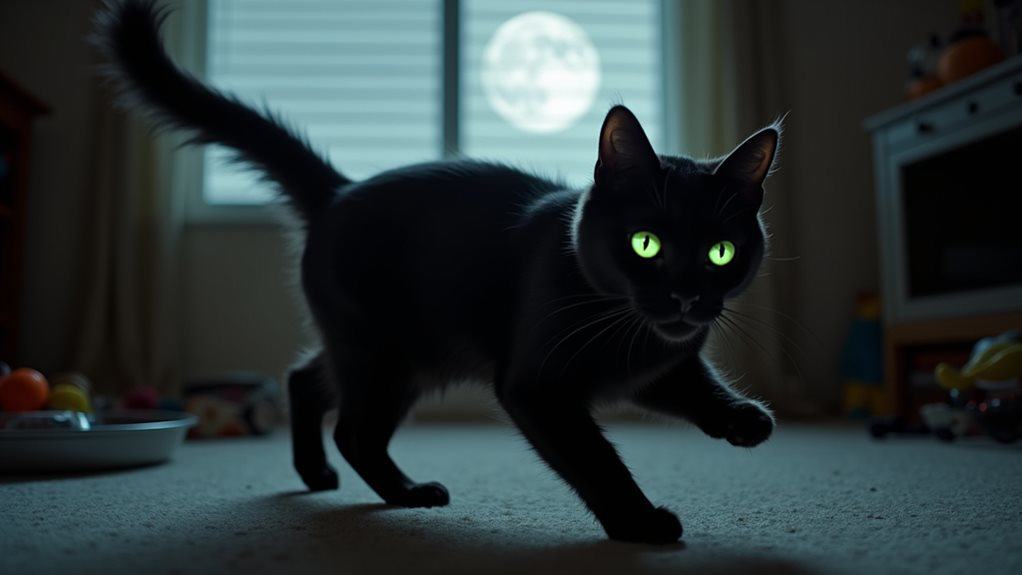
Your cat’s “night crazies” stem from their evolutionary hunting instincts—they’re naturally active at dawn and dusk. Those midnight zoomies are normal behaviors inherited from wild ancestors. To manage them, schedule intense play sessions before dinner and bedtime, provide daytime enrichment with toys and climbing spaces, and serve their largest meal before bed. Creating a dedicated cozy corner with toys can help too. Discover how these simple adjustments can transform your feline’s nocturnal antics.
The Science Behind Feline Nocturnal Energy Bursts
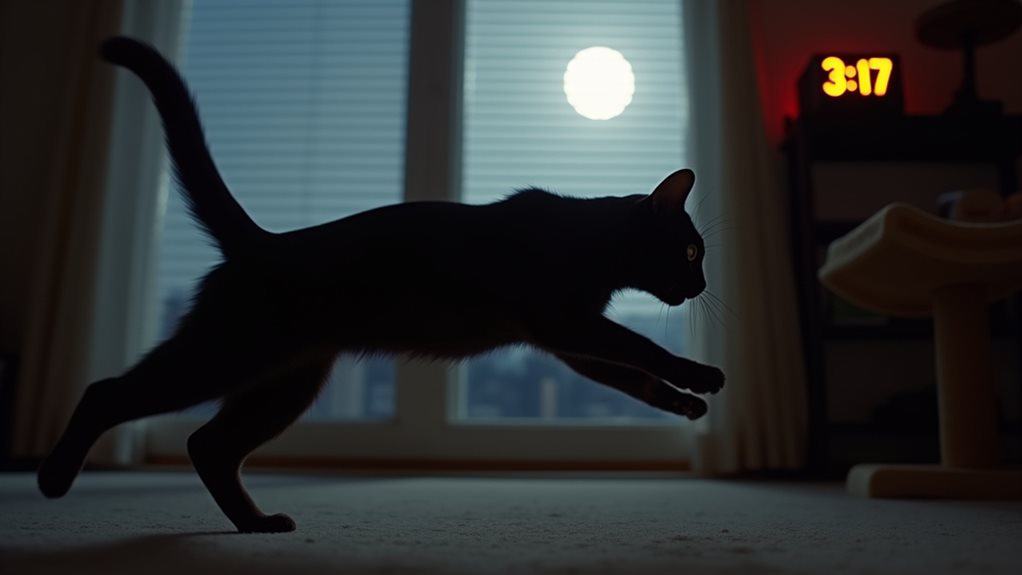
While you’re fast asleep, your cat might be zooming around the house like a tiny furry tornado. This isn’t your kitty plotting against you—it’s their nocturnal instincts kicking in!
Cats are crepuscular by nature, meaning they’re most active during dawn and dusk when their wild ancestors would hunt.
Your home’s quiet nighttime atmosphere creates the perfect playground for your cat’s natural feline behavior to emerge. Even though your domestic kitty doesn’t need to hunt for dinner, those instincts remain hardwired in their DNA. This behavior can be linked to their need for comfort and security, as the nighttime environment allows them to engage in instinctive play without distractions.
The sudden bursts of energy, sometimes called “zoomies,” are completely normal.
What’s fascinating is that your cat’s eyes are designed for low-light hunting, with pupils that can expand to cover nearly the entire visible iris—making your sleepy household their personal nighttime adventure zone.
Evolutionary Roots of Cat “Zoomies”
Your cat’s midnight sprints, often called “zoomies,” come from their ancient hunting patterns as crepuscular predators most active at dawn and dusk.
When your feline friend races around your home at 3 AM, they’re acting on deep-rooted instincts that once helped their ancestors catch prey during low-light hours.
These bursts of energy aren’t random quirks but rather your cat’s natural way of releasing pent-up predatory energy that would normally be spent stalking and chasing in the wild. This instinctual behavior aligns with their nocturnal habits that maximize their chances of successful hunting.
Crepuscular Hunting Instincts
Although cats seem to go wild in the middle of the night, most are actually crepuscular hunters by nature, meaning they’re most active during dawn and dusk. These feline instincts are deeply wired into your kitty’s DNA, explaining why they’re ready to pounce while you’re trying to sleep. Cats’ strong survival instincts enable them to adapt to their environments, further enhancing their hunting behaviors.
| Time of Day | Cat Activity Level | What Your Cat Is Doing |
|---|---|---|
| Dawn (5-8am) | Very High | Hunting, exploring, playing |
| Day (9am-5pm) | Low to Moderate | Sleeping, occasional play |
| Dusk (6-9pm) | Very High | Hunting, playing, patrolling |
| Night (10pm-4am) | Moderate | Sleep cycles with burst activity |
You’re not imagining those midnight zoomies! This crepuscular activity pattern helped wild cats’ ancestors hunt when their prey was active but larger predators weren’t around.
Predatory Energy Release
Those random bursts of manic energy—affectionately called “zoomies”—have deep evolutionary roots in your cat’s DNA.
When your feline friend suddenly tears through the house at midnight, they’re actually releasing pent-up predatory instincts that haven’t been satisfied during their day of lounging.
In the wild, cats hunt multiple small prey throughout the day and night. Your house cat, however, mightn’t have proper outlets for these natural urges.
Without adequate energy management, those predatory instincts build up and eventually explode in those dramatic midnight sprint sessions. It’s their way of burning off excess energy they’d normally use stalking and chasing prey.
To help manage these “zoomies,” ensure you provide plenty of interactive toys to engage their hunting instincts throughout the day.
Don’t worry—this behavior is completely normal and actually crucial for your cat’s mental health and wellbeing.
Distinguishing Normal Night Activity From Behavioral Issues
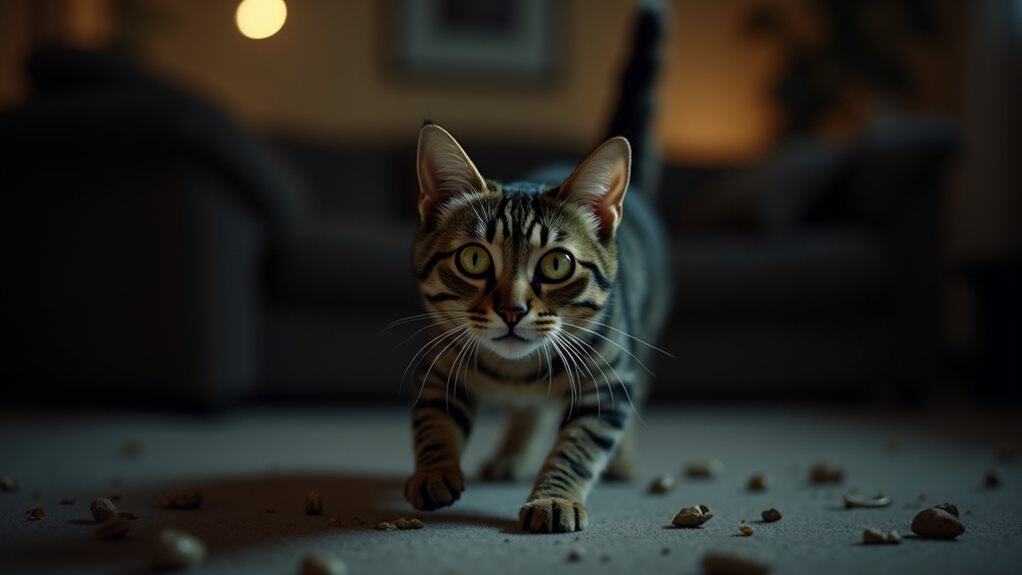
While your cat’s midnight races around the house are usually normal nocturnal behavior, it’s important to recognize when nighttime activity crosses into problematic territory.
You’ll notice differences in how kittens, adult cats, and seniors express their nighttime energy, with younger cats typically being more frantic and older ones sometimes becoming more vocal. If your cat’s nighttime behavior suddenly changes, includes excessive meowing, aggression, or seems anxious rather than playful, it might be time to consult your veterinarian about possible underlying issues. Additionally, underlying medical conditions may also contribute to sudden changes in behavior, indicating the need for a thorough evaluation by a professional.
Normal Nocturnal Patterns
Despite what many cat owners believe, a certain amount of nighttime activity is completely normal for our feline friends. Your cat’s nocturnal instincts are deeply rooted in their evolutionary history as twilight hunters. When your kitty races around at 3 AM, they’re simply expressing natural feline behavior.
Cats typically experience bursts of energy at dawn and dusk, known as crepuscular activity. You’ll notice they’re most active during these changeovers, with short bursts of play followed by naps.
Their exceptional night vision, sensitive whiskers, and acute hearing make them perfectly equipped for nighttime adventures. Furthermore, engaging with your cat during these peak activity times can enhance the bonding and attachment between you, fostering a deeper relationship.
While it might disrupt your sleep, remember that your cat isn’t being deliberately annoying—they’re just following ancient biological programming that once helped their ancestors survive in the wild.
Concerning Behavior Signs
Most cat owners can tell the difference between typical nighttime zoomies and something more concerning. When your normally playful cat suddenly exhibits excessive vocalization, aggression, or self-harming behaviors at night, it’s time to pay attention.
Environmental influences like new furniture, household guests, or nearby outdoor cats can trigger anxiety-based behaviors. Your cat might urinate outside the litter box, excessively groom until bald spots appear, or seem unusually fearful after dark.
Watch for these behavioral triggers: pacing that doesn’t stop, destructive scratching beyond normal play, or howling that continues for extended periods. If you notice signs of fear aggression, it’s essential to assess your cat’s environment for potential stressors.
If your kitty’s nocturnal antics include aggressive attacks on you or other pets, something deeper may be at work. These signs often indicate stress, anxiety, or potential medical issues requiring a vet’s attention.
Age-Related Activity Differences
As cats move through different life stages, their nighttime behavior patterns shift dramatically.
What’s normal for a kitten might be concerning for an adult cat, and understanding these differences helps you respond appropriately.
- Kitten activity peaks at night, with boundless energy driving those 3 AM play sessions – this is completely normal development.
- Adult cats typically settle into more predictable routines, with shorter bursts of activity between longer sleep periods.
- Senior behavior often includes increased nighttime vocalization or restlessness, sometimes due to age-related disorientation.
- Cats of any age may show temporary increases in night activity during seasonal changes.
You’ll notice your cat’s energy levels naturally changing as they mature, and many breeds, such as Ragdolls, exhibit unique behavioral traits that can influence their nighttime activity.
A playful kitten becomes a more measured adult, while your senior cat might need extra comfort during nighttime hours.
Creating an Enriching Daytime Schedule for Cats
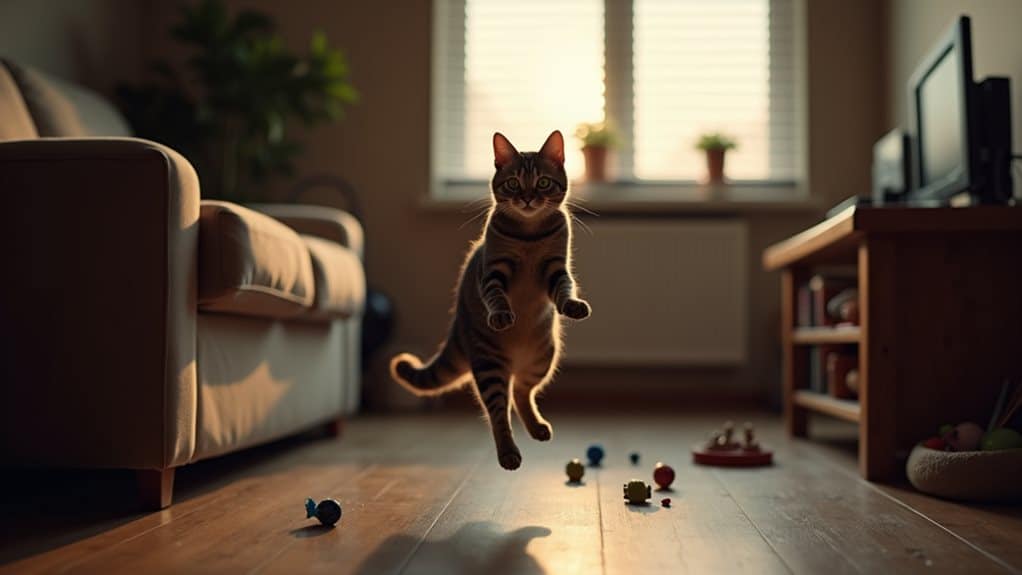
To keep your cat from transforming into a nocturnal terror, you’ll need to establish an enriching daytime routine that burns off excess energy. Schedule at least two 15-minute play sessions when you’re home, using interactive toys like feather wands or laser pointers that mimic prey movements.
Don’t underestimate the power of daytime enrichment—puzzle feeders, window perches, and cat trees can keep your feline friend engaged while you’re away. Rotating toys weekly helps maintain their interest, preventing boredom that often leads to nighttime antics. Engaging your cat in enrichment activities throughout the day can significantly reduce nighttime craziness.
Consider feeding your cat their main meal in the evening rather than morning. This natural cycle of “hunt, eat, groom, sleep” encourages them to settle down after dinner instead of revving up when you’re trying to sleep.
Strategic Playtime: Timing for Nighttime Calm
Beyond establishing a solid daytime routine, the exact timing of your cat’s play sessions can make all the difference in achieving peaceful nights.
Understanding your cat’s playtime preferences is essential to developing sleepy rituals that work.
- Schedule an intense 15-20 minute play session right before your evening meal.
- Follow dinner with another focused playtime about an hour before your bedtime.
- End nighttime play with progressively slower movements, mimicking tired prey.
- Establish consistent timing—cats thrive when they can anticipate their schedule.
When you time play sessions strategically, you’re working with your cat’s natural energy cycles rather than fighting them. Incorporating interactive play into these sessions will keep your cat engaged and help them wind down effectively.
You’ll notice your furry friend becoming naturally tired when you want them to be, transforming those midnight zoomies into peaceful purrs.
Diet and Feeding Schedule Adjustments
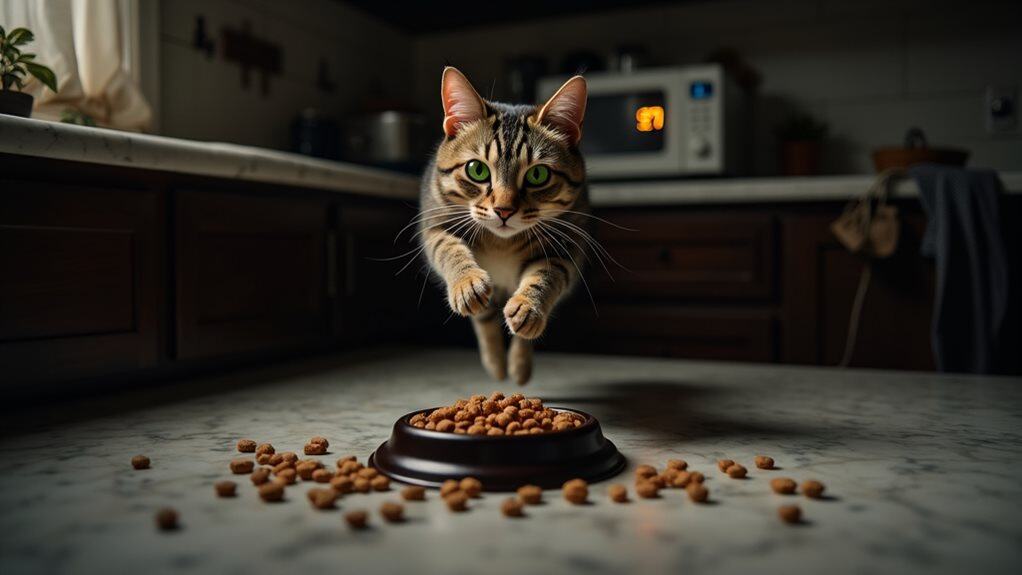
Your cat’s nocturnal energy levels are directly connected to what and when they eat. Just like humans get a burst of energy after consuming sugar, cats experience similar effects from their meals. Making strategic diet adjustments can greatly impact your feline’s nighttime behavior.
Consider implementing a feeding schedule that aligns with your household’s routine. Instead of free-feeding throughout the day, try serving your cat’s largest meal shortly before your bedtime. This timing trick encourages them to groom and nap while you’re trying to sleep, rather than demanding a midnight snack.
Some pet parents find success with automatic feeders that dispense small amounts throughout the night, preventing hunger-induced zoomies.
The quality of food matters too—premium options with balanced nutrition can help maintain steady energy levels without those wild bursts.
Setting Up a Cat-Friendly Nighttime Environment
Creating a comfortable nighttime space for your cat can dramatically reduce those 3 AM acrobatic sessions.
When you design a nighttime sanctuary, you’re helping your feline friend feel secure and content while you sleep. Consider using calming scents like lavender or chamomile diffusers (pet-safe versions only) to create a relaxing atmosphere.
- Designate a cozy corner with a soft bed and a few favorite toys
- Install a night light to help older cats find their way without waking you
- Place a heated bed or pad in cooler months to satisfy their love of warmth
- Create vertical space with cat shelves or furniture to allow climbing and perching
Your cat’s evening comfort directly impacts your sleep quality, so investing time in their nighttime environment pays off for everyone in the household.
When to Consult a Veterinarian About Nighttime Activity
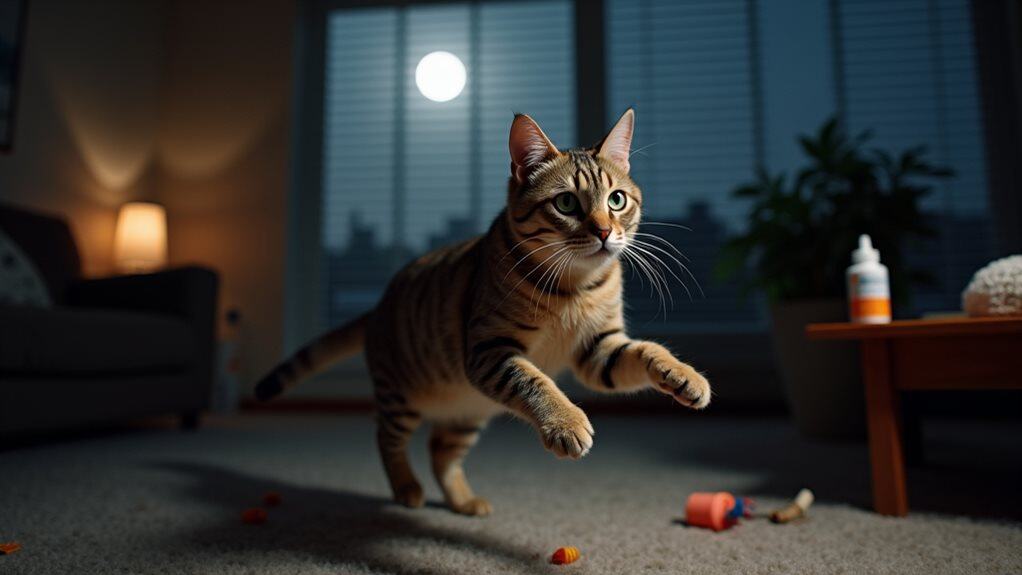
While most nighttime activity is normal feline behavior, sometimes those midnight marathons might signal something more serious. If your cat’s nighttime antics have suddenly increased or changed in intensity, it’s worth scheduling a veterinary consultation.
Watch for these warning signs: excessive vocalization, restlessness that seems painful rather than playful, or irritability during the day following sleepless nights. These could indicate underlying health issues like thyroid problems, cognitive dysfunction in older cats, or pain that’s more noticeable when everything is quiet.
Cats aren’t just being quirky—their nighttime restlessness could be silently signaling health concerns requiring attention.
During a behavioral assessment, your vet can determine if your cat’s nighttime zooming is just typical cat shenanigans or something requiring medical attention.
Don’t hesitate to bring it up—sometimes what we dismiss as “just being a cat” might actually be your furry friend trying to tell you something’s wrong.
Training Techniques to Modify Disruptive Nighttime Behaviors
Training cats to behave at night begins with consistency and patience, rather than frustration or punishment.
Establishing nighttime routines helps your furry friend understand when it’s time to settle down, not zoom around your bedroom at 3 AM.
Try these proven behavioral modification techniques:
- Schedule an evening play session to burn excess energy before bedtime.
- Create a cozy sleeping area away from your bedroom with familiar scents.
- Use positive reinforcement when your cat stays calm at night—treats work wonders!
- Gradually adjust feeding times to align with your sleep schedule.
Frequently Asked Questions
Can Certain Cat Breeds Have More Intense Nighttime Zoomies?
Yes, certain breeds definitely have more intense zoomies! You’ll notice your Siamese energy levels peak at night, while Bengal antics can reach extraordinary levels. Active breeds typically display more dramatic nighttime sprinting sessions.
Do Indoor-Only Cats Experience More Night Crazies Than Outdoor Cats?
Yes, your indoor-only cat likely experiences more night crazies due to pent-up energy. Without daytime adventures, their nocturnal instincts intensify. You’ll need to provide extra indoor stimulation to help manage these nighttime bursts.
At What Age Do Kittens Typically Outgrow Extreme Night Activity?
Frisky felines frequently find focus around 12-16 months. You’ll notice your kitten’s behavior gradually calming as they reach these growth milestones. Don’t worry—they’ll still play, but those extreme midnight marathons typically taper with maturity.
Will Getting Another Cat Reduce My Pet’s Nighttime Hyperactivity?
Getting another cat might help reduce nighttime hyperactivity. Your pets could engage in inter cat dynamics during the day, tiring each other out. However, social behavior varies—sometimes two cats might amplify nocturnal play instead.
Can Supplements or Natural Remedies Help Calm Nighttime Cat Behavior?
Herbal remedies like valerian and chamomile can work miracles for your wildest midnight marauder. Calming supplements containing L-theanine may help too. Always consult your vet before trying any natural solutions.
Final Thoughts
You’ve now got a toolbox full of strategies to tame even the wildest midnight marathon runner in your home. By understanding your cat’s natural instincts, creating engaging daytime activities, and establishing consistent routines, you’ll transform those sleepless nights into peaceful slumber. Remember, your feline friend isn’t trying to drive you absolutely insane—they’re just being cats! With patience and these techniques, you’ll both enjoy better rest and a stronger bond.