
The Best Fluffy Pancakes recipe you will fall in love with. Full of tips and tricks to help you make the best pancakes.


Quick Answer: The four things every first time cat owner must get right from day one are: having the right supplies ready before the cat arrives, booking a vet appointment within the first week, setting up a quiet safe space for the transition, and understanding that cats need time to decompress — not forced affection. Get those four things right and everything else becomes much easier.
Key Takeaways
- Buy the essentials before your cat comes home: litter box, food, water bowl, carrier, scratching post, and a hiding spot.
- Budget roughly $1,000–$1,500 for the first year, including setup costs and a vet visit.
- Indoor cats live significantly longer than outdoor cats — typically 13–17 years versus 2–5 years for outdoor-only cats.
- The first 24–48 hours should be calm and low-pressure; let the cat explore at their own pace.
- Litter training is usually instinctive for cats — the box just needs to be clean, accessible, and in a quiet spot.
- Kittens need kitten-specific food; adult cats need a different nutritional balance entirely.
- Cats can absolutely thrive in apartments, especially with vertical space and enrichment.
- Pet insurance is worth serious consideration — unexpected vet bills can run into thousands.
- Most healthy adult cats need a vet check once a year; kittens need more frequent visits in their first year.
- Cats are independent but not low-maintenance — they need daily interaction, play, and mental stimulation.
What Supplies Do You Really Need Before Getting a Cat?
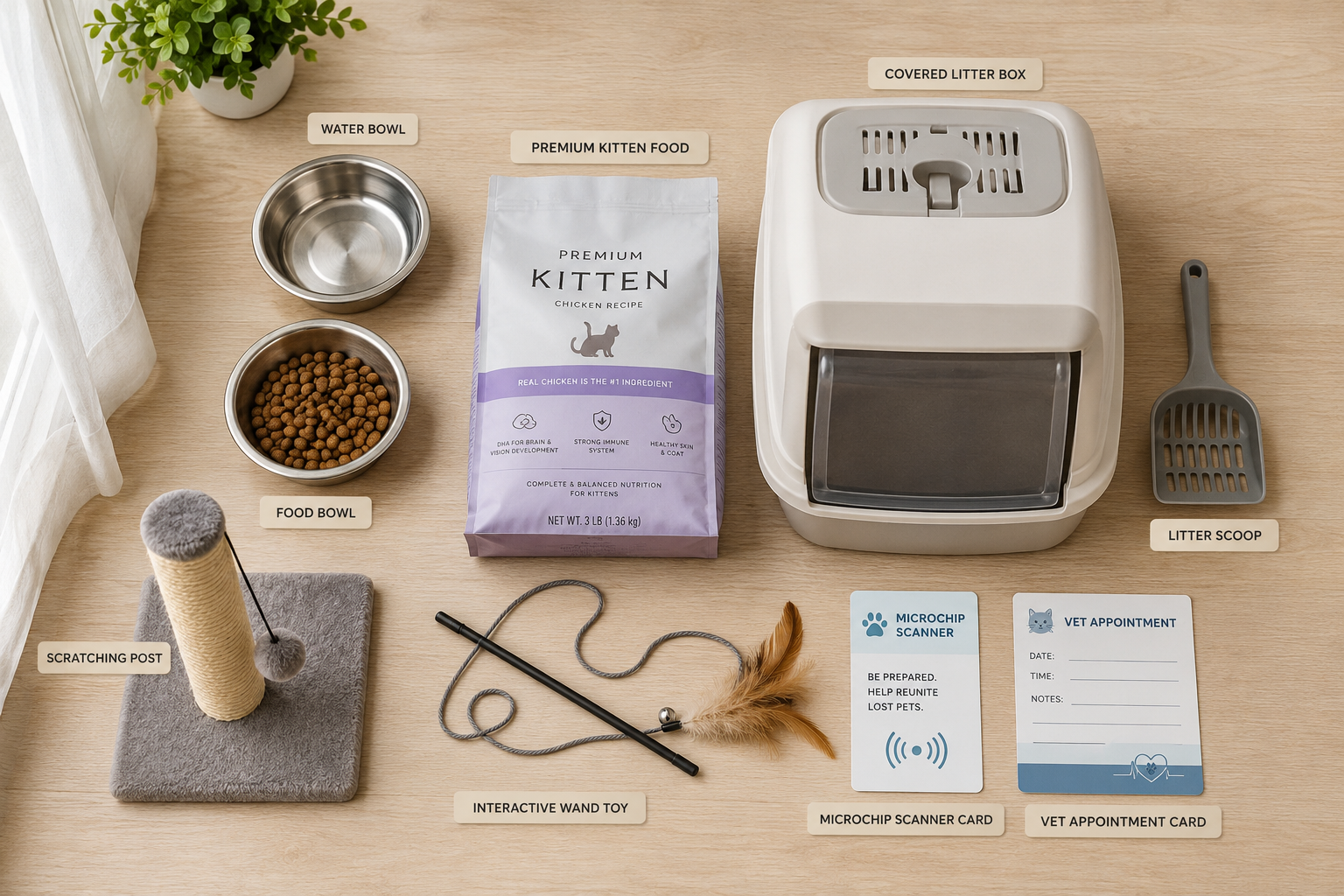
You need seven core items before your cat walks through the door. Everything else can wait — but these cannot.
The non-negotiable checklist:
- Litter box — Get one that’s 1.5x the length of your cat. Covered boxes suit some cats; open ones suit others. The Modkat Flip Litter Box or Nature’s Miracle High-Sided Litter Box are solid starting points.
- Cat litter — Unscented clumping litter (like Dr. Elsey’s Precious Cat Ultra) is the safest default. Scented litters can irritate cats’ sensitive respiratory systems.
- Food and water bowls — Stainless steel or ceramic, not plastic. Plastic can harbour bacteria and cause feline acne on the chin.
- Age-appropriate cat food — Kitten food if under 12 months, adult formula otherwise. More on this below.
- Carrier — You’ll need it on day one. The Sleepypod Air or a basic hard-sided carrier from Petmate both work well.
- Scratching post — Cats scratch to stretch, mark territory, and shed claw sheaths. A tall sisal post (at least 90cm/36 inches) is essential. The SmartCat Ultimate Scratching Post is a favourite for good reason.
- A hiding spot — A cardboard box with a blanket, a covered cat bed, or a dedicated cat hideout. New cats need somewhere to feel invisible.
Optional but genuinely useful from day one: a wand toy (Da Bird is a classic), a cat tree, and a first aid kit for cat owners.
Before your cat arrives, also walk through your home with fresh eyes and cat-proof the space. Secure loose cables, check for toxic plants, and remove anything fragile from surfaces a curious cat will absolutely reach.
How Much Does It Cost to Own a Cat for the First Year?
The honest answer: budget $1,000–$1,500 for the first year if you’re starting from scratch, and $500–$800 per year after that. These are estimates based on typical US costs in 2026 and will vary by location and cat.
Rough first-year cost breakdown:
| Expense | Estimated Cost |
|---|---|
| Adoption fee | $50–$200 |
| Initial supplies (litter box, bowls, carrier, etc.) | $150–$300 |
| First vet visit + vaccinations | $150–$300 |
| Spay/neuter (if not already done) | $200–$500 |
| Monthly food (x12) | $200–$600 |
| Litter (x12) | $100–$200 |
| Toys and enrichment | $50–$150 |
| Total estimate | $900–$2,250 |
Emergency vet visits are the wildcard. A single unexpected illness or injury can cost $500–$3,000+, which is exactly why pet insurance deserves a serious look from day one.
🐱 First-Year Cat Cost Estimator
Estimated first year:
$0
$0
Estimates only. Costs vary by location. Emergency vet bills not included.
Best Cat Breeds for First Time Owners
The best breeds for first time cat owners are those with predictably social, adaptable temperaments — cats that don’t require specialist grooming or extreme exercise. That said, a rescue cat’s individual personality often matters more than breed.
Top picks for new owners:
- Ragdoll — Gentle, laid-back, and famously tolerant. Goes limp when held, hence the name.
- British Shorthair — Calm, independent, and not demanding. Good for quieter households.
- Maine Coon — Playful and dog-like in personality. Needs more grooming but is highly sociable.
- Domestic Shorthair (mixed breed) — Often healthier due to genetic diversity. Personalities vary widely, so spend time with the individual cat before adopting.
- Burmese — Affectionate and people-oriented. Great if you want an interactive, social cat.
If you’re considering a kitten, read through the complete kitten care guide before committing — kittens are significantly more demanding than adult cats in the first few months.
What Are Common Mistakes New Cat Owners Make?
The most common mistake first time cat owners make is treating a cat like a small dog — expecting immediate affection, forcing interaction, and misreading stress signals as personality. Cats need time, space, and consistency.
Mistakes to avoid:
- Forcing cuddles too soon. A cat that hides for the first few days isn’t broken — it’s adjusting. Let them come to you.
- Free-feeding dry food only. Cats have a low thirst drive and need moisture in their diet. Wet food or a mix of wet and dry is better for urinary health long-term.
- One litter box for multiple cats. The rule is one box per cat, plus one extra. Two cats need three boxes.
- Skipping the vet because the cat “seems fine.” Many feline illnesses are hidden until they’re advanced. Annual check-ups catch things early.
- Ignoring scratching behaviour. If there’s no scratching post, the sofa becomes the scratching post. Provide options early and redirect destructive scratching before it becomes a habit.
- Using the wrong cleaning products. Many essential oils and phenol-based cleaners (like Pine-Sol) are toxic to cats. Stick to enzyme-based cleaners for accidents.
How to Introduce a Cat to a Home With Other Pets
A successful introduction takes at least 7–14 days and should never be rushed. Cats are territorial, and throwing a new cat into an existing pet’s space creates stress and aggression that can take months to undo.
Step-by-step introduction process:
- Separate rooms first. Keep the new cat in one room with their own food, water, litter, and bedding for the first few days.
- Scent swapping. Exchange bedding between the new cat and existing pets so they get used to each other’s smell before meeting.
- Door feeding. Feed both animals on opposite sides of a closed door. This builds a positive association with each other’s scent.
- Visual introduction. Use a baby gate or crack the door so they can see each other without full contact.
- Supervised face-to-face time. Keep sessions short and calm. Watch for flattened ears, hissing, or puffed tails — these mean slow down.
For a detailed walkthrough, the step-by-step guide to introducing a new cat covers every scenario including dog introductions.
Are Cats Good for Apartments, or Do You Need a House?
Cats are excellent apartment pets — in fact, many cats thrive in smaller spaces because they feel more secure in a contained territory. The key is vertical space and enrichment, not square footage.
A cat with access to a tall cat tree, window perches, and daily interactive play can be perfectly content in a studio apartment. What they can’t tolerate is boredom and isolation with nothing to do.
Maximizing vertical space for indoor cats is one of the highest-impact things you can do in a small home. Wall-mounted shelves, cat highways, and window bird feeders outside the glass give indoor cats the stimulation they need.
What Kind of Cat Food Should You Buy for a Kitten?
Kittens need food specifically labelled for kittens or “all life stages” — adult cat food doesn’t provide enough protein, fat, or calories for their rapid growth. Look for a named meat source (chicken, salmon, turkey) as the first ingredient.
What to look for on the label:
- AAFCO statement confirming it’s “complete and balanced” for growth or all life stages
- High animal protein (30%+ on a dry matter basis)
- Named fat source (chicken fat, salmon oil)
- No artificial colours, flavours, or excessive fillers like corn syrup
Good kitten food options include Royal Canin Kitten, Hill’s Science Diet Kitten, and Purina Pro Plan Kitten. Wet food is especially important for kittens — it supports hydration and kidney health from the start.
For a full breakdown of nutritional needs as your cat ages, the age-specific cat feeding guide is worth bookmarking now.
How Often Do Cats Need to Go to the Vet?
Healthy adult cats need a vet check once a year. Kittens need visits at 8, 12, and 16 weeks for vaccinations, then again at 6 months for spay/neuter discussion, then annually. Senior cats (10+) benefit from twice-yearly check-ups.
Vaccination schedule at a glance:
- 8 weeks: First FVRCP (core vaccine covering feline viral rhinotracheitis, calicivirus, and panleukopenia)
- 12 weeks: FVRCP booster + rabies (where required)
- 16 weeks: Final kitten FVRCP booster
- 1 year: First adult boosters
- Every 1–3 years: Adult boosters depending on vaccine type and lifestyle
In England, microchipping pet cats became a legal requirement in June 2024. Even if it’s not legally required where you are, microchipping is strongly recommended — it’s the most reliable way to be reunited with a lost cat.
For a full breakdown of what vaccines cats need and when, the cat vaccination guide covers everything in plain language.
Is Pet Insurance Worth It for Cats?
Yes — for most cat owners, pet insurance is worth it. A single emergency vet visit for something like a urinary blockage, broken bone, or ingested foreign object can cost $1,500–$5,000. Insurance makes those situations manageable instead of devastating.
The best time to get insurance is when the cat is young and healthy, before any pre-existing conditions are on record. Monthly premiums for cats typically run $20–$50 depending on coverage level, breed, and location.
Look for policies that cover:
- Accidents and illnesses (not just accidents)
- Hereditary and congenital conditions
- Diagnostics, surgery, and hospitalisation
- A reasonable annual limit (at least $5,000)
The cat insurance guide breaks down the main policy types and what to watch out for in the fine print.
Signs Your Cat Might Be Sick or Unhappy
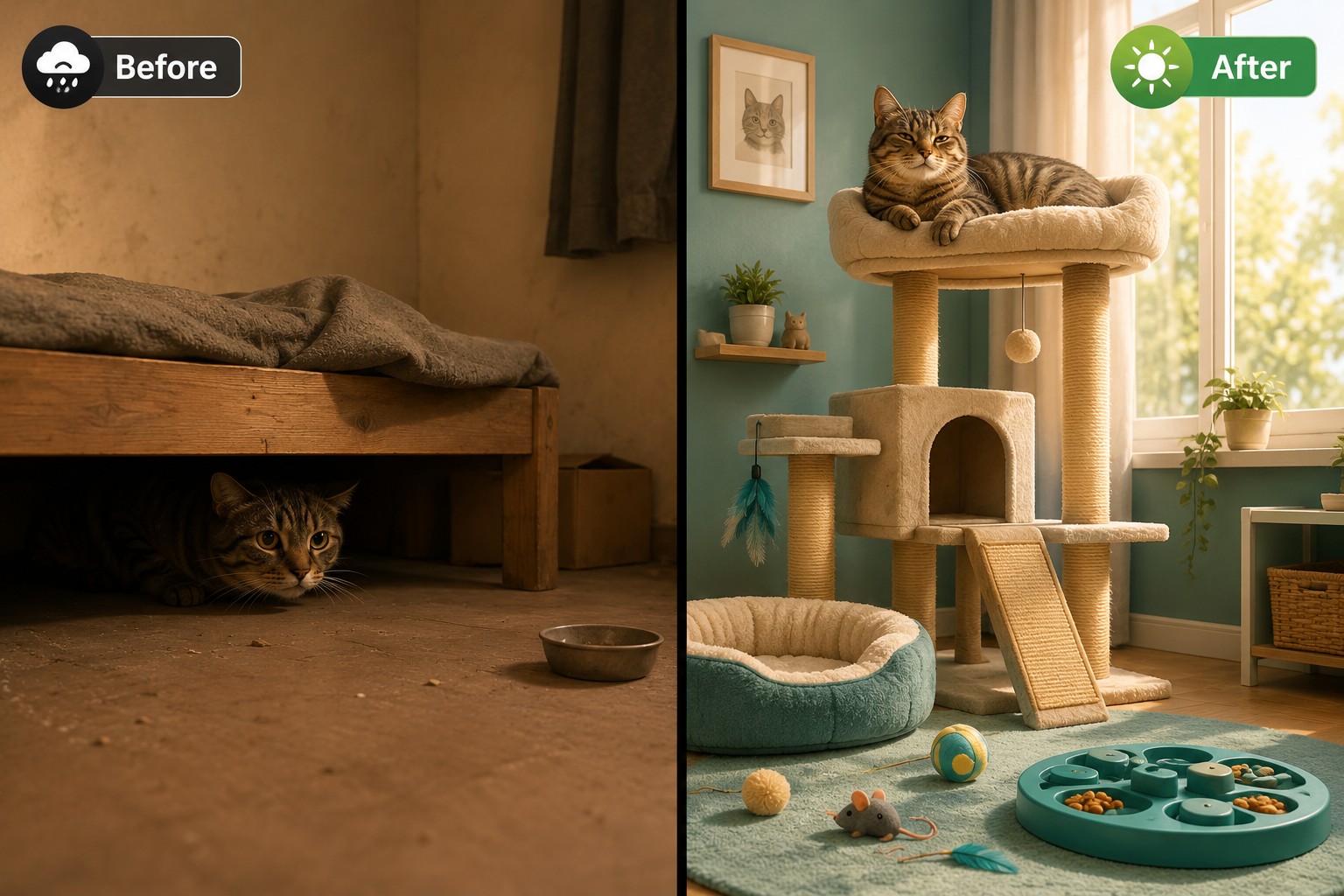
Cats hide illness instinctively — by the time they look obviously unwell, they’ve often been struggling for a while. Knowing the early signs is one of the most valuable things a first time cat owner can learn.
Signs to take seriously:
- Hiding more than usual, especially in unusual spots
- Changes in litter box habits (going outside the box, straining, blood in urine)
- Eating or drinking significantly more or less than normal
- Weight loss or gain without a diet change
- Vomiting more than once or twice a week
- Sneezing, discharge from eyes or nose
- Coat looking dull, greasy, or unkempt
- Behavioural changes — aggression, withdrawal, or excessive vocalisation
If a cat stops eating entirely for more than 24–48 hours, that’s a vet call. Cats can develop hepatic lipidosis (fatty liver disease) from even short periods of not eating, which is a serious condition.
Understanding cat behaviour helps enormously here. The cat communication guide explains how to read body language, vocalisation, and posture so you can spot when something’s off.
How to Litter Train a New Cat
Most cats litter train themselves — the instinct to bury waste is innate. Your job is to make the litter box the obvious, appealing choice.
Setup rules that actually matter:
- Place the box somewhere quiet and private, not next to the food bowls
- Use 5–7cm (2–3 inches) of unscented clumping litter
- Scoop at least once daily — cats will avoid a dirty box and find alternatives
- Wash the box with mild soap (not bleach or strong disinfectants) weekly
- Never place the box in a high-traffic or noisy area
If a new cat isn’t using the box, the most common reasons are: the box is too dirty, it’s in a stressful location, the litter type is uncomfortable on their paws, or there’s an underlying health issue (especially if they’re straining or crying).
Kittens under 3–4 months may need gentle guidance — place them in the box after meals and naps until the habit is established.
Can You Work Full Time and Still Have a Cat?
Absolutely. Cats are one of the most compatible pets for full-time workers. They sleep 12–16 hours a day and are naturally more independent than dogs. The key is making sure the hours you are home count.
Daily interactive play of 15–20 minutes (wand toys, laser pointers, puzzle feeders) goes a long way toward preventing boredom and the behaviour problems that come with it. If you work long hours regularly, consider adopting two cats so they have company — bonded pairs from a shelter are ideal.
What to set up before you leave each day:
- Fresh water (a cat fountain encourages hydration)
- A window perch with an outdoor view
- Rotating toys so they don’t go stale
- A puzzle feeder for mental stimulation at mealtimes
If your cat tends to go wild in the evenings after a quiet day, the guide to night crazies in cats explains exactly why it happens and how to manage it.
The First 24–48 Hours: What to Actually Do
The first two days set the tone for your cat’s relationship with your home. The goal is calm, not connection — that comes later.
Hour by hour:
- Arrival: Take the carrier straight to the designated “safe room” — one quiet room with food, water, litter, and a hiding spot already set up. Open the carrier door and step back.
- First few hours: Don’t hover. Let the cat explore the room at their own pace. Sit on the floor nearby and let them approach you.
- First night: Keep the room warm and quiet. Don’t force the cat out of hiding. Leave a worn item of clothing near the hiding spot — your scent is reassuring.
- Day two: If the cat is eating, drinking, and using the litter box, that’s a success. Slowly begin introducing other rooms only when the cat seems confident in the safe room.
Resist the urge to show the cat to every friend and family member immediately. Give it at least a week before introducing visitors.
FAQ
How long does it take for a new cat to settle in?
Most cats start to relax within 3–7 days, but full adjustment to a new home can take 4–8 weeks. Rescue cats with unknown histories sometimes take longer. Consistency and patience matter more than anything else.
Do cats need baths?
Healthy cats groom themselves effectively and rarely need baths. Exceptions include long-haired cats with matting, cats that get into something sticky or toxic, or cats with certain skin conditions. When in doubt, ask your vet before bathing.
How do I stop my cat from scratching the furniture?
Provide a tall, stable scratching post near the furniture they’re targeting. Use double-sided tape on the furniture temporarily as a deterrent. Reward the cat with praise or treats when they use the post. It usually takes 1–2 weeks of consistency.
Is it better to get a kitten or an adult cat as a first time owner?
Adult cats are often easier for first time owners. Their personality is already established, they’re usually already litter trained, and they’re less destructive than kittens. Kittens are adorable but require significantly more time, supervision, and patience in the first 6 months.
What human foods are dangerous for cats?
Onions, garlic, grapes, raisins, chocolate, caffeine, alcohol, and xylitol (an artificial sweetener) are all toxic to cats. For a full list, the toxic foods guide covers 20 common household items to keep out of reach.
Should I get my cat microchipped?
Yes. Microchipping is the most reliable way to be reunited with a lost cat. It’s a legal requirement for cat owners in England as of 2024, and it’s strongly recommended everywhere. The procedure takes seconds and lasts the cat’s lifetime.
Conclusion
Becoming a first time cat owner is genuinely one of the most rewarding decisions you can make — but it works best when you go in prepared rather than winging it. Get the supplies sorted before the cat arrives, give them time and space to settle in, book that first vet appointment early, and pay attention to what your cat’s behaviour is telling you.
Your action checklist for the next 7 days:
- Buy the seven essential supplies listed above
- Cat-proof your home before the cat arrives
- Set up a quiet safe room with everything the cat needs
- Book a vet appointment for within the first week
- Research pet insurance and get a quote
- Learn the basic signs of stress and illness so you can spot them early
Cats are not low-maintenance — but they are deeply rewarding when you understand what they actually need. The relationship you build with a well-cared-for cat over 13–17 years is worth every bit of the effort you put in at the start.