
The Best Fluffy Pancakes recipe you will fall in love with. Full of tips and tricks to help you make the best pancakes.


Your kitten’s first year is packed with vital milestones. You’ll need to provide warmth and frequent feedings for newborns, introduce socialization at 4-8 weeks, and shift to solid foods around one month. Make certain they receive timely vaccinations starting at 6-8 weeks, and kitten-proof your home to prevent accidents. Incorporate age-appropriate toys that evolve with their developing skills, and schedule spaying/neutering when they’re ready. The care you provide now shapes the adult cat they’ll become.
Newborn Stage (0-2 Weeks): Eyes Closed and Completely Dependent
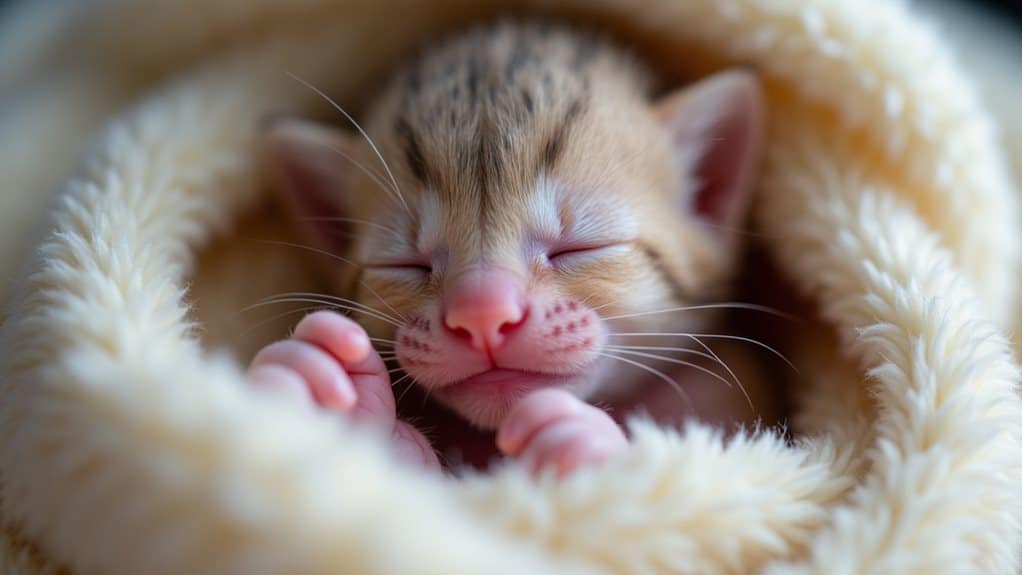
When you first welcome a newborn kitten into your home, you’ll notice they’re incredibly vulnerable creatures. Their eyes remain tightly closed during this stage, a critical part of eye development that shouldn’t be rushed or interfered with. They’ll naturally open around 7-10 days of age.
Newborn care during these initial weeks revolves around warmth, nutrition, and gentle handling. Your kitten can’t regulate their body temperature yet, so provide a consistent heat source of about 85-90°F.
They’ll need feeding every 2-3 hours, day and night—yes, even at 3 AM! Their mother handles elimination through licking, but if you’re bottle-feeding, you’ll need to stimulate them with a warm, damp cloth. This stage is crucial for healthy development, as they grow quickly during this time.
Don’t worry, they’ll grow quickly!
Early Development (2-4 Weeks): First Steps and Sensory Exploration
The next two weeks mark a dramatic transformation in your kitten’s development as their senses burst into action and their tiny world expands.
Around day 14, their eyes will open, revealing beautiful blue irises that will later change to their permanent color. You’ll notice their ears unfolding and becoming more responsive to sounds, a vital sensory milestone in their expedition.
By three weeks, your kitten begins wobbly walking attempts, often resulting in adorable tumbles as they master coordination.
These early exploratory behaviors—pawing at siblings, attempting to play, and investigating nearby objects—lay essential foundations for later hunting skills. Their sense of smell sharpens too, helping them identify you, their food, and their environment.
Don’t be surprised if they start purring now! This sound signals contentment during this exciting developmental stage. As they approach four weeks, you may notice them showing signs of readiness for solid food introduction, which is crucial for their growth and development.
Socialization Period (4-8 Weeks): Critical Window for Human Bonding
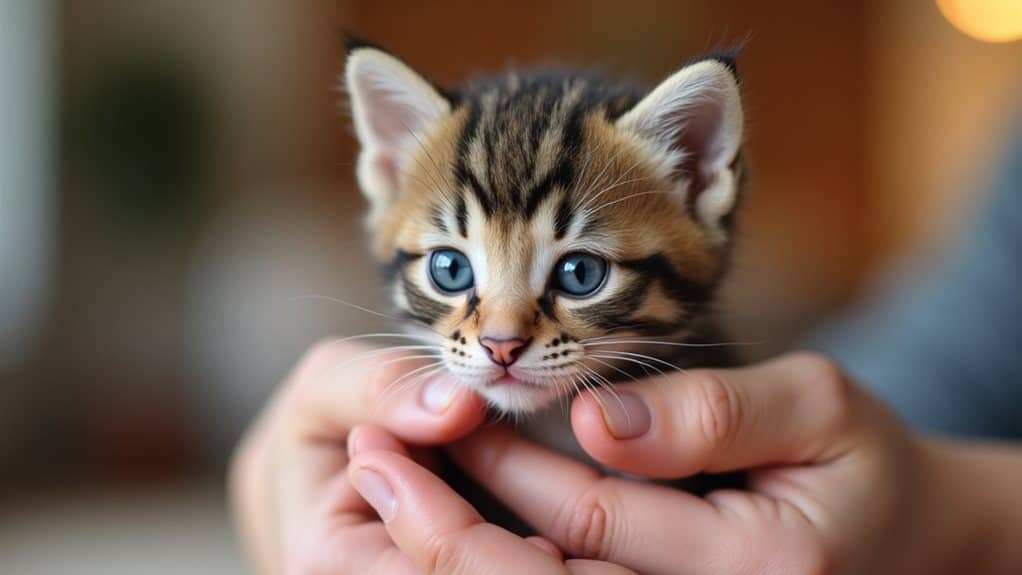
Your kitten’s early life, especially weeks 4-8, offers an essential window for building trust with humans.
During this time, you’ll want to gently handle your kitten daily, introducing them to different people to prevent shyness with strangers later in life.
Each positive interaction you create—whether through gentle petting, soft voices, or playtime—helps your kitten associate humans with comfort and safety, setting the foundation for a lifetime of bonding. Incorporating calming scents into their environment can further enhance their sense of security during this crucial development phase.
Touch Tolerance Development
Gradually introducing your kitten to various touch experiences during weeks 4-8 creates a foundation for lifelong human bonding.
During this period, your kitten’s touch sensitivity is developing rapidly, making it the perfect time to gently handle their paws, ears, mouth, and belly.
You’ll notice your kitten developing handling preferences—some may enjoy belly rubs while others prefer head scratches.
Respect these preferences while still exposing them to different sensations.
Try touching their paws for five seconds, then rewarding with a treat.
Gradually increase duration as they become comfortable. Observing vocalizations in context can also aid in understanding your kitten’s comfort levels with touch.
Multiple Handler Exposure
While consistent touch from primary caregivers builds trust, introducing multiple handlers during weeks 4-8 expands your kitten’s social repertoire dramatically. This exposure helps develop robust social skills that will serve your furry friend throughout life. You’ll notice your kitten becoming more adaptable with each new interaction. Engaging with a variety of people can also contribute to your kitten’s emotional well-being, as it will learn to feel comfortable and confident in different social settings.
| Handler Type | Benefits of Interaction |
|---|---|
| Children | Teaches gentle play tolerance |
| Men | Acclimates to deeper voices |
| Women | Exposure to different handling styles |
| Elderly | Introduces slower movements |
| Visitors | Builds confidence with strangers |
Try scheduling at least 3-4 different handler interactions weekly. Keep sessions short (5-10 minutes) and always positive. Don’t force interactions if your kitten seems overwhelmed—back off and try again later. Remember, these early exposures shape how comfortable your kitten will be around various people throughout their life.
Positive Stimuli Association
During the essential 4-8 week socialization window, kittens form powerful connections between experiences and emotions that can last a lifetime.
This is your golden opportunity to create positive associations with everyday stimuli your kitten will encounter throughout life.
When introducing new people, sounds, or objects, pair them with treats, gentle petting, or playtime. This positive reinforcement teaches your kitten that new experiences lead to good things.
For example, reward your kitten with a favorite toy when the vacuum runs, transforming a potentially scary situation into an exciting one.
Environmental enrichment plays an important role too. Create a space with various textures, hiding spots, and interactive toys that stimulate your kitten’s natural curiosity. Additionally, engaging in regular interactive playtime will help strengthen your bond and promote overall happiness as your kitten grows.
Nutrition Essentials: Transitioning From Milk to Solid Foods

Shifting your kitten from milk to solid foods follows a natural timeline that you’ll want to respect for healthy development.
You’ll need to select a high-quality kitten food that’s specifically formulated with the protein, fats, and nutrients needed for their rapid growth phase.
As your kitten grows, you’ll gradually adjust their feeding frequency from the initial 4-6 small meals per day to the more structured 3-4 meals that better suit their developing digestive system. Additionally, ensure that their diet provides high-protein food to support their energy needs during this critical growth period.
Weaning Timeline Guide
The first four weeks of a kitten’s life revolve entirely around mother’s milk, providing all the essential nutrients they need for healthy development.
Around week four, you’ll notice your kitten showing interest in solid foods—this signals the beginning of weaning.
Start by offering wet kitten food mixed with formula to create a gruel-like consistency.
Common weaning challenges include kittens walking through their food or seeming confused about what to do with it.
Don’t worry! These are normal behaviors as they learn. Providing a safe and welcoming environment will help ease their transition to solid foods.
Kitten Food Selection
Once your kitten starts exploring solid foods, choosing the right nutrition becomes your next big challenge. Look for high-quality kitten food specifically formulated for growing felines, as they need more protein, calories, and nutrients than adult cats. These special formulations support their rapid development and boundless energy.
Don’t be afraid to introduce diet variety early on. Mixing wet and dry kitten food provides different textures while guaranteeing proper hydration. Wet food’s stronger aroma often entices picky eaters, while dry kibble helps with dental health. Keep in mind that feeding wet food can also aid in preventing urinary tract issues linked to low water intake.
When shopping, check that the first ingredient listed is a quality protein source like chicken or fish. Avoid foods with excessive fillers or artificial additives.
Feeding Frequency Adjustments
As kittens grow from helpless newborns into energetic explorers, their feeding needs change dramatically.
Your tiny companion’s feeding schedule will require regular adjustments as they develop.
For newborns up to 4 weeks, they’ll need feeding every 2-3 hours around the clock.
As they reach 4-8 weeks, you can reduce to 4-6 feedings daily while introducing wet food in small portion sizes.
Once they hit 8-12 weeks, three meals a day becomes the norm as they shift to kitten kibble. Additionally, be sure to schedule regular vet visits to monitor your kitten’s health and growth.
Vaccination Schedule and Preventative Healthcare Timeline
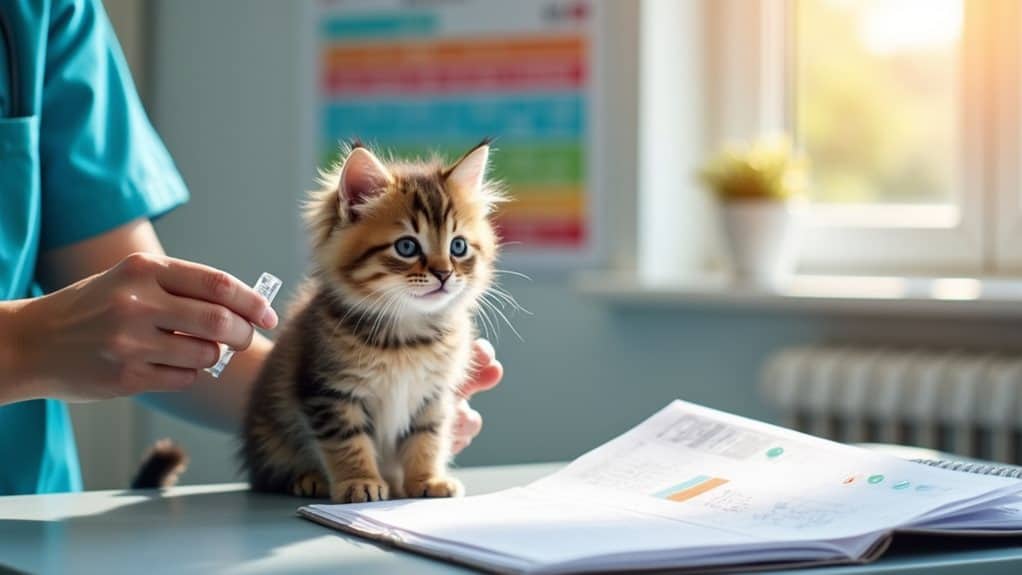
Proper vaccination begins in your kitten’s first weeks of life, creating a vital foundation for their lifelong health. Most kitten vaccinations start at 6-8 weeks, with boosters every 3-4 weeks until they’re about 16 weeks old. Core vaccines include FVRCP (protecting against three common illnesses) and rabies.
Don’t skip these appointments! Your vet will create a preventive care schedule customized to your furry friend’s needs. They’ll also check for parasites and recommend deworming treatments.
Litter Training and House Manners: Setting Up for Success
Now that your kitten’s health needs are mapped out, let’s focus on creating a well-mannered feline companion! Proper litter box setup is essential for successful house training, and with a few simple strategies, you’ll avoid unwanted accidents around your home.
Start with these house training tips:
- Location matters – Place the litter box in a quiet, accessible spot away from food and water bowls to respect your kitten’s natural instincts.
- Consistency is key – Use the same litter type initially and show your kitten the box location several times daily.
- Positive reinforcement – Never punish accidents; instead, praise your kitten when they use the box correctly.
Most kittens instinctively understand litter boxes, but patience during this learning phase will establish good habits that last a lifetime!
Safe-Proofing Your Home for a Curious Kitten
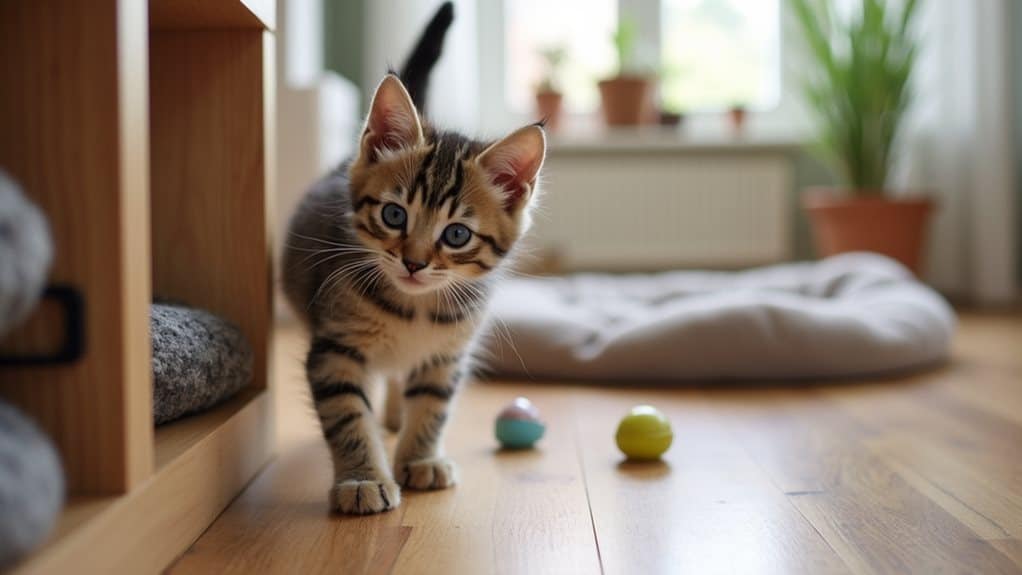
Kittens are natural explorers who’ll investigate every nook and cranny of your home with boundless curiosity and energy!
Effective kitten proofing strategies begin with getting down to their level—literally. Crawl around your floors to spot potential hazards they might discover.
Secure loose wires, remove toxic plants, and stash away small items they could swallow. Remember that dangling cords from blinds or curtains look like tempting toys but pose strangulation risks. Keep toilet lids closed and washing machines checked before use.
Replace harmful cleaning products with pet-safe household items when possible. Store medications securely, and be mindful of open windows and balconies.
Your vigilance creates a safe playground for your adventurous little friend while preserving your sanity—and your favorite vase!
Play Behaviors and Appropriate Toys by Developmental Stage
Why do play behaviors change so dramatically as your kitten grows? Just like human babies, kittens develop physical and mental skills in stages, and their play reflects these changes.
Understanding your kitten’s developmental needs helps you provide the perfect toys at the right time.
Key developmental stages for kitten play include:
- 2-3 months: Light toys they can bat and chase satisfy their predatory instincts without overwhelming them.
- 4-6 months: Interactive toys like wand toys help develop coordination during this high-energy period.
- 6-12 months: Puzzle toys and more complex playthings engage their maturing minds and help burn energy.
You’ll notice your kitten’s preferences evolve quickly. What fascinated them last week might be ignored today—that’s normal!
Rotating developmental toys keeps playtime fresh and exciting.
Managing the Teething and Biting Phase
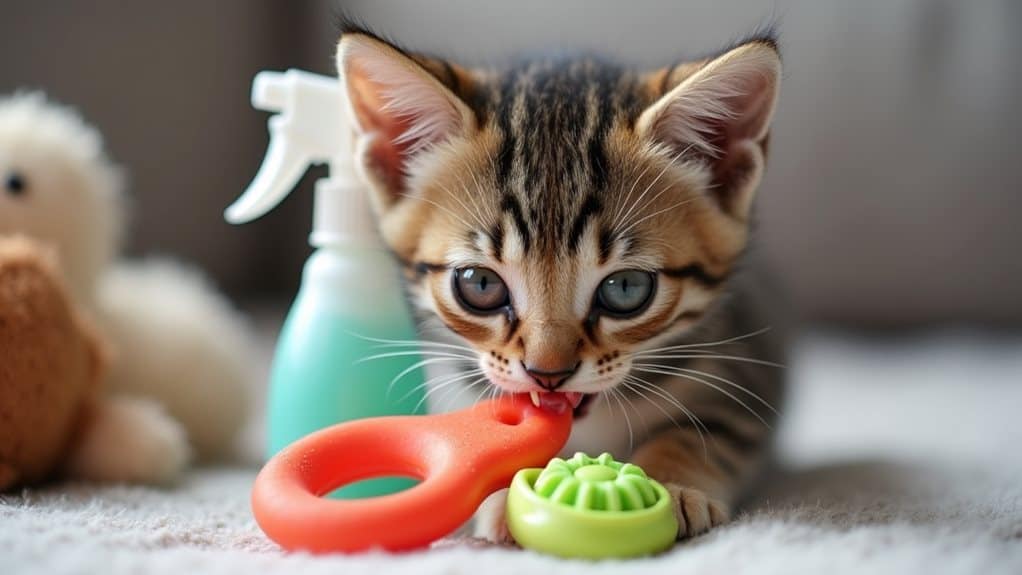
Kittens begin teething around 3-4 months of age, often signaling this uncomfortable phase with increased biting and chewing on everything, including your fingers.
You’ll need to gently redirect this natural behavior by immediately removing your hand when bitten and offering appropriate chew toys instead.
Consistency is key—always provide teething-specific toys, frozen washcloths, or kitten-safe dental chews that soothe their sore gums while teaching them what’s acceptable to bite.
When Teething Begins
As your furry friend reaches about 3-4 months of age, you’ll likely notice a change in their behavior as teething begins. This natural but sometimes challenging phase happens when your kitten’s baby teeth start falling out, making way for their permanent adult teeth.
You might spot increased chewing, drooling, or even a slight decrease in appetite during this time.
Watch for these common teething symptoms:
- Red, swollen gums that might bleed occasionally
- Increased drooling and pawing at the mouth
- Heightened chewing behavior on unexpected items
Providing appropriate teething toys is essential during this period. Soft rubber toys, frozen washcloths, or specially designed kitten teething rings can offer relief.
Redirecting Bite Behavior
Steering through your kitten’s teething phase requires patience and consistent training, especially when those needle-sharp teeth find your fingers instead of appropriate toys.
When your kitten bites, immediately redirect this behavior to a suitable toy. Don’t punish or yell, as this can create fear rather than understanding.
Instead, focus on positive reinforcement when your kitten plays appropriately. Reward gentle behavior with treats, praise, or extra playtime. Consistency is key—everyone in your household should follow the same approach to avoid confusing your furry friend.
For kittens with persistent biting issues, try redirecting aggression with interactive toys that keep your hands at a safe distance.
Wand toys, small stuffed animals, and chew-friendly toys can satisfy their natural urge to bite while protecting your fingers from becoming their next target.
Spaying/Neutering: Timing and Post-Operative Care
Making the decision to spay or neuter your kitten is one of the most responsible choices you’ll make as a pet parent. The ideal timing is between 4-6 months of age, though your vet might recommend adjustments based on your kitten’s health.
Despite common neuter myths, the procedure won’t change your kitten’s personality—just reduce unwanted behaviors like spraying and roaming.
Post-surgery care includes:
- Creating a quiet, comfortable recovery space away from other pets
- Monitoring the incision site daily for redness, swelling, or discharge
- Preventing jumping and rough play for 7-10 days using a cone if necessary
The spay benefits extend beyond preventing unwanted litters—they include reduced cancer risks and longer lifespans for your furry friend.
You’ll be amazed how quickly most kittens bounce back to their playful selves!
Frequently Asked Questions
When Should I Introduce My Kitten to Other Pets?
You should start introducing your kitten to other pets around 8-12 weeks of age. Use gradual introductions by keeping them separated initially. Provide socialization tips like supervised interactions and positive reinforcement during these first meetings.
How Do I Handle Excessive Nighttime Activity and Meowing?
Create a consistent nighttime routine with active play before bed. You’ll reduce meowing by ignoring attention-seeking cries, providing toys, and setting up a cozy sleeping area. Don’t reward noisy behavior with attention.
What’s Normal Versus Concerning Weight Gain During the First Year?
You’ll see your kitten’s weight triple by 12 weeks, then double again by year-end. Normal weight gain is steady, while concerning weight patterns include sudden spikes, plateaus, or if ribs become too visible or hidden.
Can I Train My Kitten to Walk on a Leash?
Yes, you can train your kitten to walk on a leash! Start early with a harness, not a collar. Introduce it gradually indoors before venturing outside. Leash training guarantees outdoor safety while preventing your kitten from wandering too far.
How Do I Address Sudden Behavioral Changes in My Growing Kitten?
Identify behavior triggers and observe changes in routine, health, or environment. You’ll need to manage your kitten’s stress by providing consistent schedules, safe spaces, and appropriate play. Consult your vet if changes persist.
Final Thoughts
You’ve watched your tiny ball of fur transform into a confident young cat! Through those sleepless nights, first jumps, and countless toys scattered across your floor, you’ve built a bond that’ll last a lifetime. But don’t think your kitten expedition ends at 12 months—it’s just beginning. The foundation you’ve created will shape your feline friend’s personality for years to come. Ready for the adventure ahead?