The Best Fluffy Pancakes recipe you will fall in love with. Full of tips and tricks to help you make the best pancakes.

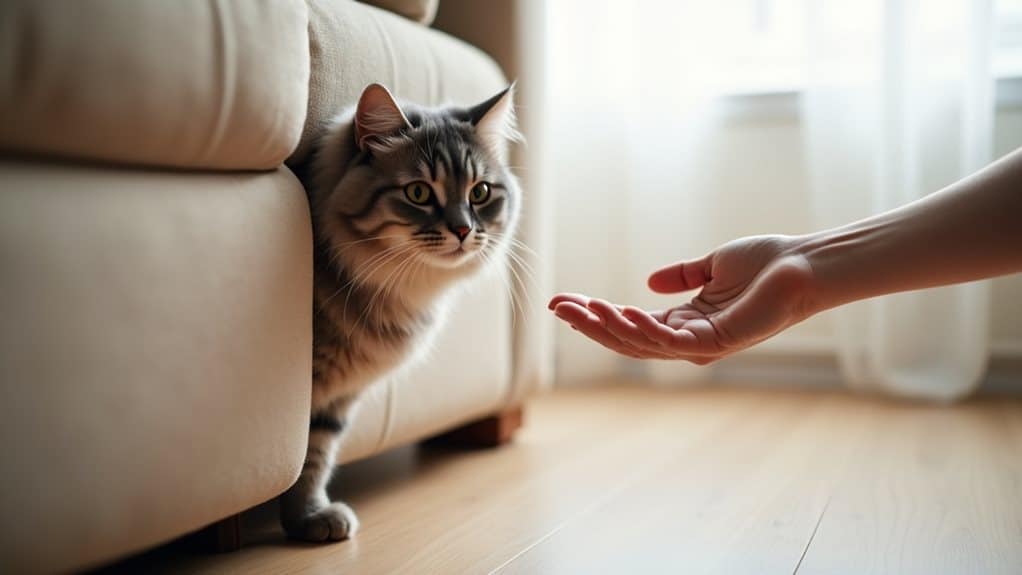
Building trust with shy cats requires patience and understanding. Create a quiet safe haven with cozy hiding spots and minimize sudden movements around them. Let your cat approach you on their terms rather than forcing interaction. Use aromatic treats and interactive toys to engage from a distance, gradually decreasing space between you. Watch for positive body language cues like relaxed posture and voluntary approaches. The process from fearful to friendly unfolds through consistent, gentle persistence.
Understanding the Root Causes of Feline Shyness

While many cat owners assume their feline friend is naturally standoffish, understanding why your cat is shy can help you build a stronger bond.
Cats develop shyness for various reasons, from past trauma to genetic predisposition. Your cat’s early experiences shape their feline behavior greatly—kittens with limited human contact during weeks 2-7 often grow into shy adults.
Timid feline behavior often traces back to kittenhood—those crucial early weeks can determine a lifetime of confidence or caution.
Environmental factors play an essential role too. A chaotic household, frequent visitors, or loud noises can trigger anxiety in your sensitive companion.
Even something as simple as rearranging furniture might make your cat retreat under the bed! Creating safe spaces within your home can significantly improve your cat’s sense of security and reduce their shyness.
Creating a Safe Haven: Setting Up Your Home for Timid Cats
Because shy cats need their own retreat from the world’s overwhelming stimuli, creating a proper safe haven is essential for their wellbeing. Start by designating quiet corners in your home where your timid friend can observe without being disturbed.
Place cozy beds or cardboard boxes in these safe spaces, preferably raised so they can survey their kingdom with confidence.
Environmental enrichment is equally important for shy cats. Add scratching posts, window perches, and interactive toys that they can enjoy during private play sessions.
You’ll want to minimize loud noises and sudden movements around these areas, as they can trigger anxiety in your nervous companion. Consider using pheromone diffusers to create a calming atmosphere throughout your home. In addition, providing safe spaces can significantly reduce their anxiety and promote a sense of security.
The Power of Patience: Respecting Your Cat’s Timeline

When shy cats enter a new home, they operate on their own unique timeline for adjustment—not yours. Your timid feline might take days, weeks, or even months to feel secure in their new environment.
Rushing this process can actually backfire, reinforcing their fearful behavior.
Instead, let your cat set the pace. Gradual exposure to new experiences—whether it’s exploring another room or meeting a family member—should happen on their terms.
Notice the subtle signs that indicate your cat is ready to take the next step: a relaxed posture, curious sniffing, or voluntary approaches. Providing emotional support through companionship and play can also help ease their transition.
Silent Bonding: Non-Invasive Ways to Build Connection
Gentle interactions don’t always require touch. Place your hand near your cat without reaching toward them, letting them approach when ready.
Patience creates space for connection—offer your presence without demands and let your cat set the pace.
You can also leave a worn t-shirt near their favorite hiding spot, helping them associate your scent with safety.
Remember, a shy cat notices everything you do, especially when you think they’re not watching.
These peaceful moments of coexistence build the foundation for deeper trust. Additionally, understanding cat body language can significantly enhance how you communicate your intentions to your feline friend.
Food as a Bridge: Using Treats and Meals to Foster Trust

Since time immemorial, food has served as a universal language of love and trust building. When working with a shy cat, strategic treat selection can make all the difference in your bonding experience.
Choose small, aromatic treats that entice even the most hesitant feline – soft treats often work better than crunchy ones for nervous cats.
Pay close attention to meal timing, as creating predictable feeding routines helps your shy companion associate you with positive experiences.
Try sitting quietly nearby while they eat, gradually decreasing the distance between you over days or weeks. You’ll know you’re making progress when your cat begins looking for you at mealtime! Additionally, this gentle approach fosters a sense of emotional connection, leading to a stronger bond based on trust.
Body Language Basics: Reading and Responding to Your Shy Cat
Your shy cat communicates volumes through body language, if you’ll take the time to notice the subtle signals of stress like flattened ears, tucked tail, or wide eyes.
When you recognize these signs, you can respond appropriately by giving your cat space, avoiding direct eye contact, or speaking in soft tones.
You’ll know you’re making progress when your cat displays confidence cues such as a relaxed posture, slow blinks, or a gently swaying tail—each small gesture represents a notable step in building trust with your timid feline friend. Understanding tail movements can further enhance your ability to interpret your cat’s emotional state.
Stress Signals Decoded
Feline body language speaks volumes when shy cats feel overwhelmed. Learning to recognize these stress indicators improves your feline communication skills and helps you respond appropriately. Your timid cat might display several telltale signs when anxious:
- Flattened ears and dilated pupils – Your cat’s fight-or-flight response is activating.
- Low body posture with tail tucked – They’re trying to appear smaller and non-threatening.
- Excessive grooming or hiding – Self-soothing behaviors indicate discomfort.
- Hissing or growling – Clear warnings that they need space immediately.
When you notice these signals, don’t take them personally! Instead, give your shy cat the space they’re requesting.
Creating distance isn’t rejection—it’s respecting their boundaries. With patience, you’ll build trust by honoring their communication cues. Additionally, be aware that whisker fatigue can also contribute to your cat’s stress during mealtimes, affecting their overall behavior and comfort.
Confidence Cues Matter
Just as important as recognizing stress signals is spotting those precious moments when your shy cat displays confidence.
These confidence cues are golden opportunities to reinforce positive feline behavior and build trust. Watch for a slightly raised tail, forward-pointing ears, and slow blinking – all signs your timid companion is feeling secure in your presence.
When you notice these signals, respond with gentle encouragement. Offer a soft voice, avoid sudden movements, and perhaps extend a treat from a respectful distance.
Don’t rush to pet them; instead, let them approach you. Each positive interaction strengthens your bond, and being aware of your cat’s comfort and security is essential for fostering a trusting relationship.
Play Therapy: Encouraging Confidence Through Interactive Games
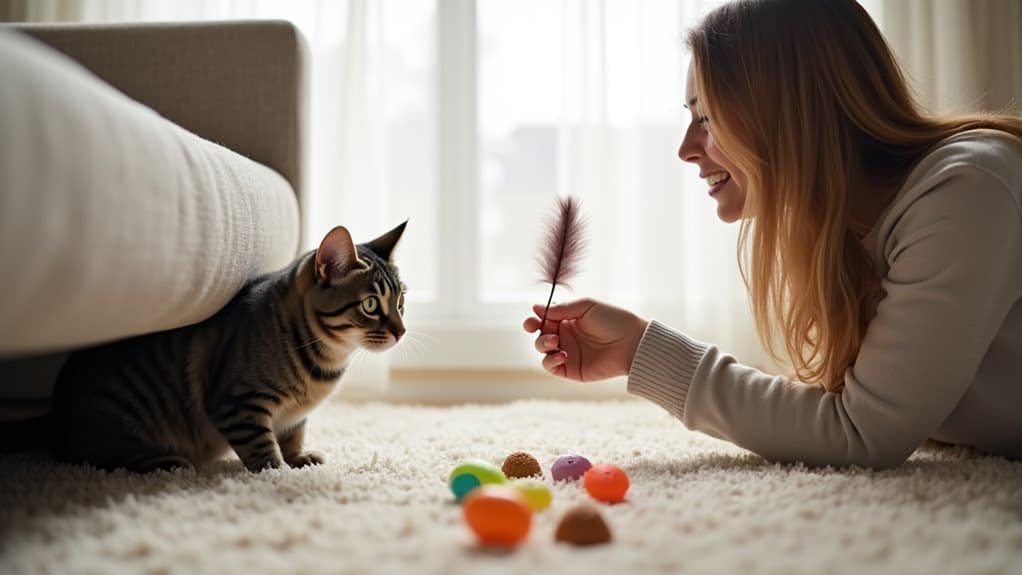
Play therapy serves as one of the most effective ways to help shy cats develop confidence and trust.
Play therapy transforms fearful felines into confident companions through the universal language of interactive engagement.
When you engage your timid feline with interactive toys, you’re creating positive associations that help them overcome fear. Social play bridges the gap between human and cat, establishing a language that transcends their natural wariness.
Try these confidence-building play strategies:
- Use wand toys that create distance while maintaining engagement
- Schedule short, daily play sessions rather than infrequent longer ones
- Let your cat “win” the hunt to build their confidence
- Follow play with treats or gentle praise to reinforce positive experiences
Incorporating interactive play into your routine will further encourage their confidence and trust in you.
You’ll notice your shy cat gradually becoming more comfortable with your presence as play becomes their pathway to trust.
The Careful Art of Physical Contact With Fearful Felines
Physical contact with a fearful cat requires patience, understanding, and a careful approach that respects their boundaries.
When you’re ready to attempt touch, start with brief moments of connection, allowing your cat to retreat whenever they feel uncomfortable.
Use a reassuring voice while extending your hand slowly, palm down, letting your cat sniff you first. This gentle introduction helps establish trust before attempting any petting.
When they seem receptive, try a light touch around their cheeks or chin—areas many cats prefer.
Watch for subtle body language cues: if ears flatten or tail twitches, give them space. Additionally, it’s important to create a calming environment through safe spaces and predictable routines to reduce anxiety for your skittish cat.
When Professional Help Is Needed: Signs of Severe Anxiety

While most shy cats can gradually overcome their fearfulness with patience and gentle care, some felines exhibit signs of severe anxiety that require professional intervention.
You’ll need to monitor your cat closely for these warning signals:
- Persistent hiding for days with no improvement in coping mechanisms
- Self-harm behaviors like excessive grooming or tail-chasing
- Complete refusal of food or water due to anxiety triggers
- Aggressive responses when cornered, even after weeks of gentle conditioning
Don’t feel like you’ve failed if your cat needs professional help!
A veterinary behaviorist can recommend appropriate treatments, which might include environmental modifications, behavior therapy, or sometimes medication.
They’ll help identify specific anxiety triggers and develop customized coping mechanisms that you couldn’t implement alone.
Your kitty deserves this support!
Success Stories: From Hiding to Thriving
You’ll be amazed at how many shelter cats have traveled from terrified, under-bed dwellers to confident companions who seek out affection.
These transformations don’t happen overnight, but with your patience and consistent positive interactions, even the most timid felines can learn to trust again.
Many adopters share heartwarming stories of cats who once wouldn’t leave their hiding spots but now compete for prime lap real estate during family movie nights.
Shelter Cats Transformed
Walking through the doors of an animal shelter, you’ll often find cats cowering in corners, hissing at strangers, or hiding beneath blankets.
These timid rescues aren’t showing their true personalities—they’re simply terrified. The shelter transformations we’ve witnessed prove that patience works wonders.
Here’s how shy shelter cats have blossomed with proper care:
- A tabby named Milo who wouldn’t emerge from his carrier now greets visitors at the door.
- Bella, once aggressive when touched, now seeks out belly rubs from volunteers.
- Shadow, true to his name, hid for weeks before becoming the shelter’s most playful resident.
- Whiskers, who hissed at everyone, now purrs loudly during adoption events.
You’d never recognize these cats from their intake photos—proving that even the most frightened felines can flourish with time and understanding.
Under-Bed to Lap
After months of patience, many shy cats who once made their homes beneath bed frames now contentedly curl up on their owners’ laps. This remarkable change doesn’t happen overnight, but with your consistent effort, it’s absolutely achievable.
Start by respecting your cat’s under-bed exploration phase—this is their safe space. You’ll notice gradual changes as trust builds: first they’ll peek out when you enter, then venture out while you’re sitting quietly nearby. Eventually, they’ll approach for brief interactions.
The milestone moment comes when your formerly fearful feline first accepts lap comfort. When they finally jump up voluntarily, remain calm and let them set the pace.
Don’t rush petting or make sudden movements. This expedition requires patience, but that magical shift from skittish stranger to purring companion makes every gentle moment worth celebrating.
Frequently Asked Questions
Can I Introduce a Shy Cat to My Existing Pets?
Yes, you can! Use proper introduction techniques with your existing pets by creating separate spaces and allowing gradual exposure. Start with scent exchanges before progressing to supervised visual contact. Take it slowly—patience is key.
Will Spaying/Neutering Reduce My Cat’s Fearful Behavior?
Yes, spaying/neutering can help reduce fearful behavior in your cat. Spaying benefits include decreased anxiety and hormonal fluctuations, while neutering effects often lead to calmer temperament and less territorial aggression you’ll likely notice.
Do Calming Pheromone Products Actually Help Shy Cats?
Yes, pheromone products can help shy cats. Calming sprays and pheromone diffusers mimic natural cat pheromones, reducing anxiety. You’ll notice they’re most effective when used alongside other trust-building techniques in your home environment.
Can Background Noise or Music Soothe Anxious Felines?
Yes, gentle background music can soothe anxious cats while reducing stress. You’ll want to keep noise levels low and consistent. Soft classical or specially designed “cat music” often works best for your nervous feline companion.
Are Certain Cat Breeds Naturally More Shy Than Others?
Yes, certain breeds like Persians and Abyssinians have naturally shy breed characteristics. You’ll need customized feline socialization strategies for these cats. Siamese and Maine Coons typically show more outgoing personalities, requiring less coaxing from you.
Final Thoughts
You’ve commenced on a remarkable expedition with your shy cat, proving that patience truly works wonders. While some believe timid cats can’t become affectionate companions, you’ve seen firsthand how false that is! With consistent trust-building, even the most hesitant felines can blossom into confident, loving pets. Remember, every small victory counts—from that first hesitant head bump to the day your once-fearful friend curls up in your lap, purring contentedly.