The Best Fluffy Pancakes recipe you will fall in love with. Full of tips and tricks to help you make the best pancakes.

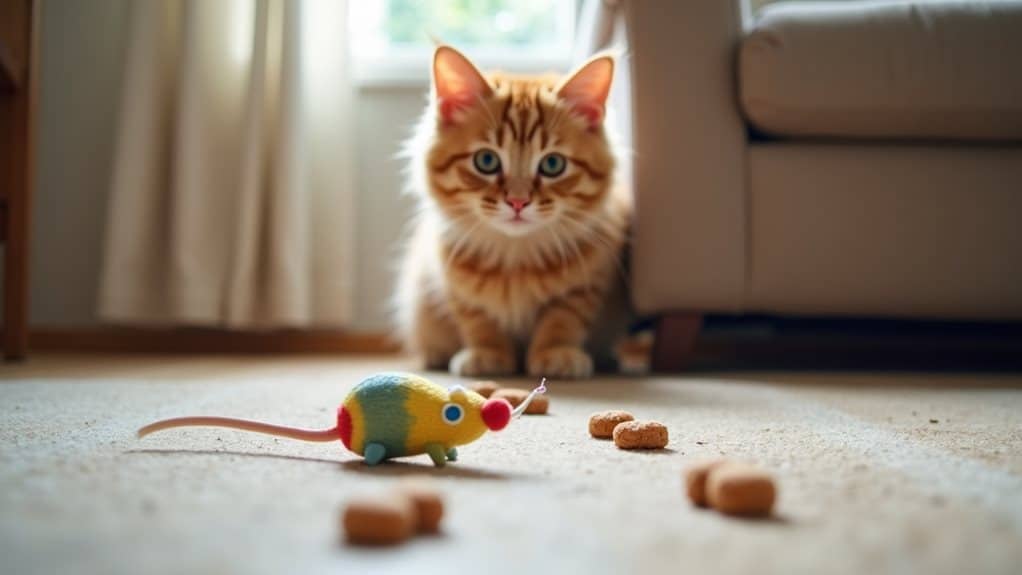
While occasional hiding is normal for cats, worry if your furry friend suddenly hides more, misses meals, or shows behavior changes like unusual vocalization. Illness or stress from environmental changes often trigger excessive hiding. Create safe spaces in social areas, establish consistent routines, and use treats with interactive toys to encourage exploration. Speak softly, reward brave moments, and never force interaction. The path to a confident, sociable cat starts with understanding their natural instincts.
The Natural Origins of Feline Hiding Behavior
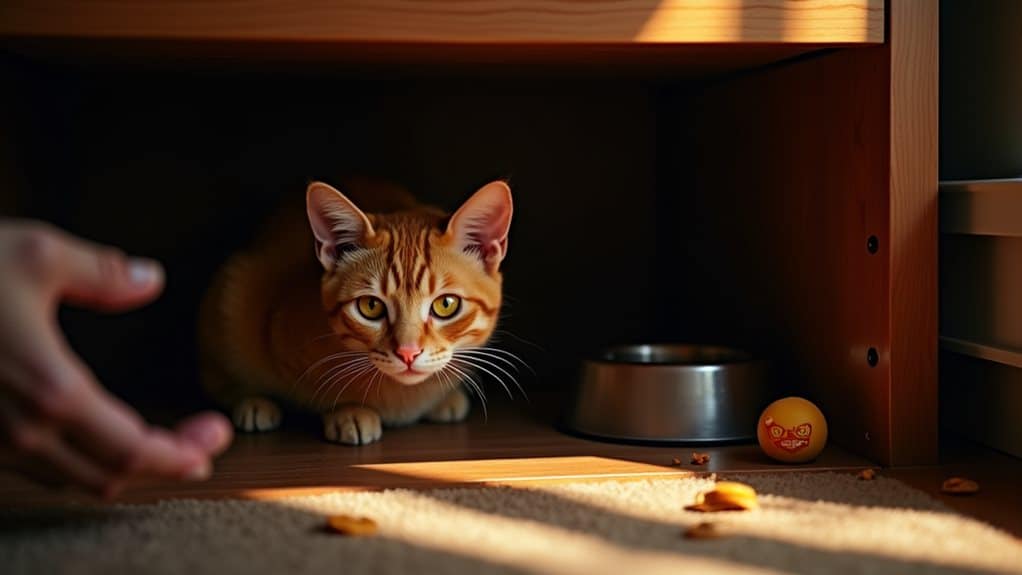
When your cat darts under the bed during a thunderstorm or hides after you’ve brought home a new piece of furniture, you’re witnessing an ancient survival mechanism at work.
Cats hide when scared—it’s not a personality quirk but evolutionary brilliance passed down from their wild ancestors.
These hiding behaviors aren’t signs your cat is being stubborn—they’re deeply rooted feline instincts that have helped cats survive for thousands of years.
In the wild, cats are both predators and prey. Their evolutionary adaptations include the ability to quickly disappear when threats emerge.
Your domestic kitty’s tendency to hide when startled is directly linked to their wild ancestors’ survival tactics. They’re hardwired to seek small, enclosed spaces where larger predators can’t reach them.
It’s why your cat loves boxes, crawl spaces, and that gap behind your couch! Understanding these natural behaviors helps you respect your cat’s need for security. Additionally, recognizing their comfort zone in various environments is crucial for their emotional well-being.
Normal vs. Concerning Hiding Patterns
Although all cats need their secret hideaways, distinguishing between normal hiding and concerning behavior is crucial for any cat parent.
Normal hiding typically occurs when your furry friend needs a break from household activity or wants a peaceful nap. You’ll notice they emerge for meals, playtime, and affection, maintaining their usual routines.
Concerning hiding, however, deserves your attention. If your cat suddenly starts hiding more than usual, stays hidden for extended periods, or misses meals, something might be wrong. This behavior could be influenced by past traumatic experiences, which may extend their time spent in hiding.
These changes could signal illness, pain, or stress. Watch for other symptoms like changes in appetite, unusual vocalization, or litter box avoidance.
Trust your instincts—you know your cat’s personality best! If their hiding behavior seems off, it’s always better to consult your vet rather than waiting to see if things improve.
Medical Conditions That Trigger Withdrawal
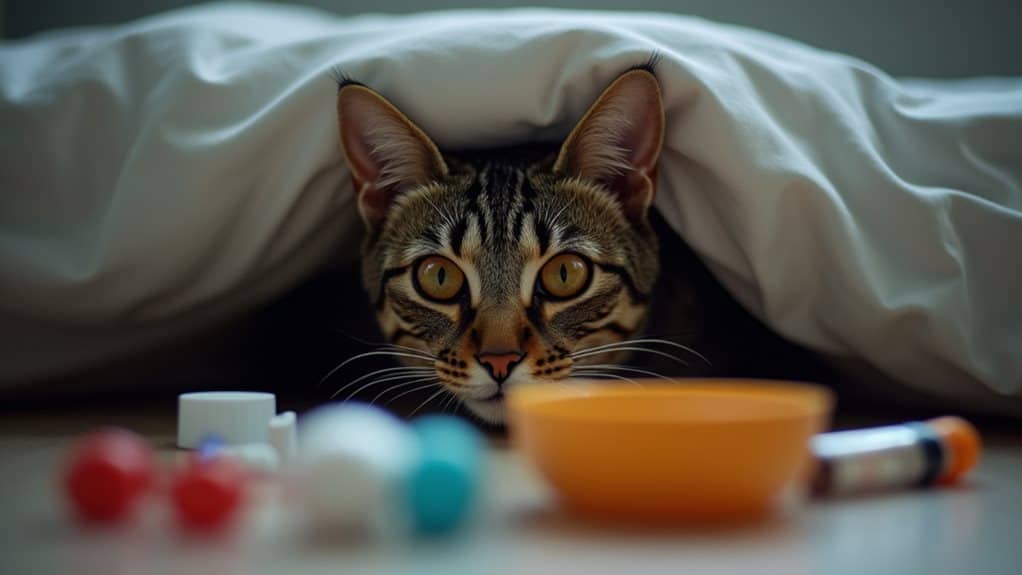
Medical conditions often explain why your cat suddenly starts disappearing under the bed or into closets. When your normally social kitty begins hiding frequently, it might signal underlying medical issues rather than just typical feline behavior.
Watch for these warning signs that require veterinary attention:
- Sudden hiding combined with changes in eating or drinking habits
- Unusual vocalization when using the litter box, suggesting pain
- Noticeable weight loss or lethargy accompanying the hiding behavior
Pain is a primary reason cats seek solitude, as they instinctively hide vulnerability from potential predators. Conditions like arthritis, dental disease, and urinary tract infections can trigger both physical discomfort and feline anxiety. Inappropriate urination, a common behavioral issue, may also indicate underlying health problems that need addressing.
Don’t assume your cat’s new hiding spot is just a quirky habit—it might be their way of communicating they’re not feeling well.
Stress and Anxiety: Environmental Triggers
Your cat’s stress levels can skyrocket when facing major environmental changes like moving homes or enduring the chaos of renovation projects.
Adding new pets or family members to your household disrupts your cat’s established territory and social dynamics, often triggering hiding as a coping mechanism.
Excessive noise from thunderstorms, construction, or even a bustling household gathering can overwhelm your feline friend’s sensitive hearing, sending them scurrying to find a quiet, secure hideaway. Additionally, providing environmental enrichment can help alleviate stress and encourage your cat to feel more secure in their surroundings.
Moving and Renovation Distress
When major changes disrupt your cat’s familiar environment, hiding becomes a natural defense mechanism. Your feline friend may disappear under beds or into closets during a move or home renovation, showing clear signs of moving stress or renovation anxiety.
Cats thrive on routine and predictability, so these changes can be particularly jarring to their sense of security.
To help your cat cope during these unsettling times:
- Create a quiet “safe room” with familiar items where your cat can retreat.
- Maintain feeding and playtime schedules as consistently as possible.
- Introduce new spaces gradually, allowing exploration at your cat’s own pace.
Additionally, utilizing synthetic pheromones can help alleviate fear and promote a sense of calm during this transition.
New Pets or People
Introducing unfamiliar faces into your cat’s territory often triggers a defensive retreat into favorite hiding spots, especially if those newcomers are energetic or loud.
Your usually social feline might vanish for days when confronted with houseguests or a new furry family member. Don’t take it personally—this is normal protective behavior!
When planning new pet introductions, patience is your greatest ally.
Create separate spaces where your cat can retreat without feeling cornered. Gradual socialization techniques work best: try swapping bedding between pets before face-to-face meetings to familiarize scents.
For human visitors, ask them to sit quietly and let your cat approach on their terms. Additionally, recognizing that fear-based aggression can exacerbate hiding behavior will help you understand your cat’s actions better.
Noise and Chaos
Loud noises and chaotic environments send most cats straight into hiding mode, often even more quickly than unfamiliar visitors do.
Your feline friend’s sensitive hearing makes them particularly vulnerable to stress from sounds you might barely notice. Effective noise reduction and chaos management in your home can dramatically improve your cat’s comfort level. Understanding that tail puffing as a stress response can indicate your cat’s fear or agitation will help you better address their anxiety.
To create a more cat-friendly environment:
- Designate a quiet “safe zone” where your cat can retreat when things get overwhelming
- Maintain consistent daily routines to provide predictability in an unpredictable world
- Use white noise machines or soft background music to mask startling sounds
You’ll notice your cat becoming more confident as you implement these strategies.
Creating Safe Spaces Without Encouraging Isolation
Although cats naturally seek hiding spots when stressed, you’ll need to strike a balance between providing security and preventing unhealthy isolation. Creating safe zones throughout your home gives your cat comfort areas without encouraging them to disappear completely. Place these retreat spots in social areas where your cat can still observe family activities.
Also, providing these safe spaces can help mitigate stress and anxiety, reinforcing a sense of security and comfort for your cat.
| Safe Space Type | Benefits | Implementation |
|---|---|---|
| Raised Perches | Allows monitoring from above | Install cat shelves or clear countertops |
| Partially Covered Beds | Provides security with visibility | Place in living room corners |
| Cat Tunnels | Offers movement between safe zones | Connect different rooms with fabric tunnels |
Gentle Techniques for Coaxing Out Timid Cats
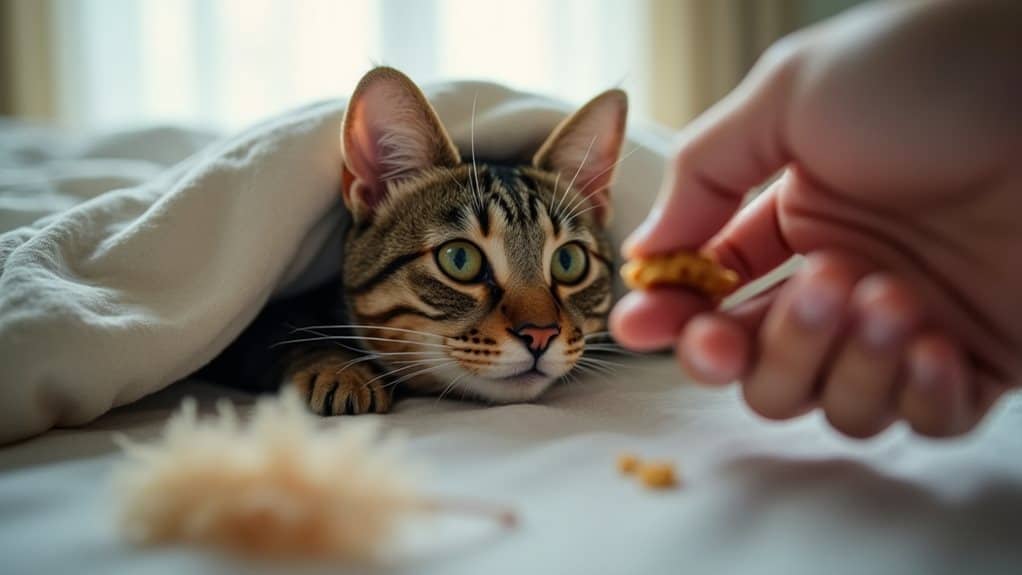
Three key principles guide the process of encouraging shy cats to emerge from their hiding spots. When your feline friend retreats, remember that patience forms the foundation of gentle encouragement. Your cat needs time to build trust at their own pace.
Patience isn’t just a virtue—it’s the cornerstone of coaxing timid cats into trusting their environment.
Creating positive associations with open spaces helps tremendously. Try these proven approaches:
- Place their favorite treats in gradually increasing distances from hiding spots
- Use interactive toys that trigger their natural hunting instincts
- Speak in soft, reassuring tones while sitting nearby (don’t force interaction)
Positive reinforcement works wonders—reward even small acts of bravery with treats or gentle praise. Additionally, providing a safe environment where your cat feels secure can significantly reduce their anxiety and encourage exploration.
Building Trust Through Routine and Positive Reinforcement
When a fearful cat has begun to emerge from hiding, establishing a consistent daily routine becomes your most powerful tool for building lasting trust.
Cats thrive on predictability, so feeding, playing, and interacting at the same times daily helps them feel secure in their environment.
Incorporate trust building activities like sitting quietly nearby while your cat eats or gently tossing treats closer to you each day.
These positive reinforcement strategies create associations between your presence and good experiences.
You’ll be amazed how quickly treats, toys, and calm talking can transform a skittish cat into a confident companion. Additionally, engaging in playful interactions with minimalistic entertainment like DIY toys can be particularly effective in building confidence as your cat learns to associate playtime with positive experiences.
When to Consult Your Veterinarian
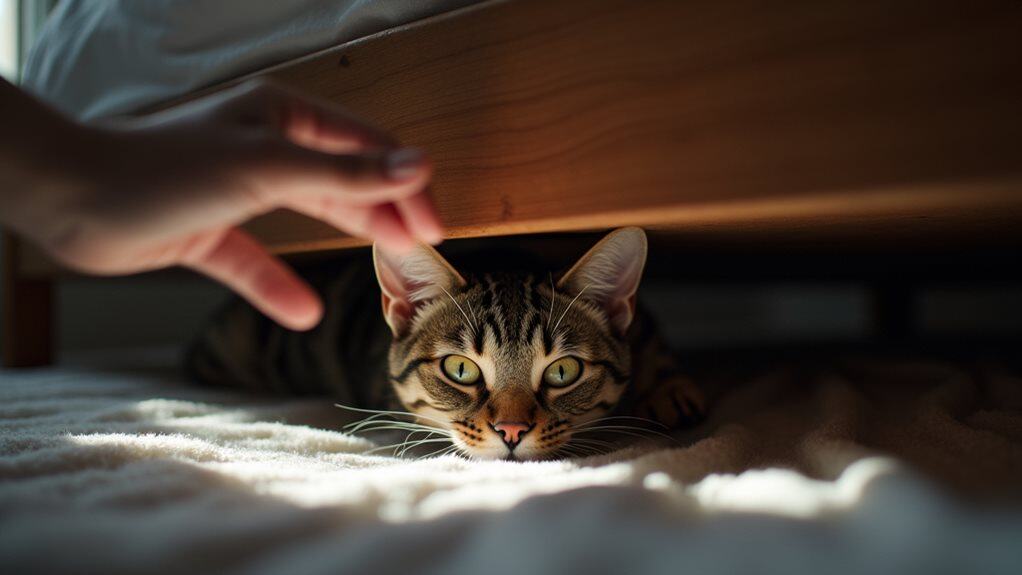
Most hiding behaviors in cats are normal, but persistent hiding could signal underlying health issues that require professional attention.
When your furry friend’s retreat becomes concerning, it’s time for a vet consultation. You know your cat best, so trust your instincts if something seems off.
Contact your veterinarian when you notice:
- Hiding accompanied by changes in eating, drinking, or litter box habits
- Physical symptoms like limping, vomiting, or unusual vocalization
- Sudden personality changes or aggression without obvious triggers
Your vet will likely perform a thorough physical examination and behavioral assessment to determine if the hiding stems from pain, illness, or anxiety.
Don’t hesitate to bring videos of your cat’s behavior at home—this valuable information helps your vet make an accurate diagnosis and develop an effective treatment plan.
Behavioral Enrichment for Shy or Fearful Cats
Creating safe spaces throughout your home offers your shy cat secure retreats where they can observe without feeling threatened.
You’ll notice remarkable progress when you engage your fearful feline in brief, positive play sessions that help build their confidence while strengthening your bond.
Consider using familiar scents on toys or bedding to create comfort zones that encourage your cat to venture beyond their hiding spots and explore their environment with growing assurance.
Environmental Safe Spaces
Shy and fearful cats desperately need designated safe spaces where they can retreat and recharge without feeling threatened. Creating a feline comfort zone isn’t complicated—it’s about understanding your cat’s need for security.
You’ll notice your cat’s anxiety decrease when they’ve reliable safe zone options throughout your home.
Consider these crucial elements for effective environmental safe spaces:
- Raised perches that provide both visibility and a sense of security
- Hidden nooks with soft bedding where they can fully conceal themselves
- Multiple retreat options in different rooms so they’re never far from safety
When you respect your cat’s need for these hideaways, you’re building trust.
Don’t force interaction when they’re in their safe space—it’s their sanctuary, not a place for socialization. Your patience will eventually reward you with a more confident companion.
Interactive Play Therapy
Transforming your fearful feline’s behavior starts with structured playtime that builds confidence while respecting boundaries.
When your cat hides frequently, interactive toys become powerful tools for coaxing them into positive social experiences. Begin with fishing-rod toys that allow distance while engaging their natural hunting instincts.
Establish consistent play routines—even just 5-10 minutes twice daily makes a difference. You’ll notice your shy kitty gradually becoming more comfortable with your presence as they focus on the excitement of the chase.
Don’t force interaction; let your cat set the pace. When they show interest, reward with treats or gentle praise.
Scent-Based Confidence Building
Scent offers a powerful gateway to rebuild your fearful cat’s confidence in their environment. Creating familiar scent trails throughout your home helps your shy feline maneuver spaces with greater security.
You’ll notice they often follow these invisible paths when venturing out from hiding spots. Pheromone diffusion products like Feliway can greatly reduce anxiety by mimicking natural cat facial pheromones that signal safety.
Try these scent-based confidence builders:
- Place items with your cat’s scent in new areas they’ve been reluctant to explore
- Rotate toys between rooms to create connected scent trails throughout the house
- Use pheromone diffusers in multiple rooms, especially near favorite hiding spots
These techniques work because cats rely on smell far more than humans do—what seems odorless to you speaks volumes to your anxious companion.
Frequently Asked Questions
Can a New Cat Bed Reduce Hiding Behavior?
Yes, a new cat bed can help. Place it in quiet areas with familiar scents. Choose soft cat bed materials that feel secure. Strategic new bed placement in social spaces can gradually encourage your cat to venture out.
Do Certain Cat Breeds Hide More Than Others?
Yes, some breeds hide more than others. Independent breeds like Persians tend to hide frequently, while sociable breeds like Siamese rarely do. Remember, hiding triggers vary, but breed characteristics greatly influence your cat’s tendency to retreat.
Does Spaying or Neutering Affect Hiding Tendencies?
Imagine your timid cat Whiskers emerging after neutering! Yes, spaying effects can reduce hiding behavior, as hormone fluctuations decrease. Neutering impacts include less territorial anxiety, making your cat more comfortable exploring their environment rather than seeking solitude.
Can Playing Cat Videos Encourage a Hiding Cat to Emerge?
Cat videos can sometimes trigger curiosity in hiding cats. You’ll see varying feline engagement strategies work – some cats emerge to investigate the sounds, while others remain unimpressed. Try different cat video effects to discover what works.
Should I Use Treats to Lure My Cat From Hiding Spots?
Like a timid explorer emerging from a cave, you’ll find treats can work wonders. Yes, use treat reinforcement to coax your cat out, but first identify hiding triggers. Don’t force interaction—let trust build naturally.
Final Thoughts
As you learn your cat’s unique hiding patterns, you’ll soon recognize the difference between natural retreat and concerning withdrawal. Picture your once-timid feline gradually emerging from under the bed, whiskers twitching with curiosity rather than fear. With patience, consistent routines, and thoughtful enrichment, you’ll build a trusting relationship where your cat feels safe both in their hideaway and by your side. Remember, every small step toward socialization is worth celebrating!