The Best Fluffy Pancakes recipe you will fall in love with. Full of tips and tricks to help you make the best pancakes.

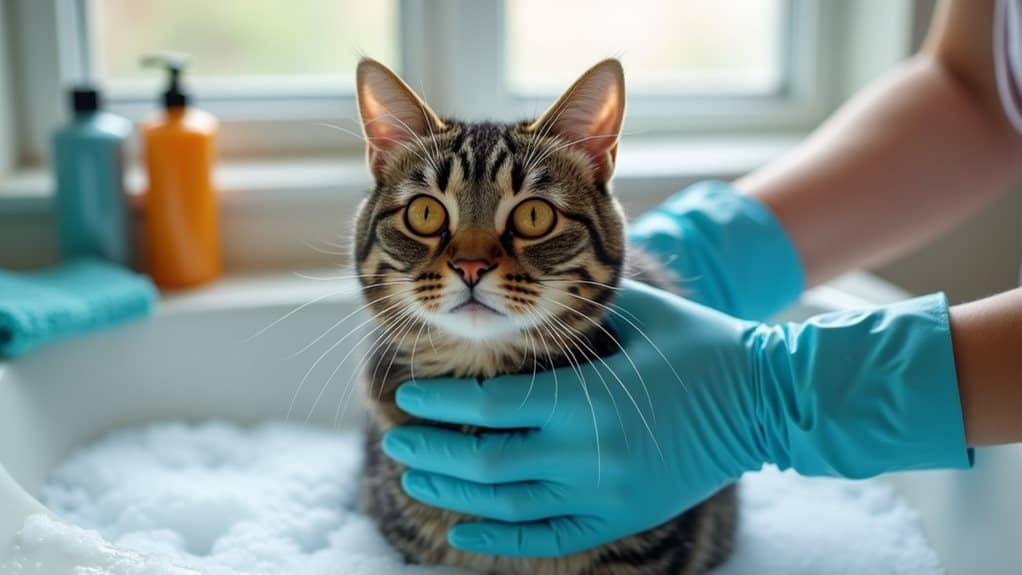
Most cats don’t need regular baths, as they’re excellent self-groomers. Only bathe your cat when they’ve encountered something sticky, toxic, or smelly, or if they have health issues like skin conditions or mobility problems. When bathing is necessary, gather cat-specific shampoo, towels, and treats before creating a calm environment with a non-slip mat. Wet your cat thoroughly, shampoo gently, rinse completely, and dry with warm towels. The right techniques will transform this potentially stressful experience into a manageable one.
When Is Bathing Your Cat Actually Necessary?
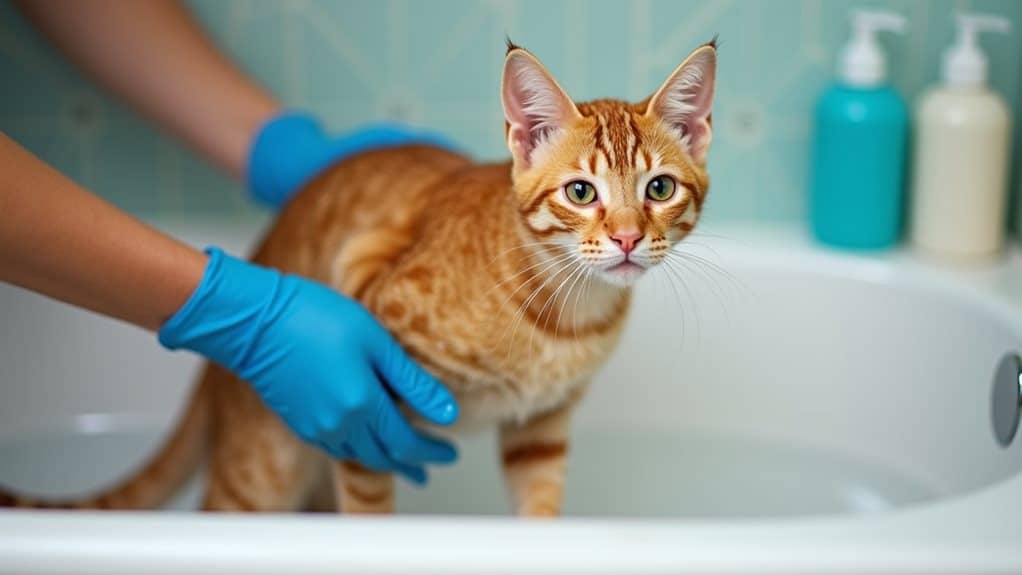
When should you actually reach for the cat shampoo? Most cats do an excellent job of keeping themselves clean, so the answer might surprise you – rarely!
Unlike dogs, healthy cats typically don’t need regular baths as part of their care routine. The ideal bath frequency for most felines is actually close to never, unless specific circumstances arise.
You’ll only need to bathe your cat if they’ve gotten into something sticky, toxic, or extremely smelly that they shouldn’t lick off themselves.
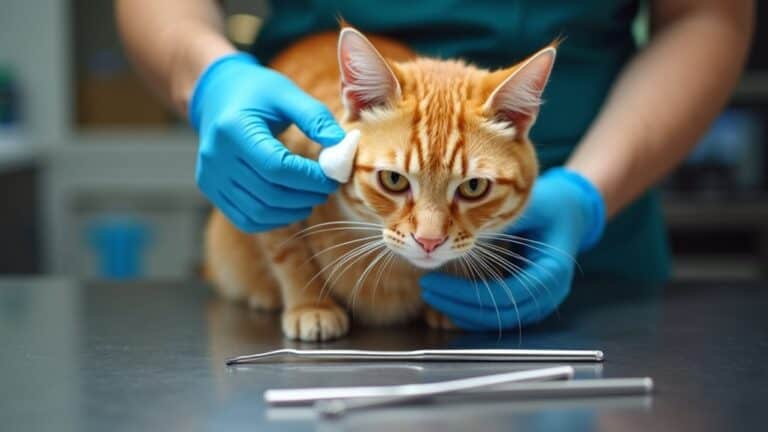
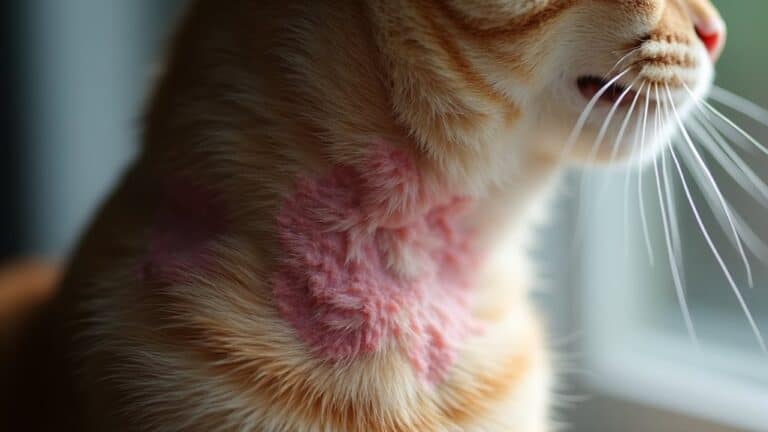
Cat health concerns like flea infestations, skin conditions, or mobility issues in senior or overweight cats might also necessitate a bath.
Remember, unnecessary bathing can strip natural oils from your cat’s coat and cause stress. Gentle handling techniques can help make the bathing experience less stressful for your cat.
Preparing Your Environment for a Low-Stress Cat Bath
Since most cats view water with suspicion or outright disdain, creating the right environment before bath time can make all the difference between success and scratches.
Your bathroom setup should be complete before you even bring kitty into the room. Close the door, lay down a non-slip mat in the tub, and gather all supplies within arm’s reach—shampoo, towels, and treats.
Preparation is key—assemble your bath arsenal and secure the space before introducing your reluctant feline to the equation.
Consider calming techniques that start well before the bath. Play with your cat to burn off energy, or schedule bath time when they’re naturally more relaxed. Using a gentle hypoallergenic shampoo can also help ensure an enjoyable experience for your feline friend.
Some pet parents find that pheromone sprays or diffusers help create a soothing atmosphere. Keep the water lukewarm, not hot, and run it at low pressure to minimize frightening sounds that might send your furry friend into panic mode.
Essential Supplies for Safely Bathing Your Feline
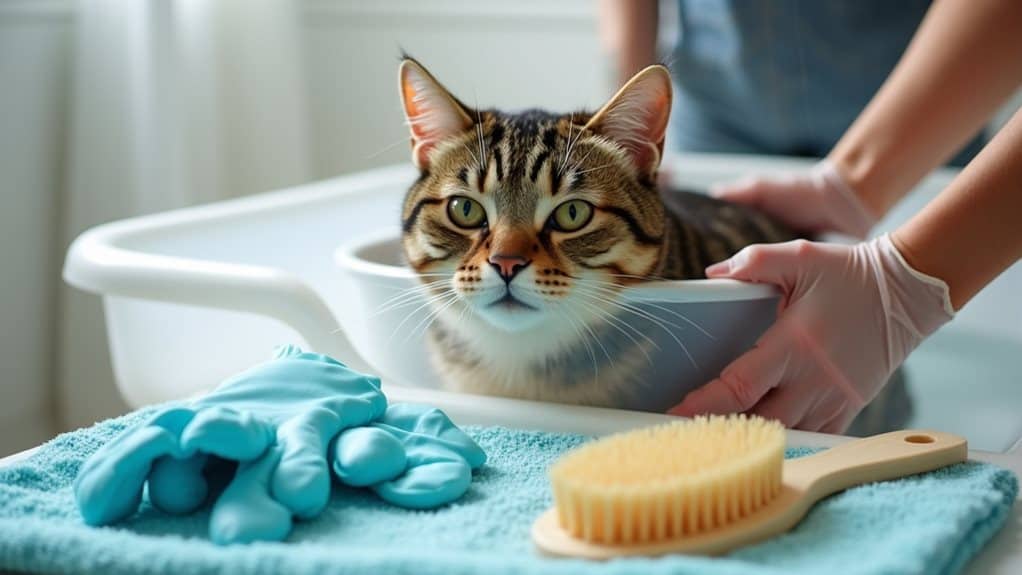
Now that your bathroom is prepared for bath time, let’s focus on the tools you’ll need for a successful cat bathing session. Gather these necessities before bringing your furry friend into the bathroom:
First, select a cat-specific shampoo—never use human products, as they can irritate your pet’s sensitive skin. For proper cat grooming, you’ll also need several soft towels, a non-slip mat for the tub bottom, and a handheld sprayer or plastic cup for rinsing.
Soap selection is vital; look for gentle, unscented formulas designed specifically for felines. Additionally, you may want to consider gentle holding techniques to maintain control and safety while bathing your cat.
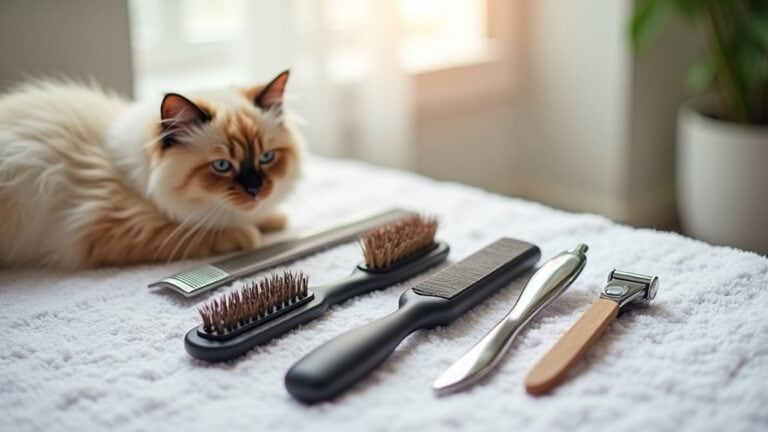
Don’t forget a brush for pre-bath detangling, rubber gloves to protect your hands from scratches, and some treats to reward your brave kitty afterward. Having everything within arm’s reach will make the process easier for both of you!
Step-by-Step Guide to Bathing a Reluctant Cat
Before you start bathing your reluctant cat, you’ll need to gather all supplies and create a calm environment, including placing a non-slip mat in the sink or tub.
Once your feline friend is thoroughly wet and shampooed, you’ll want to rinse completely to prevent skin irritation from lingering soap residue.
After the bath, wrap your cat in a warm towel immediately, keeping the room temperature comfortable while gently drying their fur to help them recover from the stressful experience. Positive reinforcement techniques can also make the process smoother for both you and your cat.
Pre-Bath Preparation
Before diving into cat grooming, gather all supplies within arm’s reach: cat-specific shampoo, towels, a non-slip mat, and treats for rewards. Remember, bath frequency should be minimal—most cats only need bathing every few months unless they’ve gotten particularly dirty. Trim your cat’s nails beforehand to minimize potential injuries. Create a calm environment by closing doors and windows, and run the water before bringing your cat into the bathroom. The sound of running water can heighten anxiety. Aim for lukewarm water—not too hot or cold—and consider using a rubber bath mat to give your kitty secure footing. A little preparation goes a long way in making bath time less stressful for both of you! Consider using regular grooming techniques to keep your cat’s coat healthy and reduce the need for frequent baths.
Post-Bath Recovery Techniques
The moments immediately following your cat’s bath are just as important as the washing itself. As you wrap your furry friend in a warm towel, be gentle but thorough with your drying technique.
Most cats will appreciate a quiet, warm space to recover from their ordeal.
Post bath grooming is vital—use a wide-toothed comb to carefully detangle fur while it’s still damp, preventing painful mats later. You’ll find this easier than tackling knots in dry fur.
Keep your bathroom door closed until your cat is completely dry, as wet cats can catch chills easily.
For maximum cat comfort, consider offering a favorite treat or toy as a peace offering. This positive reinforcement helps your cat associate bath time with something pleasant, making your next bathing session a little less dramatic. Regular grooming fosters better circulation and overall skin health, enhancing your cat’s comfort and well-being during recovery.
Drying Techniques That Won’t Terrify Your Cat
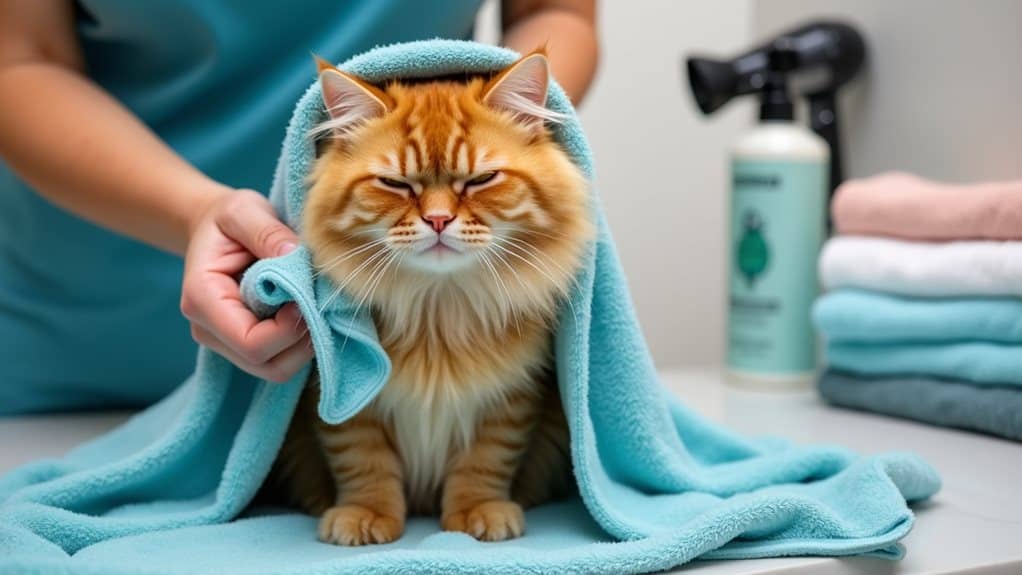
Most cats will tolerate bath time grudgingly, but drying can push them over the edge if not done carefully. Your approach to gentle drying makes all the difference between a traumatized cat and one who’ll forgive you by dinnertime.
Start with absorbent towels, pressing (not rubbing) to remove excess water. Wrap your cat in a warm towel like a purrito for comfort. Speaking softly and offering treats supports calming techniques that reduce stress.
Many cats prefer air-drying in a warm room rather than facing a hair dryer’s noise. If you must use a dryer, set it on low heat and introduce it gradually from a distance. Regular grooming also helps reduce shedding and makes bath time much easier.
Keep drying sessions short, and remember that slightly damp is better than a completely terrified cat. Your patience now builds trust for future baths.
Special Considerations for Kittens, Seniors, and Long-Haired Breeds
Different age groups and coat types require customized bathing approaches that go beyond standard techniques.
For kittens, consider their heightened sensitivity to temperature and noise. Use lukewarm water and speak softly to minimize stress during their first bathing experiences. A small sink rather than a large tub can help them feel more secure.
Senior cats present unique challenges due to reduced mobility and potential arthritis. You’ll want to provide non-slip surfaces and support their joints carefully throughout the bathing process. Don’t rush your older friend—they deserve extra patience.
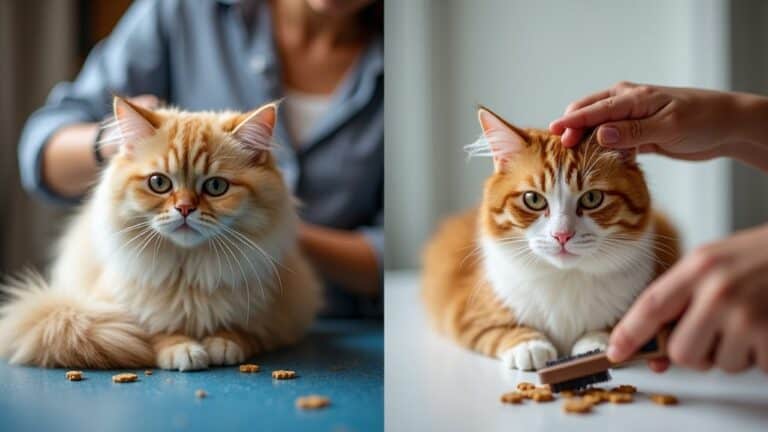
Long-haired breeds need special attention to prevent matting. Use a detangling spray before bathing and comb through their coat sections while drying. Regular grooming sessions also help maintain a healthy coat and skin for these breeds.
Persian, Maine Coon, and similar breeds benefit from more frequent grooming to maintain their luxurious coats between baths.
Alternatives to Full Baths: Spot Cleaning and Dry Shampoo Options
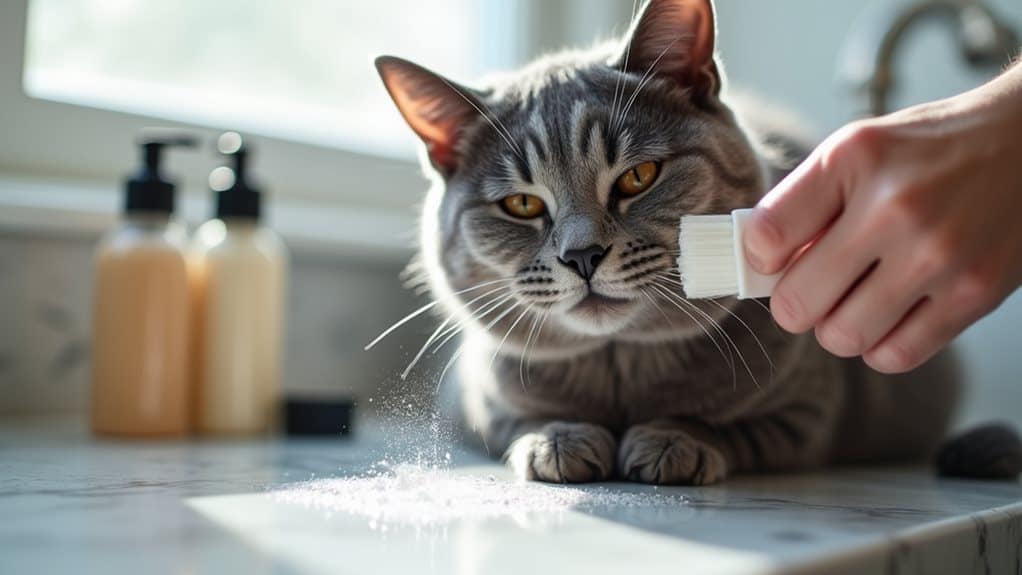
While many cats don’t require frequent full baths, you’ll still need strategies to keep your feline friend clean between major grooming sessions.
Most cats happily self-groom, but having gentle alternatives between baths keeps your feline fresh and comfortable.
Spot cleaning and dry shampoo options can be lifesavers when your cat has a minor mess or odor issue but doesn’t need a full water ordeal.
Here are three effective alternatives to full baths:
- Waterless foam cleansers – Apply directly to soiled areas, massage gently, and wipe away with a towel for quick spot cleaning.
- Pet-specific dry shampoo – Sprinkle on your cat’s coat, work it through with your fingers, and brush thoroughly to remove dirt and absorb oils.
- Grooming wipes – Perfect for paw cleaning after litter box use or wiping away minor dirt from your cat’s coat without stress.
Additionally, it’s important to regularly check for any skin issues before using these cleaning methods to ensure your cat’s coat is healthy.
Frequently Asked Questions
Can I Use Human Shampoo on My Cat?
No, you shouldn’t use human shampoo on your cat. It contains harsh chemicals that damage their skin. Stick to cat shampoo alternatives like specialized pet products that won’t disrupt their natural oils or pH balance.
How Often Should I Bathe My Outdoor Cat?
Like dust in the wind, outdoor cat grooming should be minimal. You shouldn’t bathe your outdoor cat more than once every 4-6 weeks, as they’re natural self-groomers. Frequent baths can strip vital oils.
Will Regular Bathing Reduce My Allergies to Cats?
Regular bathing can help with allergy reduction, but won’t eliminate allergies completely. You’ll see better results combining it with frequent cat grooming, air purifiers, and keeping your bedroom pet-free. Weekly brushing is particularly effective.
Is Professional Grooming Worth the Cost for Cats?
Like a butterfly emerging from its cocoon, your cat’s transformation under professional hands can be worth every penny. You’ll enjoy grooming benefits beyond DIY attempts, though cost comparison depends on your cat’s needs and your budget.
Can Cats Get Sick From Licking Themselves After a Bath?
Yes, your cat can get sick if they lick harmful residue from improper cat grooming. Always use pet-safe shampoos and rinse thoroughly when implementing bathing techniques to prevent your feline from ingesting toxic substances.
Final Thoughts
Like sailors steering through rough seas, you’ve now charted a course through the challenging waters of cat bathing. You’ve learned when to set sail and when to stay in port, prepared your vessel with proper supplies, and mastered techniques to keep your feline first mate calm. Remember, sometimes a spot-cleaning expedition is all you need. With patience and these tools in your arsenal, bath time won’t be the shipwreck many cat owners fear!